Esma Sultana Mosque: Jajce's Unique Landmark
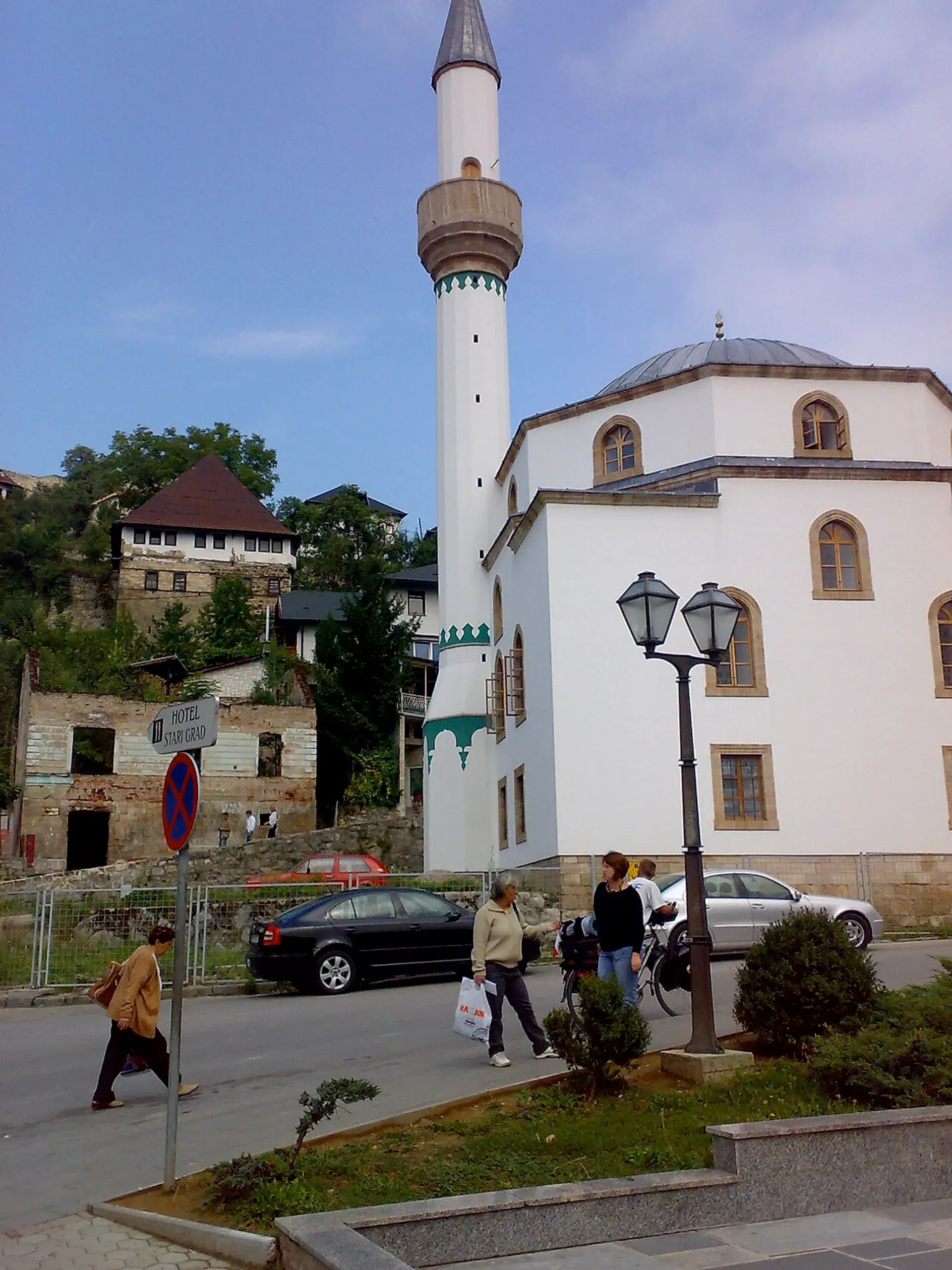
Located in Jajce's historic bazaar, the Esma Sultana Mosque stands as a significant cultural and religious landmark. It is distinguished as the most valuable Ottoman-era mosque in the city and holds the unique honor of being the only mosque in Bosnia and Herzegovina named after a woman, Esma Sultana. Its story is a compelling blend of historical record, local legend, and modern resilience.
A Tale of Two Patrons
An inscription above the mosque's portal states its construction in 1749/50 and names its founder as Emir Mustafa, a senior military officer. However, a popular and enduring local tradition attributes the mosque's funding to Esma, the wife of the Bosnian governor Mehmed Pasha Muhsinović.
According to the legend, Esma fell ill, and astrologers advised her that she would recover if she endowed three charitable buildings. She then reportedly used her own jewelry to finance the construction of two bridges over the Vrbas River and this very mosque. This narrative has given the structure its name and its unique place in the country's history as a testament to female patronage.
Architectural Features
The Esma Sultana Mosque is a fine example of Ottoman architecture, designed as a central single-domed structure with covered sofas. The elongated dome rests on a quadrangular base and reaches a height of 13 meters. The slender stone minaret features an octagonal base and a sixteen-sided body. It is intricately decorated with bud motifs, stalactite ornaments below the balcony, and relief decorations of circles, stars, and hexagons on its fence.
The original complex also included a fountain, a mekteb (a Muslim religious school), and a graveyard. The graveyard contained around twenty Ottoman tombstones, known as nişan, with the oldest dating back to 1822.
Destruction and Reconstruction
A tragic chapter in the mosque's history occurred in 1993 during the Bosnian War when it was completely destroyed and all its components were removed from the site. Its profound importance to the city's identity fueled a meticulous reconstruction effort that took place between 2003 and 2010. The mosque officially reopened in 2010, a symbol of Jajce's resilience and commitment to its cultural heritage.
The Mosque Today
Currently, the Esma Sultana Mosque serves as an active place of worship for the local Muslim community and is designated as a national monument of Bosnia and Herzegovina. It is accessible to tourists and visitors outside of prayer and evening hours. Adjacent to the mosque, the building of the Islamic community houses a library for those interested in further information.
FAQ
Who was the Esma Sultana Mosque named after?
The mosque is named after Esma, the wife of 18th-century Bosnian governor Mehmed Pasha Muhsinović. According to popular legend, she funded its construction with her jewelry, making it the only mosque in Bosnia and Herzegovina named for a woman.
When was the Esma Sultana Mosque built?
The original mosque was constructed in 1749/50. After being completely destroyed in 1993 during the Bosnian War, it was meticulously reconstructed between 2003 and 2010.
Who is the official founder of the mosque?
While it is named for Esma Sultana, an inscription above the portal identifies the founder as Emir Mustafa, a senior military officer who was the historically documented patron.
Can visitors enter the Esma Sultana Mosque?
Yes, the mosque is accessible to visitors outside of prayer times and evening hours. It is an active place of worship and a designated national monument.