Halebija Tower: Mostar's Historic Gatekeeper
The Western Anchor of Stari Most
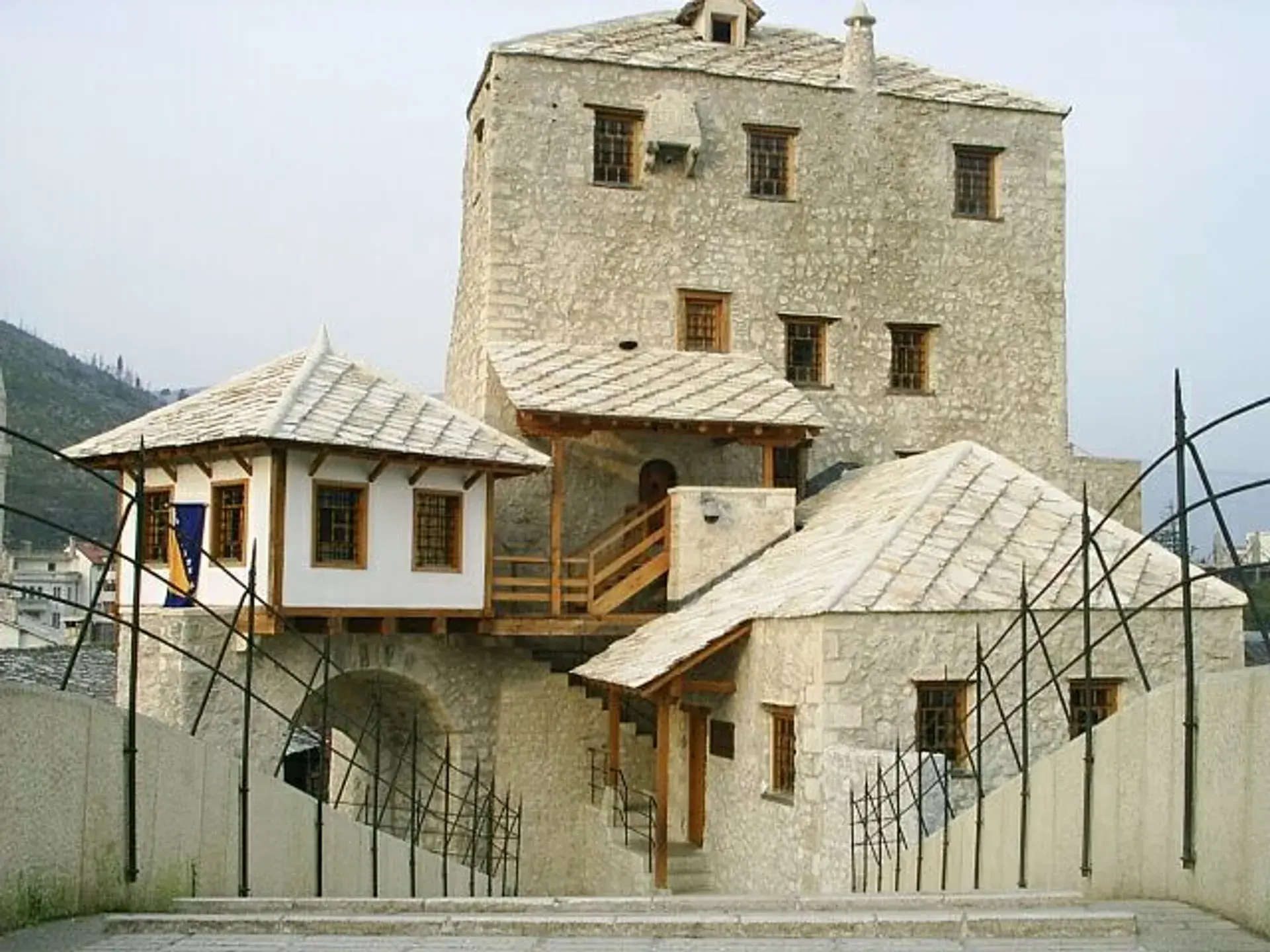
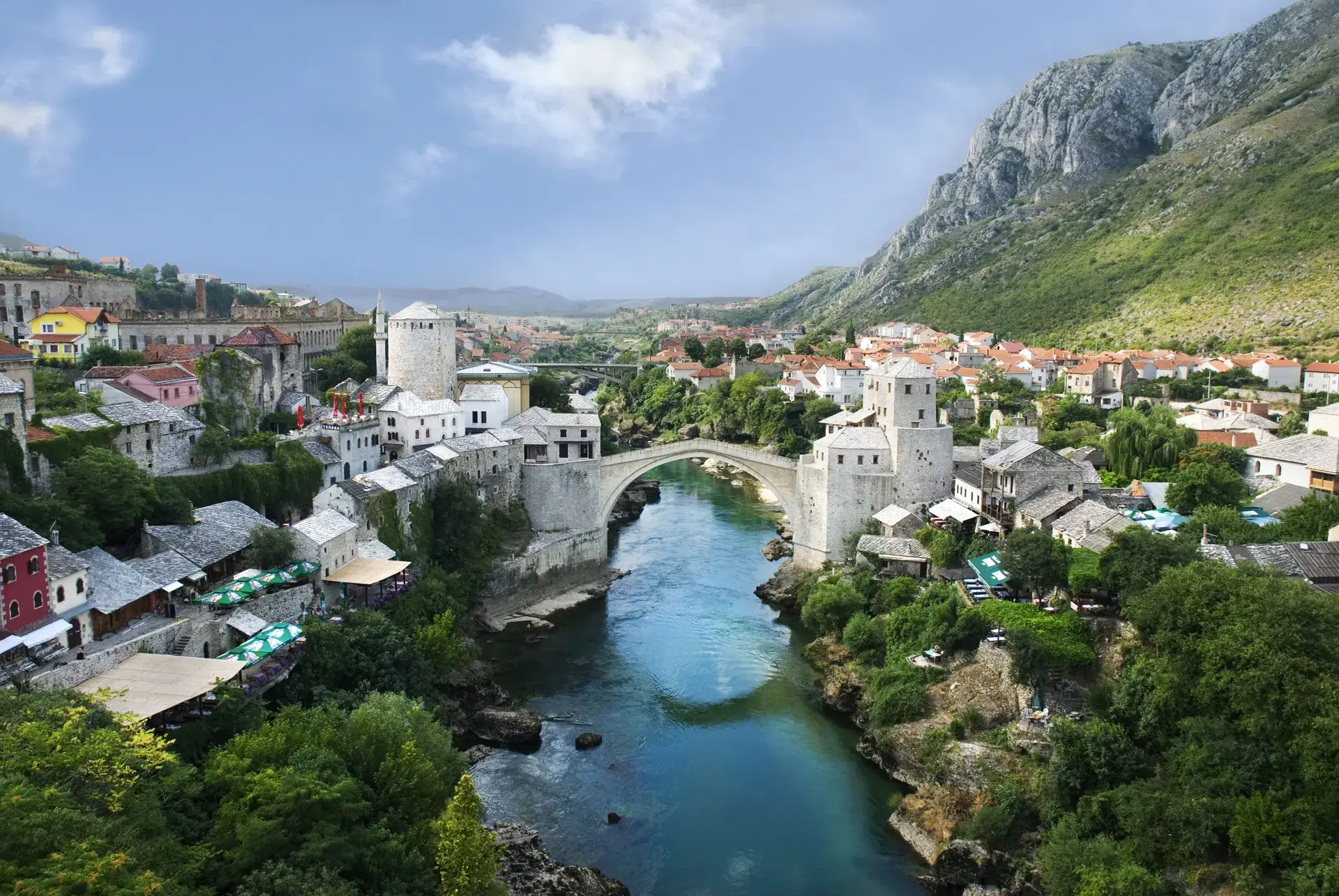
Standing on the western bank of the Neretva River, Halebija Tower anchors the foot of Mostar's iconic Old Bridge (Stari Most). Together with the semi-circular Tara Tower on the eastern bank, this multi-storied rectangular fortress historically controlled passage across the river crossing. In 2005, the structure was inscribed as part of the UNESCO World Heritage Old Bridge Area of the Old City of Mostar.
Halebija Tower was constructed using local porous tenelija and miljevina limestone bound with lime mortar, capped by traditional stone roof slabs known locally as ploče. Its defensive architecture includes thick stone walls pierced by lower embrasures and upper lookout windows, designed to repel assaults and monitor river activity.
Medieval Roots and the Ottoman "Mostari"
Defensive fortifications on this site date back to at least 1452, when earlier outposts guarded a medieval wooden suspension bridge across the Neretva gorge. Following the completion of Mimar Hajruddin's stone arch bridge in 1566 under Ottoman Sultan Suleiman the Magnificent, the western stronghold was formalized as an essential military bastion and barracks for the Ottoman garrison.
The soldiers stationed at Halebija and Tara were referred to as mostari, or bridge keepers. Rather than the bridge taking its name from the settlement, the city of Mostar derived its name directly from these stationed guards.
Between 1680 and 1695, Ottoman captain Osman-aga Halebija oversaw an overhaul of the tower, heightening its walls and converting it into a covered guardhouse (karaula) with soldier living quarters. Local tradition records that Osman-aga received the epithet Halebija not from family origins in Aleppo, but because he taught the classical Islamic jurisprudence text Halabi (Multaqa al-Abhur) at the nearby Karađoz-beg Madrasa.
The Dungeon of Ćelovina
The tower underwent further operational changes between 1714 and 1716 under the governorship of Mustafa Čelić. During this period, the lower ground vault was converted into a dark prison (tamnica), leading locals to refer to the fortification as Ćelovina. While the upper levels continued to serve as barracks and observation decks, prisoners remained confined below.
This role stood in direct contrast to its counterpart across the Neretva. While Halebija served on the western bank as a dungeon and gatehouse, the eastern Tara Tower was designated as the military's gunpowder magazine (barutana).
Modern Restoration and Living Heritage
During the 1992–1995 Bosnian War, Halebija Tower sustained severe structural damage alongside the historic core and the bridge. An extensive international reconstruction program carried out between 1999 and 2004 restored the masonry to its historic condition.
Today, Halebija Tower serves as the headquarters for the Mostar Diving Club (Klub skakača u vodu 'Mostari'), preserving the centuries-old tradition of leaping from Stari Most into the cold waters of the Neretva. The building also houses a small café, souvenir shops, and an art and craft gallery. Alongside its cultural uses, the stone passageways hugging the tower’s base provide pedestrian routes leading down to the rocky riverbank beneath the bridge arch.
FAQ
Why is the tower called Halebija?
The tower is named after Ottoman officer Osman-aga Halebija, who remodeled and heightened it in the late 17th century. Local tradition holds that he earned the name because he taught the legal text 'Halabi' at Mostar's Karađoz-beg Madrasa.
How is Halebija Tower connected to the name of Mostar?
The guards stationed to defend the bridge at Halebija and Tara towers were known historically as 'mostari' (bridge keepers). The city of Mostar took its name directly from these guards.
What was the tower used for during the 18th century?
Between 1714 and 1716, Governor Mustafa Čelić converted the lower levels into a prison called Ćelovina, while the upper floors remained guard quarters and watch posts.
What operates inside Halebija Tower today?
The tower houses the headquarters of the Mostar Diving Club (Klub skakača u vodu 'Mostari'), an art and craft gallery, souvenir shops, and a small café.