Mostar Old Town: History of Stari Most
The Origin of Mostar and Its Bridge Keepers
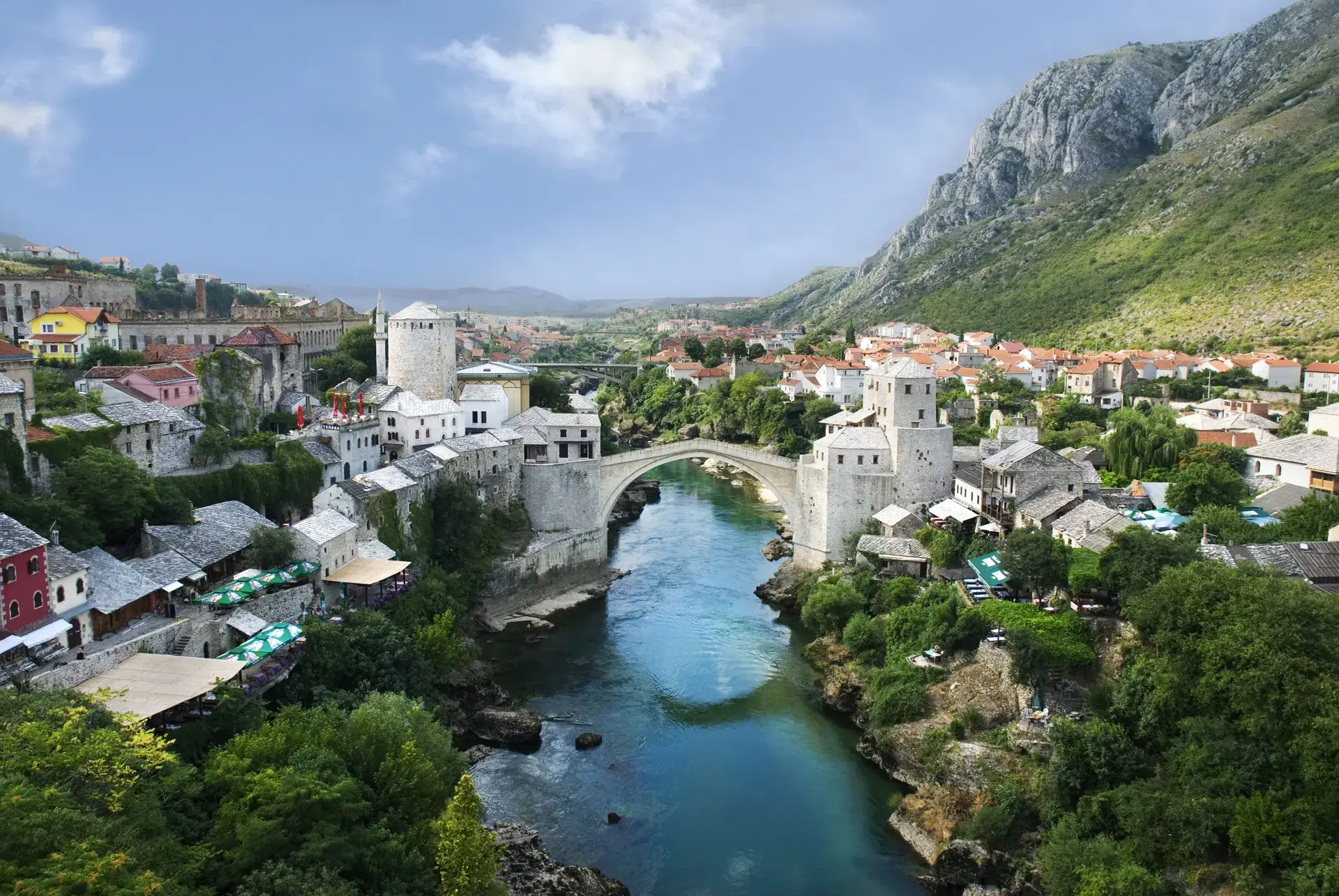
Mostar did not give its name to its famous bridge; rather, the bridge's watchmen gave their name to the city. Before the construction of the stone crossing, the passage over the Neretva River was an unstable medieval wooden suspension bridge that swung violently underfoot. The settlement surrounding the crossing took its name from the mostari, the bridge keepers who guarded the river passage from defensive fortifications on both riverbanks.
In 1557, Ottoman Sultan Suleiman the Magnificent commissioned a permanent stone structure to replace the swaying timber bridge. The project was entrusted to Mimar Hayruddin, a pupil of the imperial chief architect Mimar Sinan. Construction finished in 1566, establishing a physical and cultural link that would define the urban layout of the city for centuries.
Ottoman Architecture and Engineering
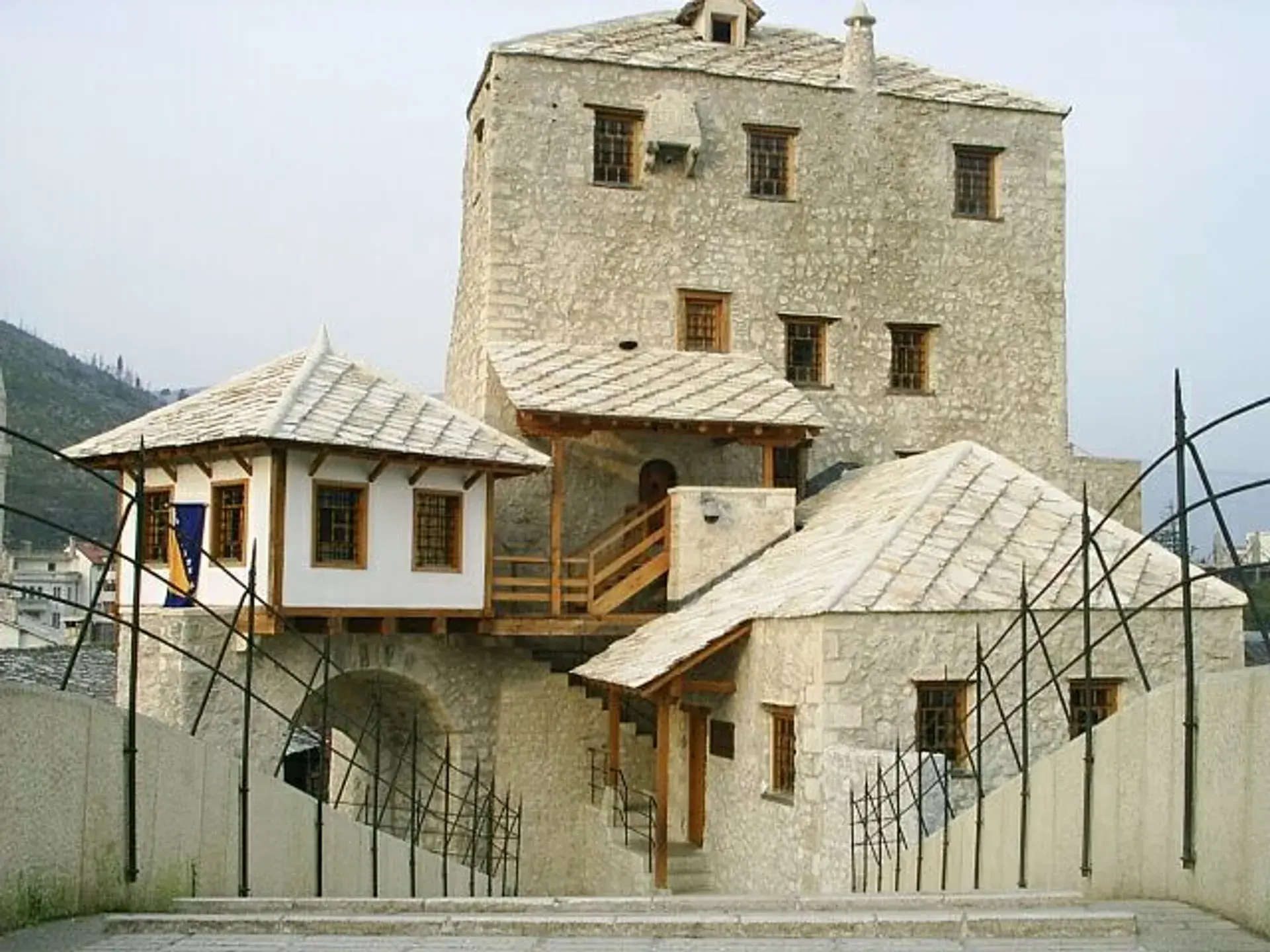
Stari Most consists of a single stone arch spanning between 28.7 and 30 meters, measuring approximately 4 meters in width, and rising 20 to 24 meters above the Neretva River, depending on seasonal water levels. The bridge was built primarily of local Tenelija limestone without piers in the riverbed, anchoring directly into the canyon's natural limestone rock faces. It is defended by two fortified watchtowers: the Tara Tower on the east bank and the Halebija Tower on the west bank.
To ensure structural integrity, Ottoman builders implemented a distinctive joinery system. Instead of relying solely on mortar, the bridge's stone voussoirs were joined using hand-forged iron dowels and cramps fitted into carved stone sockets, then sealed with poured molten lead. This technique created a semi-flexible structure capable of absorbing minor ground settlements without cracking the stone.
Historical accounts and folklore reflect the audacity of the project. Local tradition claims that Hayruddin was so anxious the arch would collapse once the scaffolding was removed—fearing execution by the Sultan—that he prepared his own funeral shroud before the unveiling. A century later, the 17th-century Ottoman traveler Evliya Çelebi wrote that the bridge looked like a frozen rainbow suspended in the air, noting that local youths routinely leapt from the arch into the river like birds.
Destruction and International Reconstruction
The historic bridge stood intact for 427 years. On November 9, 1993, during the Croat–Bosniak War, Stari Most collapsed into the Neretva River following sustained artillery and tank shelling by the Croatian Defence Council (HVO).
Between 2001 and 2004, an international coalition led by UNESCO, the World Bank, and municipal authorities carried out an extensive reconstruction effort. Divers retrieved original Tenelija stone blocks from the riverbed to analyze historic masonry practices, while newly quarried Tenelija stone supplied the rest of the material. The reconstructed bridge was officially inaugurated on July 23, 2004, as a monument of postwar recovery and civic reconciliation. In 2005, the bridge and its surrounding historic center were inscribed as a UNESCO World Heritage Site.
The Historic Quarter Today
Stari Most serves as the central spine of Mostar Old Town, operating as a free, 24/7 pedestrian thoroughfare. It connects the historic artisan quarter of the Old Bazaar (Kujundžiluk) on the east bank with the traditional streets of the west bank. Centuries of foot traffic have polished the Tenelija pavers into a slick surface, requiring carved transverse stone ribs across the bridge deck to provide traction on the steep incline.
The adjoining Tara Tower now houses the Old Bridge Museum, which documents the crossing's architectural history, destruction, and restoration. The bridge also remains an active diving platform. Members of the Mostar Diving Club (Mostarski Ikari) gather contributions from onlookers before leaping into the cold waters below, continuing a centuries-old tradition highlighted by the annual Traditional Old Bridge Diving Competition every July and stops on the Red Bull Cliff Diving tour.
FAQ
How did Mostar get its name?
The city was named after the *mostari*, or bridge keepers, who guarded the river crossing from watchtowers on both sides of the Neretva River.
What materials were used to construct Stari Most?
The bridge was constructed primarily from local Tenelija limestone, with the stones secured using hand-forged iron dowels and cramps sealed in place with poured molten lead.
When was Stari Most destroyed and rebuilt?
The bridge collapsed on November 9, 1993, after sustained artillery shelling during the Croat–Bosniak War. It was reconstructed using historic techniques between 2001 and 2004, reopening on July 23, 2004.
Is the bridge open to pedestrians?
Yes, Stari Most is an active, free pedestrian bridge open 24 hours a day, connecting the Old Bazaar on the east bank with the historic quarters on the west bank.