Koski Mehmed Pasha Mosque: Mostar Landmark Guide
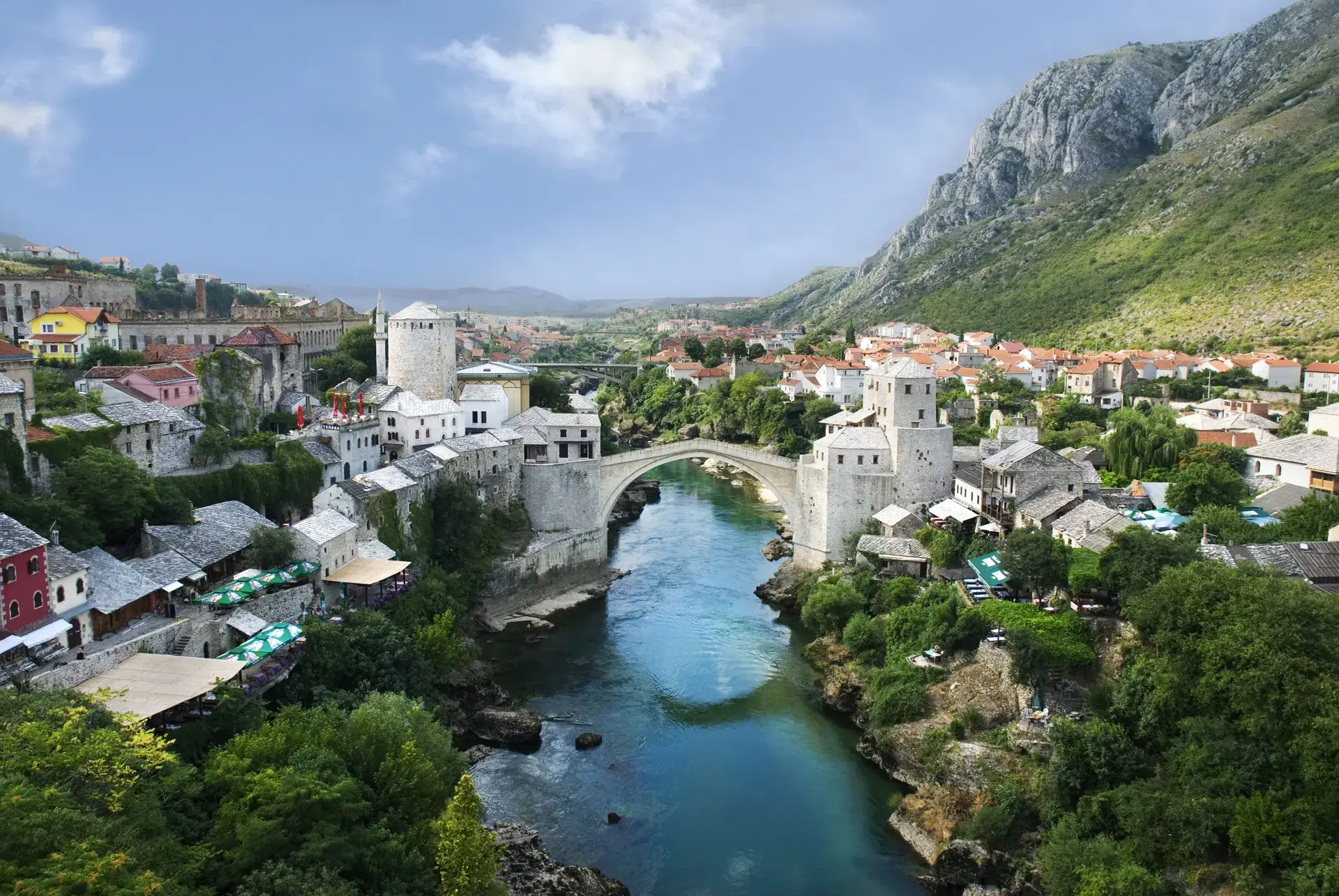
Perched on the rocky left bank of the Neretva River, the Koski Mehmed Pasha Mosque stands as one of Mostar's prominent Ottoman landmarks. Located roughly 150 to 200 meters north of Stari Most, the complex anchors the eastern historic core between the Mala Tepa market and the Kujundžiluk bazaar street. Protected as a National Monument of Bosnia and Herzegovina, it serves both as an active Islamic house of worship and a central heritage destination.
History and Construction
The mosque was endowed by Koski Mehmed Pasha, a Mostar native who served as chronicler to Grand Vizier Lala Mehmed Pasha Sokolović. After retiring in 1606, Mehmed Pasha initiated the construction of the religious foundation in his hometown. Following his death in 1611, the project was continued and completed between 1617 and 1619 by his brother Mahmud. Notably, while Mehmed Pasha left an enduring monument along the river, the location of his death and burial remains historically unrecorded.
Modeled closely after Mostar's Karadžoz Beg Mosque, the ensemble reflects classical imperial Ottoman architecture. During the 1992–1995 conflict, the site sustained severe shelling that brought down the minaret and heavily damaged the dome and courtyard. A major restoration project undertaken between 1996 and 2001 rebuilt the stone minaret and stabilized the complex.
Architectural Complex
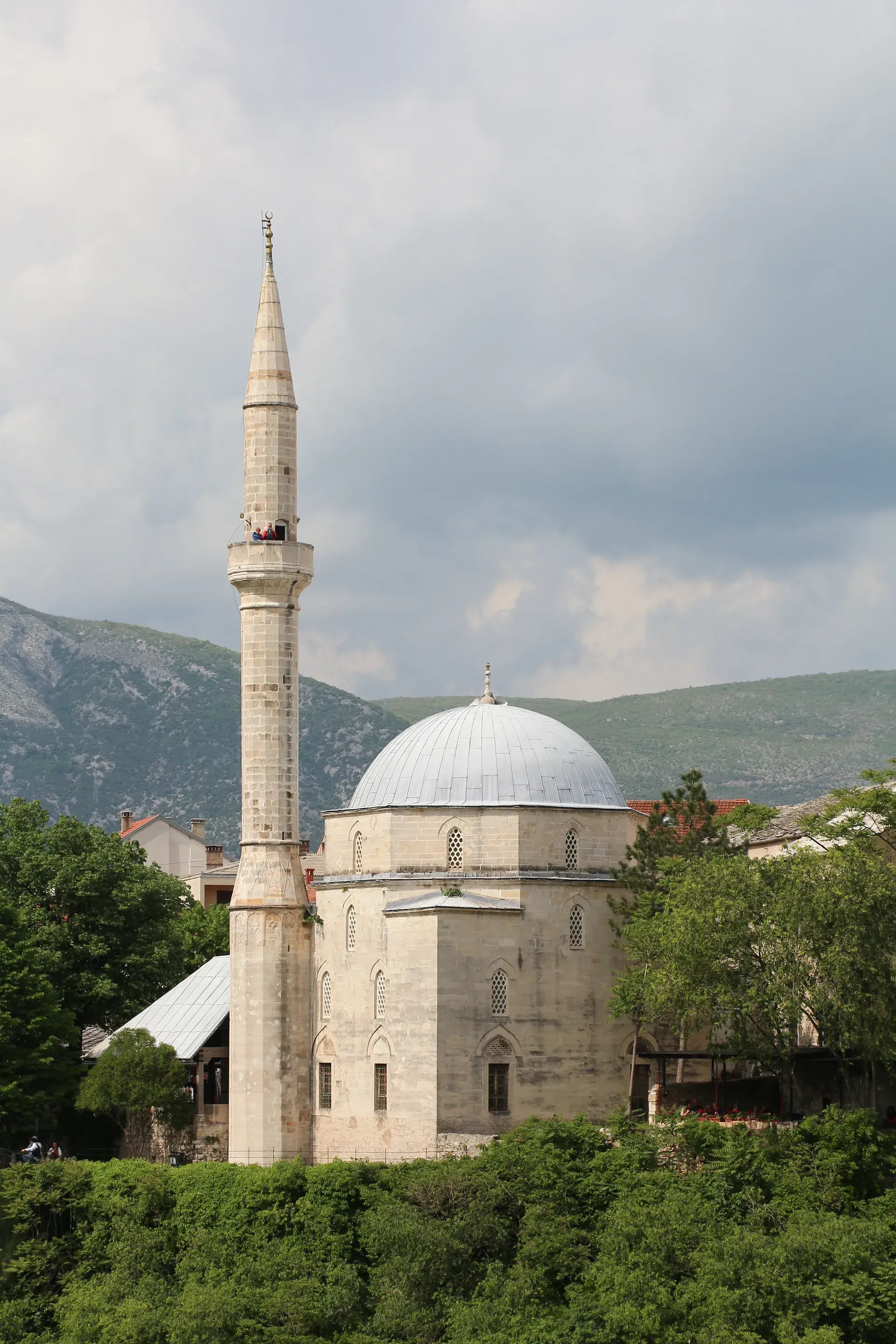
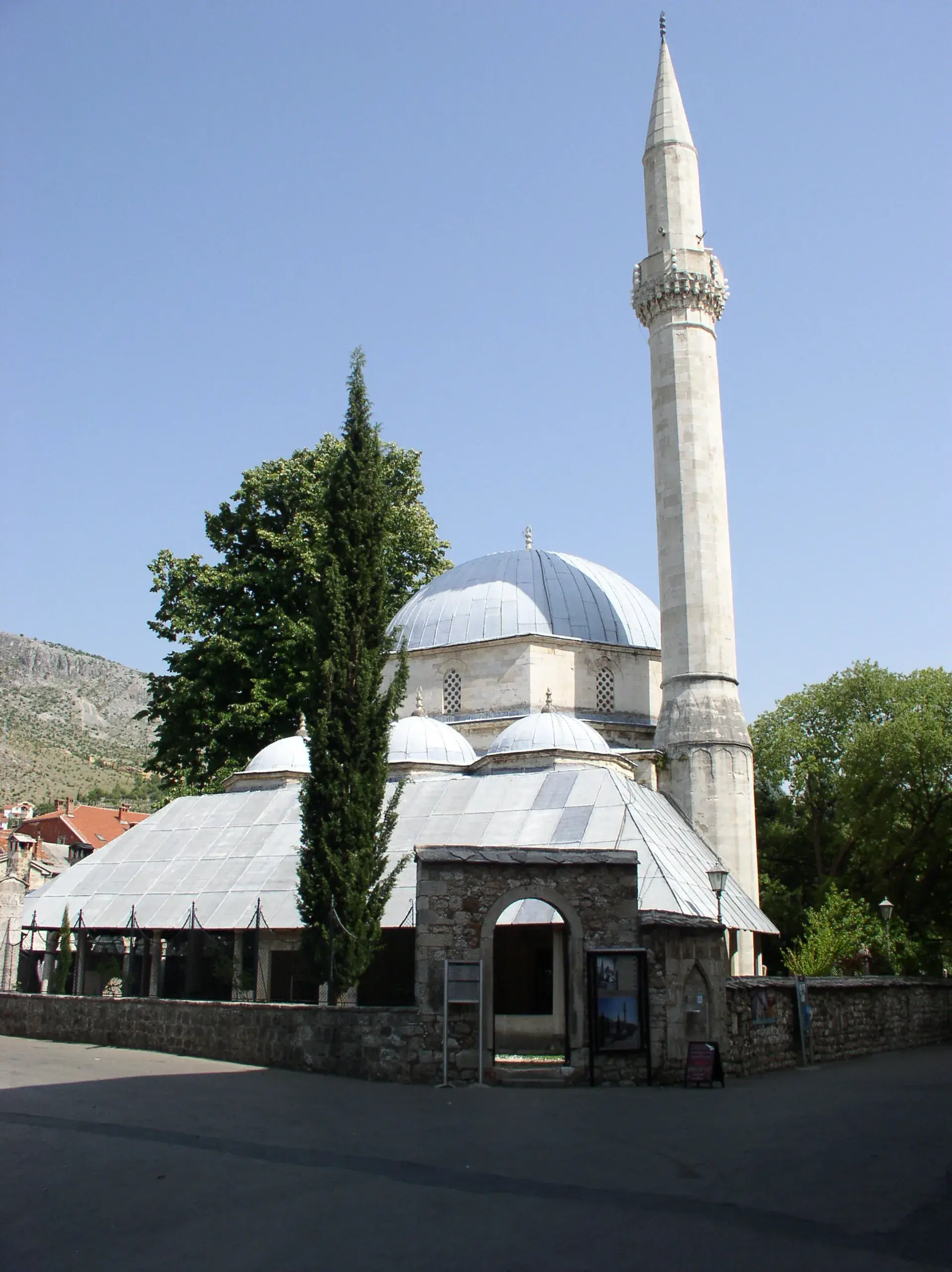
The complex encompasses a variety of interconnected Ottoman structures centered around a paved stone courtyard. The main prayer hall is a compact, single-domed stone building fronted by an entrance porch with three smaller domes and accompanied by a slender stone minaret. Over the entrance portal, a carved stone chronogram records: "Mehmed Pasha built this mosque for the love of God to be in this place. The Holy Spirit spoke its chronogram: 'Temple of God and dwelling of good people'".
Surrounding the prayer hall are several related heritage elements: a former madrasa, a twelve-sided ablution fountain (šadrvan), the turbe (mausoleum) of Sheikh Ishak, and a small cemetery (harem) filled with traditional stone headstones (nišani).
The Riverside Terrace and Stari Most Vista
The position of the complex takes advantage of the Neretva River's natural course. Because the river curves slightly westward at this section of the canyon, the southwest corner of the courtyard terrace directly aligns with Stari Most downstream. This topography frames an unobstructed axial perspective of the bridge arch and the limestone river gorge.
At the edge of the courtyard terrace, the sound of the rushing emerald waters of the Neretva echoes off the canyon cliffs, rising over the ambient murmur of the adjacent bazaar. An open-air café occupies parts of the courtyard terrace, allowing visitors to view the river canyon and watch bridge divers below.
Interior Features and Visiting
Inside the prayer hall, the mosque retains artistic details that distinguish it from many regional Ottoman buildings. Unlike sanctuaries where historic decorations were painted over during modern renovations, this prayer hall preserves visible segments of its original 17th-century wall paintings and dome pigments. The hall also features a historic floor carpet presented as a diplomatic gift by Austro-Hungarian Emperor Franz Joseph I.
Today, the site operates under dual functions. It remains a consecrated place of prayer requiring traditional etiquette and shoe removal during services, while also welcoming ticketed visitors who can tour the prayer hall, step onto the riverside courtyard terrace, and ascend the stone minaret.
FAQ
Who founded the Koski Mehmed Pasha Mosque?
The mosque was endowed by Koski Mehmed Pasha, a Mostar native and chronicler to Grand Vizier Lala Mehmed Pasha Sokolović. Following his death in 1611, it was completed by his brother Mahmud between 1617 and 1619.
Why does the mosque terrace offer such a direct view of Stari Most?
A slight westward bend in the Neretva River aligns the mosque's southwest courtyard terrace directly down the canyon, framing an unobstructed axial view of Stari Most.
What notable artifacts are located inside the prayer hall?
The prayer hall preserves original 17th-century wall paintings and dome pigments, along with a large historic carpet presented as a diplomatic gift by Austro-Hungarian Emperor Franz Joseph I.
What structures make up the mosque complex?
The ensemble includes a single-domed prayer hall, a three-domed porch, a stone minaret, a madrasa, a twelve-sided fountain (šadrvan), a cemetery (harem), the turbe of Sheikh Ishak, and a paved courtyard terminating in a riverside terrace.