Karađoz Beg Mosque: Sinan's Masterpiece in Mostar
Classical Ottoman Architecture in Mostar
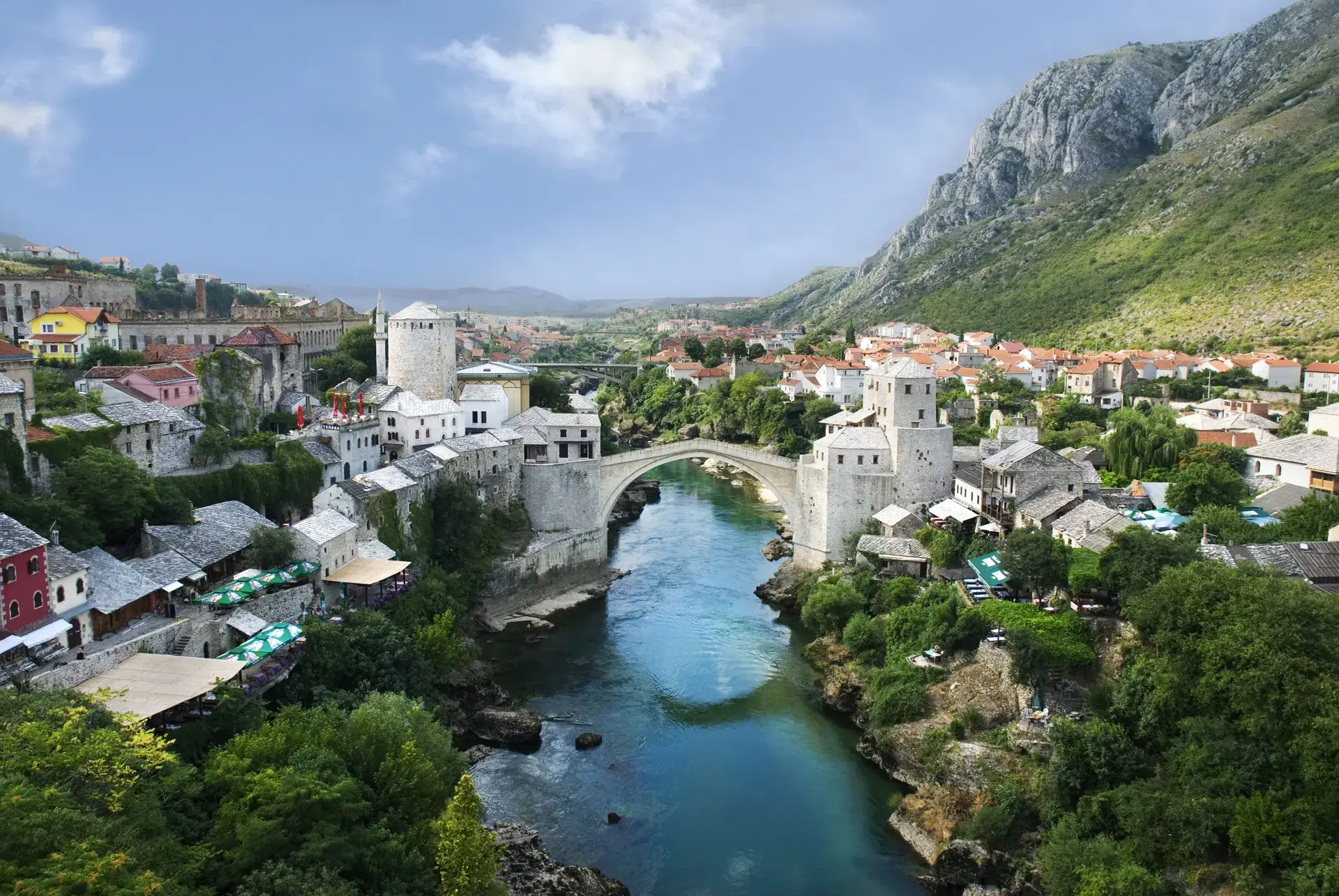
Completed between 1557 and 1558 (965 AH), the Karađoz Beg Mosque (Karađoz-begova džamija) is the largest classical Ottoman single-domed mosque in Herzegovina. Located on Braće Fejića street on the eastern bank of the Neretva River, the monument anchors the civic spine of historic Mostar just north of the Stari Most and Kujundžiluk bazaar. It is formally protected as a National Monument of Bosnia and Herzegovina.
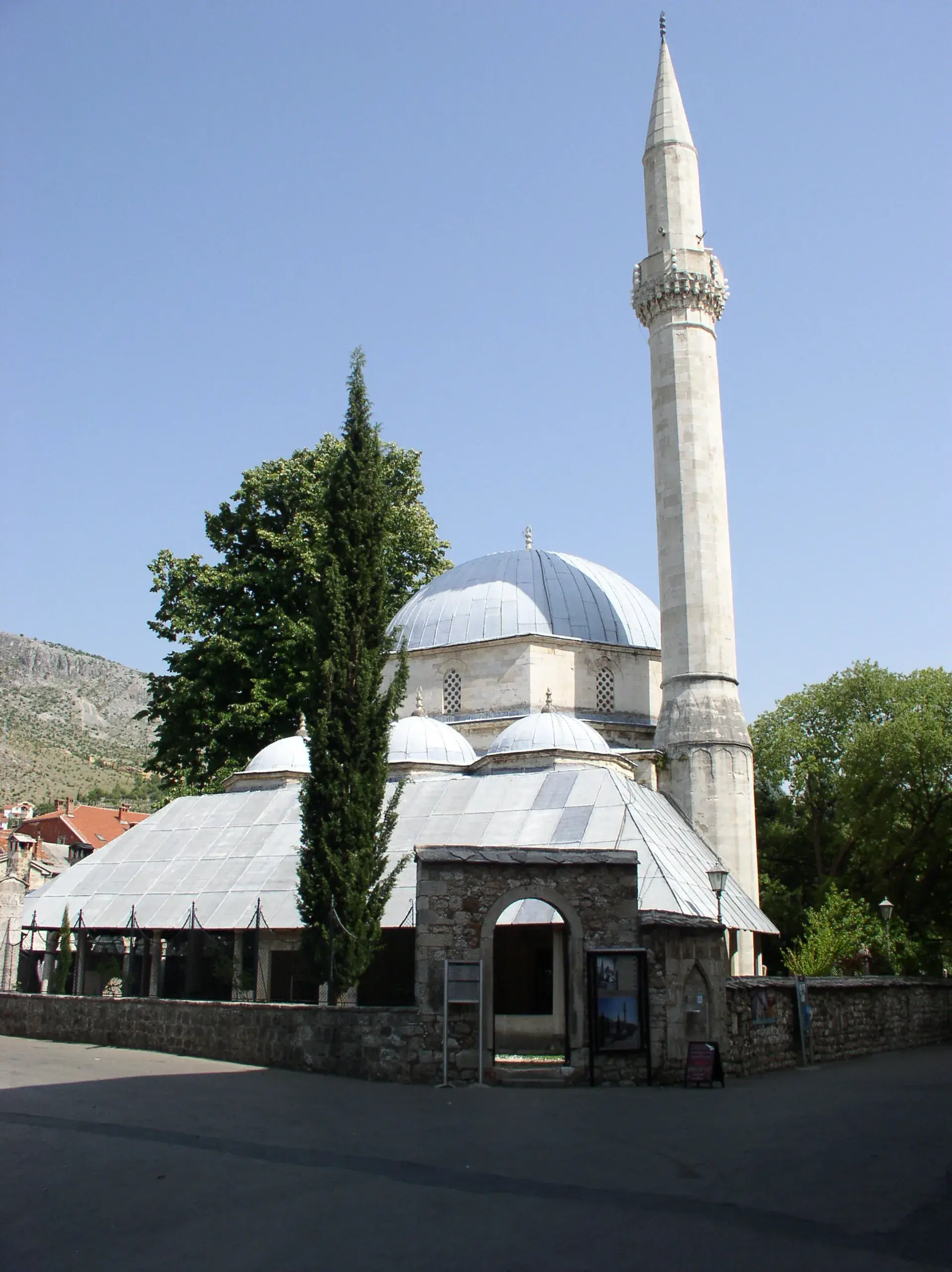
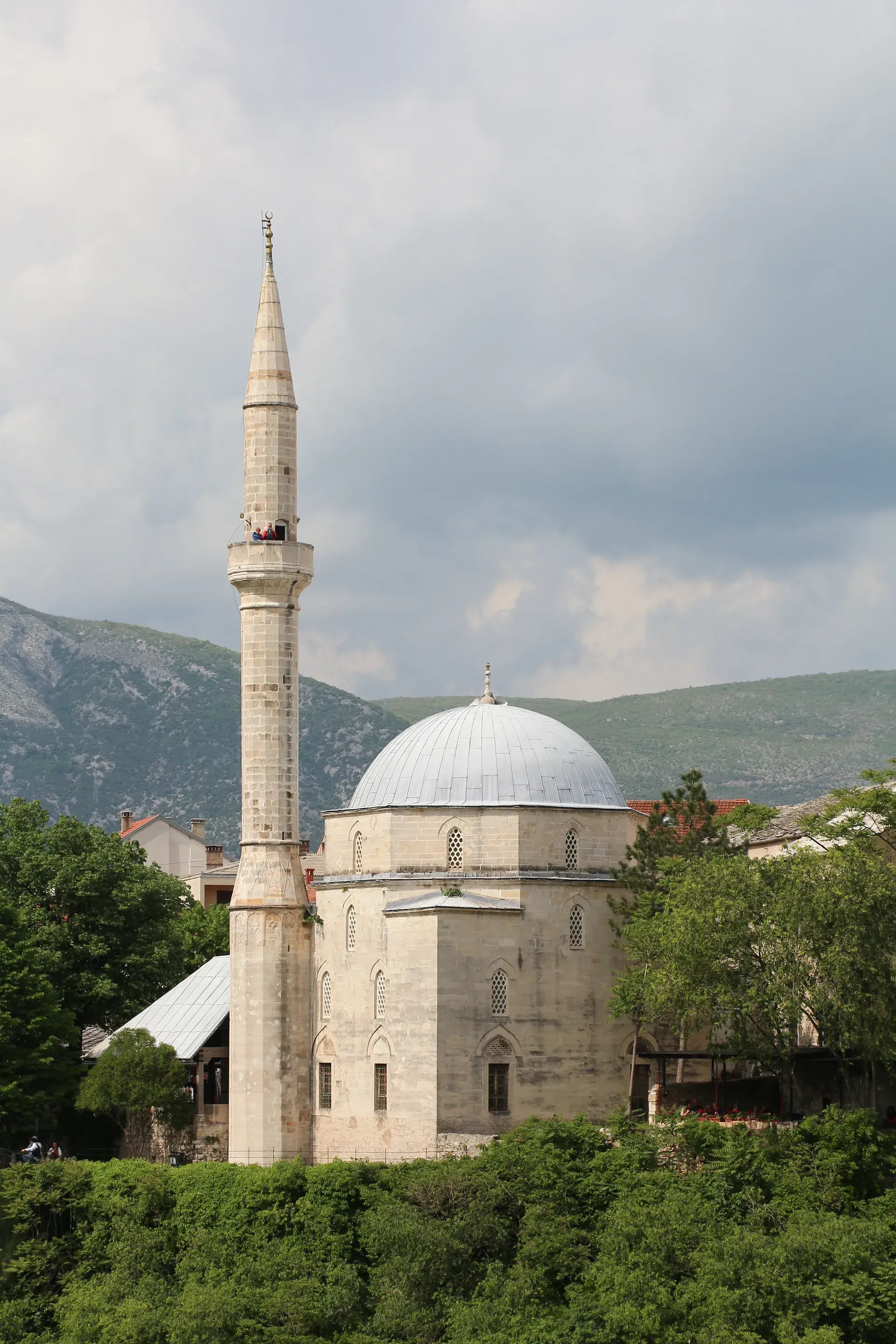
The complex represents one of the rare structures in the region directly recorded in historical inventories of Kodža Mimar Sinan, the Chief Imperial Architect of the Ottoman Empire. The sanctuary consists of a cubic stone hall crowned by a central dome rising roughly 16.5 meters high. Fronting the prayer hall is an open portico supported by stone columns and crowned by three smaller domes, alongside a slender, 34.5-meter polygonal minaret.
Imperial Connections and Patronage
The construction of the mosque occurred during the reign of Sultan Suleiman the Magnificent and was funded by Mehmed-beg Karađoz (Zaim Hadži Mehmed-beg). Mehmed-beg had immediate family connections to the highest levels of the imperial court: he was the brother of Grand Vizier Rüstem Pasha, one of the Ottoman Empire's wealthiest statesmen and Sultan Suleiman's son-in-law. This imperial kinship is explicitly documented in an Arabic inscription above the mosque's entrance.
The patron's moniker "Karađoz" derives from the Ottoman Turkish karagöz, meaning "black-eyed." Rather than connecting to the traditional Ottoman shadow puppet character of the same name, it was an honorific highlighting Mehmed-beg's dark eyes and sharp discernment.
The Courtyard and Surrounding Ensemble
The mosque originally anchored a larger civic and educational complex (külliye). Within the stone-walled courtyard (avlija), the complex incorporates a central ablution fountain (šadrvan), an Ottoman madrasa (Karađozbegova medresa), a library, and a historic cemetery (harem).
The stone boundary wall shields the interior from the bustle of Braće Fejića street, creating an environment dominated by shaded limestone and the water running from the central šadrvan. Behind the main prayer hall, the cemetery holds some of Mostar's oldest Muslim tombstones (nišani). These grave markers are crowned with hand-carved stone turbans that reflect the administrative offices and societal ranks held by the deceased.
Wartime Destruction and Rebuilding
The building sustained blast damage during World War II and suffered catastrophic destruction during the 1992–1995 Bosnian War. Heavy artillery shelling collapsed the 34.5-meter minaret, shattered the main dome, and devastated the columned porch.
Between 2002 and 2004, the complex underwent reconstruction using traditional stonecutting techniques to recreate the original Ottoman craftsmanship. Following this comprehensive restoration, the mosque reopened to the public in 2004.
Modern Use and Access
Karađoz Beg Mosque remains an active site of Islamic worship administered by the Majlis of the Islamic Community of Mostar. Regular daily prayers are observed inside the hall.
Outside of prayer services, the walled courtyard and interior sanctuary are open to visiting travelers for an admission fee. Periodic access is also granted to climb the internal staircase of the minaret, which provides elevated views across Mostar's historic core.
FAQ
Who designed the Karađoz Beg Mosque?
The mosque was designed by the Ottoman Empire's Chief Imperial Architect, Kodža Mimar Sinan, and is documented in the historical registries of his architectural works.
What is the meaning of the name Karađoz?
The name comes from the Ottoman Turkish word "karagöz," meaning "black-eyed." It was a nickname given to the founder, Mehmed-beg, in reference to his dark eyes and keen discernment.
Can visitors enter the Karađoz Beg Mosque?
Yes. Outside of regular prayer times, the walled courtyard and the interior prayer hall are open to visitors for an admission fee, with occasional access granted to climb the minaret.