Gavrankapetan House in Počitelj: History & Design
Ottoman Architecture and Hillside Setting
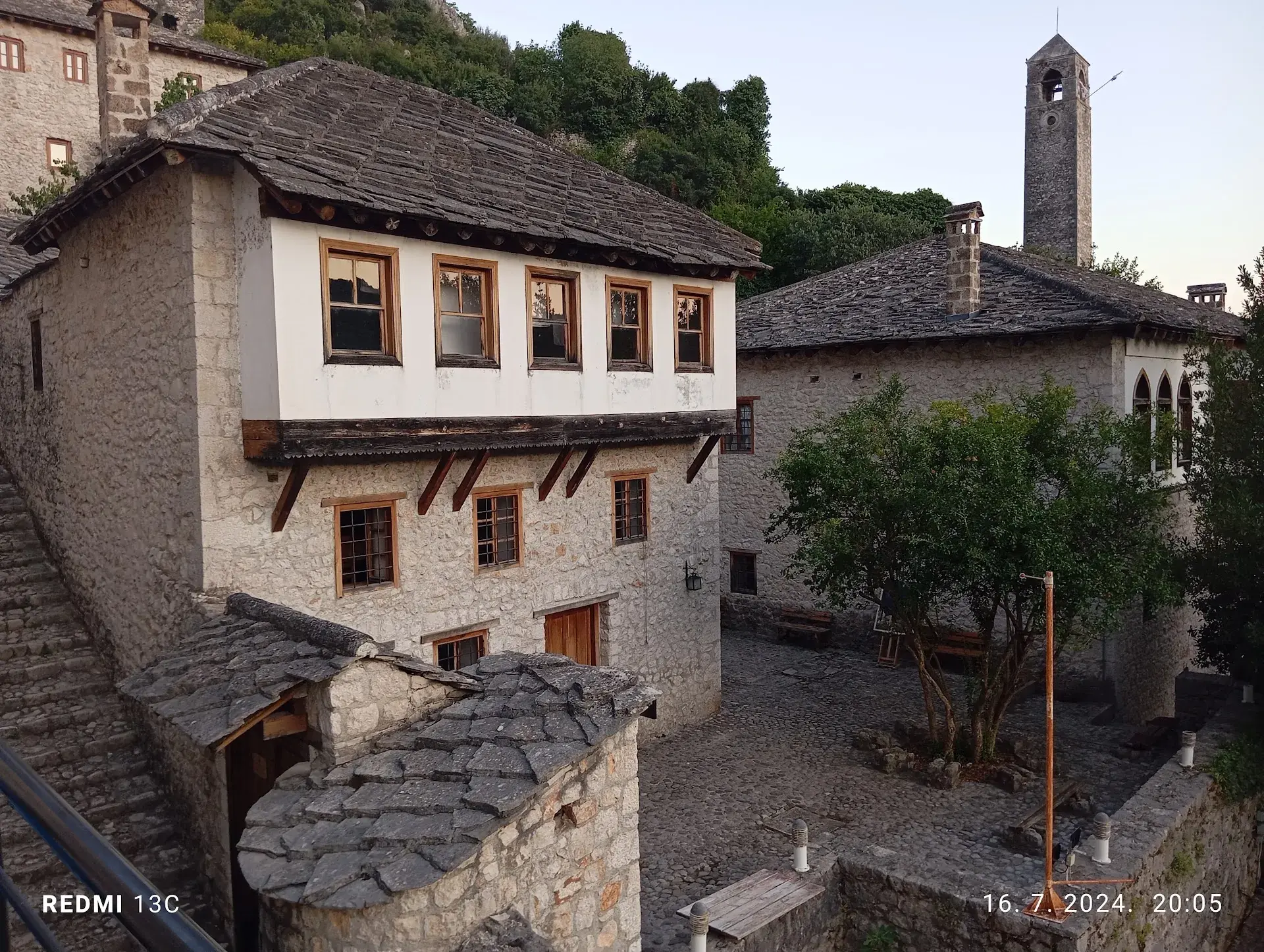
The Gavrankapetan House (Gavrankapetanovića kuća) is the largest residential ensemble in Počitelj, located on the town's terraced hillside within the Herzegovina-Neretva Canton. Developed in stages across the 16th and 17th centuries, the property consists of three interconnected stone buildings: a central residence and two smaller auxiliary wings. Situated midway up the slope along the cobblestone paths that connect the lower civic center—housing the mosque, hammam, medresa, and han—with the hilltop citadel, the complex reflects the domestic status of Počitelj's former governing class.
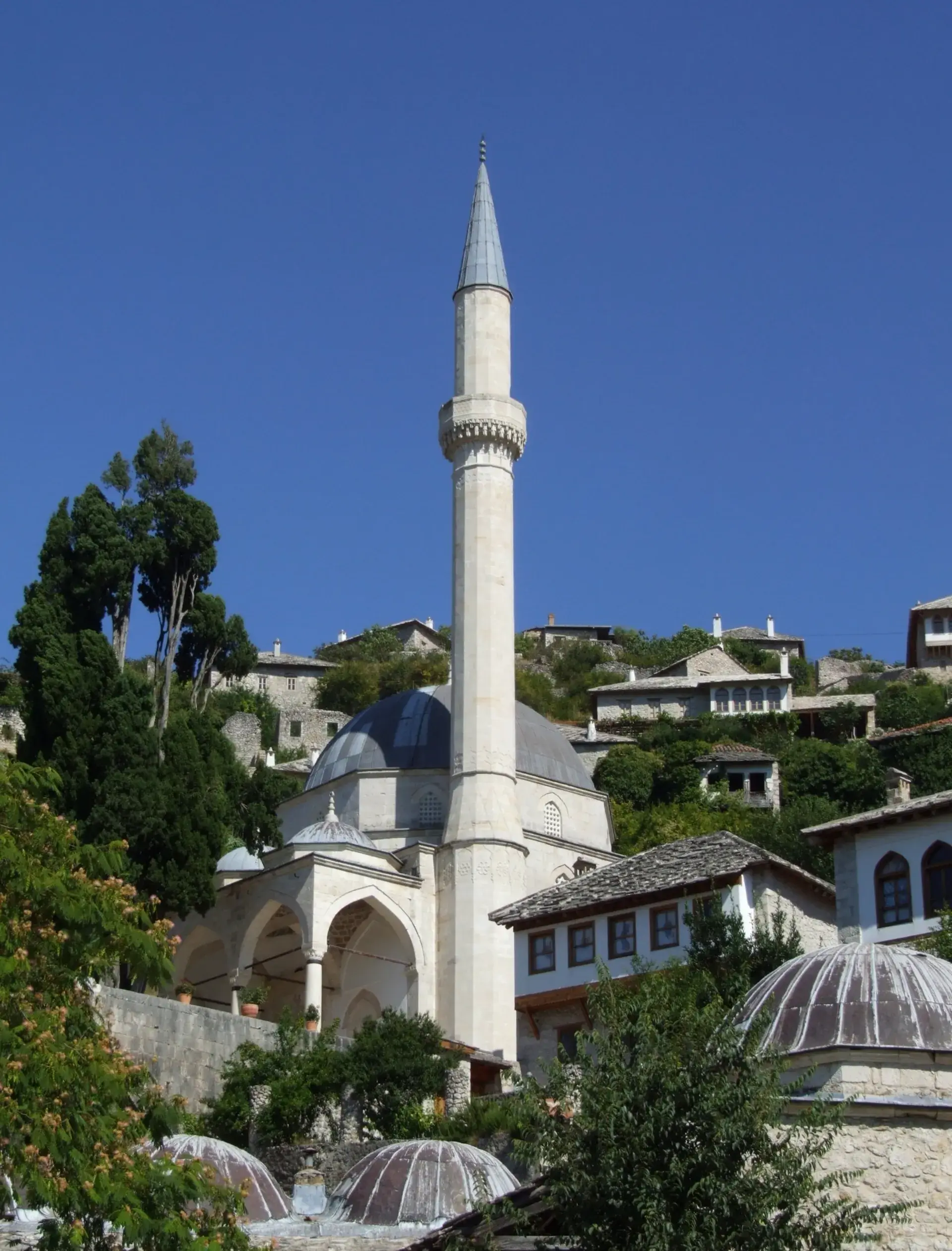
The complex showcases vernacular Ottoman-Mediterranean design, combining heavy limestone masonry on the lower levels with timber ceilings, exposed wooden beams, and plastered upper floors. Enclosed stone-paved courtyards (avlije), entered via a stone gateway, transition into elevated residential rooms. On the western facade's upper story, a continuous row of closely set rectangular windows overlooks the surrounding stone roofs, the Šišman Ibrahim Pasha Mosque, and the Neretva River below. The residence is unique as the only surviving private house in Počitelj constructed with entirely divided architectural sections for public administration (selamluk) and private domestic life (haremluk).
The Seat of the Počitelj Captains
During the 18th and early 19th centuries, the compound served as the official seat of the Gavrankapetanović family, hereditary captains (kapetani) who presided over the Počitelj Captaincy (Počiteljska kapetanija). A central figure in the family's lineage was Smail-beg, also known as Smail Gavran-kapetan, who governed from 1782 to 1820. During his administration, the settlement transitioned into an administrative district, or kadiluk.
Two regional traditions account for the family's distinctive surname. One account claims that a prominent captain had a beard and hair so dark that locals referred to him as Gavran, the Bosnian word for raven. A second tradition traces the name to the 15th-century Hungarian monarch King Matthias Corvinus, whose heraldic shield featured a raven; according to this lore, a flag left behind in the citadel after Corvinus fortified Počitelj in the 1460s later influenced the Ottoman captains' title.
International Art Colony and Restoration
After falling into disrepair by the mid-20th century, the state acquired the complex from the remaining owners in the early 1960s to safeguard its structure. Following a restoration process that began in 1961, the house officially reopened on September 27, 1964, as the base of the Počitelj International Art Colony (Međunarodna likovna kolonija Počitelj), founded by the Association of Visual Artists of Bosnia and Herzegovina (ULUBiH). Over several decades, the institution welcomed international creators, including Italian painter Vittorio Miele, developing into the longest continuously operating international artists' colony in Southeast Europe.
The complex suffered extensive damage and was burned during the 1992–1995 Bosnian War. In 2003, it underwent systematic reconstruction under a state protection initiative for Počitelj. That same year, as part of the Historic Urban Site of Počitelj, the house was designated a National Monument of Bosnia and Herzegovina and placed on the UNESCO Tentative List. Today, ULUBiH continues to operate the property as a creative center, exhibition gallery, and residency venue, hosting workshops and cultural programs such as the annual Trešnjeva nedjelja (Cherry Sunday) gathering each June.
FAQ
What makes the Gavrankapetan House architecturally unique in Počitelj?
It is the only surviving private residence in Počitelj designed with completely distinct architectural sections for public affairs (selamluk) and private family life (haremluk).
How is the Gavrankapetan House used today?
The complex serves as the headquarters, residential facility, and gallery for the Počitelj International Art Colony, hosting workshops, exhibitions, and seasonal cultural gatherings such as Cherry Sunday (Trešnjeva nedjelja).
Which historical figures governed from the Gavrankapetan House?
The house was the hereditary seat of the Gavrankapetanović captains of the Počitelj Captaincy, including Smail-beg (Smail Gavran-kapetan), who led the district from 1782 until 1820.
Discover Pocitelj like never before
Dive into Pocitelj hidden stories and secret spots with Ciceru interactive tours.
Explore tour
Audioguide
Quizzes
Maps
Solo
Couples
Groups & families

© Photo by Elvir Purisevic via Google Maps · Google Places