Počitelj Fortress: Citadel Above the Neretva
A Karst Stronghold Above the Neretva
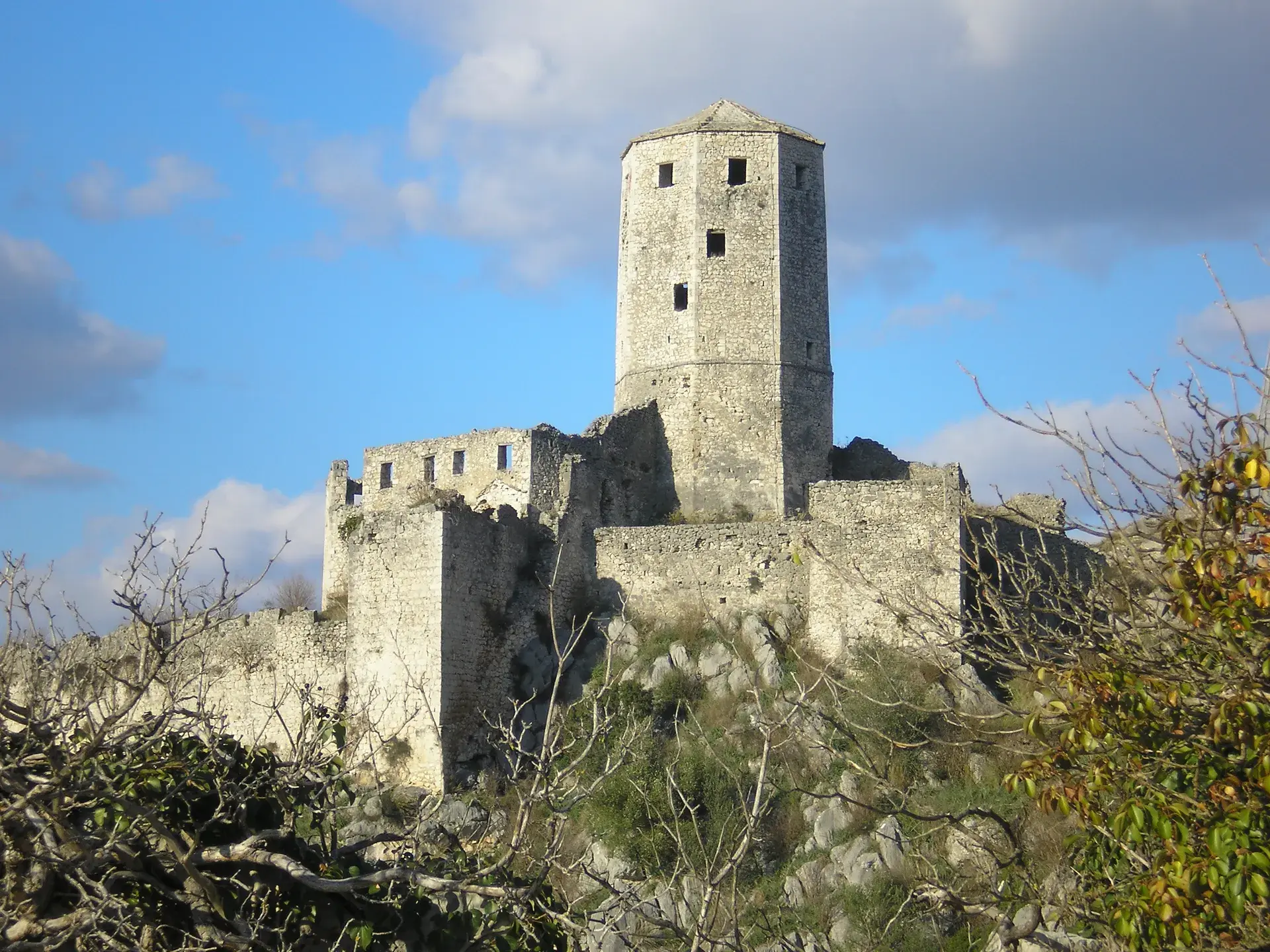
The Počitelj Citadel (Počiteljska tvrđava) rises from a steep karst bluff on the left bank of the Neretva River within the Čapljina municipality, roughly 30 kilometers south of Mostar. Positioned at the highest northern crest of a natural limestone amphitheater, the complex crowns the historic town below. Designated as a National Monument of Bosnia and Herzegovina in 2003 and placed on the country's UNESCO World Heritage Tentative List, the fortress stands as a layered testament to medieval and Ottoman military engineering.
The layout of the site is dictated by its vertical topography. Unlike many European medieval fortifications, the citadel was constructed without a defensive ditch or dry moat. The natural limestone cliffs drop precipitously down to the river gorge, presenting a sheer natural barrier that made standard siege equipment and infantry assaults impractical.
Medieval Foundations and Strategic Conflicts
Fortifications at the site began in 1383 under King Tvrtko I of Bosnia. The position served as a vital guard post along the Neretva trade corridor, which connected the inland territories of Bosnia with coastal Dalmatian trading hubs, notably Drijeva near Gabela. The fortress soon entered broader European diplomatic records, earning explicit mentions in mid-15th-century charters issued by King Alfonso V of Aragon in 1444 and Holy Roman Emperor Frederick III in 1448.
Following the Ottoman conquest of central Bosnia in 1463, the stronghold became a strategic frontline outpost. Hungarian King Matthias Corvinus reinforced the citadel with a royal garrison between 1463 and 1471, drawing financial subsidies from both the Papacy and the Republic of Dubrovnik to fortify the perimeter against Ottoman advances. Despite these defensive investments, Ottoman forces took the fortress in 1471 after a short siege.
Ottoman Reinforcement and the Captaincy Era
Under Ottoman administration, the fortress was overhauled to meet the demands of early modern artillery. Builders retrofitted its medieval towers with embrasures for firearms, strengthened the curtain walls, and supported the expansion of the urban settlement that cascaded down the hillside toward the riverbank.
The citadel gained renewed strategic importance after Venetian troops seized and destroyed the downstream fortress of Gabela in 1698. To protect the border against Venetian Dalmatia, Počitelj was elevated to the seat of an Ottoman military captaincy. Local command was held by the Gavrankapetanović lineage throughout the 18th and 19th centuries. Although the complex was founded centuries earlier by Bosnian royalty, its central keep is still known primarily as Gavran-Captain's Tower (Gavrankapetanova kula).
When Austria-Hungary assumed administrative control over Bosnia and Herzegovina in 1878, the stronghold lost its military purpose. This cessation of military utility spared the citadel from late-19th-century industrial development and modernization, preserving its stonework and early urban context.
Architecture of the Keep and Ramparts
The most prominent structure of the citadel is Gavran-Captain's Tower, a polygonal limestone keep featuring walls roughly two meters thick. The keep connects directly to an enclosed stone courtyard (obor) that perches directly above the river chasm. At the upper ridgeline, the fortification network links to the Pasha's Bastion (Pašina tabija), a semicircular artillery battery.
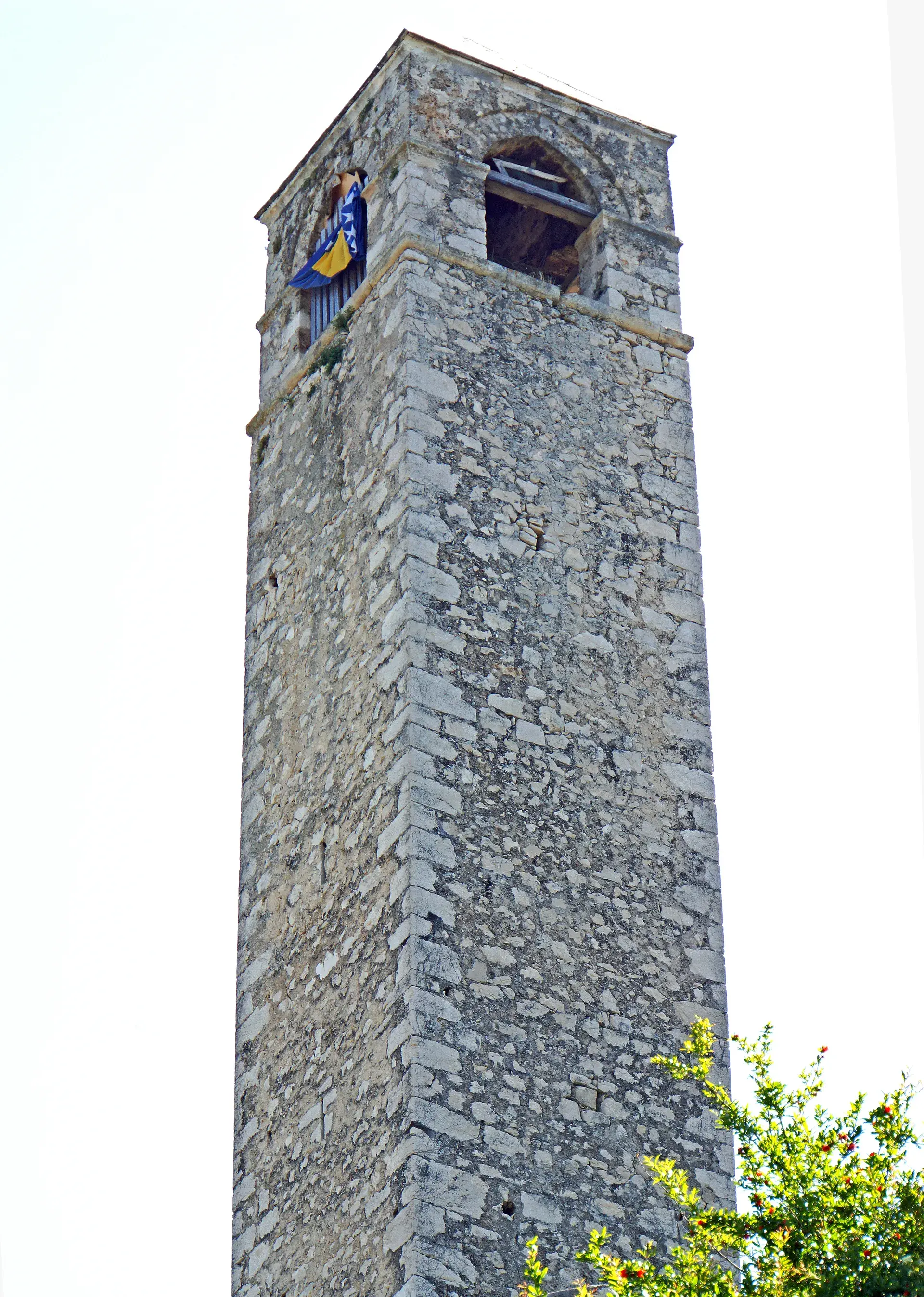
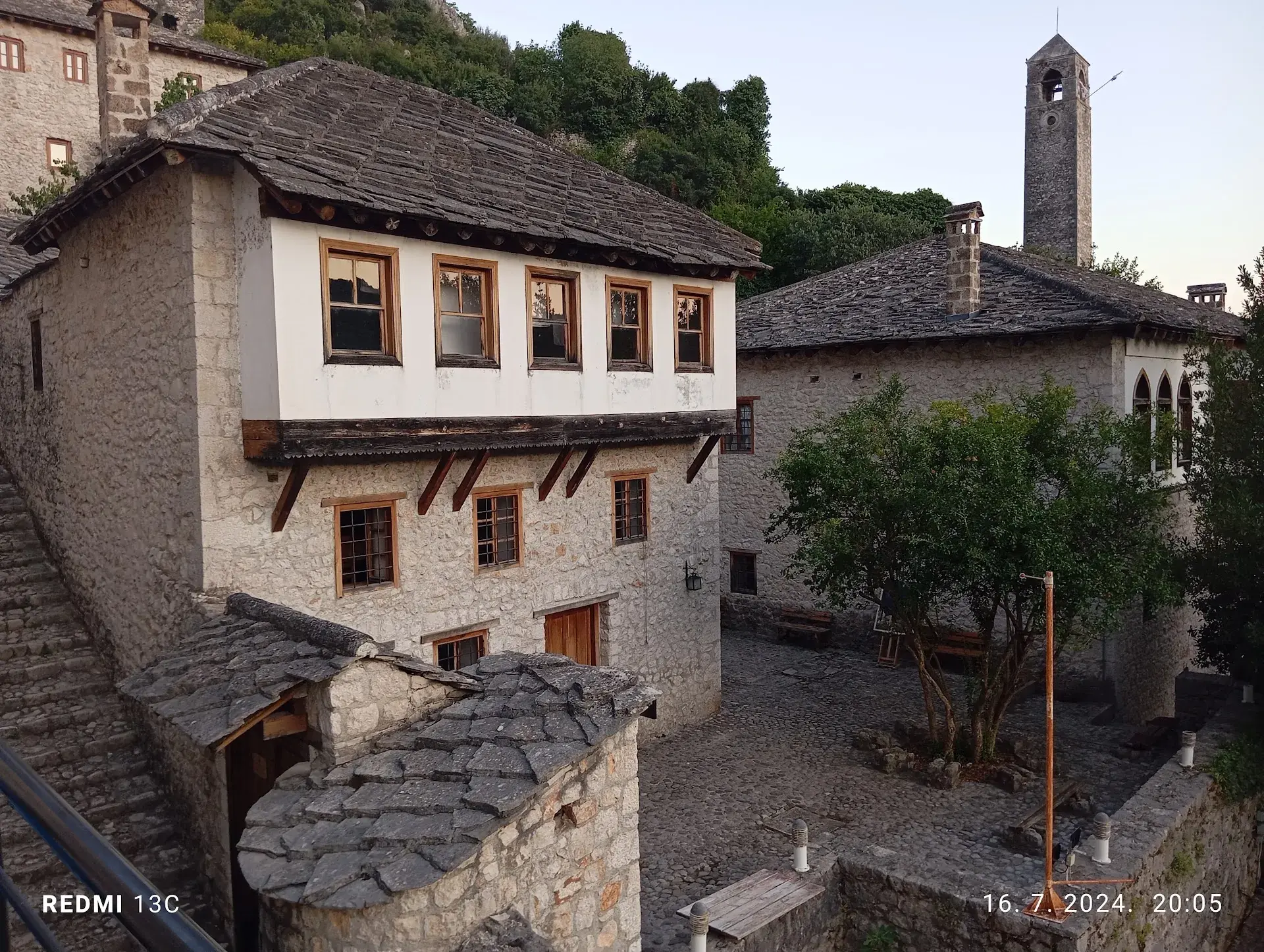
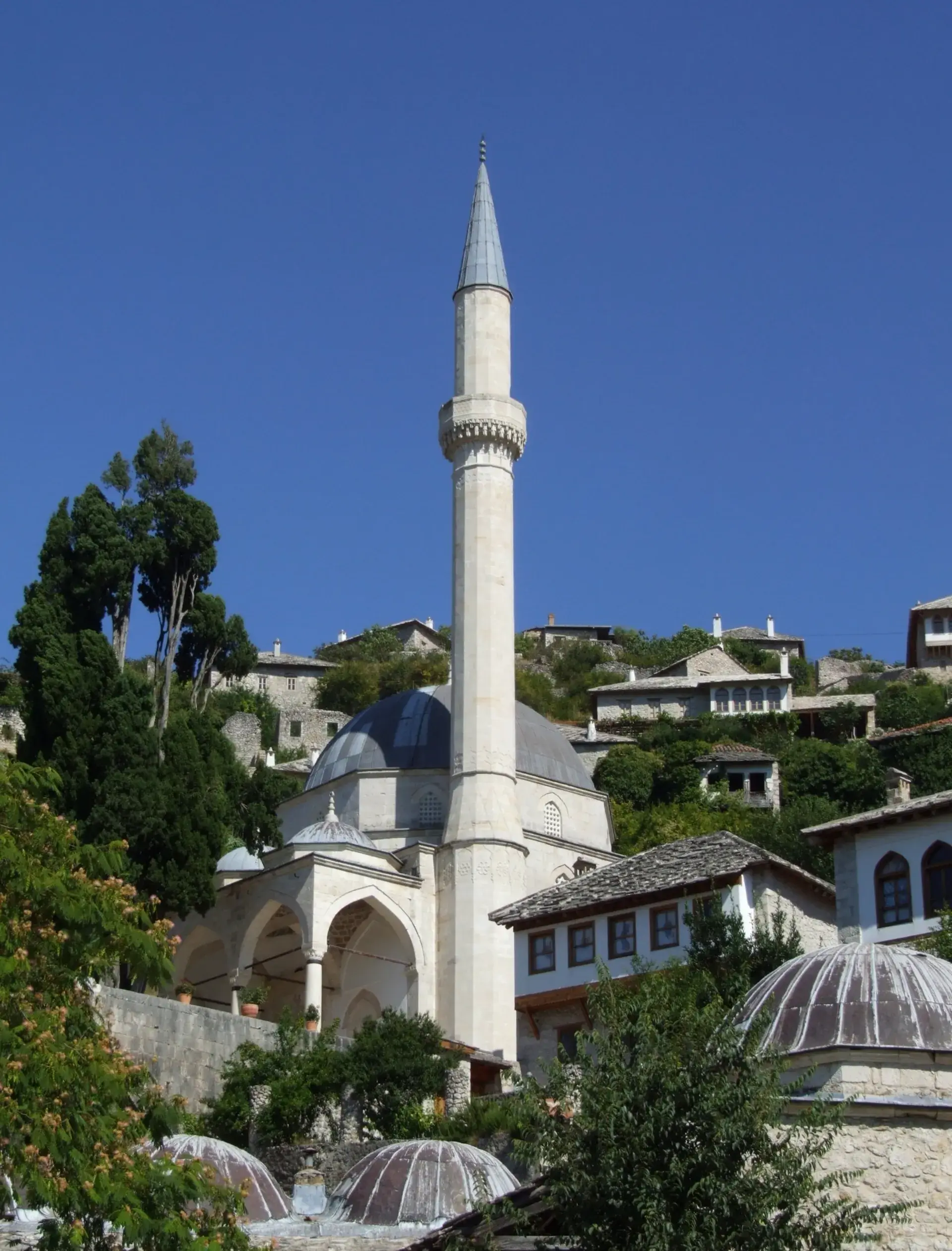
The limestone masonry of the complex is weathered by canyon winds that funnel through narrow arrow slits and cannon ports, carrying the scents of wild fig, scrub, and pomegranate rooted in the stone joints. Below the citadel walls, the historic settlement fans out down the hillside, framing landmarks such as the 16th-century Hadži Alija Mosque, a madrasa, a public bathhouse (hamam), and a 17th-century freestanding clock tower.
Preservation and Modern Heritage
During the conflict between 1992 and 1996, the historic settlement suffered structural damage and subsequent decline, leading to its inclusion on the World Monuments Watch list of the 100 Most Endangered Sites in 1996 and 1998. These listings prompted international survey and conservation efforts across the town.
Preservation challenges continued in 2020 when exposure and deteriorating structural woodwork caused a partial collapse of the timber-and-slate roof on Gavran-Captain's Tower. A municipal and federal restoration program successfully rebuilt the historic roof framing in early 2023.
Today, the citadel functions as a freely accessible open-air architectural monument reached by steep stone-paved stairs (kaldrma). It also remains closely tied to regional culture: since 1964, the lower settlement has hosted the Počitelj International Art Colony, making the high stone keep one of the most frequently painted landmarks in modern Bosnian landscape art.
FAQ
Why does the Počitelj Citadel lack a defensive moat?
The fortress relies on natural topography rather than artificial ditches. The limestone karst bluff drops vertically toward the Neretva River, forming a natural cliff barrier that prevented the approach of siege equipment.
Who was the fortress named after?
Although founded by medieval Bosnian King Tvrtko I, the main keep is known as Gavran-Captain's Tower after the Gavrankapetanović family, hereditary captains who commanded the Ottoman stronghold during the 18th and 19th centuries.
What role did Hungary play in the history of the citadel?
Between 1463 and 1471, King Matthias Corvinus of Hungary garrisoned and reinforced the fortress as a frontline barrier against Ottoman forces, supported by funds from Dubrovnik and the Papacy.
When was the roof of Gavran-Captain's Tower restored?
Following a partial collapse caused by weathered timber framing in 2020, reconstruction of the tower's timber-and-slate roof was completed in early 2023.