Shishman Ibrahim Pasha Mosque in Počitelj
Ottoman Origins and Architecture
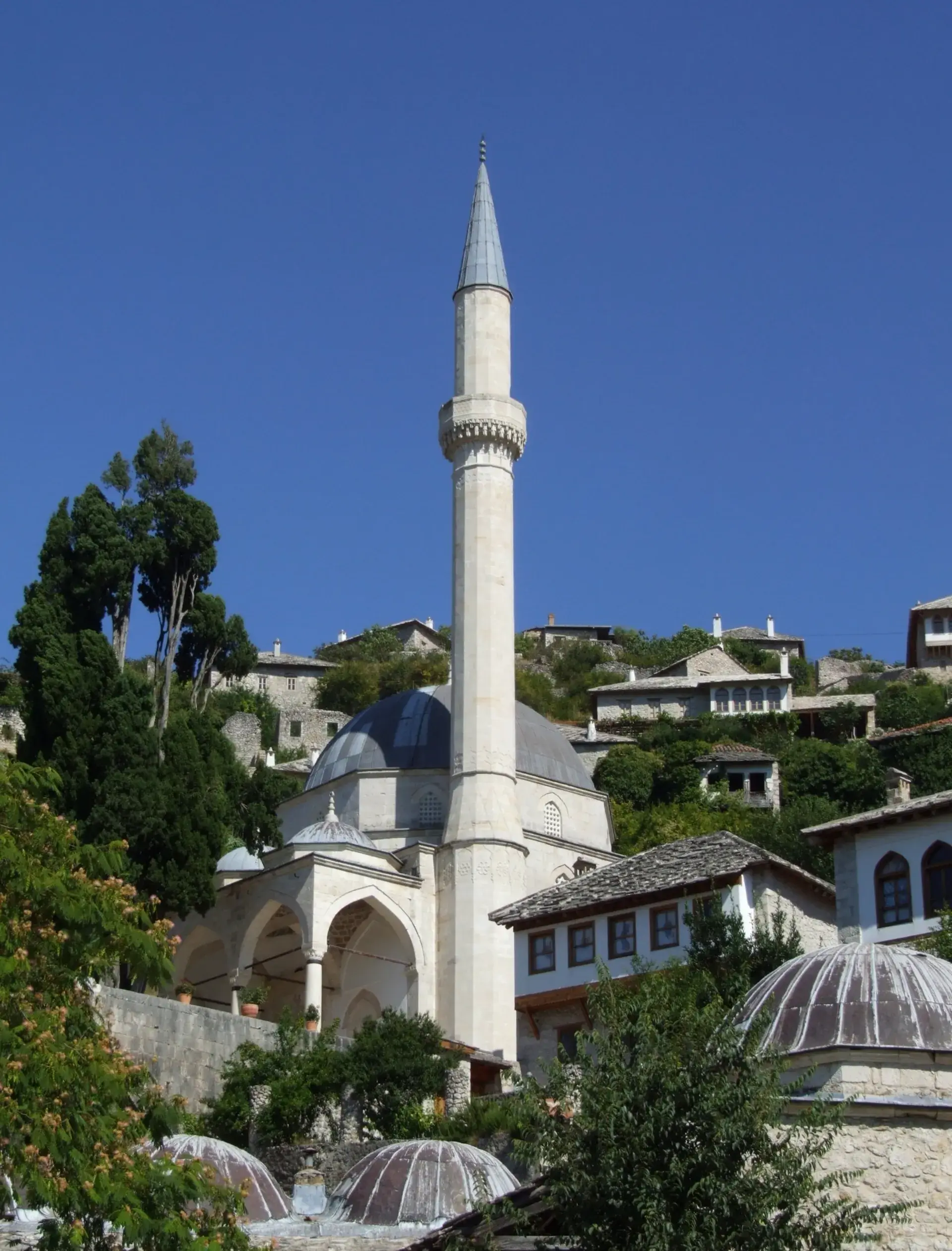
Commissioned in 1562–1563 (AH 970) by Hadži-Alija, son of Musa, the Hadži Alija Mosque—frequently referred to as the Šišman Ibrahim Pasha Mosque—stands as a prime example of classical Ottoman provincial architecture. Built from the warm-toned local limestone of the Neretva Valley, the structure features a square prayer hall crowned by a central stone- and lead-covered dome, an arcaded portico resting beneath three small domes, and a single slender stone minaret.
Roughly a century after its initial construction, around 1664, the Ottoman vizier Šišman Ibrahim Pasha funded comprehensive repairs and established extensive endowments for the surrounding complex. Because of his substantial patronage, his name became linked to the site, leading to the mosque being recognized interchangeably by both titles.
The Urban Core of Počitelj
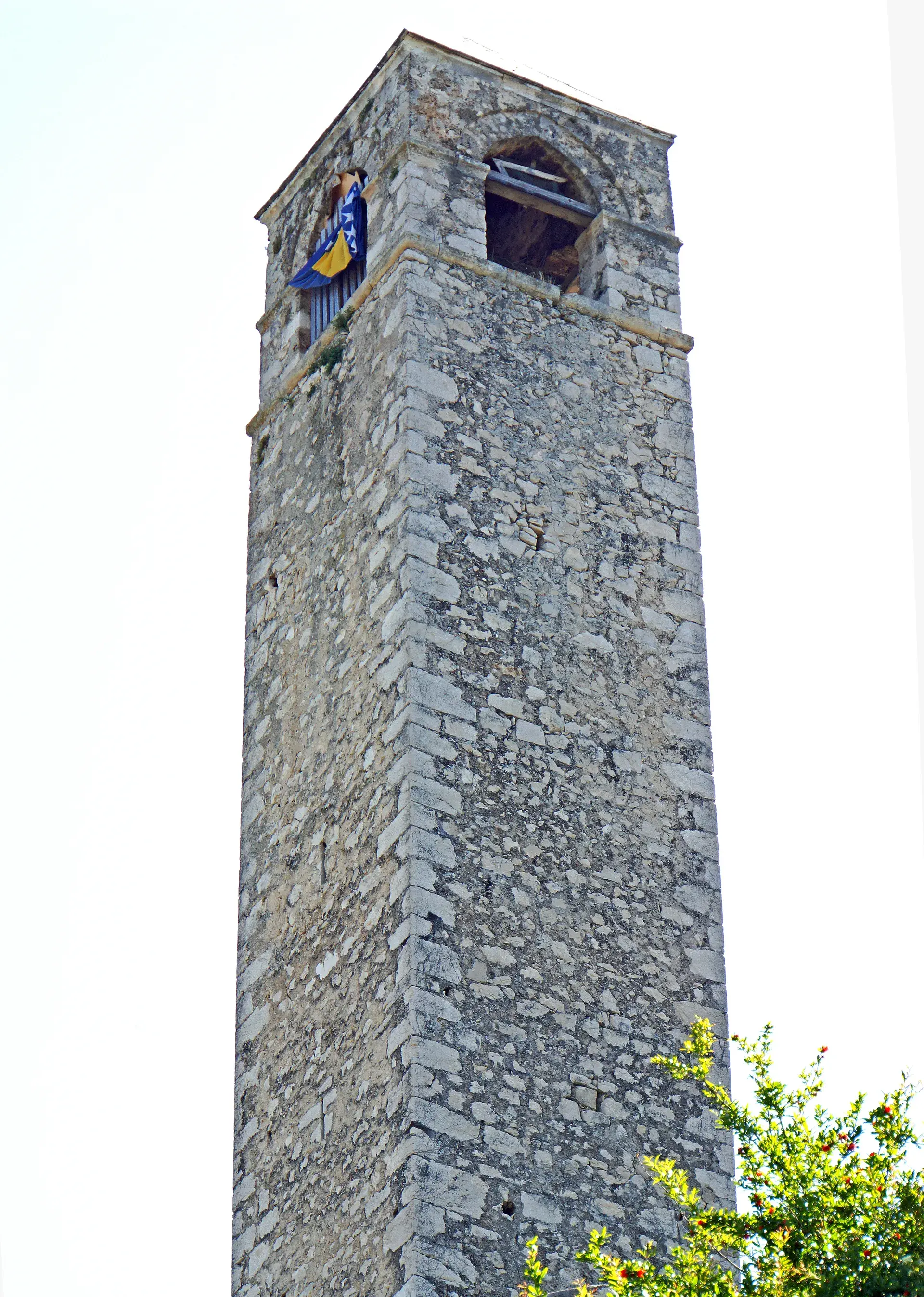
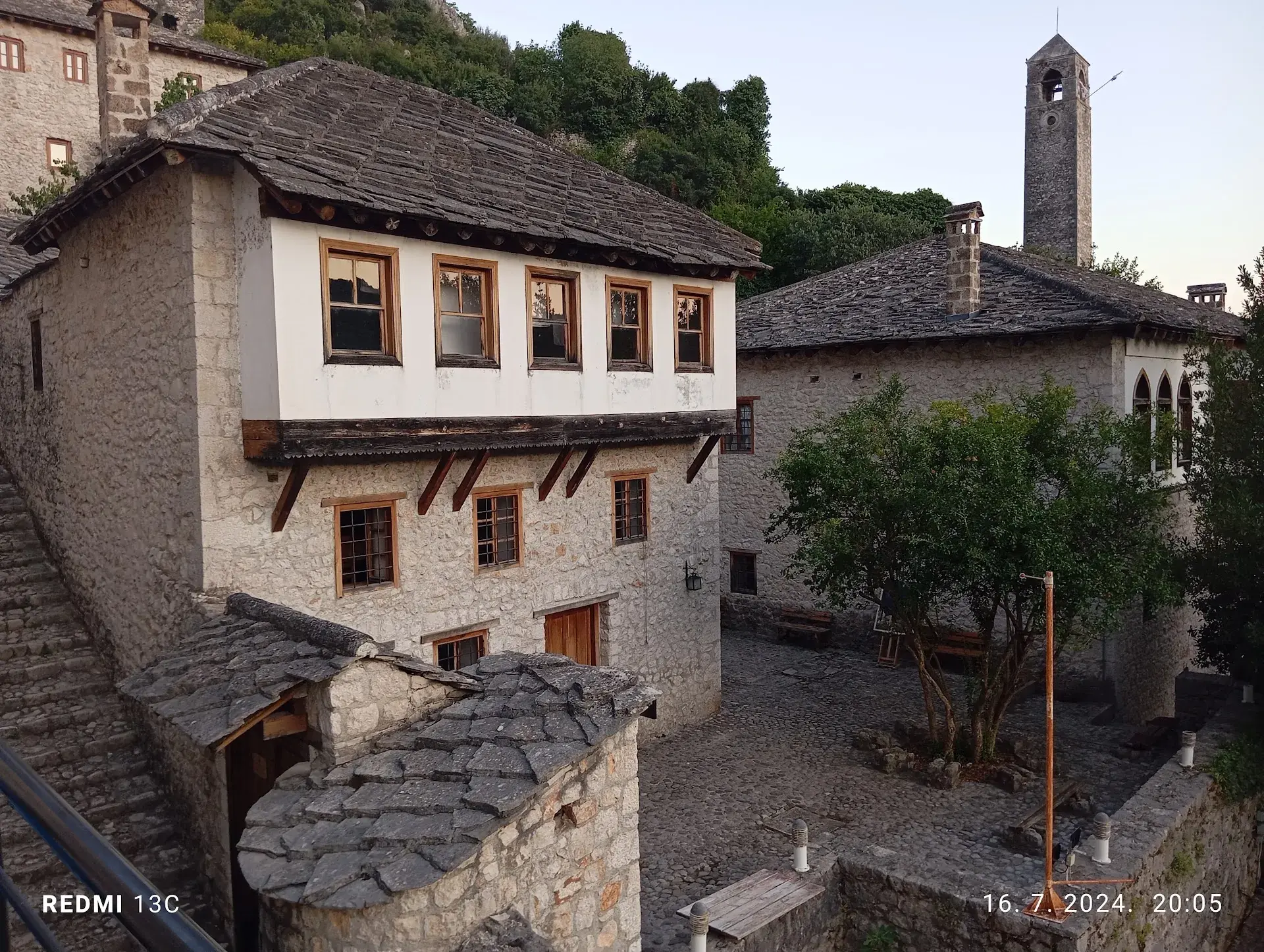
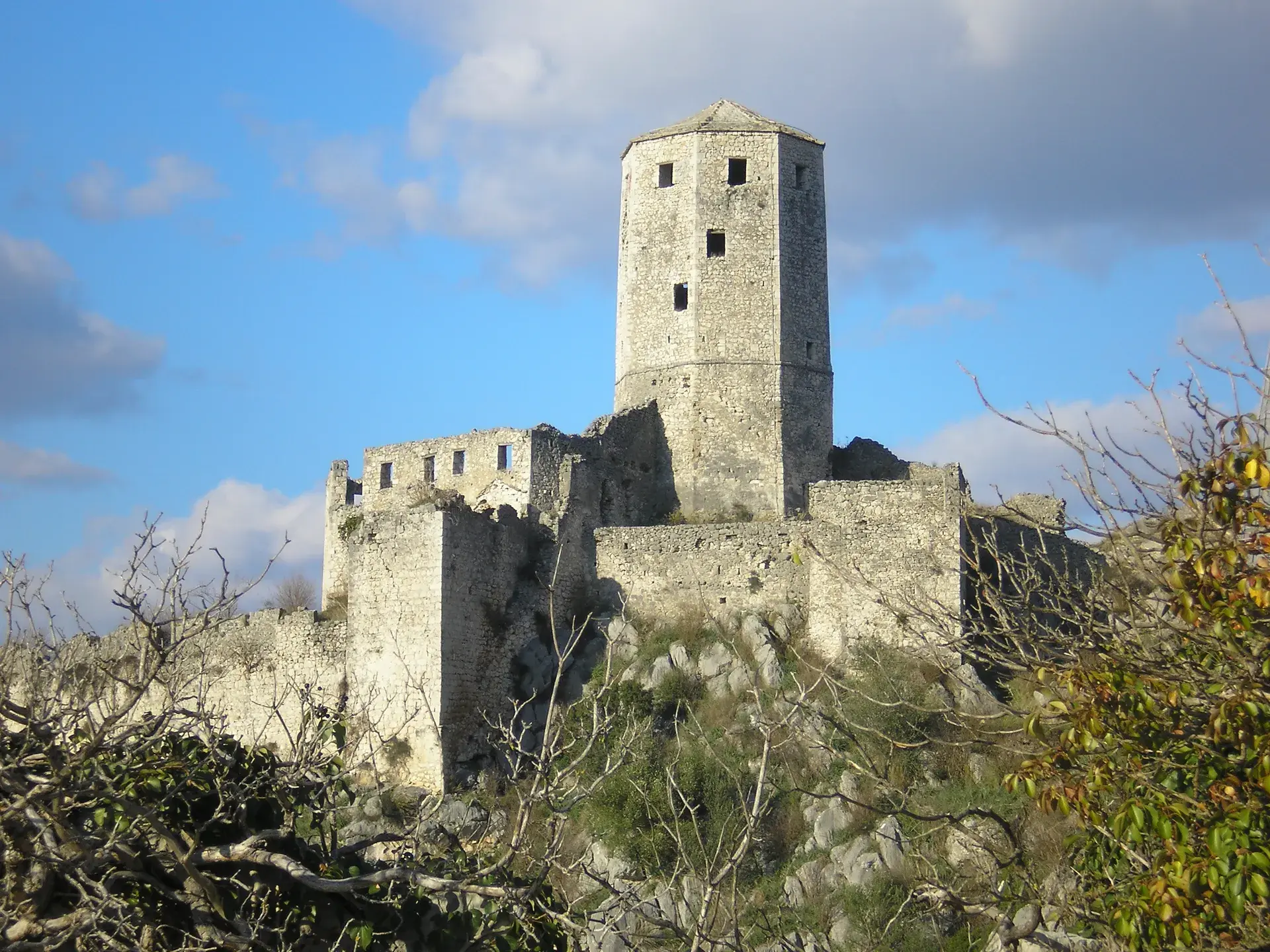
Set midway up the natural karst amphitheater of Počitelj, the mosque operates as an architectural hinge within the historic settlement. Its mid-slope position links the lower entrance along the Neretva River and the adjacent medresa (religious school) to the stepped pedestrian paths that ascend toward the Gavrankapetanović House, the clock tower, and the hilltop citadel.
Historically, the mosque served as the focal point for the settlement's 16th-century expansion. Around it arose a full civic and religious ensemble, including a hammam (bathhouse), a han (caravanserai), and a clock tower. Today, the mosque is an integral part of the Historic Urban Site of Počitelj, which is protected as a National Monument of Bosnia and Herzegovina and listed on the UNESCO World Heritage Tentative List.
Destruction and Restoration
During the Bosnian War in 1993, the mosque sustained catastrophic damage when it was heavily shelled and dynamited by Croatian forces (HVO). The explosion destroyed the minaret, collapsed the main dome, and demolished the portico arches.
Between 2002 and 2005, a comprehensive reconstruction project returned the landmark to its historical form. Supported by UNESCO and the Aga Khan Trust for Culture, restoration specialists utilized archival records and traditional masonry techniques to rebuild the limestone walls, domes, and minaret.
Interior Design and the Outdoor Memorial
The cubic prayer hall beneath the stone dome was engineered to naturally amplify the reciter’s voice during religious services. Stacked tiers of arched windows channel natural light across the interior, illuminating restored floral wall stencils and wooden balcony furnishings.
Outside, on the open stone terrace directly facing the mosque, lies a permanent open-air memorial. It consists of original carved stone fragments and structural wreckage salvaged from the 1993 destruction, preserved to commemorate the monument's wartime history.
Visiting the Mosque
The building remains an active place of worship, accommodating the local Muslim community for daily and Friday prayers. Travelers and visitors are permitted to enter outside of scheduled prayer times. Modest attire is required for entry, and customary small donations are collected on site.
FAQ
Why does the mosque have two different names?
The mosque was founded in 1562–1563 by Hadži-Alija, son of Musa. In the mid-17th century, Ottoman vizier Šišman Ibrahim Pasha funded major restorations and endowments for the complex, causing both patrons' names to be used interchangeably.
What happened to the mosque during the 1993 conflict?
In 1993, during the Bosnian War, the mosque was dynamited and shelled by Croatian forces (HVO), resulting in the destruction of its minaret, central dome, and portico arches. It was rebuilt between 2002 and 2005 using traditional masonry techniques.
What is the stone display located on the terrace outside?
The open stone plateau in front of the mosque displays carved stone fragments and architectural remnants salvaged from the 1993 destruction, arranged as a permanent outdoor memorial.
Can tourists enter the mosque?
Yes, visitors may enter outside of daily and Friday prayer services. Modest dress is required, and small entry donations are customary.