Gornja Kapija: Počitelj's Historic Upper Gate
The Highland Portal of Počitelj
Gornja kapija, or the Upper Gate, is a historic fortified portal integrated into the stone defensive wall system (bedemi) enclosing the historic town of Počitelj. Situated on the high upper rim of a natural karst amphitheater within the Čapljina municipality of Bosnia and Herzegovina, the gate marks the northernmost high terminus of the settlement's primary pedestrian axis. Paired with Donja kapija (the Lower Gate) positioned near the Neretva River, Gornja kapija protected the upper boundary of the town.
The portal is legally protected as an integral component of the Historic Urban Site of Počitelj. In 2003, the Commission to Preserve National Monuments (KONS) designated the settlement a National Monument of Bosnia and Herzegovina, and the site was subsequently added to the UNESCO Tentative List in 2007.
Strategic Function and Military Role
Počitelj developed as a critical strategic stronghold commanding movement through the Neretva River valley toward the Adriatic Sea. While local chroniclers and oral tradition attribute the town's initial fortifications to King Tvrtko I of Bosnia around 1383, the earliest documented archival records date to the 1440s. Following the Ottoman conquest in 1471, the settlement was transformed into an administrative and defensive center widely referred to as the "Key of Herzegovina."
In the late 17th century, shifting regional borders and conflicts with the Republic of Venice prompted significant defensive upgrades. Shortly before 1698, the town's stone ramparts were expanded, connecting Gornja kapija directly to artillery bastions, including Pašina tabija and Pilavdžića tabija. The gatehouse formed part of a strict vertical defensive strategy. While Donja kapija at the base managed riverborne trade, customs, and lodging at the caravanserai (han), Gornja kapija operated primarily as a guarded military checkpoint shielding against attacks from the upland karst plateau. Military use ended after the Austro-Hungarian occupation in 1878, leaving its late Ottoman-era defensive layout intact.
Vertical Urbanism and the Veliki Harem
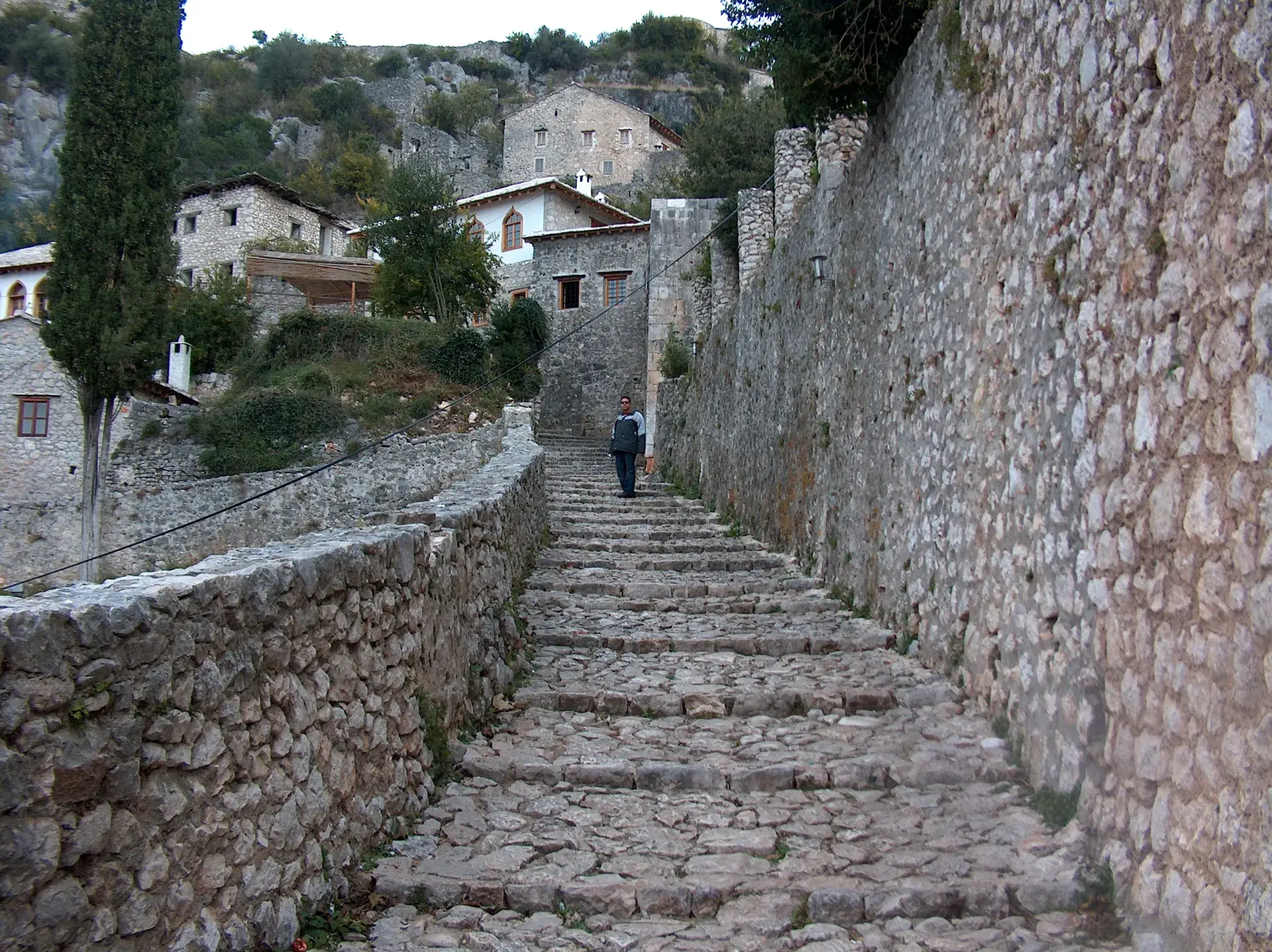
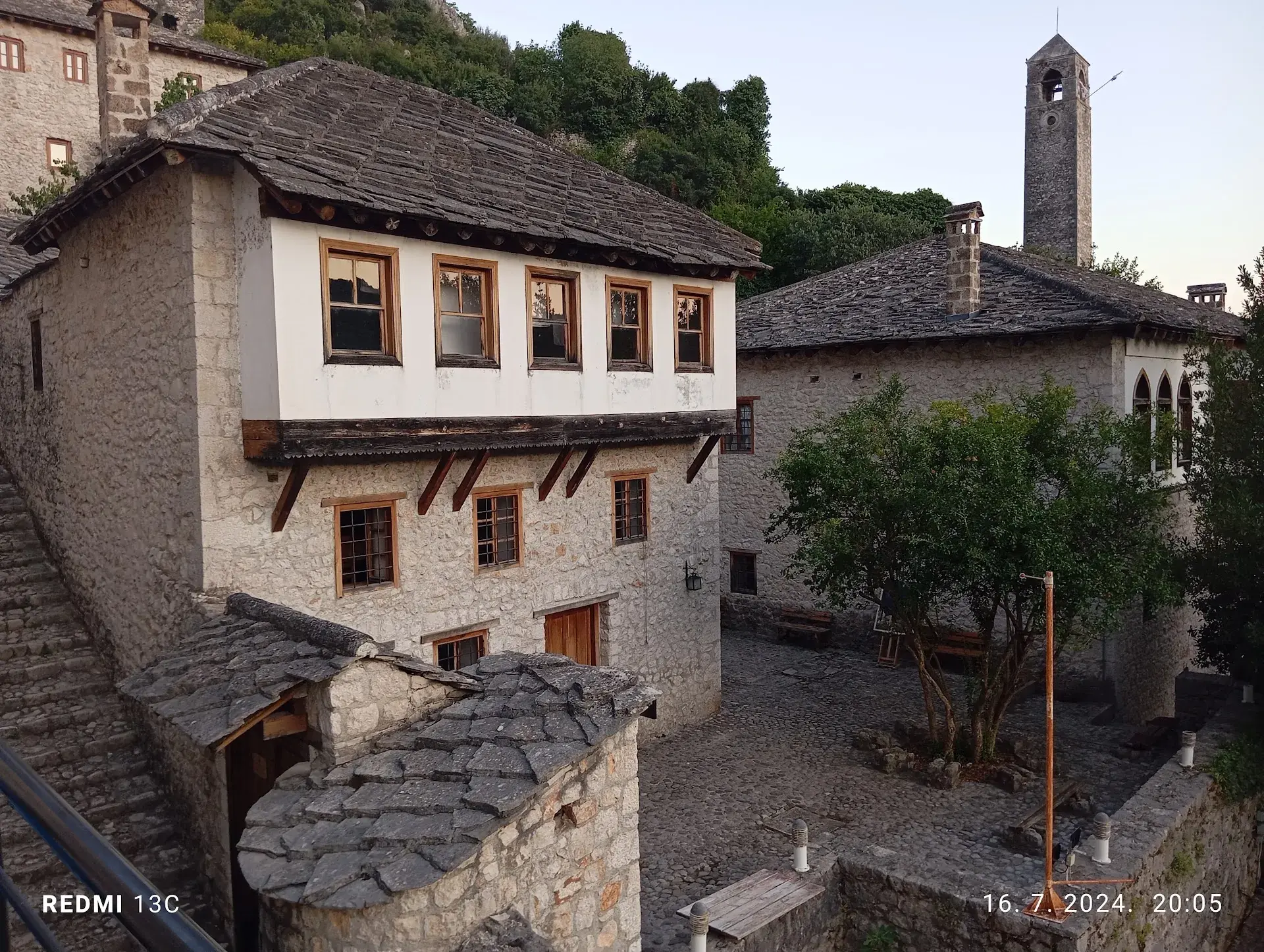
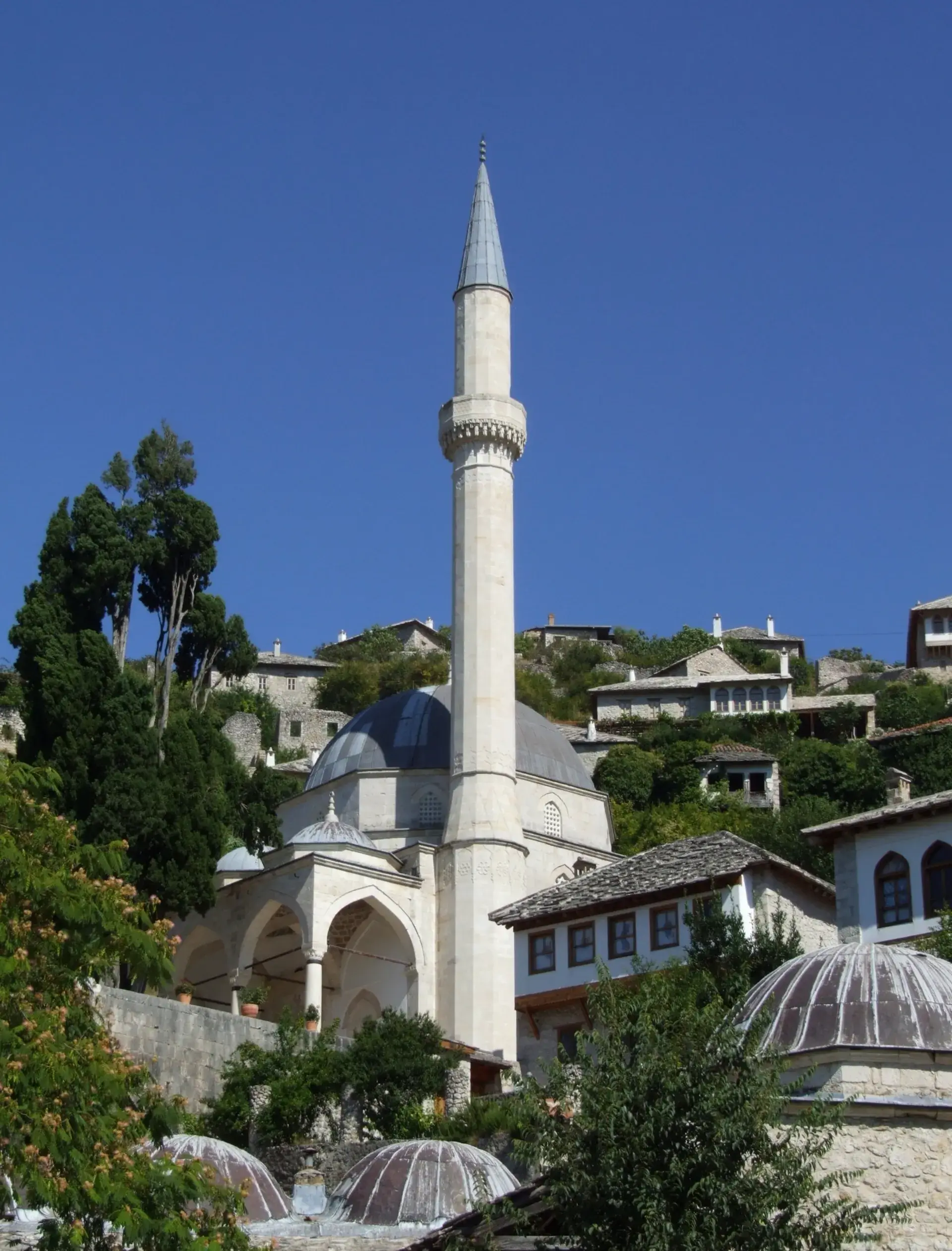
Počitelj exhibits a distinct Ottoman-Mediterranean terraced layout reflecting functional social and military zoning. Commercial life, public bathhouses, and traveler accommodations were concentrated along the riverbank; residential quarters (mahale) occupied the central terraces; and military infrastructure crowned the high perimeter, anchored by the citadel, bastions, and Gornja kapija.
This vertical division influenced surrounding land use. In contrast to many medieval fortified cities where cemeteries were enclosed inside town walls near places of worship, Počitelj positioned its historic burial ground outside the ramparts. Known as Veliki Harem, this extramural cemetery lies on the exposed highland slopes and was traditionally accessed through the upper approaches leading past Gornja kapija.
Architectural Character and Present Day
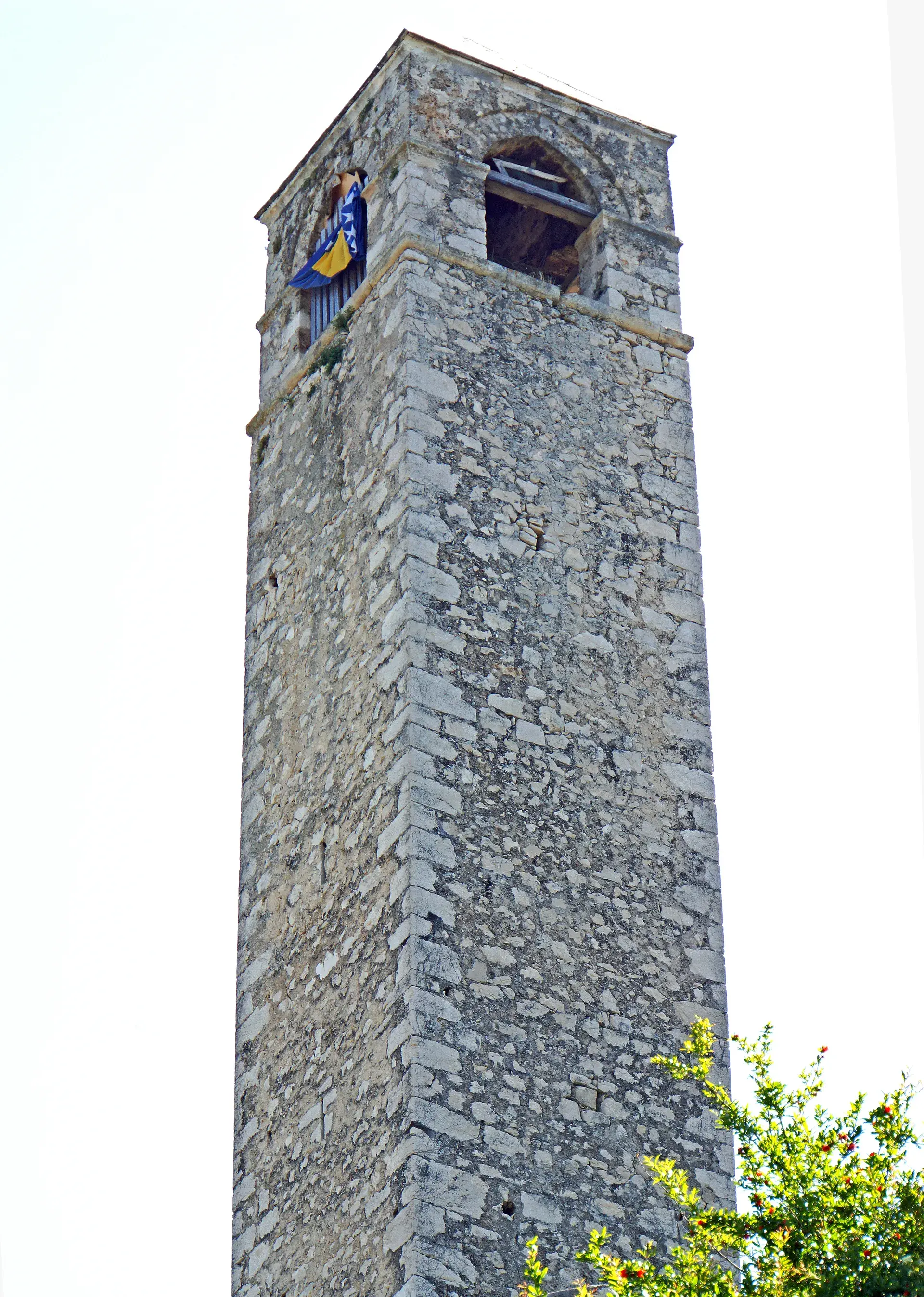
Constructed from rough-hewn stone blocks, Gornja kapija forms a narrow arched entrance cut into the defensive walls. The limestone threshold frames views spanning the entire settlement, its distinctive slate roofs, the Gavran-Kapetan tower, and the Neretva River below. The uneven, cobbled pathways leading to the portal are flanked by wild fig trees and pomegranate shrubs rooted in the karst stone.
Today, Gornja kapija serves as an open pedestrian passage linking the upper ramparts with walking trails across the karst hinterland. It also provides a secondary access point for visitors entering from the highland plateau. The gate remains preserved under public access and conservation guidelines outlined by the municipal Regulatory Plan for Počitelj.
FAQ
What was the primary function of Gornja kapija?
Gornja kapija served as a fortified military checkpoint regulating overland movement between the settlement and the upland karst plateau, defending the upper walls against mountain-flank attacks.
How did Gornja kapija differ from Donja kapija?
While Gornja kapija was primarily a high-altitude military defense point, Donja kapija (the Lower Gate) was located near the Neretva River and managed commercial traffic, arriving merchants, and the public caravanserai.
Where is the historic cemetery of Počitelj located in relation to the gate?
The historic cemetery, Veliki Harem, is situated completely outside the defensive walls on the highland slopes, reached via the pathways extending beyond Gornja kapija.
What legal protections cover Gornja kapija?
It is protected as part of the Historic Urban Site of Počitelj, which was declared a National Monument of Bosnia and Herzegovina in 2003 and placed on the UNESCO Tentative List in 2007.