Bistrik Railway Station: Sarajevo's Historic Landmark
An Imperial Gateway
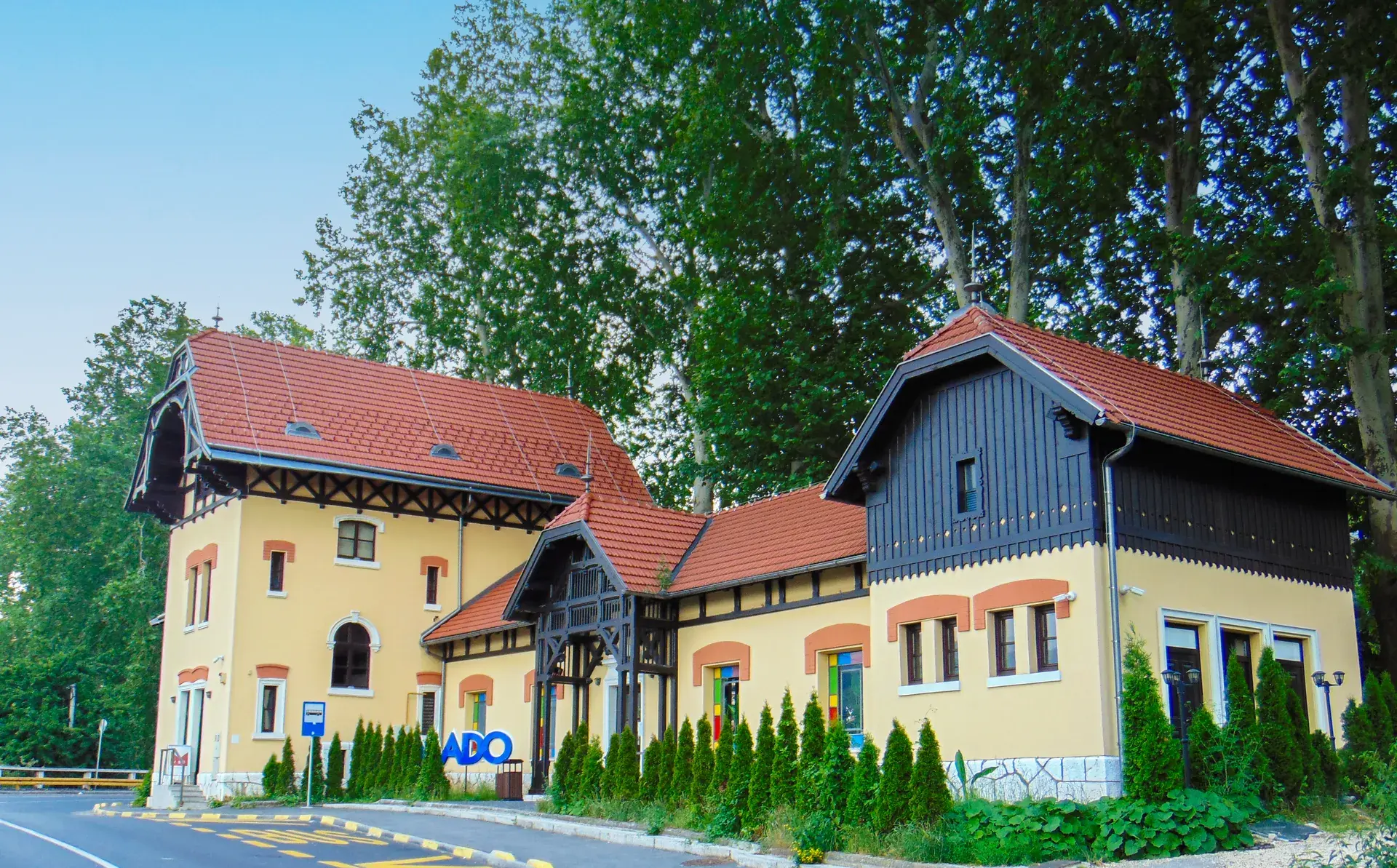
Constructed in 1906, the Bistrik Railway Station in Sarajevo stands as a significant symbol of the Austro-Hungarian era in Bosnia and Herzegovina. The building was a key component of the newly established narrow-gauge "Eastern Railway" (Ostbahn), which connected Sarajevo with the eastern parts of the country. Its design exemplifies the "Alpine or Romantic style," characterized by prominent sloping roofs and ornate wooden eaves, a deliberate architectural shift from the city's Ottoman heritage.
The construction of the Eastern Railway was an ambitious and costly undertaking for the Austro-Hungarian administration, aimed at integrating the region economically and militarily. The expense was so great that it prompted local complaints, to which Emperor Franz Joseph is said to have famously replied, "If a meter of railroad costs a kilogram of gold, you shall build it."
From Rails to Residences
The station's life as a transportation hub came to an end when the Eastern Railway ceased operations in 1973. The final train, affectionately known as "Ćiro," made its last departure from Bistrik in August 1978. In the following decades, the station fell into disrepair, suffering from neglect and damage during the war.
In a surprising turn, the grand building was converted into residential units, housing between five and seven families. This period saw numerous structural alterations that compromised the building's original design. The former railway tracks surrounding the station were eventually replaced by a city bypass road.
Restoration and Rebirth
Despite its period of decline, the station remained a cultural touchstone, famously featuring in key scenes of the 1972 cult film "Walter Defends Sarajevo." Recognizing its historical and architectural value, the Bistrik Railway Station was declared a National Monument of Bosnia and Herzegovina in 2006.
Major renovation efforts began in October 2020. After resolving property issues for the resident families and undertaking an extensive restoration, the station officially reopened to the public on April 6, 2022. The project restored the building to its former splendor, preserving a vital piece of Sarajevo's heritage.
The Station Today
Today, the restored Bistrik Railway Station serves as a multifunctional cultural center. The building is divided into two main areas: a museum exhibition space and a catering establishment. The museum often features displays inspired by the station's history and its connection to the film "Walter Defends Sarajevo." The other section hosts a branch of the Turkish restaurant chain "Mado," which opened in October 2023.
FAQ
When was Bistrik Railway Station built?
The Bistrik Railway Station was built and became operational in 1906 as part of the Austro-Hungarian administration's "Eastern Railway" project.
Why did the Bistrik Railway Station close?
The station ceased its primary function after the Eastern Railway line stopped operating in 1973. The last train, known as "Ćiro," departed in August 1978.
What is the Bistrik Railway Station used for now?
After extensive renovations, the station reopened in 2022 as a cultural center. It now houses a museum exhibition space and a restaurant.
Is the Bistrik Railway Station a protected landmark?
Yes, the Bistrik Railway Station was officially declared a National Monument of Bosnia and Herzegovina in 2006.