Gazi Husrev-beg Mosque: Sarajevo's Ottoman Heart
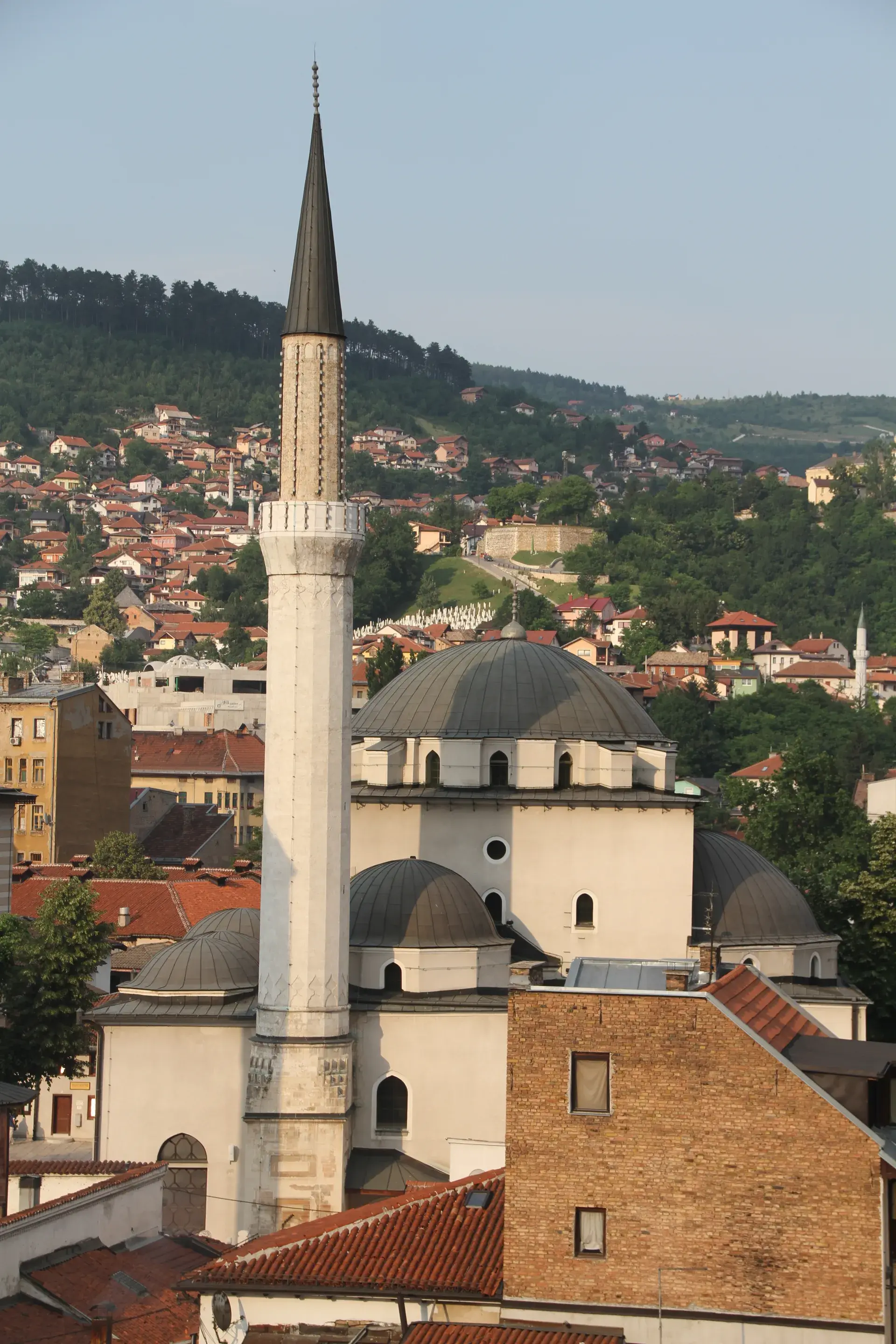
The Gazi Husrev-beg Mosque stands as the architectural and spiritual heart of Sarajevo's Ottoman legacy. Constructed in the 16th century, this magnificent structure is not only a central place of worship but also a symbol of the city's rich history, resilience, and unique cultural intersections.
History and Foundation
The mosque was built between 1530 and 1532, with an inscription marking its completion in 1531. Its construction was commissioned by Gazi Husrev-beg, the Ottoman governor of Bosnia and grandson of Sultan Bayezid II. He is considered one of the most significant legators in the history of Bosnia and Herzegovina. The mosque was the centerpiece of his extensive charitable endowment, or waqf, which included a library, schools, a marketplace, and public baths. This foundation was instrumental in transforming Sarajevo from a small town into a major city.
The principal architect was Acem Ali Tabrizi “Alaüddin,” the chief Ottoman court architect from Tabriz, who served under Sultan Suleiman the Magnificent. The mosque represents a prime example of the Classical Ottoman architectural style.
A Landmark Through Time
Throughout its history, the Gazi Husrev-beg Mosque has witnessed Sarajevo's evolution. In a fascinating blend of tradition and modernity, it became the first mosque in the world to be equipped with electric lighting in 1898, an innovation introduced during the Austro-Hungarian administration. This event highlights Sarajevo's unique position as a meeting point of Eastern and Western cultures.
The building suffered significant damage during the Bosnian War from 1992 to 1995. An extensive reconstruction and interior redesign took place between 1996 and 2002. This restoration, led by Bosnian calligrapher Hazim Numanagić, removed many of the 19th-century pseudo-Moorish decorations that had been added during the Austro-Hungarian period, re-establishing a different interior aesthetic.
The Mosque Complex Today
Today, the Gazi Husrev-beg Mosque is the main congregational mosque for Muslims in Bosnia and Herzegovina, functioning as an active place of daily worship and a community hub. It is also a popular destination for visitors interested in its history and architecture. Tourists are permitted to enter outside of prayer times, with the expectation of modest dress and the removal of shoes before entering the main hall.
An integral part of the complex is the adjacent Clock Tower (Sahat-kula). Uniquely, its mechanism is set to lunar time, where the day ends at sunset. This system was crucial for accurately determining the daily Islamic prayer schedules. The original waqf established by Gazi Husrev-beg continues to function to this day, managing the complex and its charitable activities.
FAQ
When was the Gazi Husrev-beg Mosque built?
The Gazi Husrev-beg Mosque was constructed between 1530 and 1532, as part of a large charitable endowment by the Ottoman governor of Bosnia, Gazi Husrev-beg.
What is a unique fact about the Gazi Husrev-beg Mosque?
It holds the distinction of being the first mosque in the world to be equipped with electric illumination, a technological advancement introduced in 1898 during the period of Austro-Hungarian rule.
Can tourists visit the Gazi Husrev-beg Mosque?
Yes, the mosque is open to visitors outside of designated prayer times. Modest attire is expected, and visitors must remove their shoes before entering the main prayer hall.
What is the purpose of the clock tower next to the mosque?
The Clock Tower, or Sahat-kula, operates on lunar time to help accurately determine the schedule for daily Islamic prayers, with the day officially ending at sunset.