Morića Han: Sarajevo's Last Ottoman Caravanserai
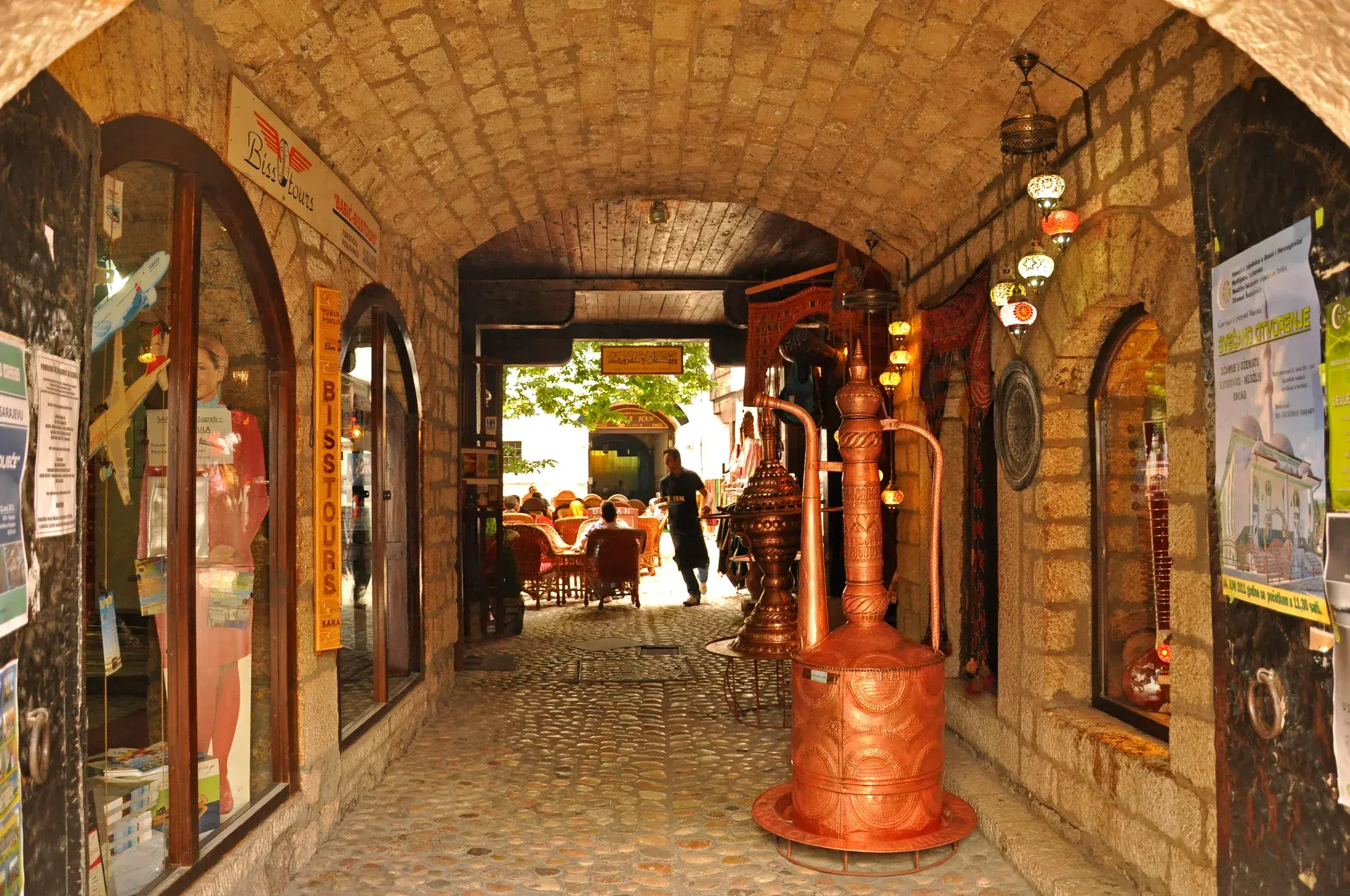
Morića Han stands in the heart of Sarajevo's Baščaršija district as the city's sole surviving caravanserai, a tangible link to its Ottoman past. This historic inn's courtyard walls echo with centuries of stories from merchants and travelers who once passed through its gates, underscoring Sarajevo's foundational role as a commercial hub.
Origins as a Trade Hub
Originally constructed in 1551, Morića Han was financed as part of the endowment (Vakuf) of Gazi Husrev-Bey, a prominent Ottoman governor of Bosnia. Designed in the classic Ottoman architectural style, it served as a caravanserai, or roadside inn, capable of accommodating approximately 300 travelers and 70 horses. The ground floor provided stables and storage for goods, while the upper floor contained guest rooms and a significant coffeehouse.
The 17th-century Ottoman traveler Evliya Çelebi visited in 1659 and recorded it as Hadži-Bešir's han, named for its landlord at the time. The modern name, Morića Han, is believed to derive from Mustafa-aga Morić and his son Ibrahim-aga Morić, who were tenants in the early 19th century.
A Center of Civic Life
Beyond its function for travelers, Morića Han was a crucial center for Sarajevo's social and political life. Its coffeehouse was a renowned gathering spot where the city's elite, artisans, and merchants met to discuss important matters. The han's cultural importance is also cemented by its mention in traditional Bosnian sevdalinka songs.
A pivotal moment in its history occurred on July 29, 1878, when citizens convened within its walls to establish the Narodni Odbor (People's Council). This gathering was a formal protest against the impending Austro-Hungarian occupation of Bosnia and Herzegovina, marking the han as a site of political resistance.
Destruction and Reconstruction
The structure has endured multiple fires throughout its history. After an initial fire in 1697, it was reconstructed. However, a devastating fire in December 1957 completely destroyed the building. A faithful reconstruction project took place between 1971 and 1974, restoring the han to its former appearance.
During this 20th-century rebuilding, a unique artistic element was added: Persian calligraphy inscriptions featuring poems by the famed poet Omar Khayyám were incorporated into the interior walls. In 1998, ownership of the historic property was returned to the Gazi Husrev-Beg's endowment.
Morića Han Today
Today, Morića Han functions as a vibrant cultural and commercial destination. Its tranquil courtyard is a popular spot for locals and tourists to enjoy Bosnian coffee. The complex houses a national restaurant serving traditional cuisine, a notable Persian carpet shop, various cafes, and other stores. Some sections are also used for offices and by religious associations, continuing its legacy as a dynamic hub within Sarajevo.
FAQ
What was the original purpose of Morića Han?
Morića Han was originally an Ottoman-era caravanserai, or roadside inn, built to accommodate merchants and travelers. It had space for approximately 300 people and 70 horses, with storage for goods on the ground floor and guest rooms above.
Is the current Morića Han the original building?
No. The building was reconstructed after a fire in 1697 and was completely destroyed by another fire in 1957. The structure seen today is a faithful reconstruction completed between 1971 and 1974.
Why is Morića Han historically significant?
It is the last surviving caravanserai in Sarajevo. It was also a site of political protest, where citizens gathered in 1878 to oppose the Austro-Hungarian occupation. Its coffeehouse was a major social and political hub for the city's elite.
What can you find at Morića Han today?
Today, Morića Han is a commercial and cultural hub featuring a traditional Bosnian restaurant, a Persian carpet shop, cafes, and other stores. Its courtyard is a popular public space for enjoying coffee.