Sarajevo City Hall (Vijećnica): History & Rebirth
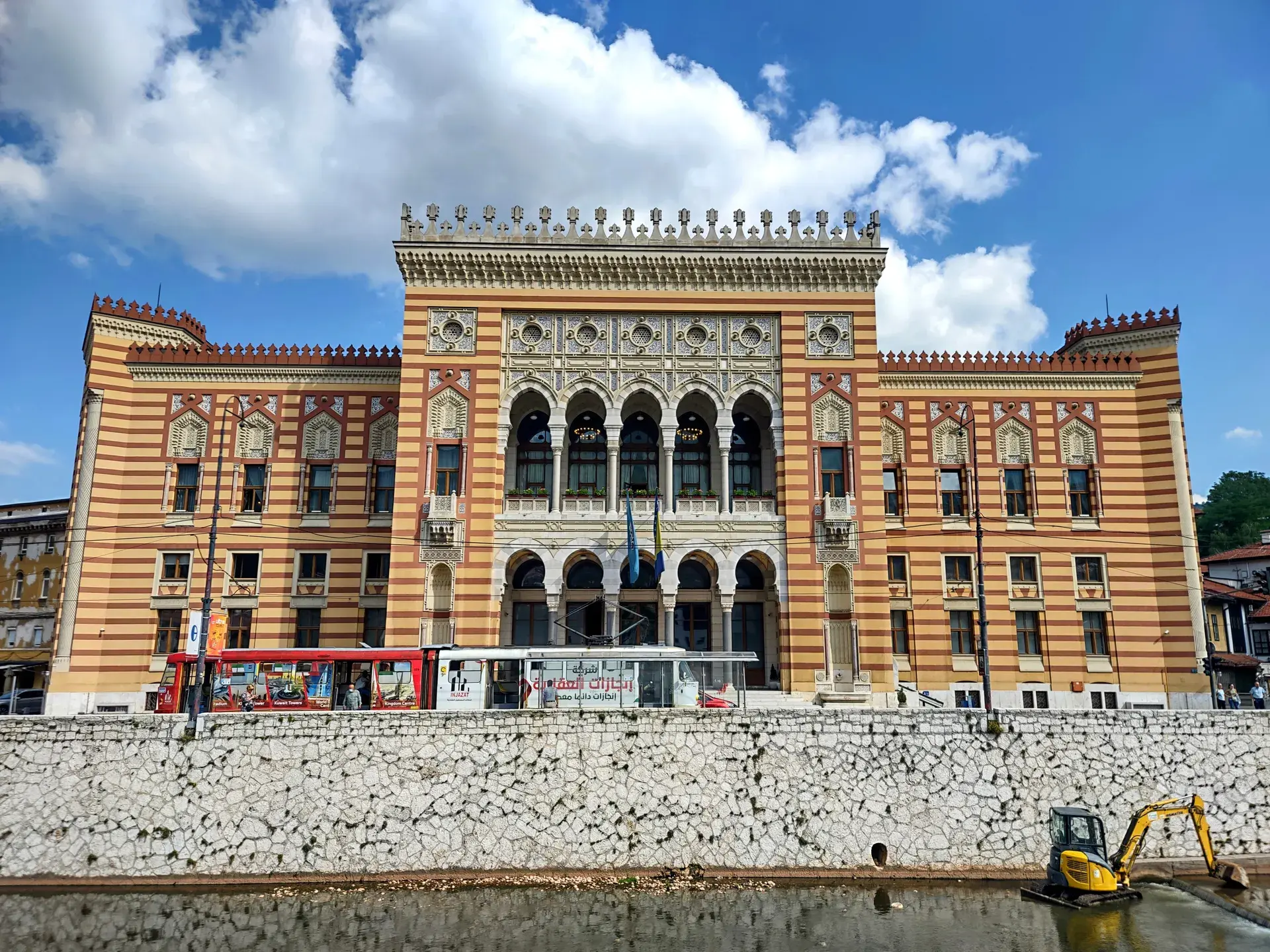
Gradska vijećnica, also known as Vijećnica, stands as a dramatic symbol of Sarajevo's history, resilience, and cultural fusion. This architectural masterpiece, with its striking Pseudo-Moorish design, has witnessed pivotal moments, from the prelude to World War I to its own near-total destruction and meticulous restoration.
Austro-Hungarian Origins and Design
Constructed between 1892 and 1894 under the Austro-Hungarian administration, the Vijećnica officially opened on April 20, 1896. The project was a complex collaboration, initiated by Czech architect Karel Pařík, largely developed by Alexander Wittek, and completed by Ćiril M. Iveković. The building's distinctive Moorish Revival style was a deliberate choice by the empire to create a modern administrative center that also acknowledged the region's Islamic heritage.
To achieve this authentic look, architect Alexander Wittek traveled twice to Cairo to study Mamluk-period buildings like the Sultan Hassan Mosque. Tragically, Wittek did not see the project's completion. He suffered from a mental illness and reportedly took his own life in 1894, with some sources suggesting the project's challenges contributed to his despair.
A Stage for History
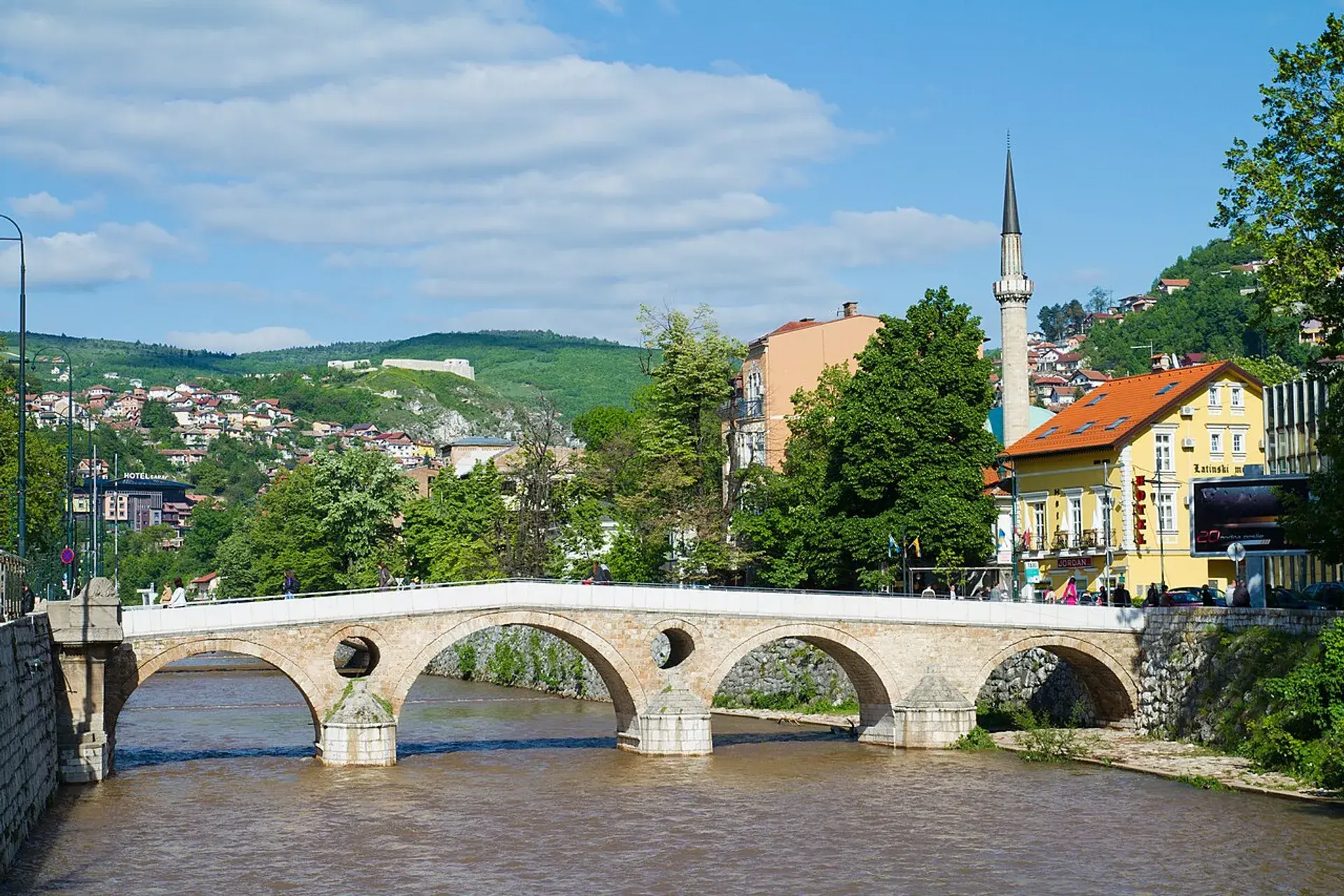
Upon its opening, the Vijećnica served as Sarajevo's city hall, housing the municipal government, city council, and city court. Its place in world history was cemented on June 28, 1914, when Archduke Franz Ferdinand and his wife, Sophie, attended a reception in the building just moments before their assassination nearby, an event that triggered the start of World War I.
After World War II, in 1949, the building's function shifted. It became the National and University Library of Bosnia and Herzegovina, evolving into a vital repository of the nation's cultural heritage. It housed an extensive collection of up to two million books, rare manuscripts, and important documents.
Destruction and Rebirth
During the Siege of Sarajevo, the Vijećnica faced its darkest chapter. On August 25-26, 1992, it was intentionally shelled with incendiary bombs, causing a catastrophic fire. The blaze was an act described as 'bibliocide,' destroying nearly 90% of the library's invaluable collection. Citizens recall the poignant image of blackened pages from burned books floating through the air like snow.
For years, the Vijećnica stood as a skeletal ruin, a powerful symbol of the war's devastation. A painstaking reconstruction effort began in 1996. Lasting 18 years and costing over 22 million euros with significant international funding, the building was meticulously restored using original plans and historical photographs. It officially reopened on May 9, 2014, restored to its former splendor.
The Vijećnica Today
Today, Gradska vijećnica is a multi-functional institution and a symbol of Sarajevo's revival. It serves as the official seat of the Mayor of Sarajevo and the City Council. The building once again houses the National and University Library, alongside a museum. The basement features a permanent exhibition, "Sarajevo 1914-2014," which details the city's and the building's tumultuous history. It is also a prestigious venue for state ceremonies, cultural events, concerts, exhibitions, and weddings.
FAQ
What is inside the Sarajevo City Hall (Vijećnica)?
Today, the Vijećnica is a multi-purpose building. It is the headquarters for the Mayor of Sarajevo and the City Council, and it also houses the National and University Library of Bosnia and Herzegovina, a museum, and serves as a venue for cultural and ceremonial events.
Why is Gradska vijećnica famous?
It is famous for its unique Pseudo-Moorish architecture, its historical significance as the site of Archduke Franz Ferdinand's last reception before his assassination, its tragic destruction in 1992, and its subsequent restoration as a symbol of resilience.
When was the Sarajevo City Hall rebuilt?
After being destroyed in 1992, reconstruction efforts began in 1996. The building was meticulously restored over 18 years and officially reopened to the public on May 9, 2014.
What architectural style is the Vijećnica?
The Vijećnica is a prominent example of Pseudo-Moorish or Moorish Revival architecture. This style was inspired by the Islamic art of Spain and North Africa, particularly Mamluk-period buildings in Cairo.