Begovina: Ottoman Riverside Manor in Stolac
Begovina is a nineteenth-century fortified residential complex situated on the left bank of the Bregava River in Stolac, Bosnia and Herzegovina. Designated as a National Monument of Bosnia and Herzegovina, the architectural ensemble represents one of the region's finest examples of late Ottoman aristocratic residential architecture, reflecting the lifestyle, defense needs, and social structures of the local ruling class.
The Relocation from Hilltop Citadel to Riverbank
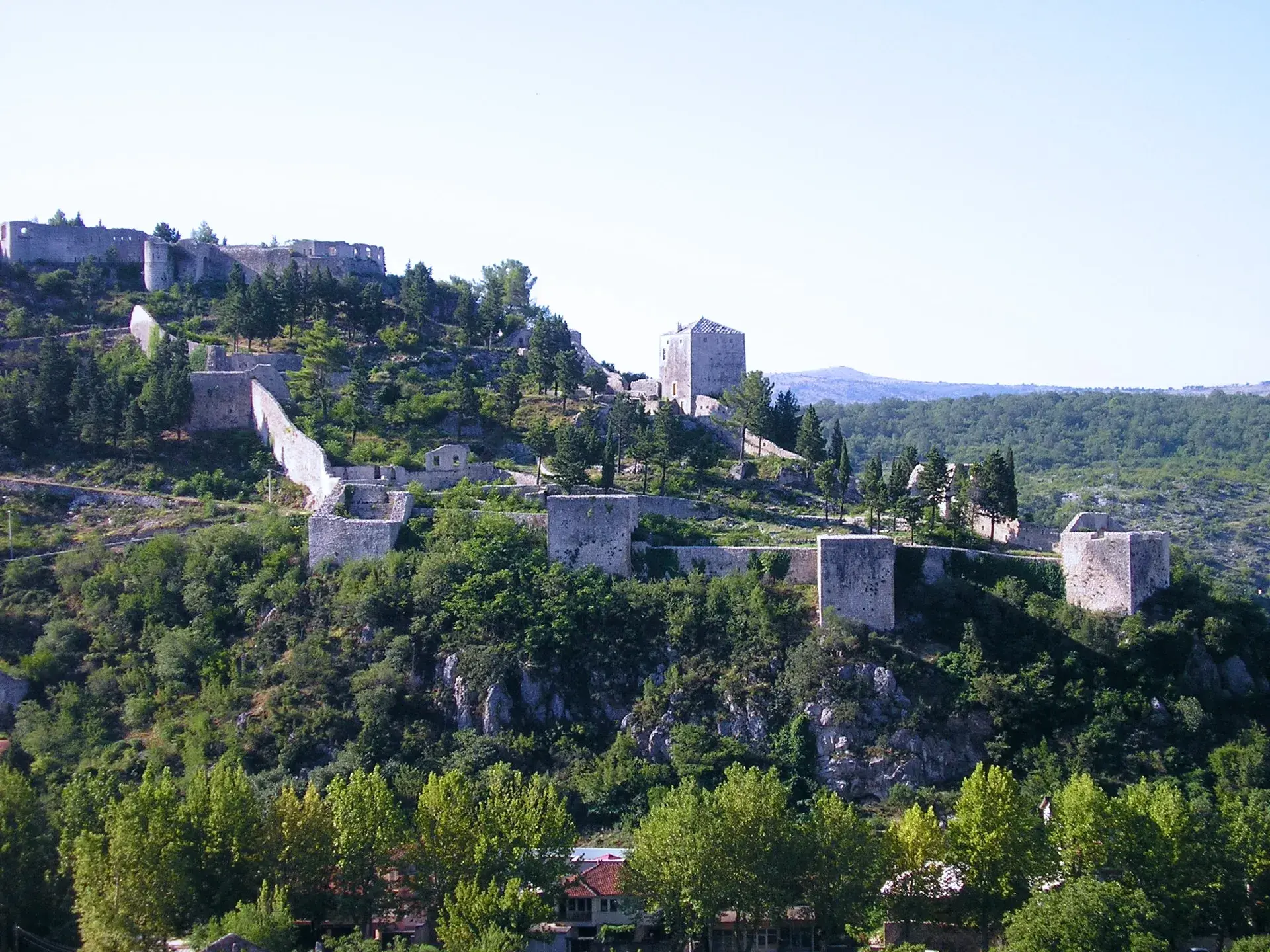
The construction of Begovina was initiated under Ali Pasha Rizvanbegović, a prominent member of the Rizvanbegović family who was appointed Vizier of Herzegovina in 1833 following administrative reforms that separated Herzegovina into a distinct province. With this rise in regional power, the family altered their living strategy, descending from the medieval hilltop fortress of Vidoški Grad to establish a private residential estate along the Bregava River.
Positioned roughly 1 to 1.5 kilometers upstream from Stolac's historic town center (čaršija), the riverside compound anchored the eastern boundary of the settlement. Moving from an elevated stronghold down to the fertile riverbank allowed the family to blend domestic luxury, agricultural production, and strategic security in a single complex.
Spatial Organization and Domestic Clan Architecture
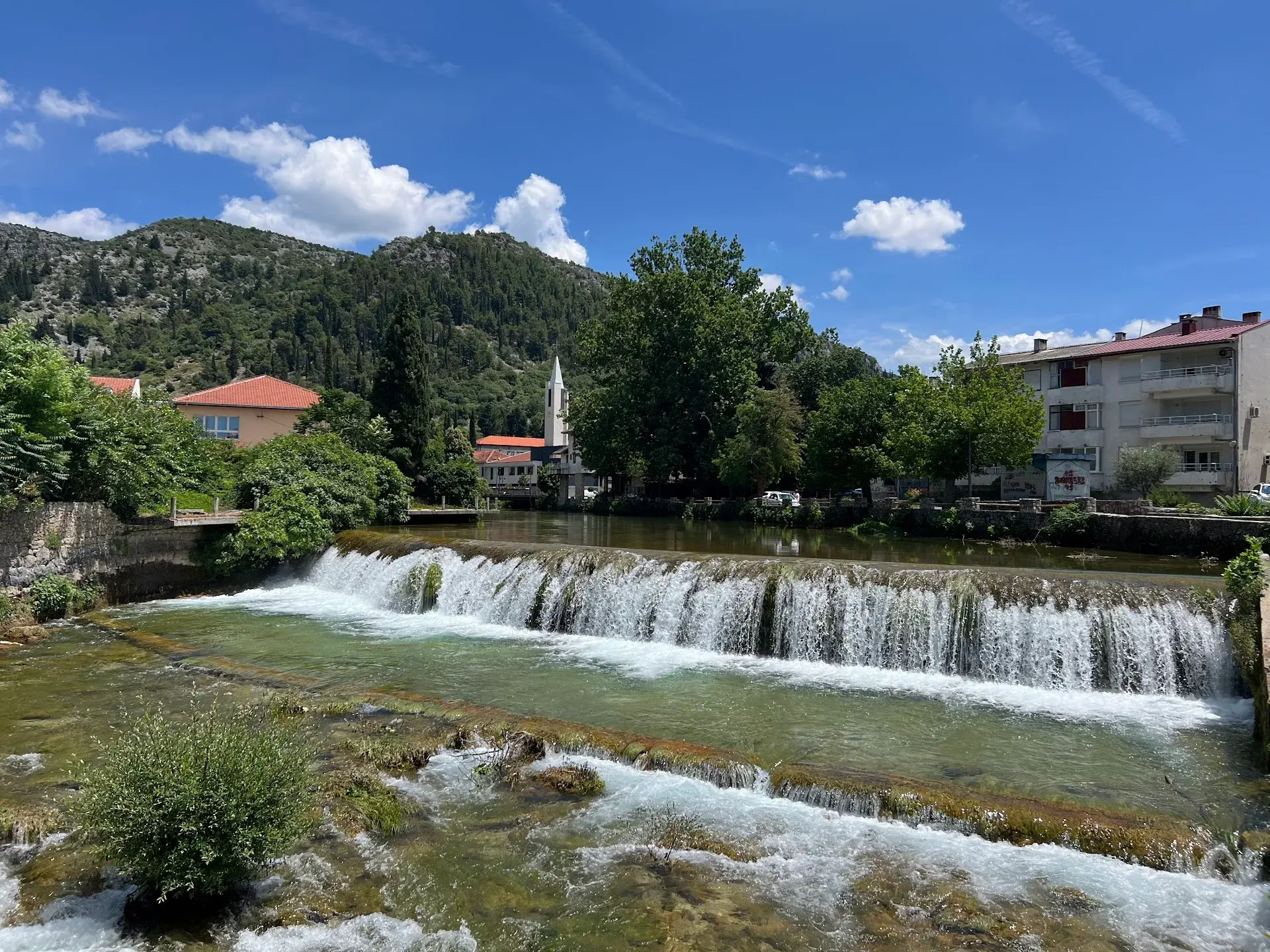
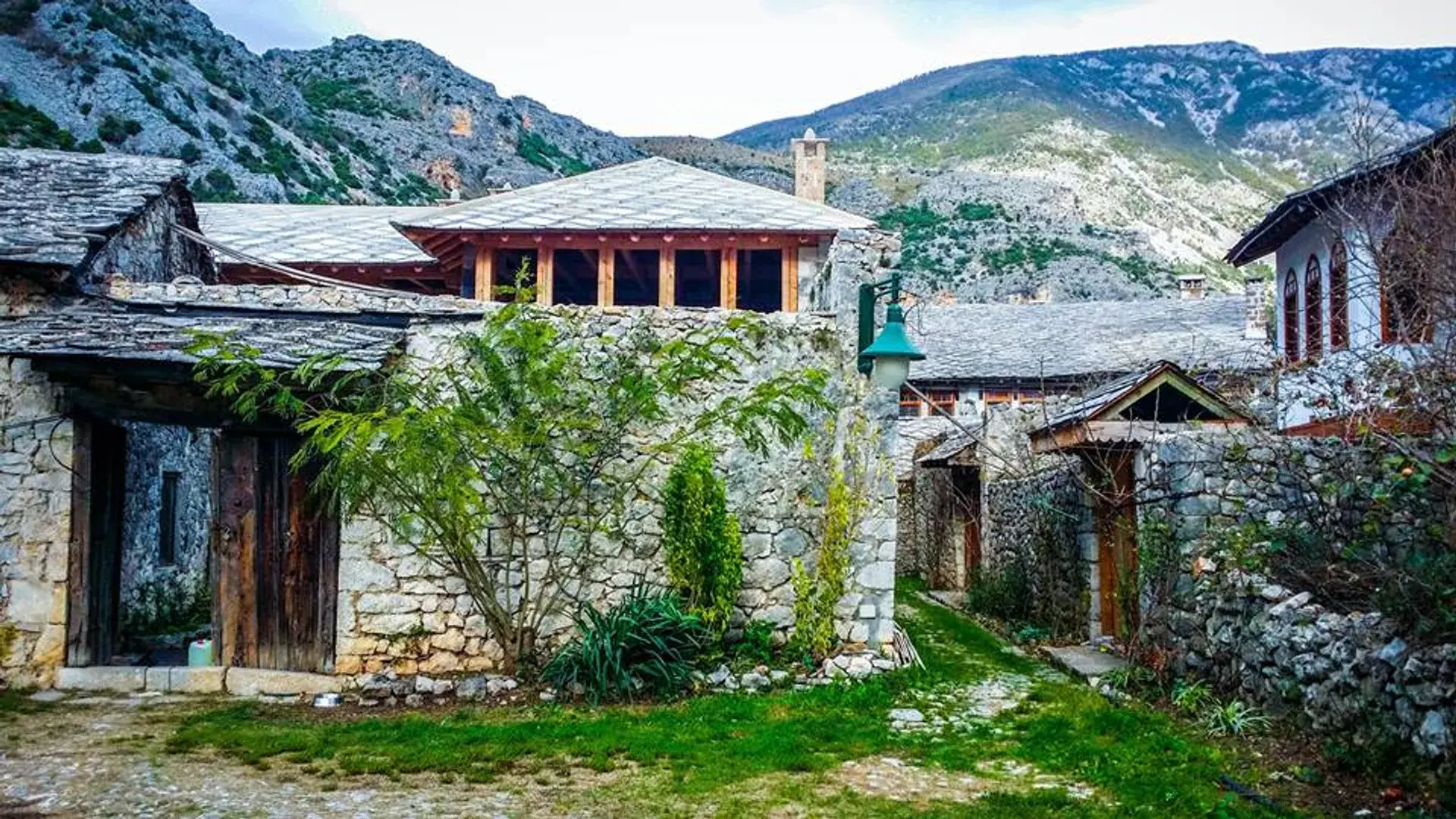
Begovina occupies a narrow, elongated plot measuring approximately 25 meters in width and 180 meters in length. The complex is physically anchored at its approach by the stone-arched Begovina Bridge, erected around the turn of the nineteenth century to link family holdings on both sides of the river. Historically, the quarter functioned as a self-contained community, featuring residential quarters, agricultural outbuildings, private courtyards, guest quarters known as konaks, and an elementary school (mekteb).
The layout reflects a strict architectural hierarchy divided into four spatial thresholds. Moving from the exterior inward, the complex transitions from the public access road to an initial courtyard accommodating guest konaks, followed by semi-private service areas, and finally the enclosed family homes. Extended clan living is especially evident in the architecture; one residential building features a prominent roofline pierced by 13 individual chimneys designed to heat individual rooms within a single shared structure.
Acoustic Defenses and River Integration
Although Begovina was built as an open, domestic alternative to the hilltop citadel, security remained a vital priority. The complex was surrounded by stone perimeter walls that incorporated an ingenious acoustic warning system: the upper perimeter of the defensive walls was capped with loose, unmortared stones. If an intruder attempted to scale the boundary, the unstable stones would dislodge and clatter to the ground, alerting guards and residents.
Alongside fortification, the river provided vital microclimate regulation and resources. Channels carved from stone diverted water from the Bregava directly through internal courtyards and walled gardens, feeding fountains and sustaining mature fig and pomegranate trees that offered shade during hot Mediterranean summers.
War Damage and Contemporary Heritage
During the Bosnian War in 1993, Begovina was set on fire and severely damaged. While post-war preservation and rebuilding initiatives have repaired portions of the complex, other structures on the grounds remain only partially restored. Despite these setbacks, the site retains deep cultural significance; during the 1970s, heir Fahrudin Rizvanbegović hosted a literary salon within the manor that was instrumental in establishing Stolac's renowned cultural festival, Slovo Gorčina.
Today, Begovina remains private property, owned and occupied by descendants of the Rizvanbegović family rather than operating as an open public museum. While visitors can admire the Begovina Bridge, river channels, and exterior stone facades from the outside, entry into the inner courtyards depends entirely on permission from the resident family.
FAQ
Can the public visit the interior of Begovina?
Begovina is private residential property inhabited by descendants of the Rizvanbegović family and does not operate as a public museum. While the exterior walls, river frontage, and stone bridge are visible from the street, access to the interior courtyards requires permission from the owners.
What defensive features were built into Begovina?
The complex utilized high outer stone walls topped with an unmortared layer of loose, irregular stones. This design acted as an acoustic alarm system, as any intruder attempting to scale the wall would cause the stones to collapse noisily.
Why was Begovina built along the river instead of inside the old fortress?
After administrative reforms in 1833 established Herzegovina as a distinct province ruled by Vizier Ali Pasha Rizvanbegović, the local nobility transitioned away from defensive hilltop fortifications like Vidoški Grad to build spacious, water-integrated residential estates along the Bregava River.
Discover Stolac like never before
Dive into Stolac hidden stories and secret spots with Ciceru interactive tours.
Explore tour
Audioguide
Quizzes
Maps
Solo
Couples
Groups & families

© Photo by zijo rizvanbegovic via Google Maps · Google Places