Benat Waterfall: Stolac's Historic Ottoman Weir
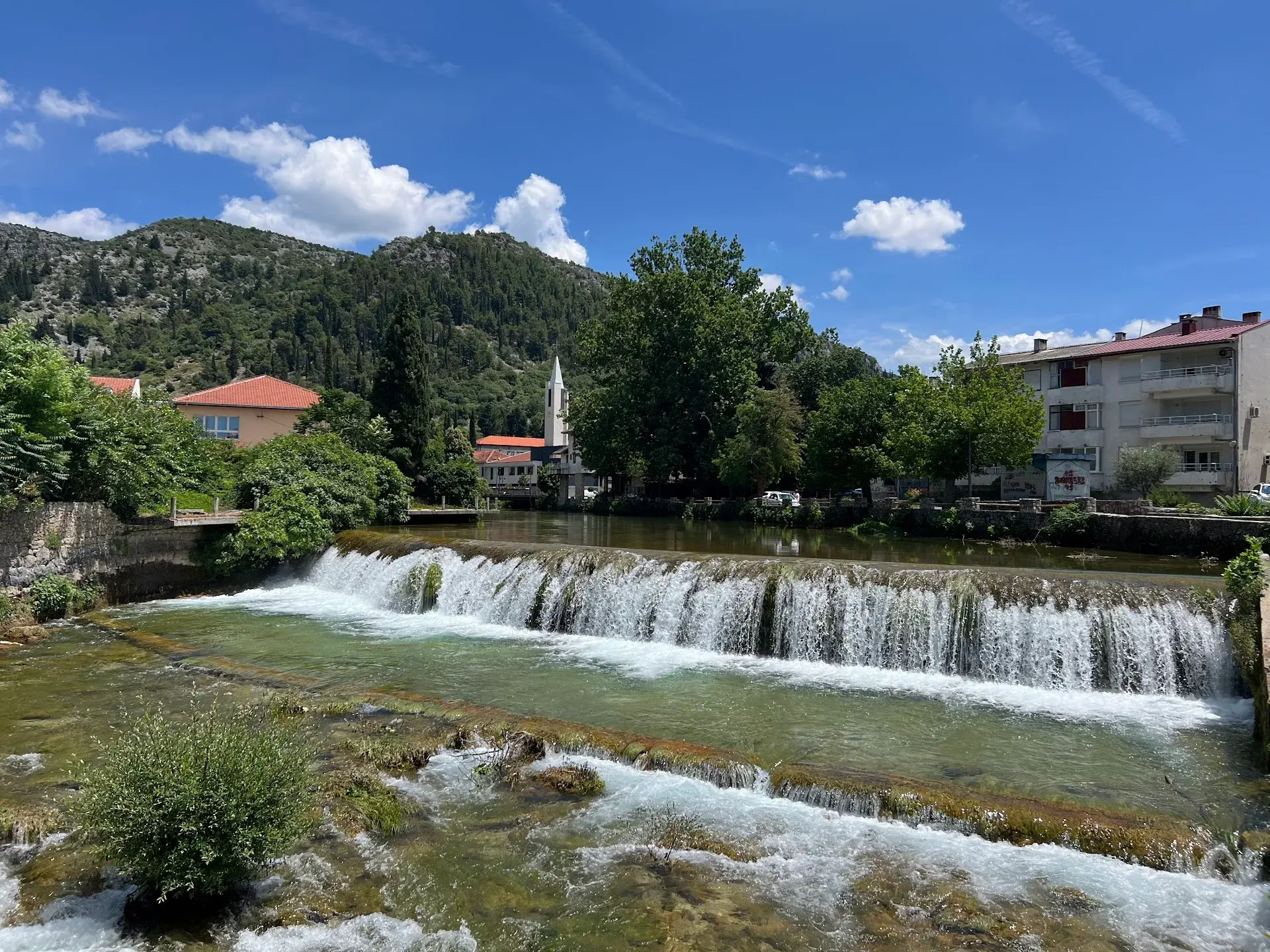
Benat Waterfall, locally known as Slap Benat or Veliki benat, is a wide, stepped cascade situated on the karstic Bregava River in central Stolac. While the town is renowned for natural cascades such as Pjene and Provalije, Benat is an engineered water feature formed by an 18th-century Ottoman stone weir (bent). Built across the riverbed to regulate water flow, this structure represents an integration of vernacular Ottoman hydraulic engineering with the surrounding limestone terrain. In 2003, the weir and its associated waterways were designated as part of a National Monument of Bosnia and Herzegovina: the Natural and Architectural Ensemble of the Bregava River Bed with Mills, Fulling Mills, and Bridges.
Ottoman Hydraulic Engineering and Industrial Heritage
From the 15th to the early 20th century, the economic life of Stolac relied heavily on grain milling, as well as the finishing of wool and leather. Stone weirs like Benat were crucial components of this municipal production network. By raising the level of the Bregava River, the weir diverted water into stone-lined millraces (jazovi), which directed kinetic energy to drive flour mills (mlinice) and water-powered cloth-fulling vats (stupe and badnjevi). The weir stands near surviving mill structures and the historic Šarić family summer residence, illustrating the close historical ties between the town's industrial infrastructure and its residential architecture.
Social Life and Bathing Traditions
As industrial processes modernized throughout the 19th and 20th centuries, the commercial focus around the weir shifted toward civic recreation. The pool formed directly beneath the dam, known as kupalište Benat, emerged as a defining social venue. In Stolac, river bathing was traditionally divided by neighborhood quarters (mahale), with Benat serving as the primary summer gathering spot for youth from Čaršija, Uzinovići, and Zagrađe.
Securing a regular spot on the stone ledges and bridge parapets around Benat carried distinct neighborhood prestige. Younger residents often sought standing among established local figures of the era, such as individuals remembered by nicknames including Balube, Kongo, Zenda, and Enes Zekić "Sova." Before modern flotation equipment became common, children learning to swim in the calmer sections around the weir wore dried, hollowed-out gourds tied to their waists as swim aids. The location also fostered local lore; mid-20th-century regular swimmers, dubbed Bentaši, were known to collect harmless water snakes beneath the weir to release onto the bridge at 2:00 PM, startling workers leaving their shifts at the nearby Inkos garment factory.
The Modern Riverside Setting
The Bregava River branches into multiple channels, islets, and cascades navigated by 15 separate bridges throughout Stolac. Benat remains a prominent scenic focal point in this urban river system. Water pours over the broad stone weir in a steady roar that carries into neighboring residential gardens and buffers the sound of municipal street traffic.
The banks surrounding the cascade connect directly to the Old Town and border outdoor dining areas, including the garden terrace of the restored Old Mill. Today, the pool and surrounding riverbed accommodate sightseeing, warm-weather swimming, and kayak stops.
FAQ
Is Benat Waterfall a natural formation?
No, Benat Waterfall is an artificial cascade created by an 18th-century Ottoman stone weir (bent) designed to regulate river levels.
What role did Benat Waterfall play in the history of Stolac?
The weir elevated river water to feed stone millraces (jazovi), which powered local grain mills (mlinice) and wool-fulling vats (stupe and badnjevi) from the Ottoman era through the early 20th century.
Is Benat Waterfall part of a protected heritage site?
Yes, in 2003 it was protected as part of the National Monument of Bosnia and Herzegovina: the Natural and Architectural Ensemble of the Bregava River Bed with Mills, Fulling Mills, and Bridges.
Discover Stolac like never before
Dive into Stolac hidden stories and secret spots with Ciceru interactive tours.
Explore tour
Audioguide
Quizzes
Maps
Solo
Couples
Groups & families

© Photo by Issa via Google Maps · Google Places