Sultan Selim Mosque: Stolac's Historic Landmark
Foundation and Urban Development
The Sultan Selim Mosque (Sultan Selimova džamija), also commonly known as the Emperor's Mosque (Careva džamija) and the Market Mosque (Čaršijska džamija), stands at the center of Stolac's historic bazaar in Bosnia and Herzegovina. Commissioned under the patronage of Ottoman Sultan Selim I Yavuz, the mosque was completed in 1519 (AH 925), a date recorded in two Ottoman Turkish stone inscriptions positioned above the entrance portal.
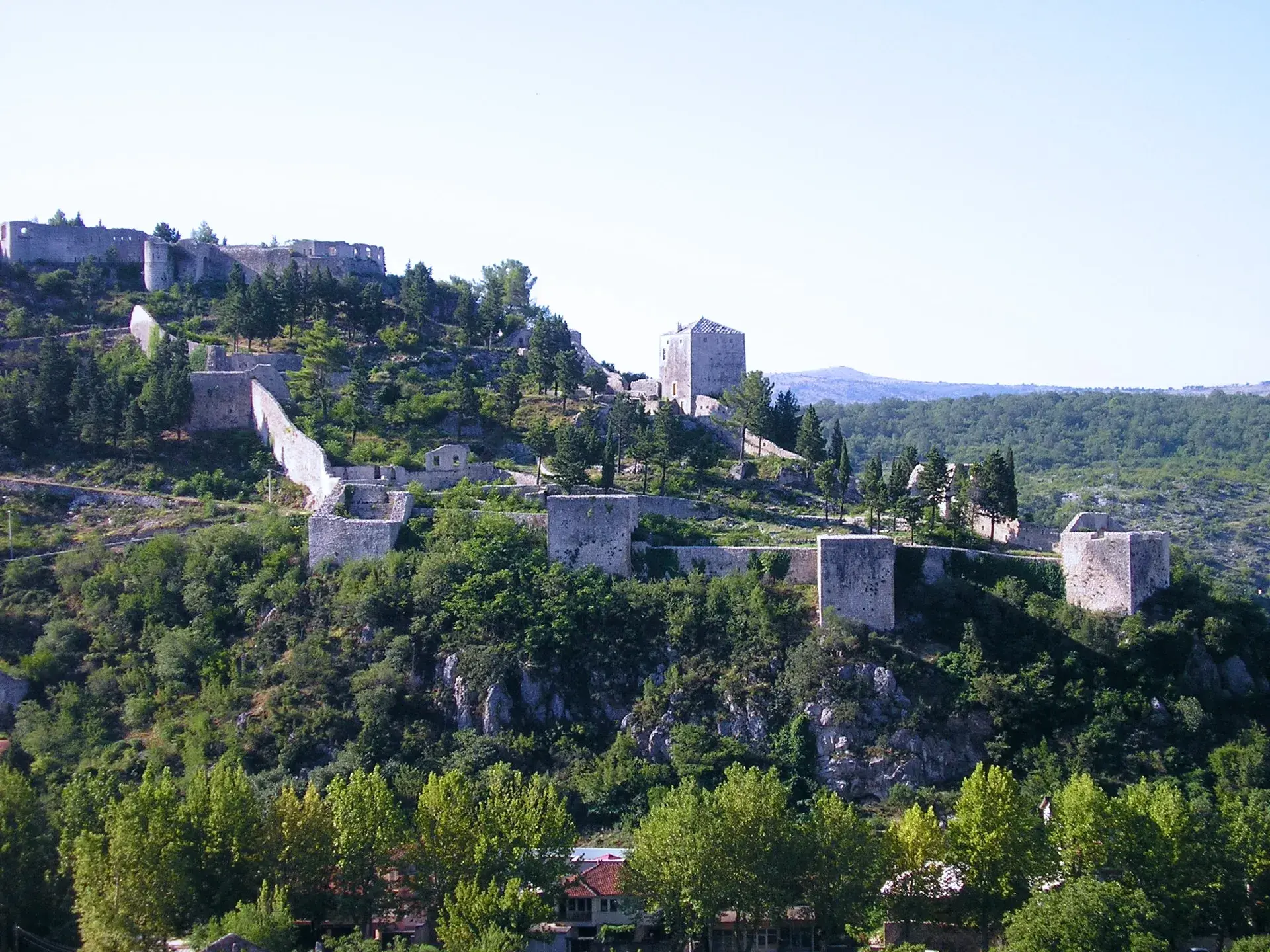
Prior to the mosque's construction, Stolac was a modest settlement clustered beneath the medieval hilltop fortress of Vidoški grad. Erected near an existing communal cistern and open prayer ground (musalla), the mosque catalyzed the settlement's transition into a planned Ottoman commercial town (kasaba). Over the following centuries, charitable endowments (vakuf) established by local leaders, such as Silahdar Husein-pasha Šarić, expanded the precinct to include a primary religious school (sibjan mekteb), a travelers' inn (musafirhana), a reading room, bazaar stalls, and a seventeenth-century clock tower.
Architectural Features and Sufi Symbolism
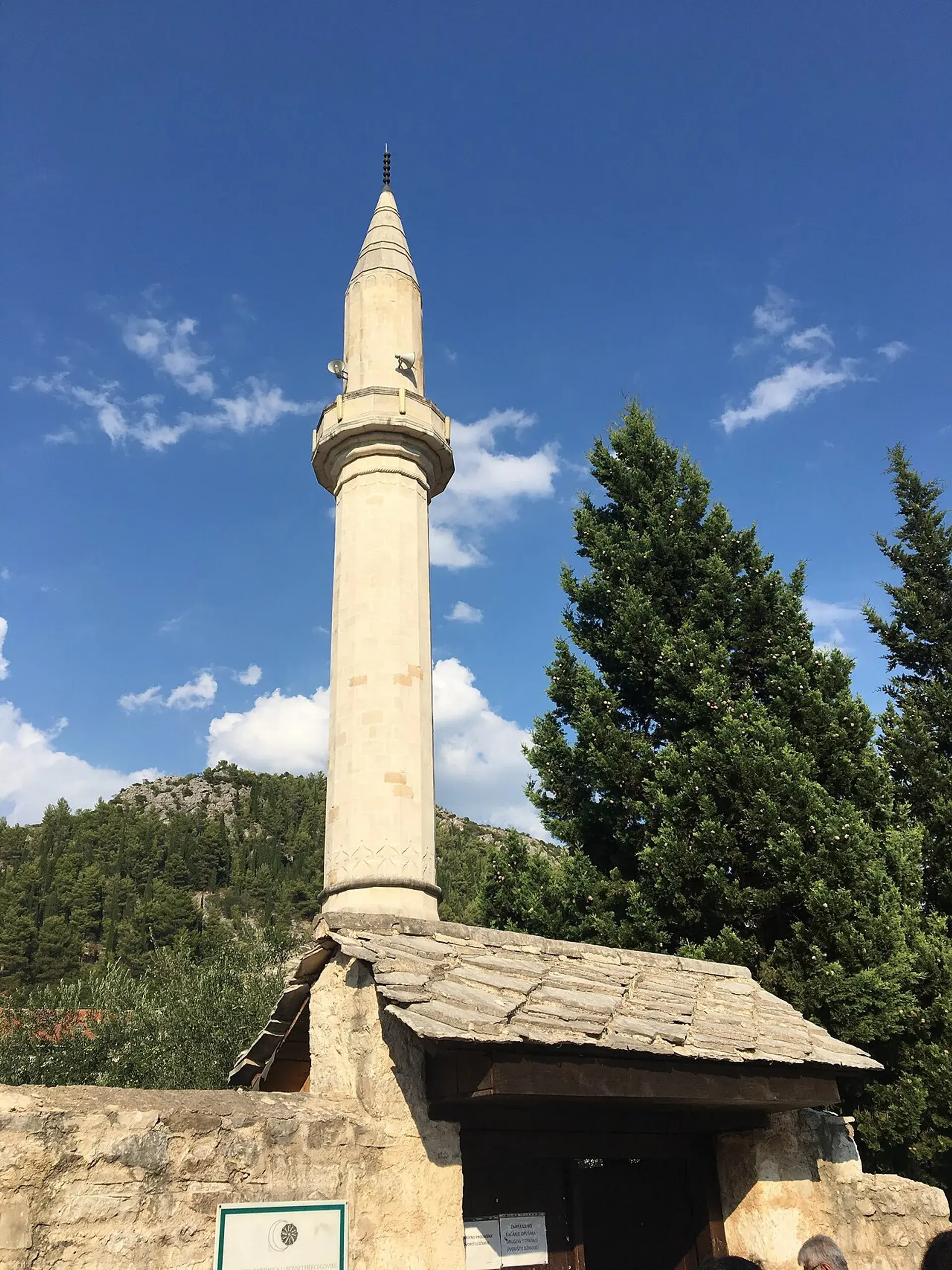
The mosque rests on an outer footprint measuring 18.30 by 15.30 meters, enclosed by 90-centimeter-thick semi-dressed stone walls. Rather than a lead dome, the building is sheltered by a traditional four-pitched hipped roof clad in thick local limestone slabs. An open front porch features restored floral and plant frescoes painted above the limestone masonry.
Rising to a height of 25.80 meters, the adjacent minaret departs from standard circular designs. It is built with a dodecagonal (12-sided) stone shaft and is ornamented below the muezzin's balcony (šerefe) with double rows of carved, stylized tulip motifs.
Inside, the prayer hall contains an unusual configuration of 11 interior wooden pillars, earning the building the historical moniker Džamija jedanaest direka (Mosque of Eleven Pillars). Five columns carry the main ceiling beam, while six support the raised wooden prayer gallery (mahfil). Architectural historians and local tradition connect this specific count to esoteric Sufi numerology, representing 11 visible spiritual successors with the 12th remaining in occultation.
The Cistern, Fountain, and Courtyard
The mosque anchors the Great Tepa (Velika tepa) market square, linking the historic bazaar at the base of the citadel with the bridges and quarters along the Bregava River. Bordering the entrance gate is an 11-meter-deep communal cistern (čatrnja) that historically provided reliable freshwater to local merchants and residents.
In 1909, a stone fountain (šadrvan) funded by Hadži Salih Behmen was installed alongside the cistern. The sound of running water in the stone courtyard complements the neighboring burial ground, creating a quiet enclave against the rocky backdrop of the Vidoški fortress slopes.
Destruction, Reconstruction, and Current Use
During the Bosnian War in August 1993, the Sultan Selim Mosque and the surrounding historic bazaar were mined with explosives and leveled by Croat Defence Council (HVO) forces. Following the demolition, original structural stones and decorative elements were cleared and dumped into landfills and the Radimlja riverbed.
In 2001, a meticulous reconstruction campaign began, relying on photographic archives, historic plans, and salvaged masonry recovered from the river. The restored mosque officially reopened in August 2003. In the same year, the mosque and the surrounding bazaar ensemble were designated a National Monument of Bosnia and Herzegovina. Administered by the Islamic Community of Bosnia and Herzegovina (Medžlis IZ Stolac), the complex serves as an active Sunni place of worship and a central landmark for cultural events in Stolac.
FAQ
When was the Sultan Selim Mosque founded?
The mosque was founded in 1519 (AH 925) under the patronage of Ottoman Sultan Selim I Yavuz, as recorded in two stone inscriptions above the portal.
Why is the building called the Mosque of Eleven Pillars?
The prayer hall features 11 wooden pillars—five supporting the central ceiling beam and six supporting the raised prayer gallery. Local tradition links this layout to esoteric Sufi symbolism representing 11 visible spiritual successors.
What makes the minaret of Sultan Selim Mosque distinct?
The minaret is 25.80 meters tall and has a 12-sided (dodecagonal) stone shaft decorated with double rows of stylized carved tulips below the balcony.
When was the mosque restored after its wartime destruction?
After being leveled in August 1993 during the Bosnian War, reconstruction began in 2001 using archival records and salvaged original stone, concluding with an official reopening in August 2003.