Šarića Kuća: Stolac's Historic Captaincy House
Origins and Architecture
Šarića kuća, located in the historic center of Stolac, Bosnia and Herzegovina, is a prominent 18th-century Ottoman residential complex. Constructed in 1734 or 1735 (1147 AH), the residence was built by Ismail-kapetan Šarić, who led the Stolac Captaincy (Stolačka kapetanija) from 1731 until 1761. A carved stone epigraphic slab mounted over the entrance lintel documents its construction date.
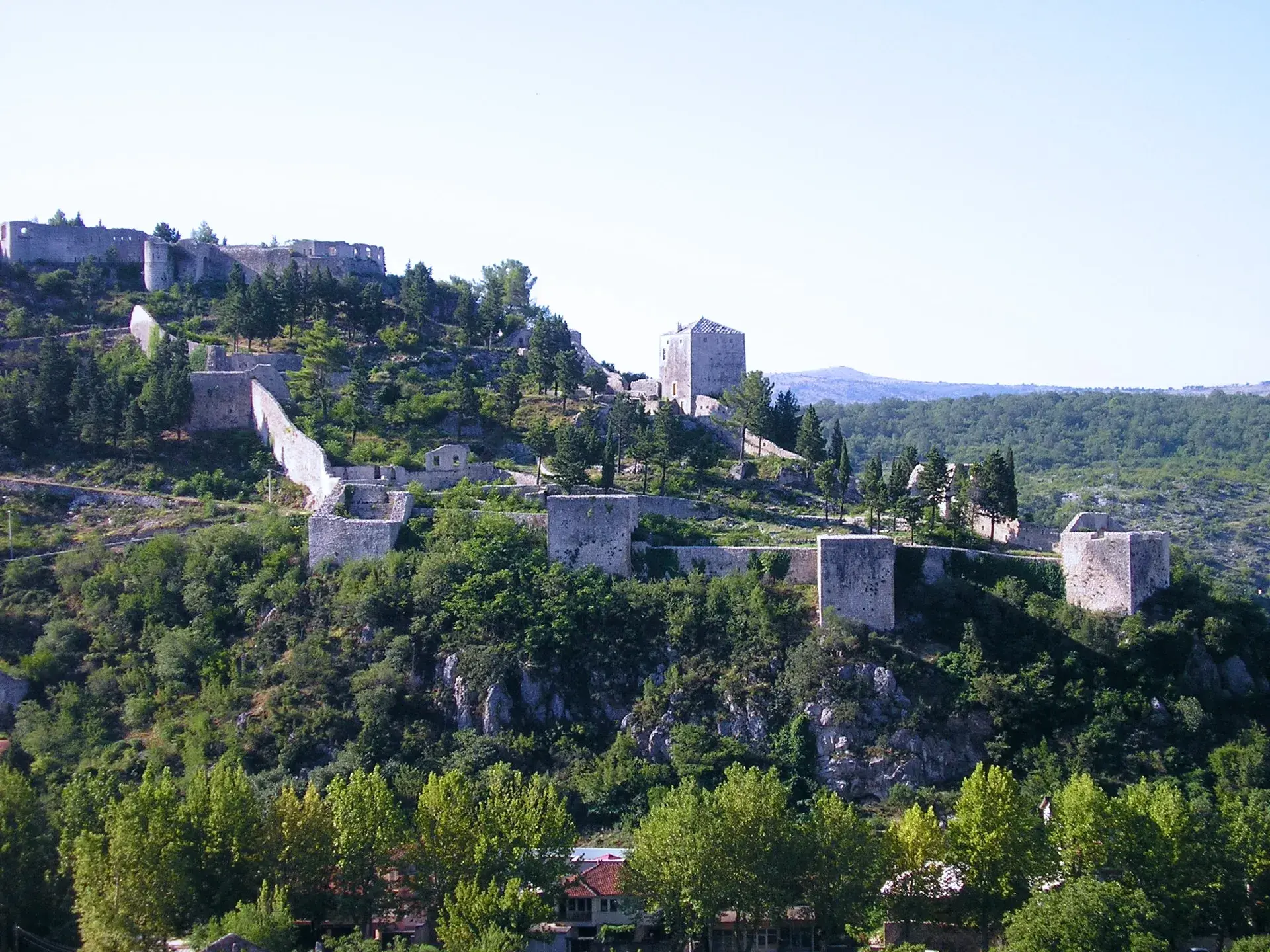
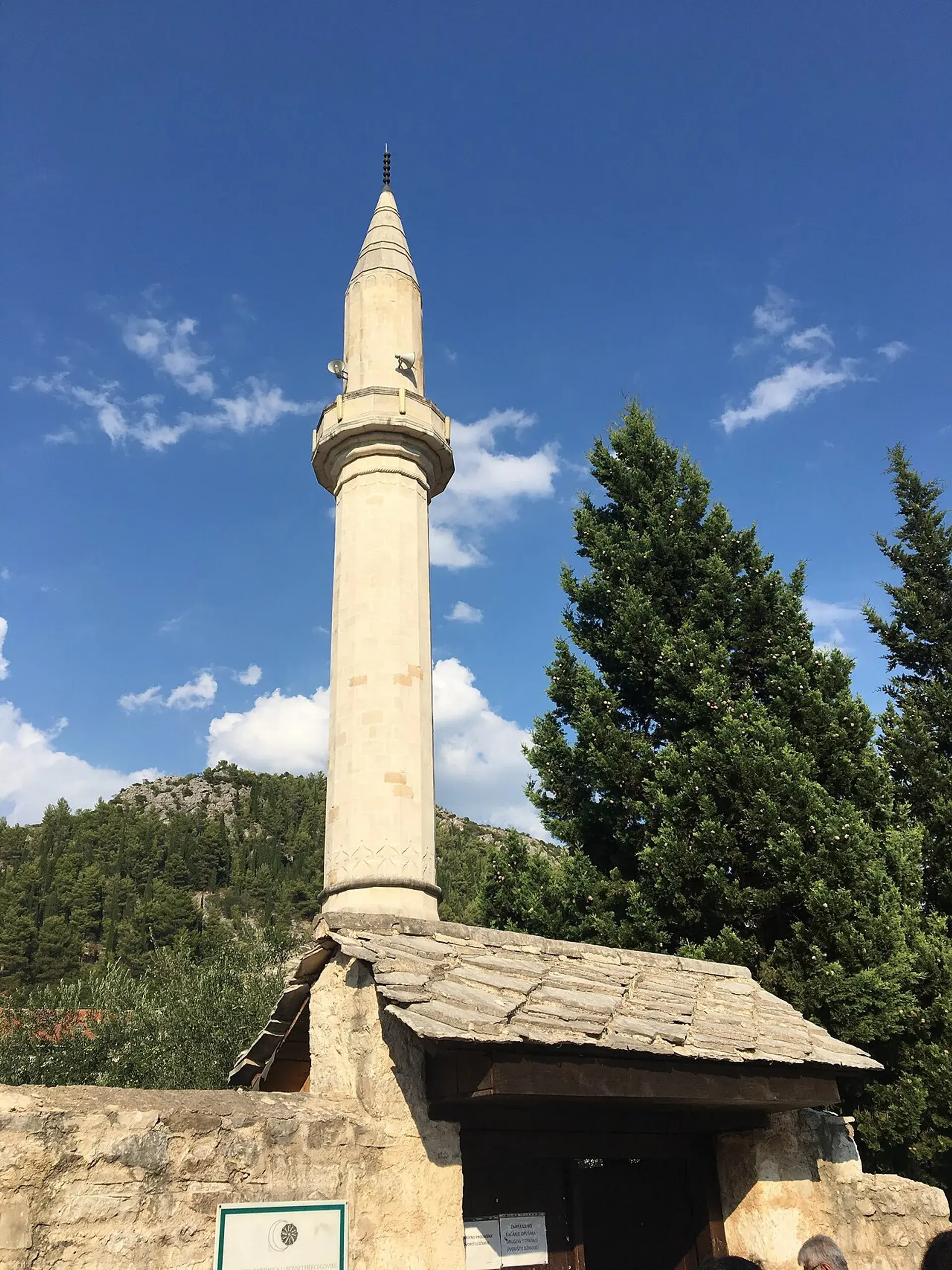
The complex exemplifies traditional Herzegovinian Ottoman residential architecture, combining fortified structural elements with domestic living quarters. Built with heavy, dressed white limestone masonry on the lower level, the house is finished with timber-framed windows, a stone courtyard, and hipped wooden eaves. Situated immediately behind the central Čaršija bazaar and the Sultan Selim Mosque, the property historically connected the town’s commercial heart with its residential zones and the footpath leading up to the Vidoški fortress.
The Šarić family ranked among the most prominent hereditary leaders in Stolac. Beyond his military and administrative role, Ismail-kapetan Šarić served as a civic benefactor, financing a nearby mosque, an elementary school (sibjan-mekteb), a public water cistern (čatrnja), and multiple commercial shops.
The Branko Šotra Gallery
On July 28, 1963, the residence assumed a new civic identity when it reopened as the Branko Šotra Gallery (Galerija Branka Šotre). This marked the first regional extension branch established outside Sarajevo by the Art Gallery of Bosnia and Herzegovina.
The gallery was dedicated to Stolac-born artist Branko Šotra (1906–1960), a communist Partisan veteran and art educator known for his expressive black-and-white printmaking. The permanent exhibition showcased 92 graphic prints—predominantly woodcuts and linocuts—donated by Šotra, alongside 11 works by other Yugoslav artists. The conversion established an unusual architectural dialogue, placing modernist mid-20th-century graphic art within the fortified walls of an 18th-century Ottoman captaincy seat.
Destruction and Restoration
During the Bosnian War, on July 26, 1993, Šarića kuća was deliberately set on fire and gutted. The interior was completely destroyed and the exhibited artwork was confiscated, leaving only the outer perimeter stone walls standing up to the roofline.
Recognizing its historical and architectural importance, the Commission to Preserve National Monuments designated the complex a National Monument of Bosnia and Herzegovina in May 2003. Comprehensive structural reconstruction took place between 2012 and 2013 under the European Union–funded ARCH-Stolac cultural heritage initiative, rebuilding the lost timber framing and roof according to historic documentation.
Contemporary Role
Following its physical revival, the City of Stolac allocated the building to the Stolac Town Brass Orchestra (Gradski orkestar Stolac). The orchestra gained notable local significance as one of the first post-war civic organizations to bring together youth from across the town’s ethnic divisions.
After sustaining damage from severe weather and the 2022 Stolac earthquake, the complex underwent additional emergency roof and timber restoration funded by the Federal Ministry of Displaced Persons and Refugees. Following this work, Šarića kuća officially reopened in May 2025. Today, the complex operates as an active rehearsal space and venue for civic and cultural gatherings, where brass fanfares and woodwind scales regularly resonate through the stone courtyard into the adjacent streets.
FAQ
When was Šarića kuća built?
The house was built in 1734/1735 (1147 AH) by Ismail-kapetan Šarić, as recorded on the stone inscription slab above the main entrance.
What was the Branko Šotra Gallery?
Opened in 1963, it was the first regional branch of the Art Gallery of Bosnia and Herzegovina, housing 92 graphic prints donated by artist Branko Šotra and 11 works by other Yugoslav artists.
How is Šarića kuća used today?
The complex serves as a cultural venue and rehearsal hall for the Stolac Town Brass Orchestra (Gradski orkestar Stolac), hosting civic and musical gatherings.