Kensington Market: Toronto's Historic & Vibrant Hub
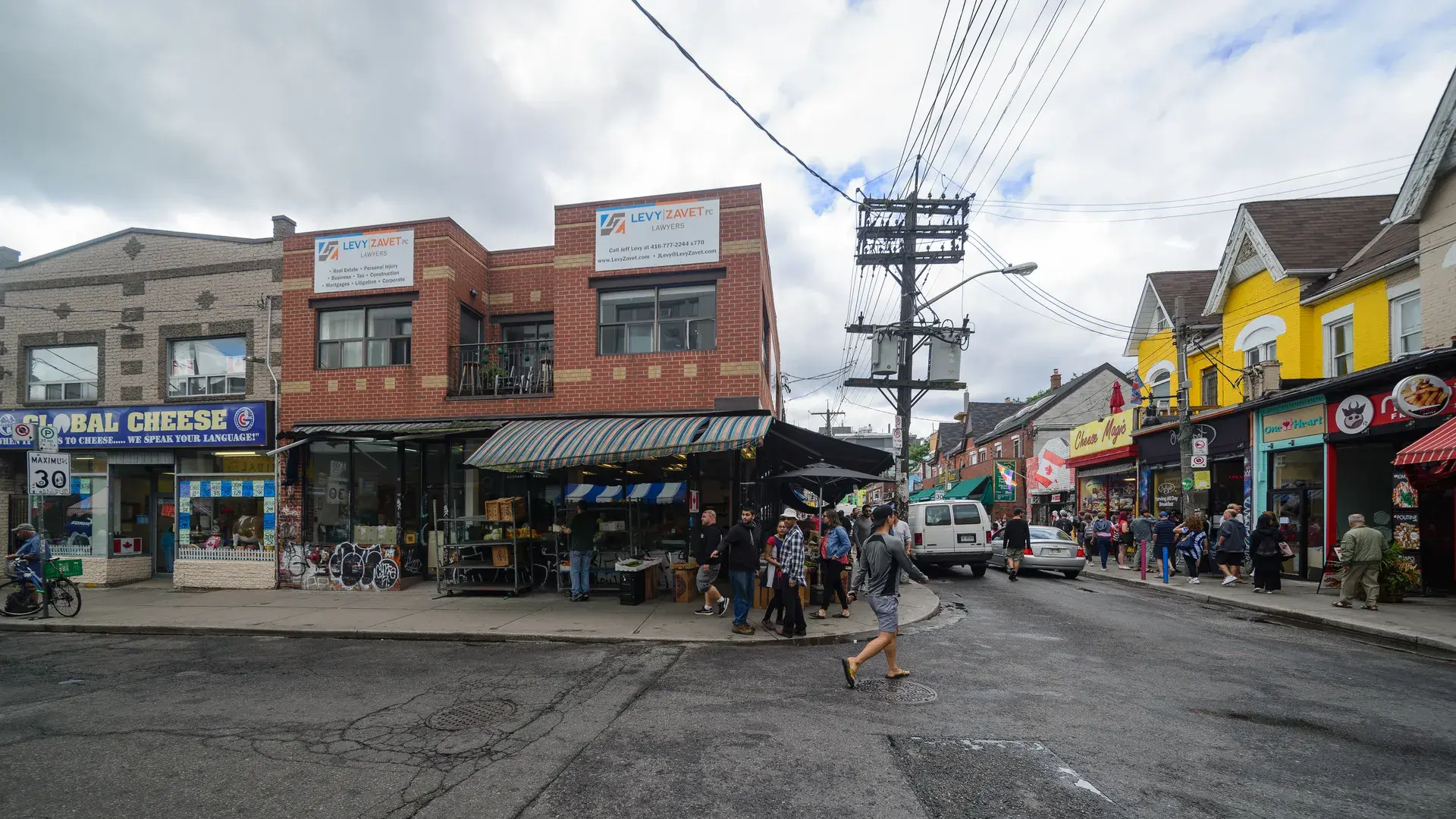
Kensington Market is a National Historic Site of Canada, recognized in 2005 for its representation of the country's ethnic mosaic. Its vibrant, seemingly chaotic collection of shops and homes stands in stark contrast to its origins as a sprawling aristocratic estate.
From Aristocratic Estate to Urban Market
The area's history begins in 1815 when George Taylor Denison, a Canadian militia member, acquired the 40-hectare Bellevue estate. The property featured a Georgian-style mansion, an orchard, and grazing areas. In the 1850s, the estate was subdivided, leading to the construction of Victorian-style row houses for Irish and Scottish immigrant laborers. Many of these houses were later adapted to include ground-floor shops.
The Jewish Market and Waves of Immigration
A significant transformation occurred in the early 1900s with the arrival of Eastern European Jewish immigrants fleeing persecution. They established businesses in the front rooms of their homes, and the area became known as "the Jewish Market." By the 1920s and 1930s, the Jewish population in and around Kensington was about 60,000, served by over 30 synagogues. After World War II, as this community prospered and moved to other parts of the city, new waves of immigrants from the Azores, the Caribbean, East Asia, and Latin America arrived, each adding another layer to the market's unique cultural fabric.
A Cultural and Community Hub
Kensington Market's independent and multicultural spirit has been a defining feature. In 1969, the community successfully opposed urban renewal plans that threatened its character. The neighborhood's identity was famously captured in the CBC series "King of Kensington" (1975-1980), and its star, Al Waxman, is commemorated with a statue in Bellevue Square Park. Other notable figures with ties to the area include composer Percy Faith, who lived at 171 Baldwin Street as a child.
The Market Today: Vibrancy and Challenges
Today, Kensington Market is a bustling neighborhood with approximately 3,500 residents. It is known for its independent shops, vintage clothing stores, art galleries, diverse restaurants, and extensive street art. From May to October, "Pedestrian Sundays" close the streets to cars on the last Sunday of the month, filling them with performers and vendors. The market is also facing gentrification, leading to a decline in traditional fresh food vendors and an increase in bars and dispensaries, sparking local debate about its future.
Hidden History Beneath the Streets
Beneath the modern market lies a hidden history. The first recorded business in the area was the Spadina Brewery, established in the 1830s, which used water from Russell Creek. This creek was later buried and sewered in the mid-19th century, but the faint sound of its flowing water can sometimes be heard near the intersection of Kensington Avenue and St. Andrew Street. Of the more than 30 synagogues from the Jewish Market era, only two—the Kiever Synagogue and the Anshei Minsk—remain operational today.
FAQ
Why is Kensington Market a National Historic Site?
Kensington Market was designated a National Historic Site of Canada in 2005 because its history of successive waves of immigration and settlement makes it a significant representation of Canada's ethnic mosaic.
What was Kensington Market before it was a market?
Before becoming a market, the area was the Bellevue estate, a 40-hectare property established in 1815 by George Taylor Denison. It was subdivided in the 1850s to build Victorian row houses for immigrant laborers.
What are Pedestrian Sundays at Kensington Market?
Pedestrian Sundays are a monthly event from May to October where the market's streets are closed to vehicles. This allows pedestrians, street performers, and vendors to take over the streets on the last Sunday of each month.