Osgoode Hall's Cow Gates: A Toronto Urban Legend
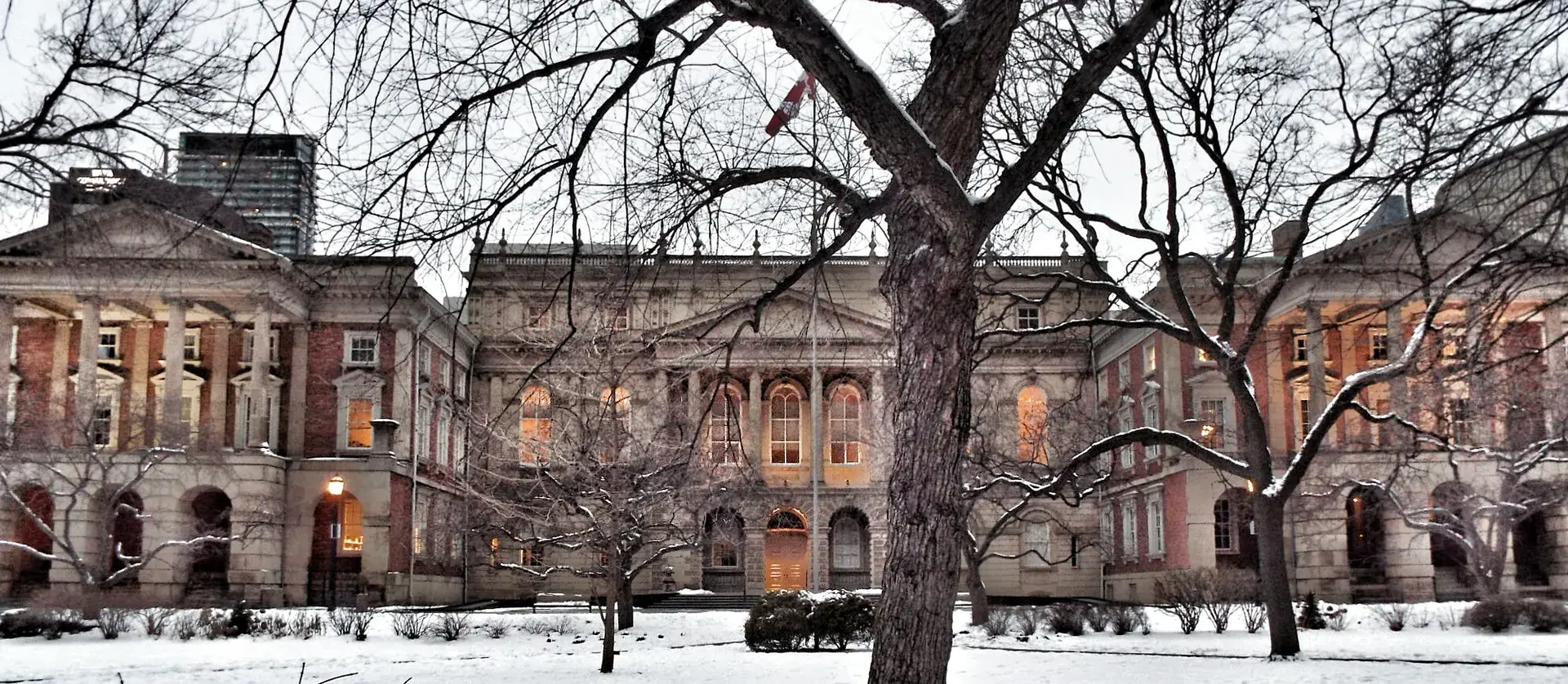
Osgoode Hall in Toronto is known for its distinctive cast-iron fence and its peculiar zigzagging entrances, popularly known as the 'Cow Gates.' A persistent local legend claims these gates were designed to prevent livestock from wandering onto the manicured grounds. However, this charming story is a well-known urban myth.
The Myth of the Cow Gates
The famous fence, including the Cow Gates, was designed by architect William Storm and erected in 1867. By this time, Toronto was an established urban and commercial center with bylaws that prohibited cattle from roaming freely. The notion that the gates were for livestock control was largely popularized by a novel published in 1933.
The legend became so ingrained in local lore that in the 1950s, a group of law students famously attempted to test the theory by pushing a cow through one of the gates. Their attempt was unsuccessful, but the story remains a beloved piece of Toronto's history.
A Legacy in Law and Architecture
Osgoode Hall itself is a foundational landmark in Ontario's legal history. Construction began in 1829 on a 6-acre site then considered the northwestern edge of the town of York. Completed in 1832, it was designed by John Ewart and William Warren Baldwin to serve as the headquarters for the Law Society of Upper Canada, which was established in 1797.
The building is named for William Osgoode, the first Chief Justice of Upper Canada. Its architecture is a blend of Palladian, Neoclassical, and Victorian Classical styles, reflecting various expansions and renovations over nearly two centuries by architects such as Henry Bowyer Lane and the firm of Cumberland and Storm.
A Witness to History
Throughout its long history, Osgoode Hall has played a central role in pivotal moments. During the Rebellion of 1837, the hall was temporarily repurposed as troop barracks. In 1846, it began housing the province's Superior Court, solidifying its judicial function.
A significant legal event occurred here in 1861 with the John Anderson case. The ruling set a precedent that protected refugees from the Underground Railroad from being extradited back to the United States, cementing Osgoode Hall's place in Canadian legal history.
Osgoode Hall Today
Today, Osgoode Hall continues to be an active legal hub. It houses the Law Society of Ontario, the Ontario Court of Appeal, and the Divisional Court of the Superior Court of Justice. Since 1874, the building has been jointly owned by the Law Society and the Government of Ontario.
While it is a working courthouse, the public can visit during business hours, Monday to Friday, from 9 a.m. to 5 p.m., though visitors must pass through a metal detector. The site also participates in events like Doors Open Toronto and offers self-guided tours via a mobile app.
FAQ
Is the story about Osgoode Hall's 'Cow Gates' true?
No, the story is a popular urban myth. The gates were built in 1867, by which time Toronto was an urban center with bylaws preventing cattle from roaming freely.
What is Osgoode Hall used for today?
Osgoode Hall is an active legal center, housing the Law Society of Ontario, the Ontario Court of Appeal, and the Divisional Court of the Superior Court of Justice.
Who is Osgoode Hall named after?
The building is named after William Osgoode, who served as the first Chief Justice of Upper Canada from 1792 to 1794.
Can the public visit Osgoode Hall?
Yes, the public can enter Osgoode Hall during business hours (Monday to Friday, 9 a.m. to 5 p.m.) after passing through a security check. The site also offers tours during summer and participates in Doors Open Toronto.