Calle del Embudo: Bogotá's Historic Funnel Street
The Alley That Defied the Spanish Grid
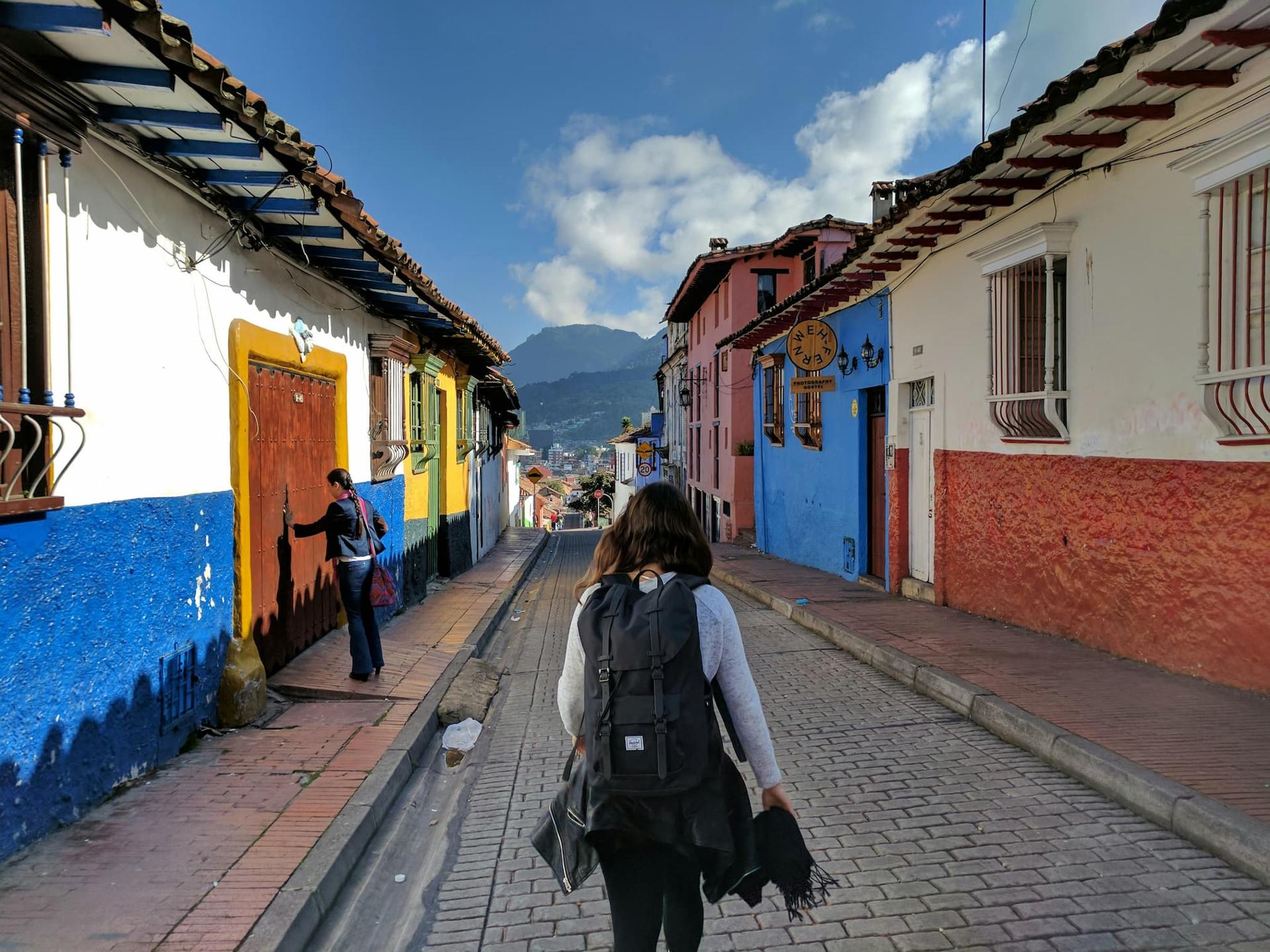
Located in the historic La Candelaria district of central Bogotá, Calle del Embudo runs along Carrera 2 between Calle 12B/Calle 13 and Calle 14. Translating directly to "Funnel Street," the cobblestone lane derives its name from an acute bottleneck layout that narrows sharply as it approaches its terminus. Built wide enough only for foot traffic or a single pack horse, the passage completely broke with the imperial urban standards of its era.
While the Spanish Crown strictly mandated a uniform checkerboard grid (damero) across Latin American cities under the Laws of the Indies, Calle del Embudo defied this geometric formula. Its alignment instead emerged organically, shaped by informal early settlements and natural mountain runoff flowing down the eastern Andean slopes. Blocks uphill from Bogotá's grand civic landmarks, including Plaza de Bolívar and the Botero Museum, the street preserves an authentic, irregular colonial footprint.
Bogotá self guided walking tour by Ciceru
1.5 hours9 stopsAudio guideStart any day, at your own paceTicket on your phone · 30-day refundHistorical Origins and Enduring Identity
The passage terminates directly at the Plazoleta del Chorro de Quevedo. Local tradition identifies this square as an elevated Muisca indigenous lookout (Thibsaquillo) as well as the 1538 military camp of conquistador Gonzalo Jiménez de Quesada, although contemporary documentation confirming this specific founding site remains absent.
During early colonial rule, the streets of Santa Fe (Bogotá) carried descriptive names based on terrain, local commerce, or visual quirks rather than numbers. In 1774, Viceroy Manuel Guirior decreed an official system of street naming and house numbering across the city. Despite these bureaucratic efforts to impose order, the moniker Calle del Embudo endured in civic memory and remains visible on neighborhood markers today.
The Fall and Revival of Chicha
For generations, Calle del Embudo was an epicenter of traditional chicherías serving chicha, an indigenous fermented maize beverage central to Muisca culture. However, the trade faced near-total destruction in the mid-20th century. Following the destructive 1948 Bogotazo riots, the Colombian government enacted Law 34 of 1948, which criminalized non-pasteurized artisanal chicha under the pretext of modern sanitation and public health. This legislation was heavily lobbied by industrial beer conglomerates such as Bavaria.
The ban forced chicha producers and consumers into clandestine networks for decades. Eventually, grassroots cultural preservation efforts revived the drink's status as living Colombian heritage. Today, the street once again serves as Bogotá's focal point for chicha production, with roughly twenty distinct chicherías and drink stalls lining the passage.
Street Art and Modern Counter-Culture
Calle del Embudo now operates as a dynamic pedestrian corridor connecting the institutional quarter of La Candelaria to its bohemian, counter-cultural core. Facades composed of low-rise whitewashed plaster and weathered adobe support an evolving open-air gallery. Large-scale public murals and street art, created by prominent artists such as Carlos Trilleras, cover the walls with themes highlighting indigenous Muisca identity, environmental subjects, and social resistance.
The tactile and sensory character of the alley remains tied to its heritage. Uneven river cobblestones frequently hold puddles after Andean rain showers, while the air carries the sweet, fermented aroma of yeast, maize, pineapple, and panela (unrefined cane sugar) alongside roasted Colombian coffee. Chicha is still widely served in totumas—traditional shallow bowls crafted from hollowed-out, dried tree gourds. Alongside ancestral malted recipes, local vendors have introduced modern variations known as chicha de colores, blending the fermented corn base with blackberry, passion fruit, and other tropical fruits.
FAQ
Why is Calle del Embudo shaped like a funnel?
The alley formed organically along early pedestrian paths and natural mountain runoff slopes, bypassing the rigid checkerboard grid mandated by the Spanish Laws of the Indies.
What is a totuma and why is it used on Calle del Embudo?
A totuma is a traditional shallow vessel crafted from a hollowed, dried tree gourd. In the chicherías along Calle del Embudo, chicha is customarily served in totumas rather than glassware.
Why was chicha banned in Colombia in 1948?
Following the Bogotazo riots in 1948, the Colombian government passed Law 34 of 1948, prohibiting non-pasteurized artisanal chicha under hygiene claims that were heavily backed by commercial beer brewing lobbies.
More places in Bogota
bogota, colombia
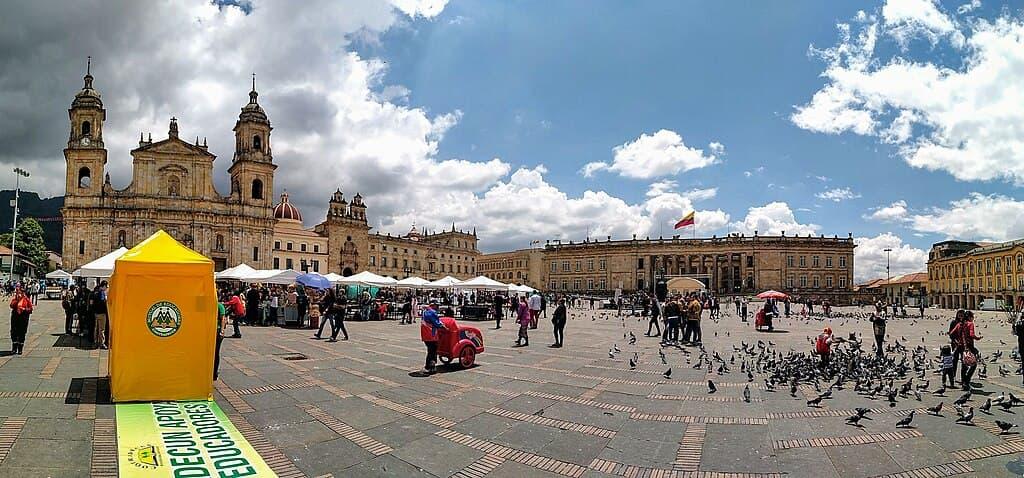
Plaza de Bolívar: the republic’s front porch.
Plaza de Bolívar: the republic’s front porch.
bogota, colombia
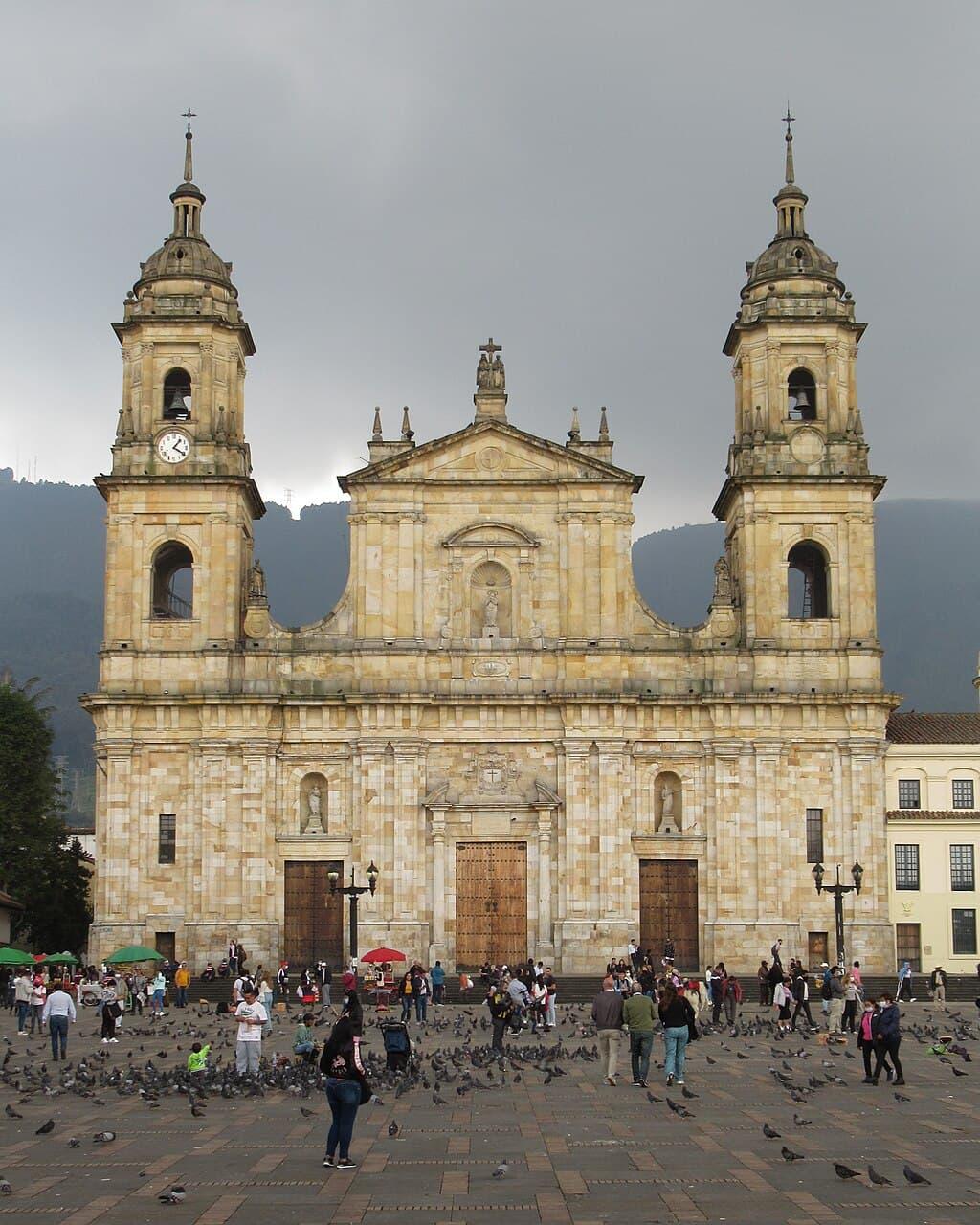
Catedral Primada de Colombia: faith in four acts
Catedral Primada de Colombia: faith in four acts
bogota, colombia
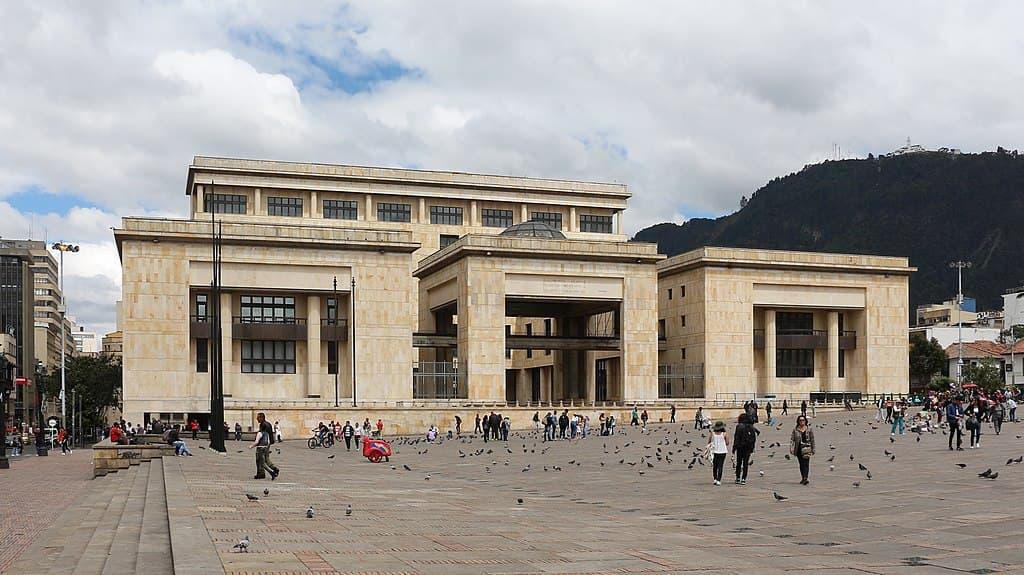
Palacio de Justicia: a building rebuilt, a story remembered