Centro Cultural Gabriel García Márquez in Bogotá
A Landmark Born from the Bogotazo
The Centro Cultural Gabriel García Márquez (CCGGM), colloquially known as "El Gabo," stands at Calle 11 # 5-60 in the historic La Candelaria district of Bogotá. Occupying a 3,200-square-meter site just one block east of the Plaza de Bolívar, the plot carries a complex civic history. During the colonial era, it housed the Claustro e Iglesia de la Enseñanza, which in 1886 became the location of Colombia’s first National School of Fine Arts. Around 1920, those structures were demolished to construct the republican-style Palacio de Justicia.
On April 9, 1948, the Palacio de Justicia was burned and gutted during the Bogotazo riots that followed the assassination of political leader Jorge Eliécer Gaitán. For nearly 55 years following the fire, this prime plot near the presidential palace and primary cathedral functioned as an open-air surface parking lot. Between 2003 and 2004, Mexico's publishing house, the Fondo de Cultura Económica (FCE), acquired the land to construct its Colombian headquarters and establish a cultural center honoring the 1982 Nobel laureate in literature, Gabriel García Márquez.
Bogotá self guided walking tour by Ciceru
1.5 hours9 stopsAudio guideStart any day, at your own paceTicket on your phone · 30-day refundRogelio Salmona's Architecture of Brick and Water
Commissioned by the FCE, celebrated Colombian-French architect Rogelio Salmona designed the complex, which covers approximately 9,500 to 9,600 square meters of built space. The building stands as Salmona’s final completed civic project; he passed away in October 2007, three months before its official inauguration on January 30, 2008.
Rather than replicating the colonial adobe or neoclassical stone typical of La Candelaria, Salmona conceptualized a porous, modern public space. The complex utilizes exposed sand-toned concrete alongside locally manufactured Santa Fe bricks, which form lattice walls, double walls, and continuous paved footpaths. Fluid ramps, curved colonnades, and large glass façades invite pedestrians directly off the street into an expansive interior void. Gentle water channels temper the noise of the surrounding streets, while central shallow reflecting pools catch daylight and cast moving reflections across the rough brick surfaces. Upper terraces and ramps frame views of the domes and bell towers of the Catedral Primada against the backdrop of the Cerros Orientales.
A Regional Cultural Hub
The cultural complex operates as a diplomatic and cultural bridge celebrating the ties between Colombia and Mexico, the two countries where García Márquez spent much of his life. Today, the facility draws approximately 150,000 visitors each year and hosts more than 350 cultural programs annually, including book launches, academic lectures, musical recitals, and the annual "Visiones de México en Colombia" festival.
Inside, the complex houses one of Latin America's largest bookstores, which offers tens of thousands of Spanish-language titles spanning literature, history, and philosophy. Facilities also include the 324-seat Rogelio Salmona auditorium, the Débora Arango art exhibition gallery, classrooms, commercial cafés, and open plazas such as Plazoleta México. Without requiring admission tickets, the public courtyards and open-air terraces serve as communal gathering places integrated into the pedestrian pathway connecting the Plaza de Bolívar with the nearby Banco de la República museum complex.
FAQ
Who designed the Centro Cultural Gabriel García Márquez?
The complex was designed by renowned Colombian-French architect Rogelio Salmona. It was his final civic project, inaugurated in January 2008 shortly after his death in October 2007.
What occupied the site prior to the construction of the center?
The site previously held a colonial convent, Colombia's first National School of Fine Arts, and the republican-style Palacio de Justicia, which burned down during the 1948 Bogotazo. The vacant land operated as a parking lot for nearly 55 years until the FCE purchased it.
Is admission required to visit the complex?
No, the center provides free pedestrian access to its courtyards, terraces, and public reading areas.
More places in Bogota
bogota, colombia
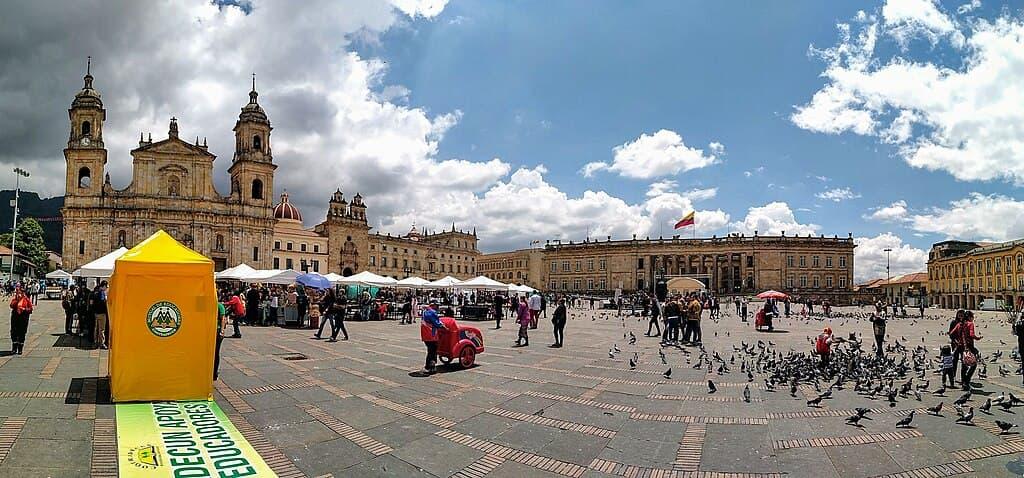
Plaza de Bolívar: the republic’s front porch.
Plaza de Bolívar: the republic’s front porch.
bogota, colombia
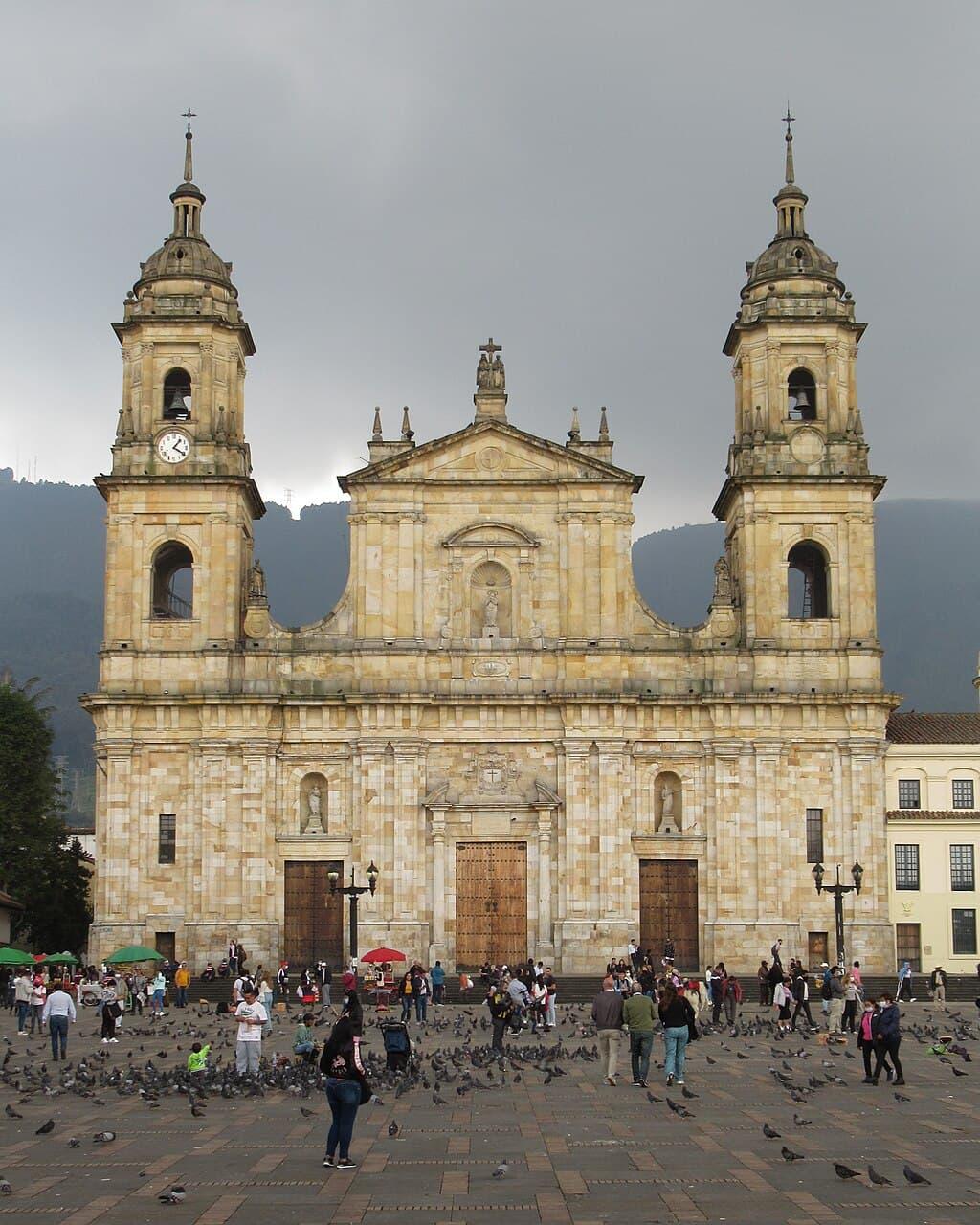
Catedral Primada de Colombia: faith in four acts
Catedral Primada de Colombia: faith in four acts
bogota, colombia
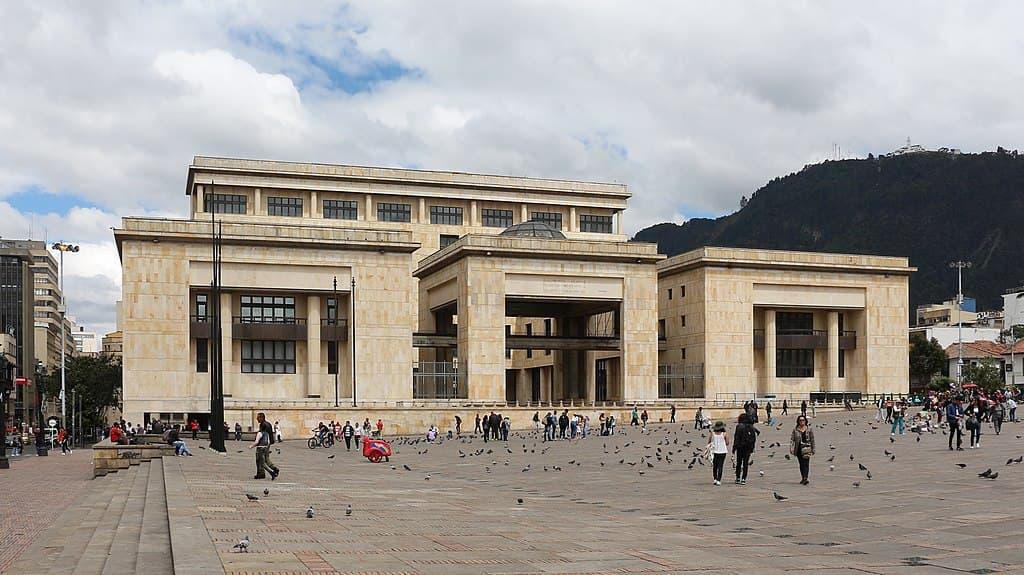
Palacio de Justicia: a building rebuilt, a story remembered