Chorro de Quevedo: History and Myth in Bogotá
At the intersection of Calle 12B and Carrera 2 in the historic La Candelaria district of Bogotá sits the Plazoleta del Chorro de Quevedo. Set against the eastern slopes of the Cerros Orientales, this small pedestrian square centers around an ornamental stone water fountain and is framed by single- and two-story colonial-style buildings with clay tile roofs. While local lore often presents this intimate corner as the birthplace of the Colombian capital, the square's physical fabric is largely a twentieth-century architectural recreation.
The Legend Versus the Historical Record
Long before Spanish colonization, the hillside served as part of the Muisca territory of Thybzacuy (Teusaquillo), functioning as an elevated lookout and retreat for the Zipa, the ruler of the southern Muisca confederation. Following the arrival of European forces, popular tradition maintained that conquistador Gonzalo Jiménez de Quesada established a military camp named Nuestra Señora de la Esperanza on this exact spot on August 6, 1538, erecting twelve thatched huts to honor the apostles alongside a rudimentary church.
Despite the persistence of this tale, historians and the Instituto Distrital de Patrimonio Cultural classify the founding of Bogotá at Chorro de Quevedo as an urban legend. Primary colonial records show that the August 1538 mass occurred near modern-day Parque Santander, while the formal legal establishment took place in April 1539 at Plaza Mayor, now known as Plaza de Bolívar. The narrative placing the initial twelve huts at Chorro de Quevedo only gained widespread public currency during the mid-twentieth century.
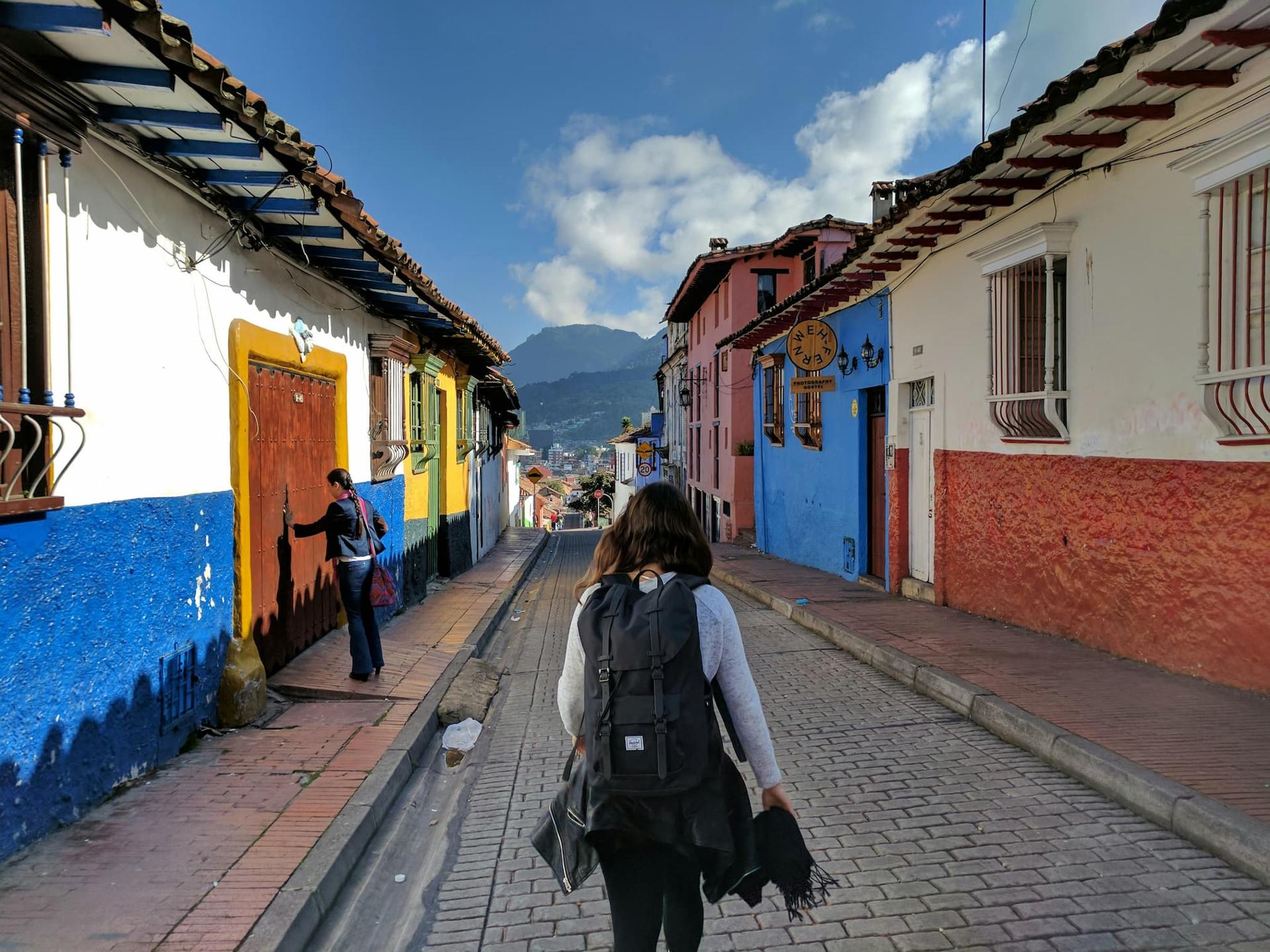
Bogotá self guided walking tour by Ciceru
1.5 hours9 stopsAudio guideStart any day, at your own paceTicket on your phone · 30-day refundThe 1969 Reconstruction and Architectural Revival
The site takes its modern name from Father Quevedo, an Augustinian friar who acquired the plot in 1832. Quevedo installed a public water fountain (chorro) fed by mountain runoff to supply nearby residents. That original structure was destroyed in 1896 when an adjacent wall collapsed, leaving the corner neglected for decades.
In 1969, municipal authorities redesigned the space to evoke a historic public square. Construction crews installed the current stone fountain and paved the plaza according to period models. At the southern edge of the square, builders erected the Ermita de San Miguel del Príncipe. Though often mistaken for a sixteenth-century relic, the whitewashed chapel was constructed entirely in 1969 as an architectural tribute to the Capilla del Humilladero, Bogotá's first permanent church, which stood near Parque Santander from roughly 1544 until its demolition in 1887.
Calle del Embudo and the Heritage of Chicha
The primary route into the square is Calle del Embudo, a cobblestone alley that physically narrows like a funnel as it approaches the opening of the plaza. Dense murals and street art cover the corridor's masonry facades, reflecting the area's contemporary bohemian character.
Calle del Embudo and the surrounding perimeter of the square host numerous taverns and chicherías. These establishments specialize in chicha, an indigenous fermented maize beverage traditionally served in dried gourd bowls known as totumas. In 1948, following lobbying from commercial beer breweries, the national government passed Law 34, which banned the production and sale of chicha under the guise of hygiene regulations. In the decades that followed, Chorro de Quevedo served as ground zero for artists, students, and cultural advocates who organized to preserve and eventually re-legalize the beverage as part of Colombia’s culinary heritage.
Street Storytellers and Evening Culture
Today, the plaza functions as a social gathering point for university students, artists, and neighborhood residents. Each evening, the square transforms into an open-air stage for cuenteros (street storytellers), comedians, and buskers. Spectators gather on curbs and stone paving, filling the plaza with applause and laughter that echoes off the surrounding whitewashed walls.
Positioned on the eastern fringe of La Candelaria, Chorro de Quevedo serves as an informal, intimate counterpoint to the institutional monuments of Plaza de Bolívar. It remains one of Bogotá's defining public hubs, balancing civic myth with ongoing cultural expression.
FAQ
Was Bogotá officially founded at Chorro de Quevedo?
No. Historians and the Instituto Distrital de Patrimonio Cultural classify the founding of Bogotá at Chorro de Quevedo as an urban legend. Archival records place the initial August 1538 ceremony near Parque Santander and the formal legal founding in 1539 at Plaza de Bolívar.
How old is the chapel on the plaza?
The Ermita de San Miguel del Príncipe was built in 1969. It was constructed as an architectural replica of the Capilla del Humilladero, Bogotá's first permanent church, which stood near Parque Santander until 1887.
How did Chorro de Quevedo get its name?
The square is named after Father Quevedo, an Augustinian friar who purchased the land in 1832 and erected a public water fountain (*chorro*) fed by mountain runoff for neighborhood residents.
Why is chicha prominent around Chorro de Quevedo?
Chicha is an indigenous fermented corn beverage. After being banned nationwide in 1948 under Law 34, Chorro de Quevedo and neighboring Calle del Embudo became central hubs for the cultural reclamation that eventually restored its legal status.
More places in Bogota
bogota, colombia
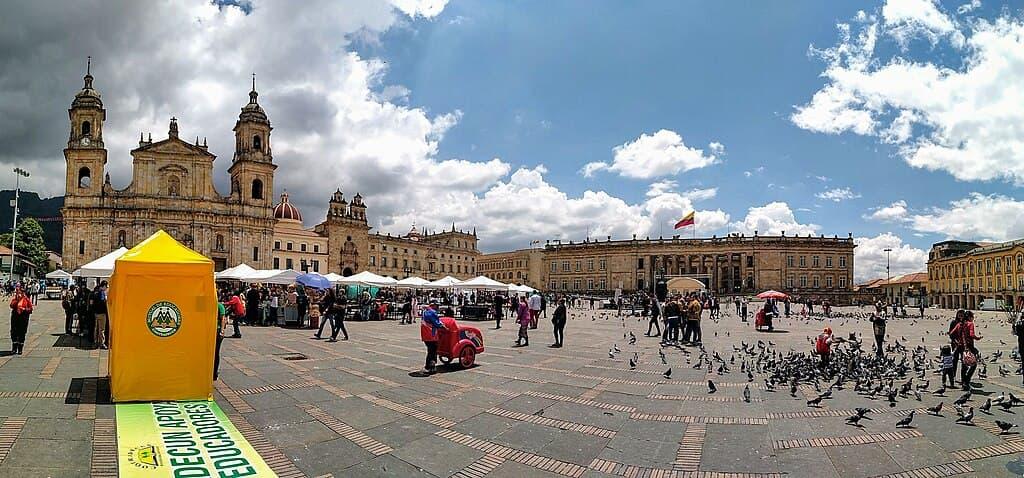
Plaza de Bolívar: the republic’s front porch.
Plaza de Bolívar: the republic’s front porch.
bogota, colombia
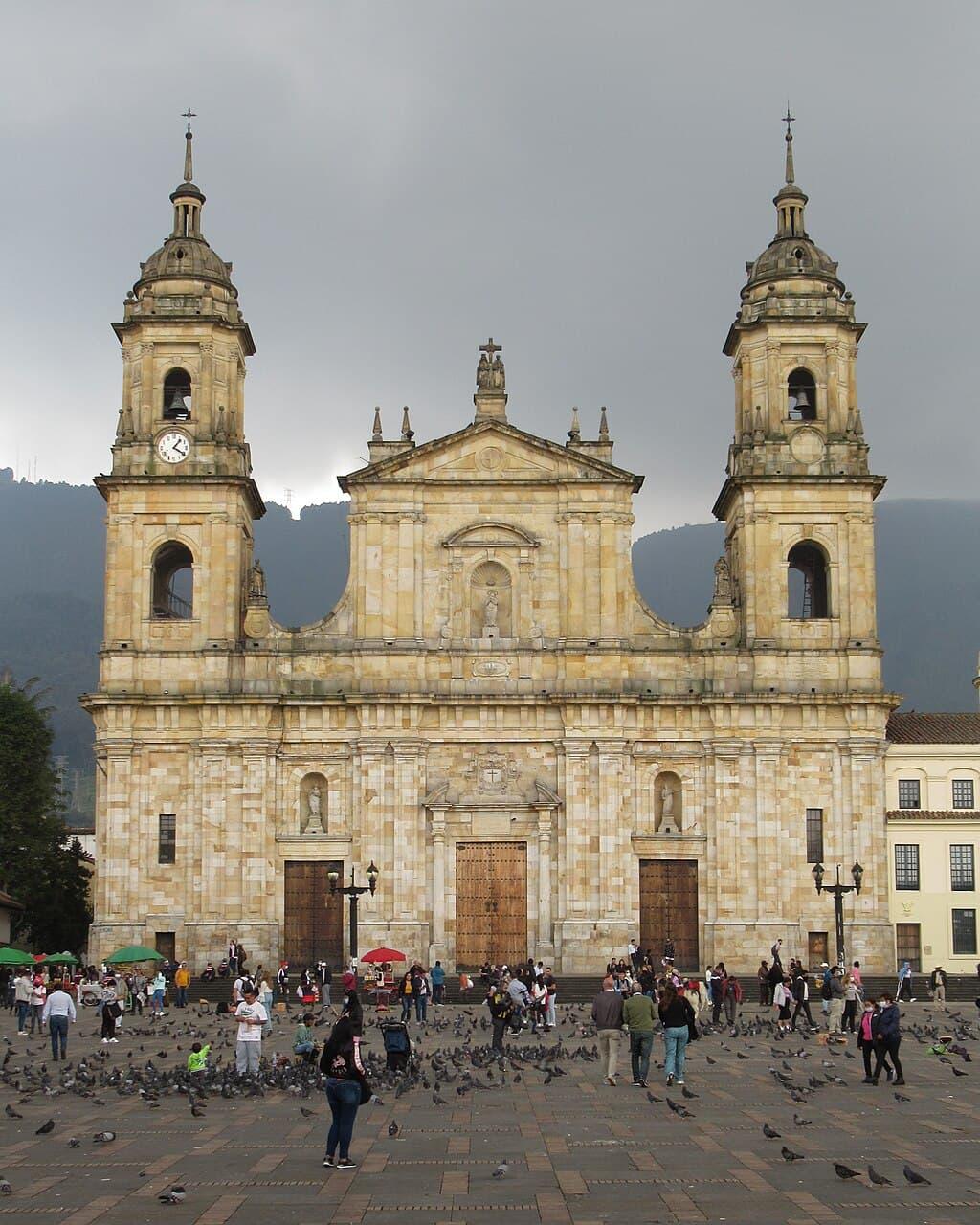
Catedral Primada de Colombia: faith in four acts
Catedral Primada de Colombia: faith in four acts
bogota, colombia
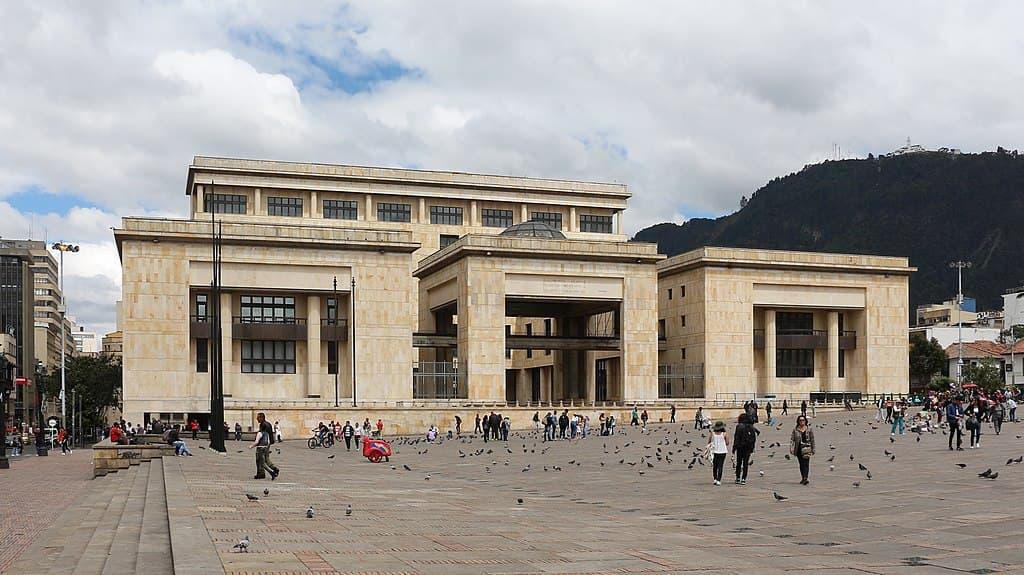
Palacio de Justicia: a building rebuilt, a story remembered