Museo del Oro Bogotá: Architecture and Gold Story
Modernist Design on Parque Santander
Situated at the intersection of Calle 16 and Carrera 6 in central Bogotá, the Museo del Oro occupies the eastern edge of Parque Santander, a historic public square once known as the Plaza de las Yerbas. The institution sits along the pedestrianized Avenida Jiménez, known as the Eje Ambiental. Directly outside the building, independent brokers gather along the pavement to negotiate open-air emerald trades, creating an immediate urban contrast with the monumental treasures preserved inside.
The museum structure was designed between 1961 and 1968 by Colombian modernist architect Germán Samper Gnecco of the firm Esguerra Sáenz Urdaneta Suárez y Cía. Samper conceived the building as an estuche urbano (urban jewel box)—an austere, opaque white cube elevated over a recessed glass ground floor. During the initial design phases, Samper considered casting an enlarged pre-Columbian relief onto the exterior concrete facing the square, but he discarded the idea as vulgar and dangerous, concluding that the exterior should remain completely unadorned so as not to compete with the delicate metalwork within. The design received Colombia's Premio Nacional de Arquitectura in 1970 and underwent a major renovation and expansion overseen by Samper that concluded in 2008.
Bogotá self guided walking tour by Ciceru
1.5 hours9 stopsAudio guideStart any day, at your own paceTicket on your phone · 30-day refundThe Central Bank and Heritage Preservation
Operated under the cultural network of the Banco de la República, Colombia's central bank, the museum holds the world's largest collection of pre-Columbian gold artifacts. The initiative began in 1939, when the bank’s board resolved to purchase ancient metal objects to protect the country's archaeological heritage from being melted into commercial bullion or sold to foreign collectors.
The founding artifact of the collection was the Poporo Quimbaya, purchased in 1939. This hollow vessel, dated to approximately 300 CE, was crafted by indigenous artisans to hold lime for ritual coca leaf consumption. Initially displayed inside executive boardrooms and later within the Pedro A. López bank building, the growing collection eventually required a dedicated cultural facility, prompting the construction of the Parque Santander complex. Today, the holdings encompass more than 34,000 metal objects alongside over 20,000 ceramic, stone, and bone artifacts, backed by active research and conservation laboratories.
Metallurgy and Indigenous Heritage
Scientific analysis of the collection reveals sophisticated pre-Hispanic metalworking techniques. Many artifacts that appear to be solid gold are composed of tumbaga, an alloy of copper, gold, and silver. Indigenous metalsmiths treated the cast pieces with plant-based acids to deplete surface copper, leaving an exterior layer of pure gold.
Among the collection's central pieces is the miniature Balsa Muisca (Muisca Raft). Discovered in central Colombia, the cast metal piece depicts the investiture ceremony of a new cacique (or zipa), an event that inspired the European myth of El Dorado. According to historical records, the leader coated his body in resin and gold dust before boarding a raft on Lake Guatavita to cast golden offerings and emeralds into the water.
The Interior Experience and Access
From the street, the museum appears as a windowless, pale stone monolith. Inside, the architecture transitions sharply away from exterior daylight into darkened, black-walled galleries. Carefully focused spotlights illuminate individual glass vitrines, giving the golden artifacts the illusion of floating in mid-air.
The museum functions as a public research and educational venue. It welcomes visitors Tuesday through Sunday and remains closed on Mondays. General admission is charged from Tuesday to Saturday, with free entry provided to the public on Sundays.
FAQ
Why was the Museo del Oro created?
In 1939, the Banco de la República began acquiring pre-Columbian gold artifacts to prevent cultural heritage from being melted down into bullion or exported to private collections abroad.
What was the founding piece of the museum's collection?
The founding artifact was the Poporo Quimbaya, an indigenous vessel dated to approximately 300 CE used for ritual lime storage, acquired by the central bank in 1939.
What is the architectural concept behind the building?
Architect Germán Samper Gnecco designed the building as an 'estuche urbano' (urban jewel box), creating an austere, unornamented white cube elevated over glass so it would not compete visually with the exhibits inside.
What is tumbaga?
Tumbaga is an alloy of gold, copper, and silver used by pre-Columbian artisans, who used plant acids to dissolve copper from the surface to leave an exterior skin of pure gold.
More places in Bogota
bogota, colombia
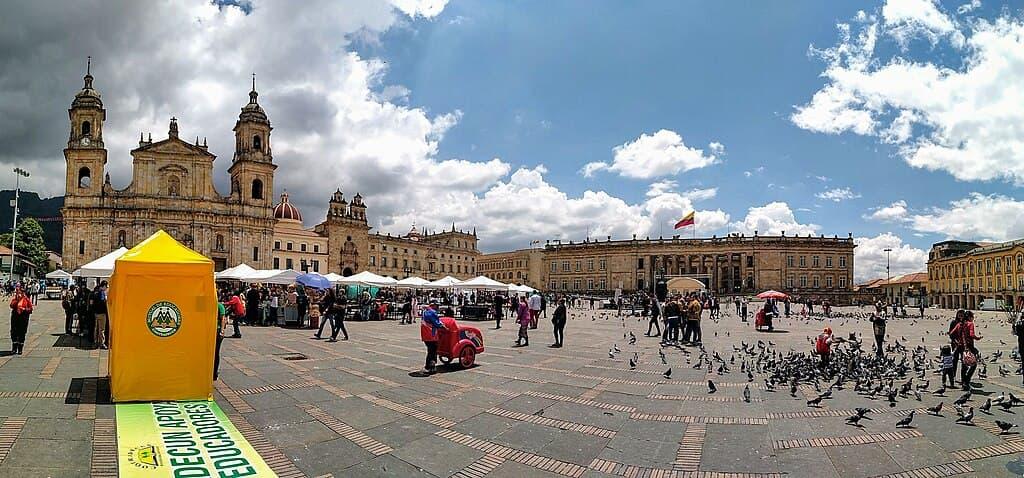
Plaza de Bolívar: the republic’s front porch.
Plaza de Bolívar: the republic’s front porch.
bogota, colombia
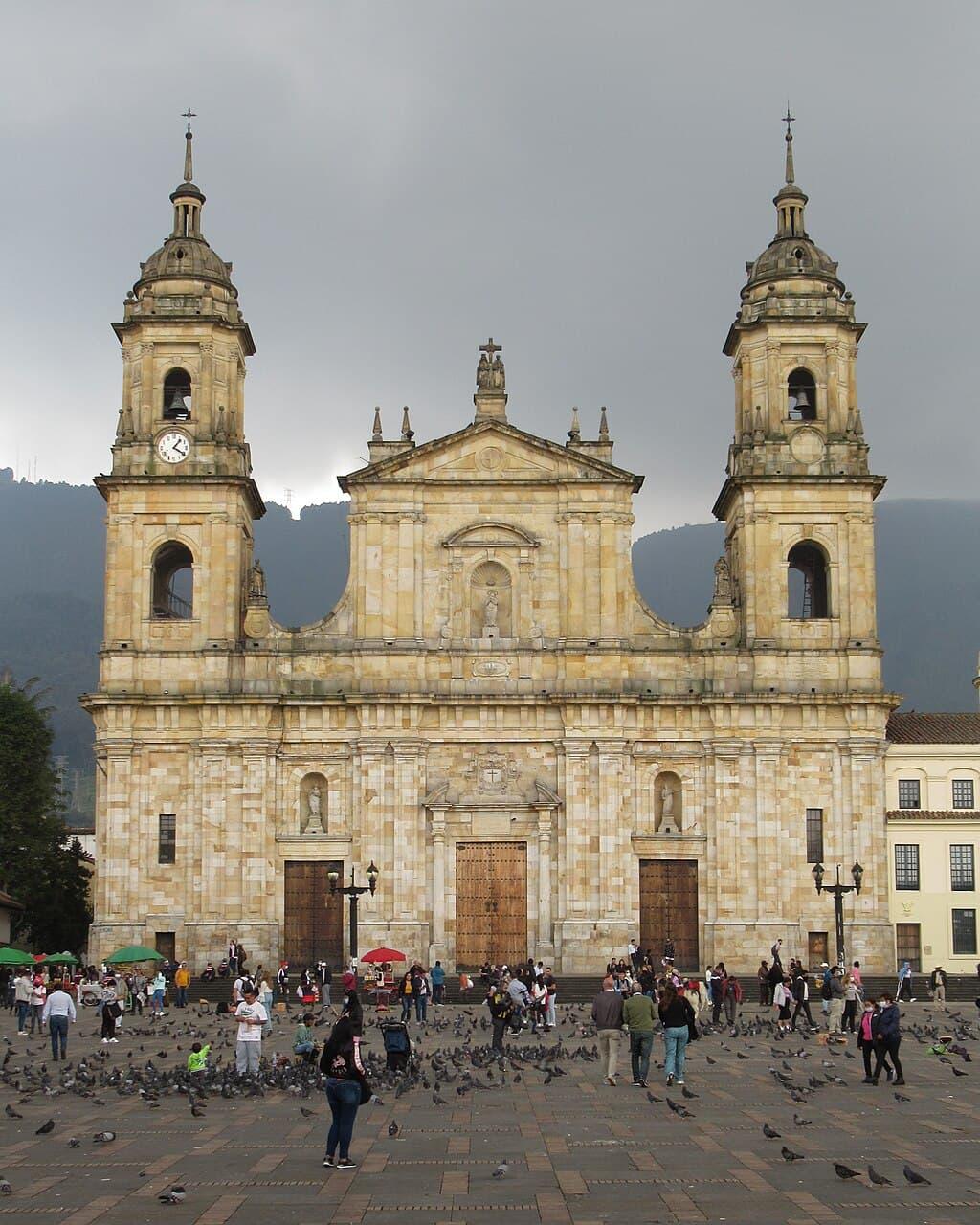
Catedral Primada de Colombia: faith in four acts
Catedral Primada de Colombia: faith in four acts
bogota, colombia
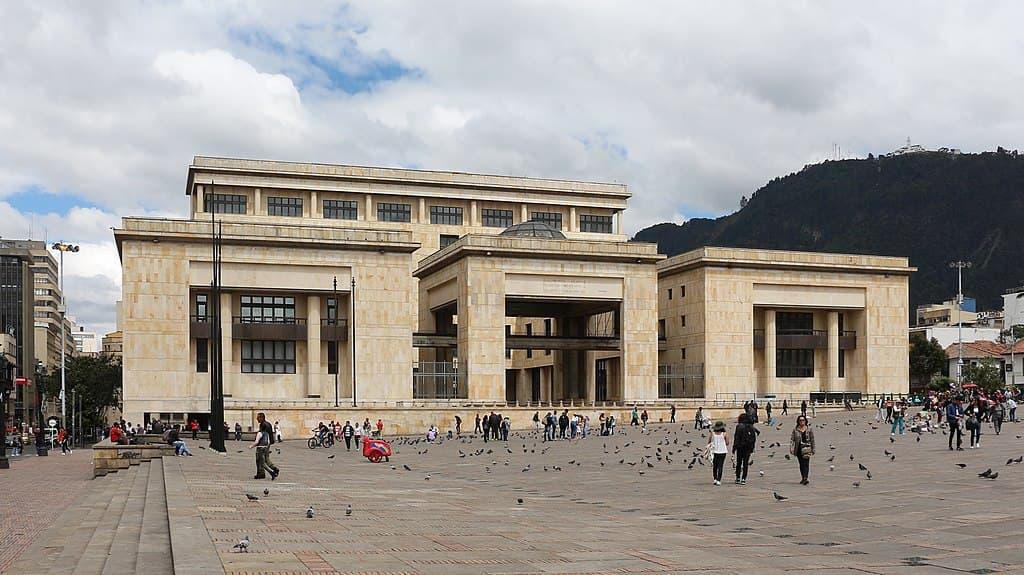
Palacio de Justicia: a building rebuilt, a story remembered