Cathedral of Saint Domnius: Split's Roman Landmark
From Imperial Tomb to Christian Sanctuary
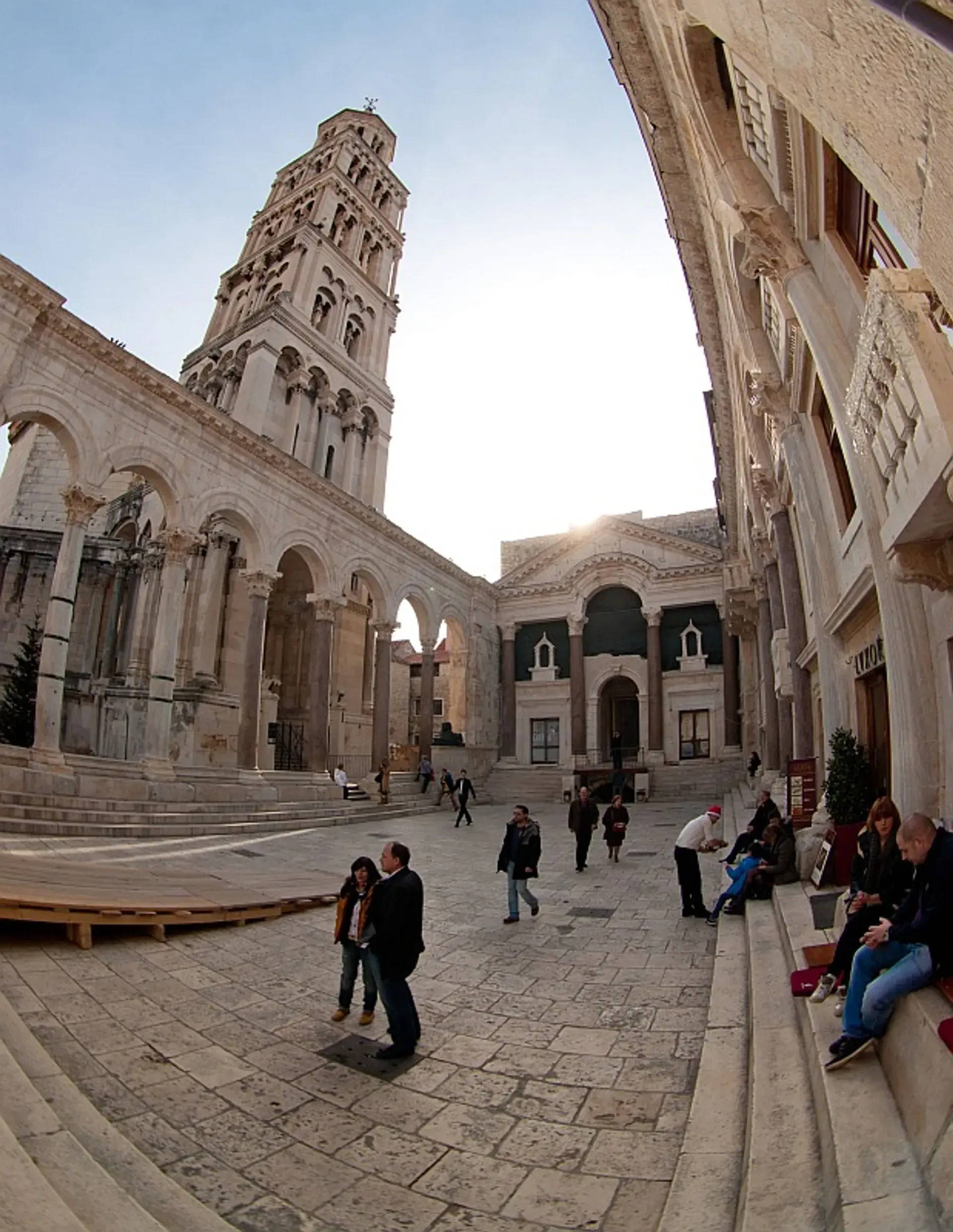
Located on the Peristyle at the central crossroads of the ancient Cardo and Decumanus, the Cathedral of Saint Domnius (Katedrala Svetog Duje) stands as the core architectural landmark of Diocletian's Palace in Split. Erected around AD 305, the central edifice was originally commissioned as the imperial mausoleum for Roman Emperor Diocletian, who led the empire's final widespread persecution of Christians. Among the victims of this campaign was Bishop Domnius of the neighboring city of Salona, who was executed in AD 304.
Following the 7th-century sack of Salona, Christian refugees sought safety within the fortified palace walls and transformed the imperial tomb into a Christian place of worship around AD 650. Diocletian’s sarcophagus was destroyed, and the relics of Saint Domnius alongside fellow Salonitan martyr Saint Anastasius were enshrined inside. Formally dedicated to the Assumption of the Virgin Mary while honoring Domnius at the bell tower, the complex is widely recognized as the world's oldest Catholic cathedral still operating inside its original ancient structure.
Split walking tour with audio and quizzes: Diocletian’s Palace
2 hours10 stopsAudio guideStart any day, at your own paceTicket on your phone · 30-day refundClassical Architecture and Medieval Art
The exterior of the cathedral is an octagonal stone monument framed by an ancient colonnade of 24 original columns. Stepping inside reveals a circular chamber ringed by two tiers of Corinthian columns. Above, the brickwork of the ancient dome displays a distinctive dual construction pattern: bricks are arranged in a fishbone or fan layout in the lower sections before transitioning into concentric circular rings toward the crown.
Over the centuries, the ancient Roman interior was enriched with medieval and Renaissance artistic contributions. In 1214, Split artist Andrija Buvina carved the monumental wooden entrance doors, which depict 28 scenes from the life of Christ across two walnut wings. The sanctuary also houses a 13th-century hexagonal pulpit crafted from green porphyry and an altar honoring Saint Anastasius, sculpted in 1448 by Juraj Dalmatinac.
The Bell Tower and Crypt
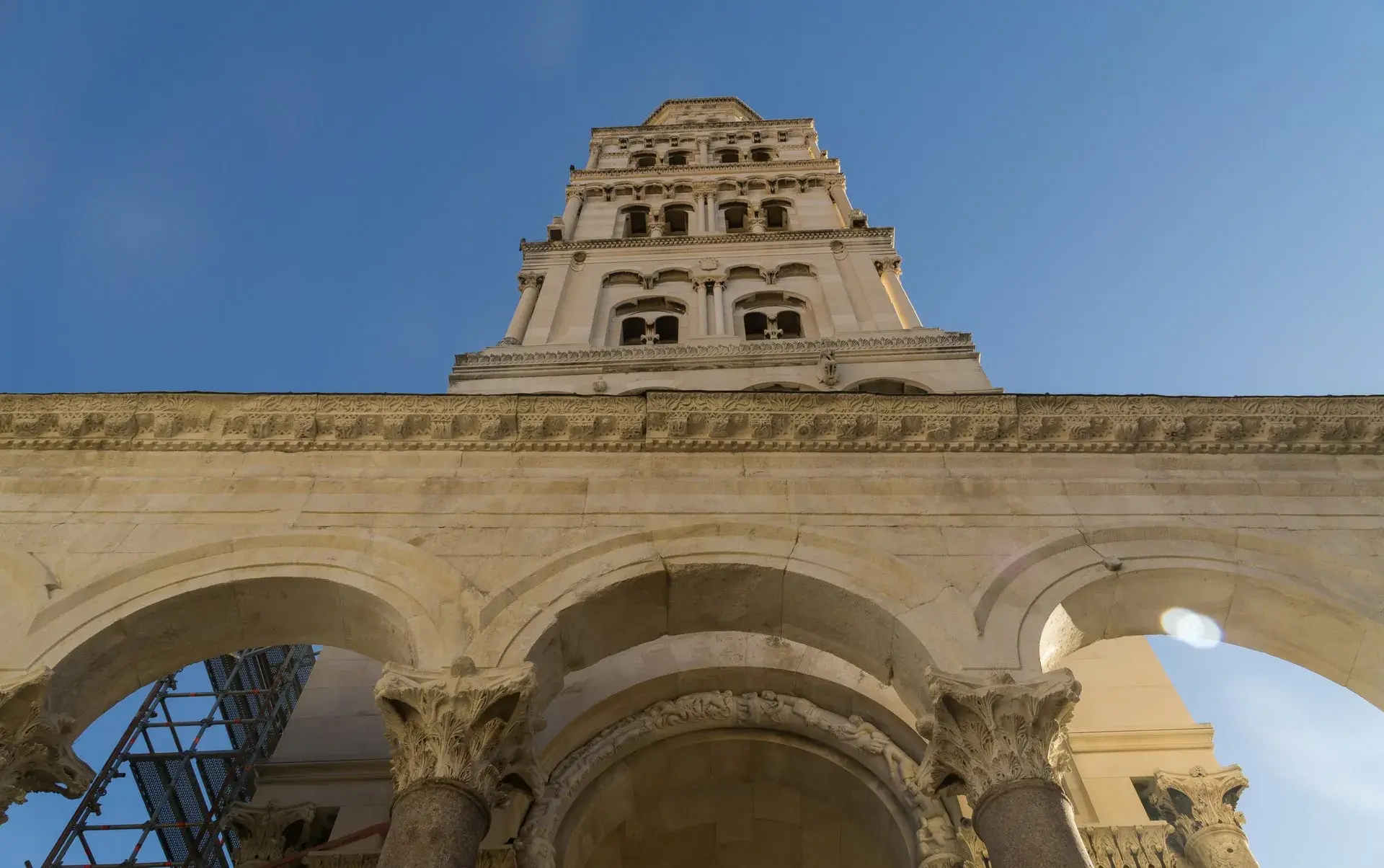
Directly beneath the cathedral floor lies the Crypt of Saint Lucy, an ancient Roman substructure carved into the palace foundation platform. Rising beside the mausoleum is the 57-meter freestanding Romanesque-Gothic bell tower. While the surrounding palace complex took approximately a decade to complete in the Roman era, the bell tower required roughly three centuries to construct, beginning in the 13th century and concluding with major reconstruction between 1890 and 1908.
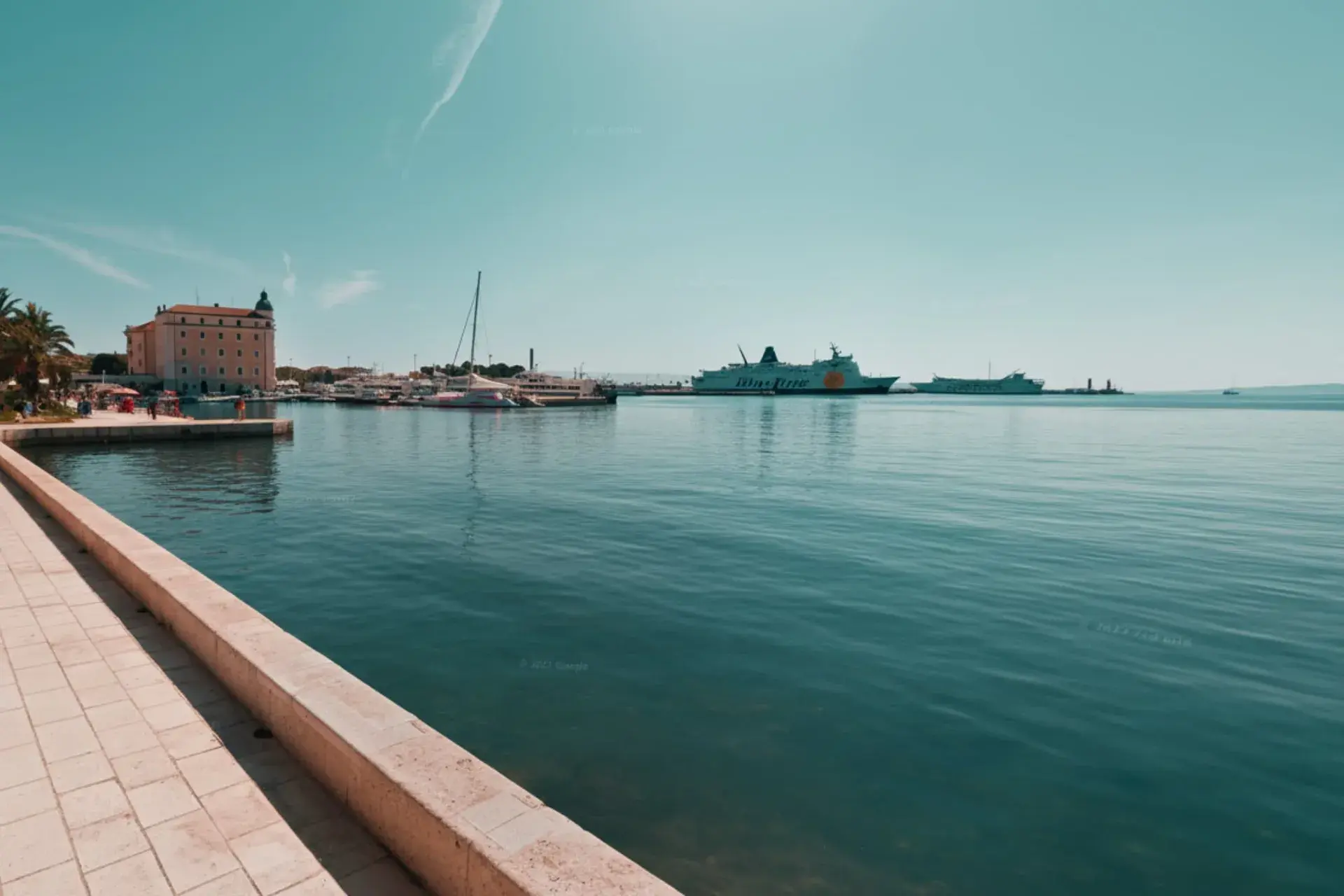
The tower serves as Split's most prominent skyline landmark, visible across the Riva promenade, the harbor, and Mount Marjan. An exposed internal staircase leads past open arches and coastal winds to an upper viewing platform that provides 360-degree views over the palace rooftops, the Adriatic Sea, and the central Dalmatian islands.
Visiting and Practical Information
The Cathedral of Saint Domnius remains the active seat of the Archdiocese of Split-Makarska, hosting daily liturgical services as well as the annual May 7 Feast of Saint Domnius, which features a historic civic and religious procession.
The exterior of the cathedral, the colonnade, and the soaring bell tower can be viewed from the Peristyle square without paying an entrance fee. Separate ticketing applies for entry into the cathedral interior, the Crypt of Saint Lucy, the Cathedral Treasury, and the climb up the bell tower. Paid entry also applies to neighboring historical sites in the palace complex, including the Temple of Jupiter and the palace cellars.
FAQ
What was the cathedral originally used for?
It was originally built around AD 305 as the imperial mausoleum and resting place for the Roman Emperor Diocletian.
Can the Cathedral of Saint Domnius be seen without paying an entrance fee?
Yes. The octagonal exterior, surrounding Roman colonnade, and bell tower are fully visible from the Peristyle without a ticket, though paid admission is required to enter the church interior, crypt, treasury, and tower.
Who carved the cathedral's monumental wooden doors?
Split artist Andrija Buvina carved the cathedral's walnut entrance doors in 1214, illustrating 28 scenes from the life of Christ.