
Prokurative (Republic Square) in Split: History & Guide
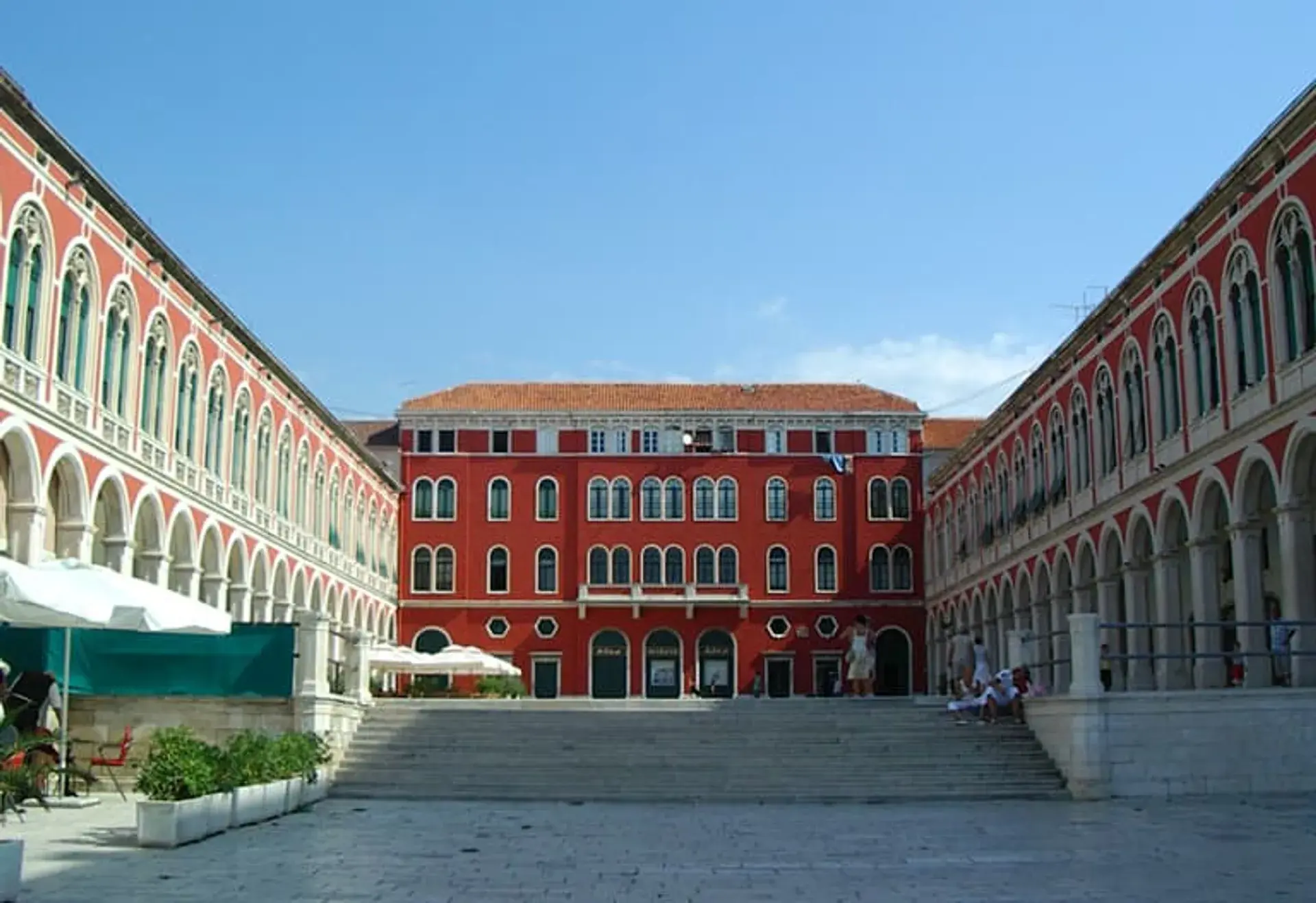
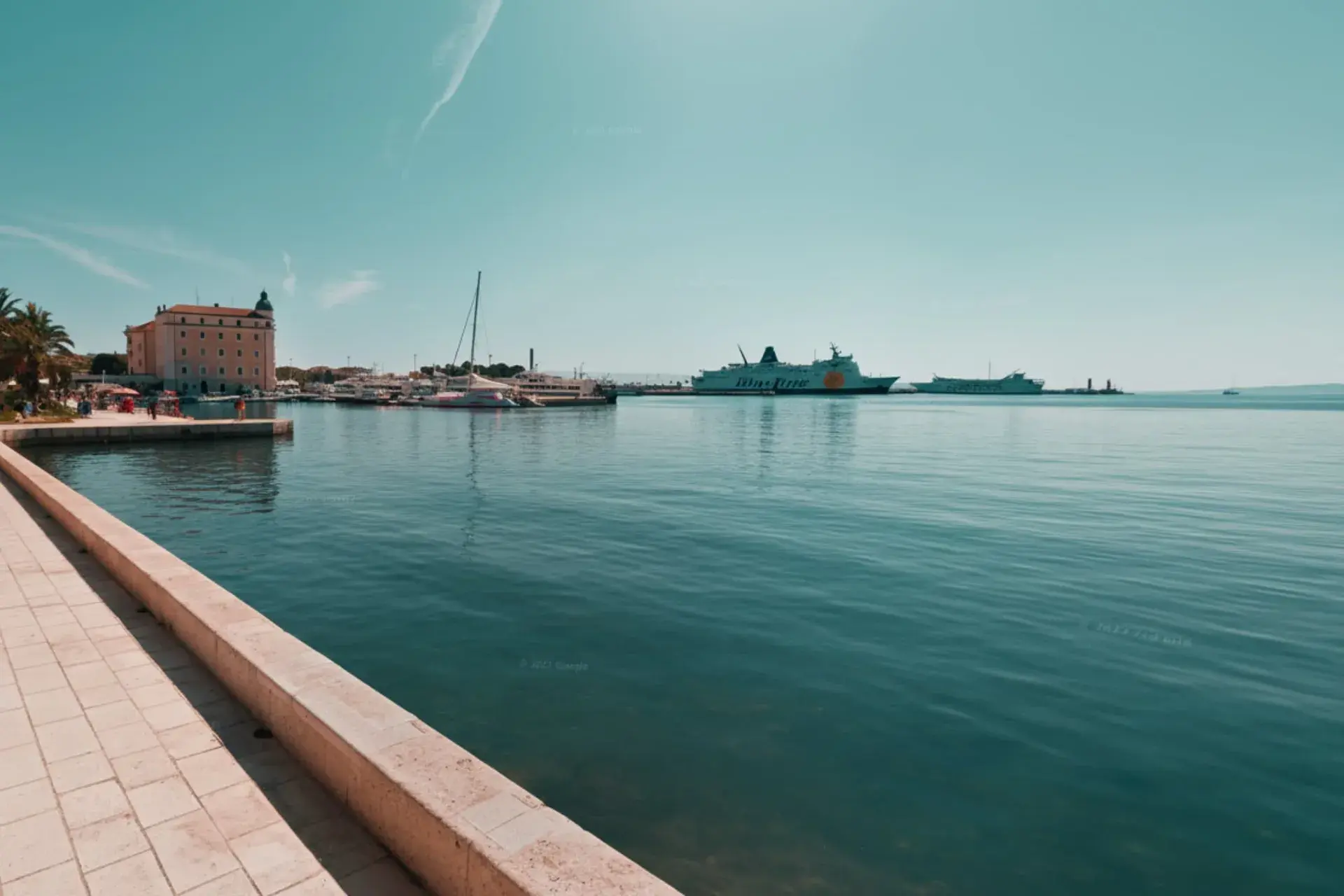
Officially designated as Trg Republike (Republic Square) and widely known by locals as Prokurative, this grand Neo-Renaissance plaza sits immediately west of Diocletian's Palace at the edge of Split's Riva waterfront promenade. Flanked on its north, west, and east sides by continuous two-story arcaded wings, the square opens southward directly toward the Adriatic Sea, welcoming harbor breezes and framing panoramic maritime views.
Modeled directly after the Procuratie surrounding Venice's Piazza San Marco, Prokurative represents Split's civic modernization and outward growth during the 19th century under Austro-Hungarian rule, marking a distinct architectural departure from the compact Roman and medieval fabric of Diocletian's Palace toward Marjan hill.
Origins and Mayor Antonio Bajamonti
The development of the square was spearheaded by Dr. Antonio Bajamonti, a prominent 19th-century mayor of Split. The site originally began on what was known as Marmont's green with the opening of the privately funded Teatro Bajamonti in December 1859. Designed by Venetian architect Giovanni Battista Meduna, the theater served as the civic anchor for the project until a catastrophic fire in May 1882 destroyed the building, which was never restored to its original state.
Despite the loss of the theater, Bajamonti’s vision for a classical, Venetian-style civic plaza continued. Meduna also designed the western colonnade, which was built between 1863 and 1867. Decades later, in 1905, this western wing was updated with cement mascarons and decorative friezes.
Split walking tour with audio and quizzes: Diocletian’s Palace
2 hours10 stopsAudio guideStart any day, at your own paceTicket on your phone · 30-day refundArchitecture and Wing Asymmetry
While Prokurative presents an impression of symmetrical balance from afar, a closer look reveals that the two facing wings do not match. The western wing, constructed in the 1860s, features carved reliefs and mascarons beneath the upper windows. By contrast, the eastern colonnade, built decades later across two phases (1909–1911 and 1927–1928), entirely lacks these intricate relief decorations.
This discrepancy gave rise to a popular local legend claiming that the original Venetian architect became so overwhelmed with homesickness for Venice that he abandoned the project halfway through and sailed home. In reality, the visual differences stemmed simply from different construction periods and building phases.
Throughout the day, the repeating loggias and stone columns cast sharp geometric shadows across the broad stone paving, particularly during low late-afternoon sunlight.
The Lost Bajamontuša Fountain
In 1880, Mayor Bajamonti erected the Monumentalna Fontana (commonly called "Bajamontuša") on the Riva at the southern entrance of the square. The monument celebrated the restoration of Diocletian's ancient aqueduct, which brought fresh drinking water from the Jadro River back into the city.
The fountain remained a defining fixture until 1947, when post-war Yugoslav authorities demolished it with dynamite, viewing it as an ideological symbol of Italian cultural dominance. Although the fountain was destroyed, several salvaged stone heads survived and are preserved in the Split City Museum.
Modern Use and Festivals
Today, Prokurative serves as an expansive pedestrian plaza and one of Split's primary open-air cultural venues. The covered ground-floor colonnades host café and restaurant seating, including Restaurant Bajamonti, making the square a popular gathering spot away from the main pedestrian thoroughfare of the Riva.
During the summer months, the square transforms into an outdoor concert arena. It regularly hosts major civic events, including performances associated with the Split Summer Festival and the long-running Split Music Festival (Festival zabavne glazbe Split).
FAQ
Why do the two wings of Prokurative look different?
The older western wing, completed in 1867 and updated in 1905, includes decorative friezes and carved mascarons below the upper windows. The eastern wing was built decades later, between 1909 and 1928, and was finished without these ornamental carvings.
What inspired the design of Republic Square in Split?
The square was inspired by the Procuratie of St. Mark's Square in Venice. It was designed in part by Venetian architect Giovanni Battista Meduna, though unlike Venice's enclosed plaza, Prokurative opens directly to the Adriatic Sea.
What happened to the historic fountain at the entrance of the square?
Erected in 1880 to mark the return of fresh tap water via Diocletian's restored aqueduct, the Monumentalna Fontana (or 'Bajamontuša') was dynamited by Yugoslav authorities in 1947. Surviving stone heads from the fountain are kept in the Split City Museum.