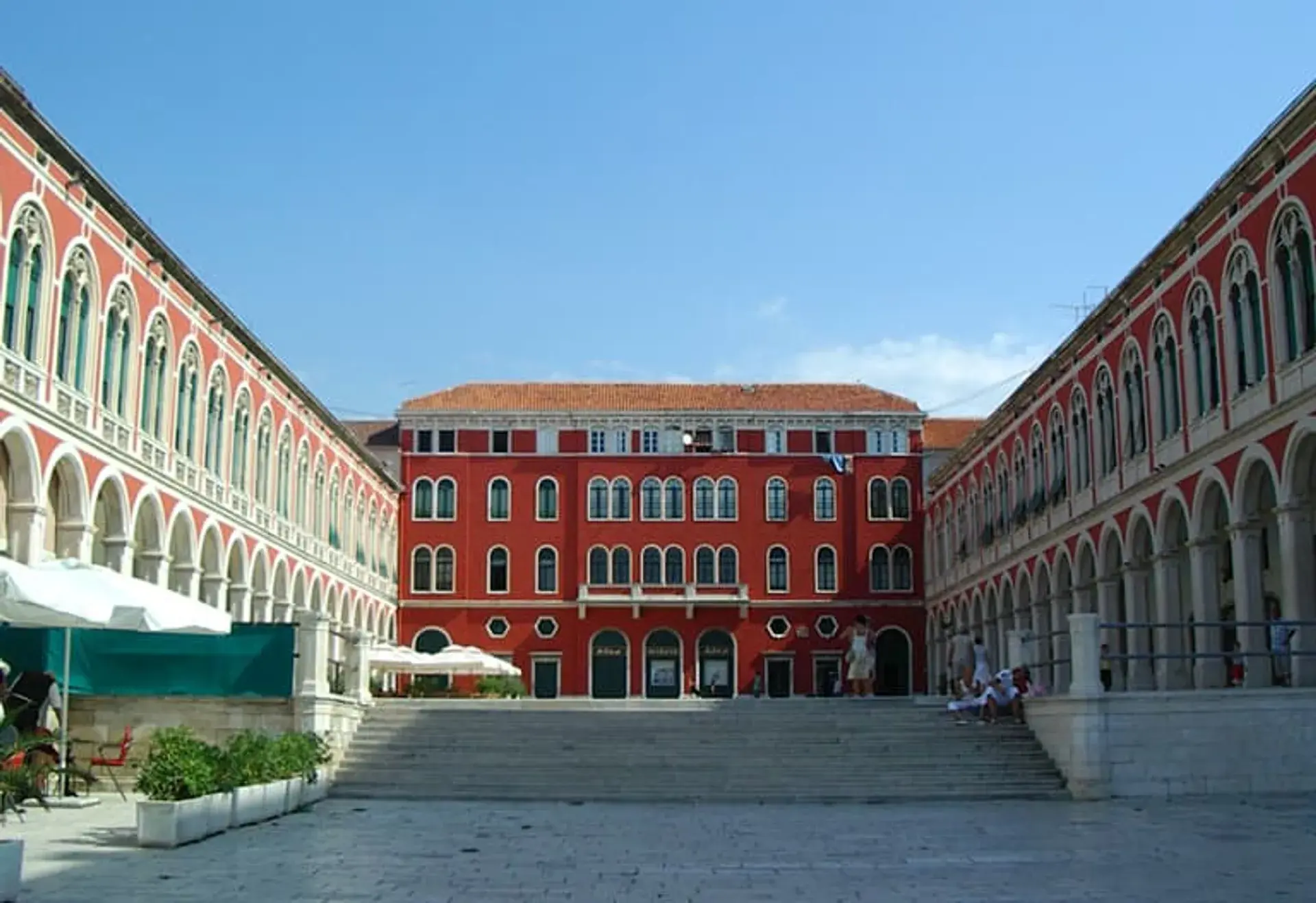
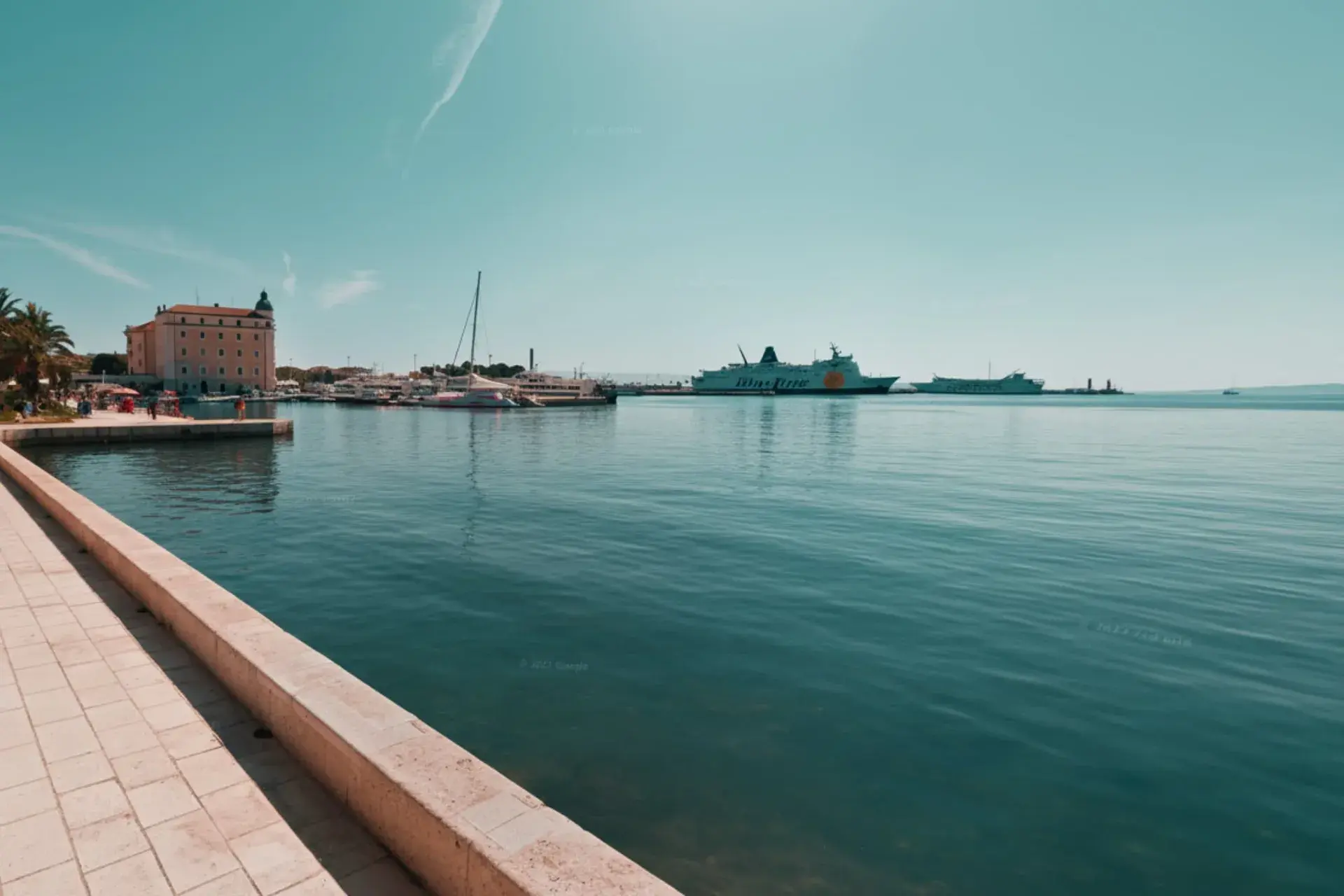
Pjaca: Split's Historic People's Square and Town Hall
The Evolution of Split’s Civic Heart
Directly outside the western wall of Diocletian's Palace, past the historic Iron Gate, lies Narodni trg. Known universally by locals as Pjaca—derived from the Italian word for square—this public space marks the medieval expansion of Split beyond its ancient Roman enclosure. As population pressures mounted during the 13th and 14th centuries, civic life pushed westward into what was designated as the "New City."
Pjaca gradually superseded the Roman Peristyle as the primary municipal and commercial center of Split. Originally known as Saint Lawrence’s Square after a medieval church that once occupied its center, the plaza symbolized the city's transition from Roman imperial rule to medieval and modern civic governance.
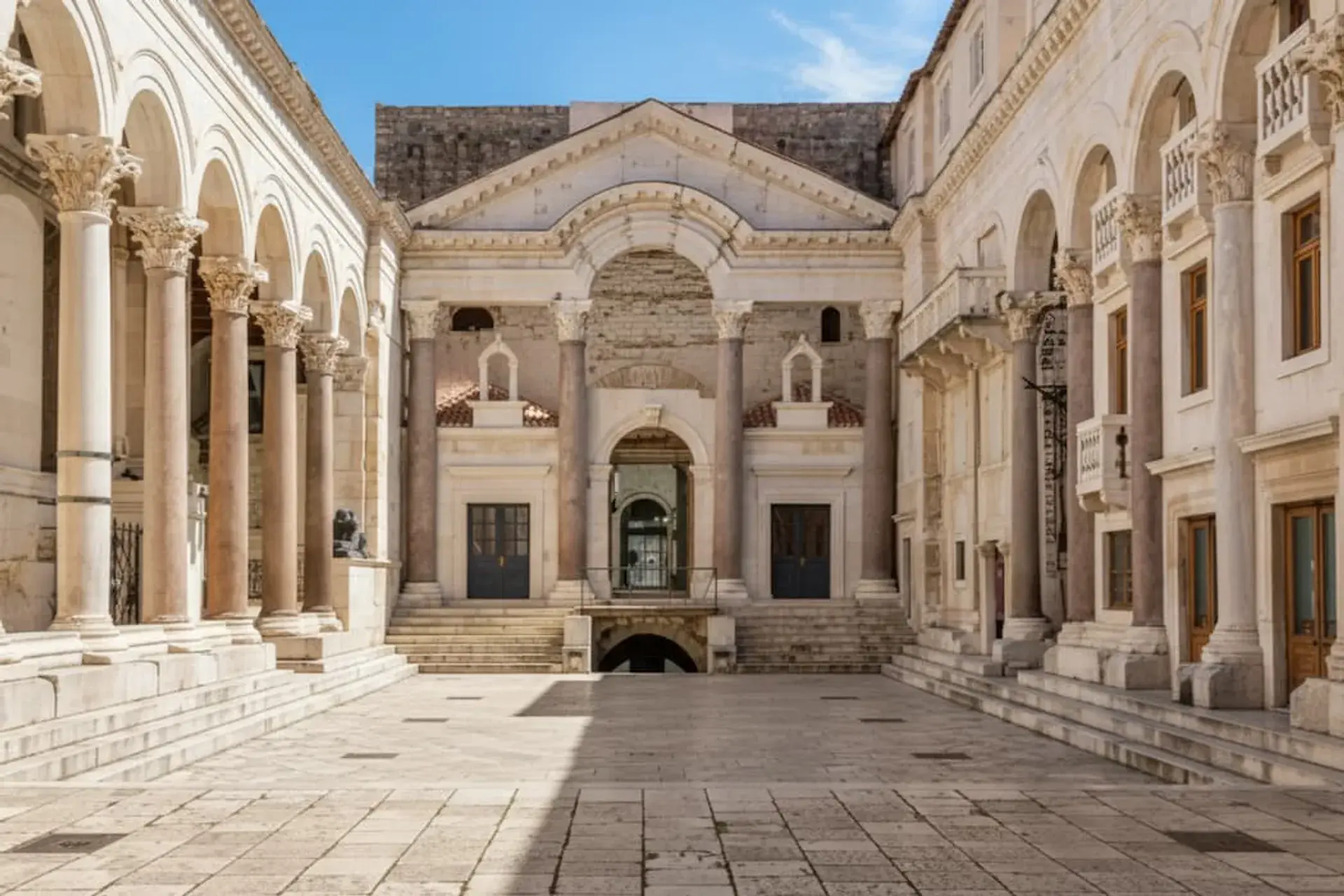
Split walking tour with audio and quizzes: Diocletian’s Palace
2 hours10 stopsAudio guideStart any day, at your own paceTicket on your phone · 30-day refundFrom Venetian Rule to the Gothic Old Town Hall
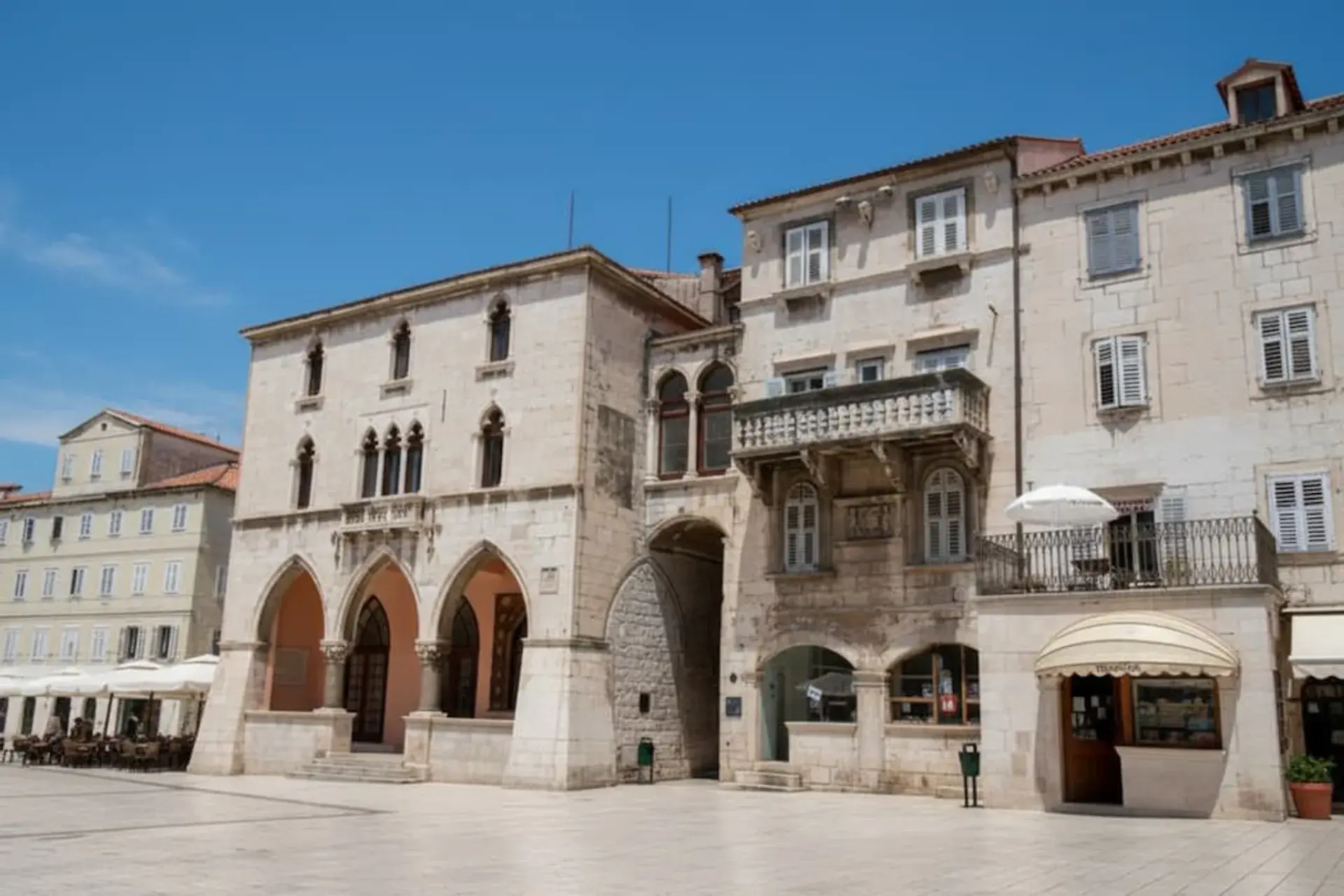
Following the Venetian conquest in 1420, the urban layout changed dramatically. The Republic demolished the central medieval church to build a comprehensive civic compound on the northern flank of the square. This municipal complex featured the rector’s palace, administrative offices, and a open-arched public loggia used for municipal announcements and the keeping of standard communal measures.
By 1821, under Austrian imperial administration, the aging Venetian administrative complex had deteriorated and was largely demolished. The original 15th-century Gothic loggia was spared and preserved as the Old Town Hall (Stara gradska vijećnica). Today, the building showcases Gothic architectural details alongside a ground-floor arcade, operating as a municipal venue for rotating art and historical exhibitions.
Architectural Landmarks Across the Square
Pjaca is surrounded by an architectural timeline spanning multiple centuries. A medieval clock tower adjoins an earlier Romanesque tower house. The tower is renowned for its rare 24-hour clock face divided into Roman numerals, designed so that its single hand takes an entire 24 hours to complete a single revolution.
Adjacent to the clock tower stands the 14th-century Late Romanesque Ciprianis Palace. Its façade features ornate stone carvings, including a 1394 depiction of Saint Anthony the Abbot alongside a relief of Adam receiving the forbidden apple from Eve. The square is also bordered by the 16th-century Renaissance Karepić Palace, Cambi Palace, and the Secessionist Nakić Palace, which dates to 1902.
On the edge of the square sits the Morpurgo bookstore, founded in 1860 by Jewish intellectual Vid Morpurgo. Morpurgo played a significant role in Split's commercial history, also co-founding a local distillery that eventually expanded into the international spirits brand Stock. In the open plaza, the stone flagpole base, known locally as the Štandarac, remains a focal point of municipal history, having been the center of legal debates over the inscription of Split's 1944 liberation date from Axis occupation.
Atmosphere and Daily Civic Life
During the 19th and early 20th centuries, the square served as the intellectual hub of the Dalmatian national revival, with political figures and writers congregating at Gradska kavana and surrounding meeting houses.
Today, the plaza functions as a lively pedestrian thoroughfare linking Diocletian's Palace with Marmontova Street, the local fish market, and the western waterfront. Polished, light-colored limestone flagstones pave the enclosed space, reflecting the bright Mediterranean sunlight against the weathered stone façades. Outdoor café terraces and shops continue the square's longstanding tradition as Split’s meeting place.
FAQ
What makes the clock tower on Pjaca unique?
The clock tower features a rare 24-hour dial marked with Roman numerals, meaning its single hand takes a full 24 hours to complete one complete rotation.
What is the history behind the Old Town Hall on Pjaca?
Originally built in the 15th century as a Gothic loggia within a Venetian administrative complex, it was the only part of the compound spared from demolition by Austrian authorities in 1821. Today, it functions as a municipal exhibition gallery.
Which historic palaces can be seen on Pjaca?
The square features several notable residences, including the 14th-century Romanesque Ciprianis Palace, the 16th-century Renaissance Karepić Palace, Cambi Palace, and the 1902 Secessionist Nakić Palace.