
Split Green Market: Guide to Pazar at Silver Gate
Split's Living Open-Air Market
Pazar, officially named Zelena tržnica (Green Market) and often called Stari Pazar, is Split’s primary open-air agricultural market. Derived from the regional term for "market" or "bazaar," Pazar borders the monumental eastern limestone wall of Diocletian's Palace along Hrvojeva Street, directly outside the Silver Gate (Porta Argentea) and adjacent to the Church of Saint Dominic. The market serves as an eastern counterpart to the city’s historic fish market (Peškarija), which operates on the western side of the palace.
Pazar is open year-round, seven days a week, starting early in the morning between 06:00 and 07:00 and winding down by early afternoon between 13:00 and 14:00. The market is at its busiest during the morning hours, with peak trading and the freshest selections appearing between 07:00 and 09:00.
Split walking tour with audio and quizzes: Diocletian’s Palace
2 hours10 stopsAudio guideStart any day, at your own paceTicket on your phone · 30-day refundHistory and Relocation from Fruit Square
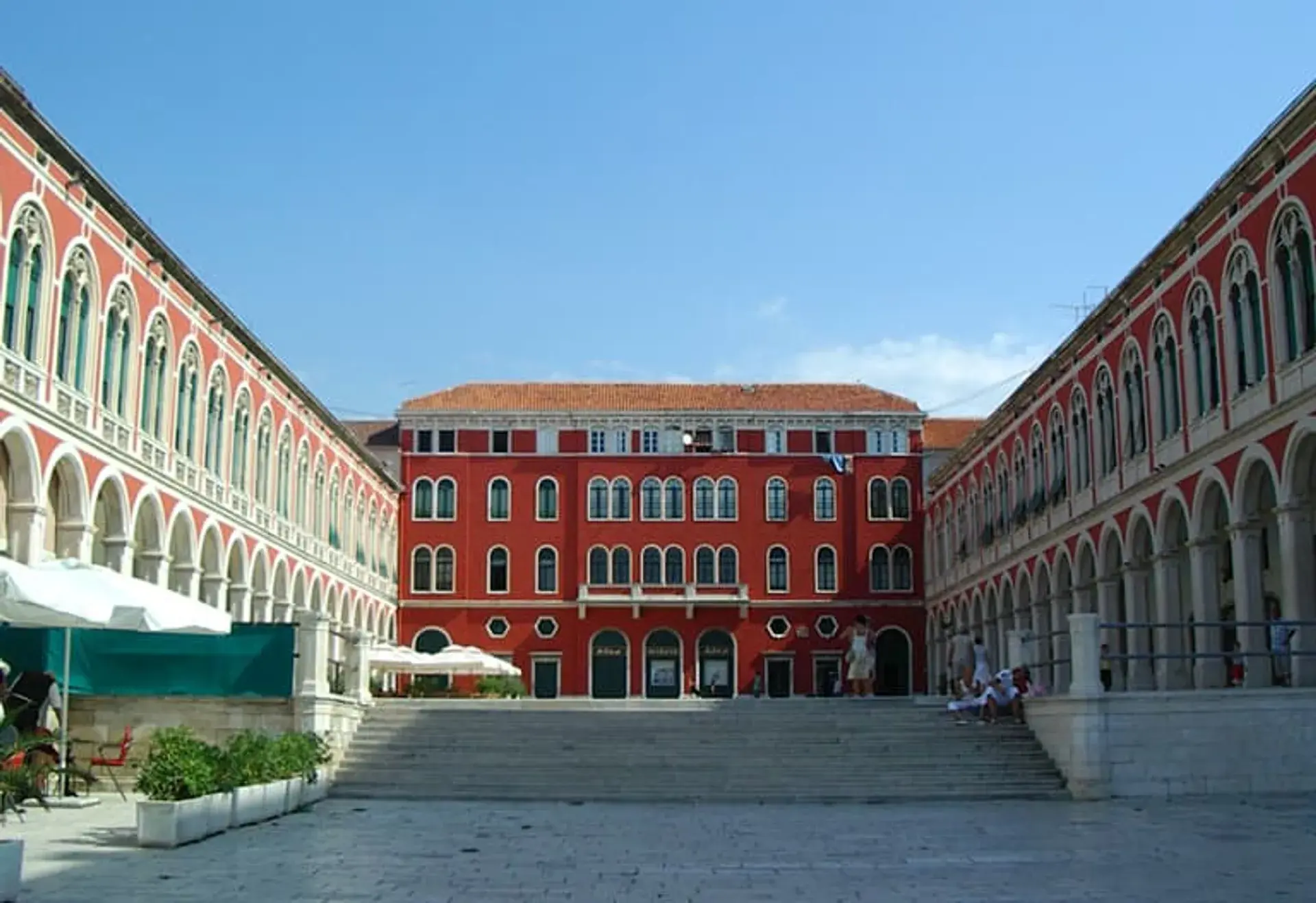
Central produce trading in Split did not always take place along the palace ramparts. In earlier centuries, fruit and vegetable merchants gathered inside the medieval center at Fruit Square (Voćni trg, officially Trg braće Radić). During the late 19th and early 20th centuries, urban expansion led municipal authorities to relocate the vendors outside the eastern Roman wall.
This relocation provided expanded capacity for merchants and simplified road access for farmers traveling in from the Dalmatian hinterland. Since that move, Pazar has served continuously as a trading intersection connecting inland agricultural producers, coastal merchants, and Adriatic islanders.
Local Produce and Daily Commerce
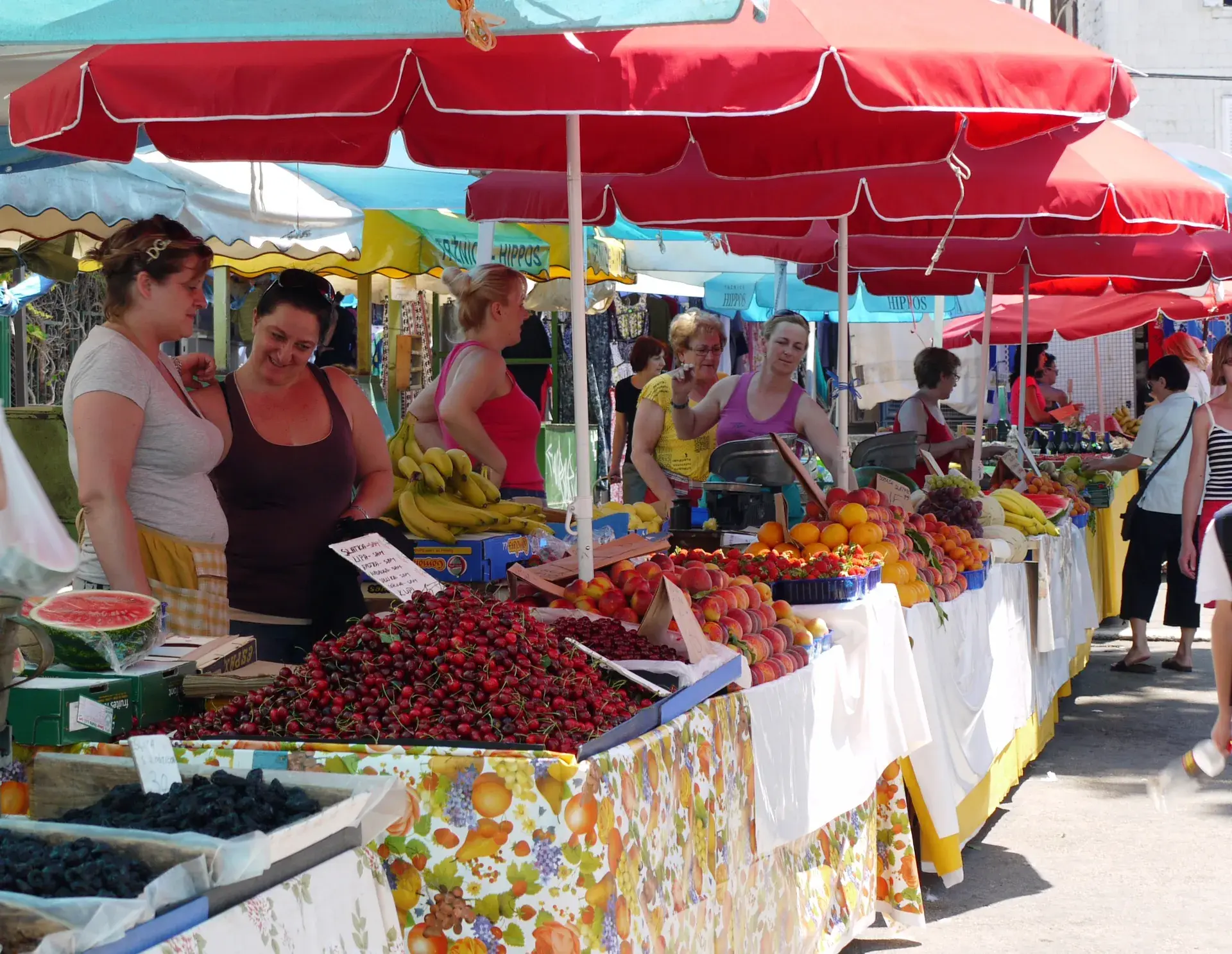
Unlike purely ornamental or tourist-focused attractions, Pazar remains a working civic food market frequented by local residents, domestic cooks, and restaurant chefs. Across open stone tables and stalls, sellers offer a wide range of seasonal Dalmatian goods, including tomatoes, figs, citrus fruits, leafy greens, and wild asparagus in the spring. Shoppers also find local cheeses, olive oils, Dalmatian pršut, honey, homemade rakija, dried herbs, cut flowers, and lavender products. Transactions across these produce tables are predominantly conducted in cash using Euros.
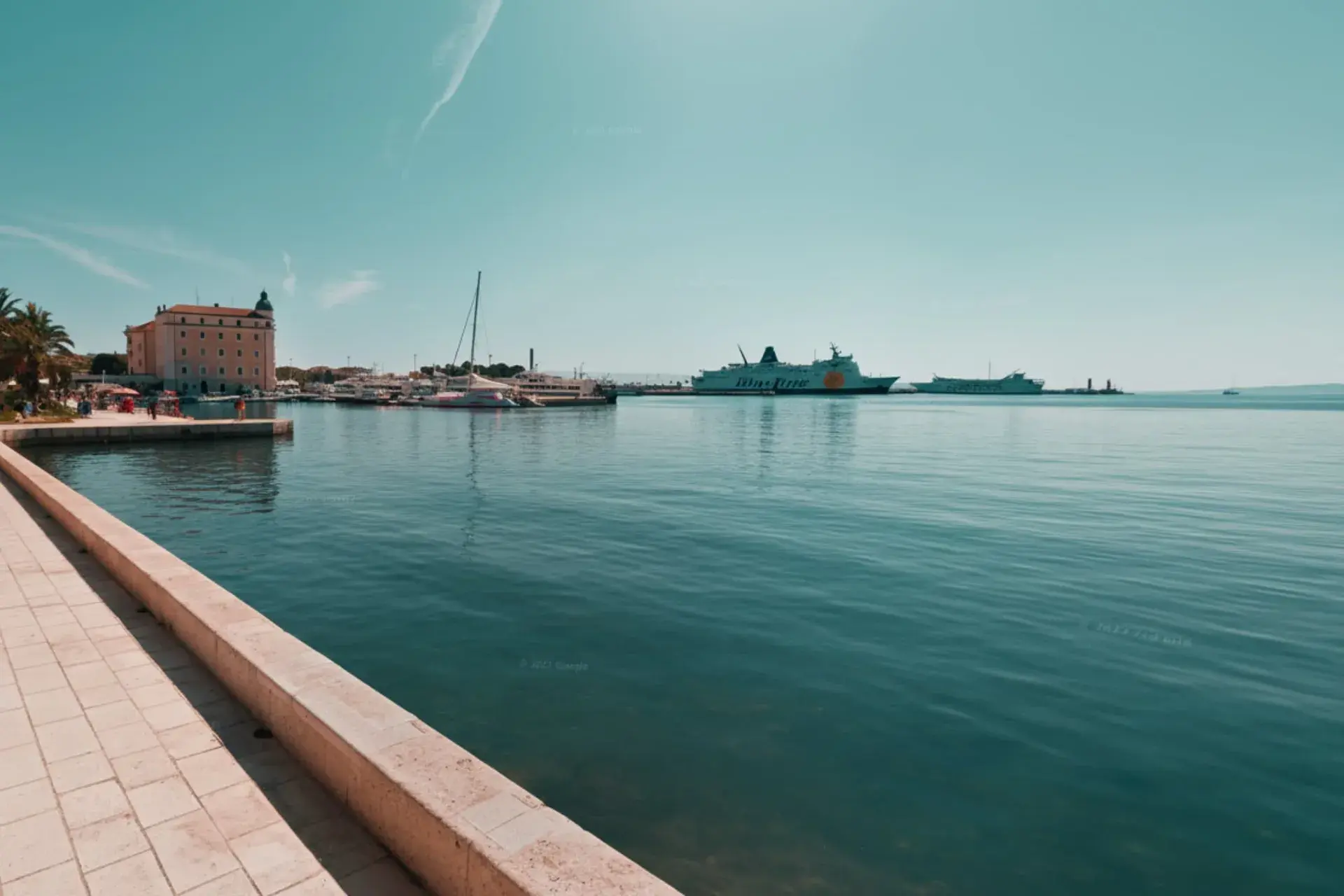
The market also accommodates bulk provisioning for the surrounding Adriatic region. Because transport costs lead to higher grocery prices on Dalmatian islands, ferry travelers and island residents routinely buy fresh fruit and vegetables in bulk at Pazar before departing from the adjacent port. Along the market's periphery near the harbor and bus terminal, stalls sell clothing, beach items, and souvenirs, alongside permanent refrigerated kiosks that house butchers and dairy vendors.
An Ancient Backdrop for Everyday Life
The physical setting of Pazar integrates ancient Roman architecture directly into everyday commerce. The 1,700-year-old eastern rampart of Diocletian's retirement palace functions as a windbreak and structural backdrop for produce crates and market stalls. In the morning light, sun-bleached Roman limestone turns an ochre hue behind tables stacked with red tomatoes and purple lavender bundles.
The bustling market area is marked by the sounds of crate-stacking, vendors calling out prices, and rapid bargaining in the Dalmatian dialect. In addition to supplying daily essentials, Pazar serves as the primary eastern entrance to the historic core, directing pedestrian traffic straight through the Silver Gate and onto the ancient Decumanus corridor toward the central Peristyle.
FAQ
What are the operating hours for Pazar?
The market operates daily year-round from early morning, starting between 06:00 and 07:00, until early afternoon around 13:00 to 14:00. Peak trading occurs between 07:00 and 09:00.
Where is Pazar located in Split?
Pazar is located along Hrvojeva Street on the eastern exterior wall of Diocletian's Palace, directly outside the Silver Gate (Porta Argentea) and next to the Church of Saint Dominic.
What goods can be purchased at Pazar?
Vendors sell seasonal Dalmatian produce such as figs, citrus, tomatoes, and spring wild asparagus, alongside olive oils, cheeses, Dalmatian pršut, honey, rakija, dried herbs, cut flowers, and lavender products. Meat, dairy, clothing, and souvenirs are available in peripheral stalls and kiosks.
What currency and payment methods are used at the market?
Transactions at Pazar are carried out primarily in cash using Euros.