Archdiocesan Museum Olomouc: History & Artifacts
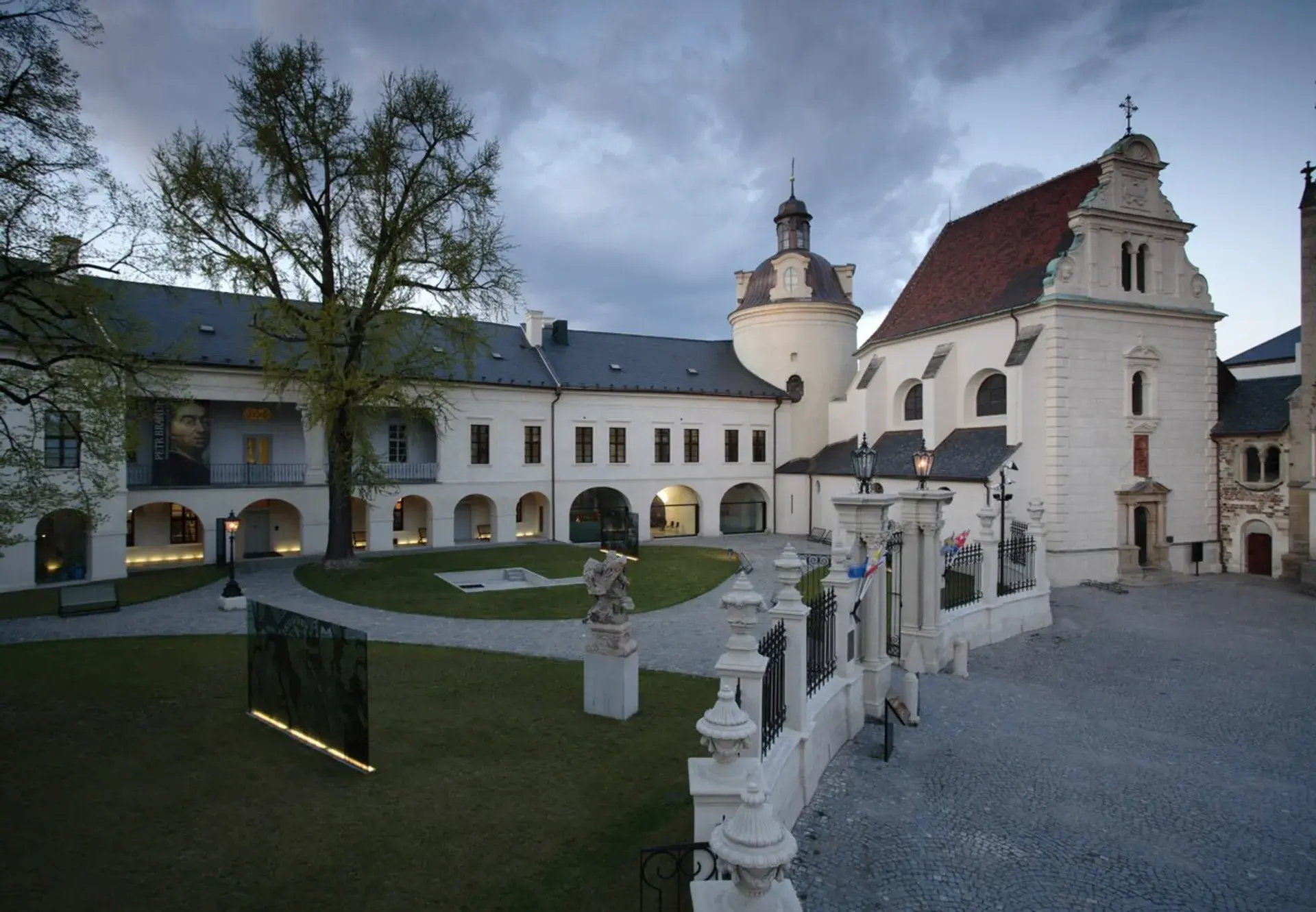
Behind the walls of this modern ecclesiastical museum lies the scene of a 14th-century royal assassination that ended a 400-year-old dynasty. Opened to the public in 2006, the Archdiocesan Museum is located on Wenceslas Hill, adjacent to Saint Wenceslas Cathedral. It anchors the eastern end of Olomouc's historical core and serves as a major spiritual and archaeological high point. In 2016, the Olomouc Castle and Archdiocesan Museum site became the first landmark in Czechia to receive the European Heritage Label.
A Seat of Power and Royal Tragedy
Wenceslas Hill originated as a fortified center for Moravian Přemyslid rulers. Around 1141, Bishop Jindřich Zdík moved the bishopric's seat here, constructing a grand Romanesque palace noted for its bifora and trifora windows. Although long referred to as the "Přemyslid Palace," modern archaeological research confirmed the structure was primarily the palace of Bishop Zdík.
The complex holds a dramatic place in national history. On August 4, 1306, 16-year-old King Wenceslas III was assassinated inside the compound while resting during a military campaign. This event abruptly ended the male line of the Přemyslid dynasty, which had ruled the Czech lands for over 400 years.
Art, Architecture, and Exhibitions
Operated by the Olomouc Museum of Art and the Archdiocese of Olomouc, the complex features a striking architectural interplay. Visitors can observe the distinct contrast between raw 12th-century Romanesque masonry, preserved Gothic wall frescoes, and sleek modern glass-and-steel walkways introduced during a 2006 reconstruction by HŠH architekti.
The museum's permanent exhibition, "For Glory and Praise: 1000 Years of Spiritual Culture in Moravia," displays medieval sculptures, Moravian sacred art, paintings, and liturgical artifacts. Notable historical spaces integrated into the museum include the 14th-century Gothic cloister, the Chapter Deanery, and the Chapels of Saint Barbara and Saint John the Baptist.
Hidden Curiosities and Notable Visitors
The site also boasts a surprising musical legacy. In the autumn of 1767, an 11-year-old Wolfgang Amadeus Mozart took refuge from smallpox in the Chapter Deanery complex. During his stay, he composed his 6th Symphony in F major. Today, the museum hosts cultural events, film screenings, and musical performances in a hall named the Mozarteum in his honor.
Other historical highlights include a monumental, elaborately gilded ceremonial carriage commissioned in Paris by Cardinal Ferdinand Julius von Troyer in the 1740s. Additionally, the collection displays a facsimile of the Horologium Olomucense, a celebrated 12th-century illuminated manuscript originally produced in the palace scriptorium.
FAQ
When did the Archdiocesan Museum in Olomouc open?
The Archdiocesan Museum opened in 2006 following an extensive reconstruction designed by HŠH architekti.
Why is the Archdiocesan Museum historically significant?
The museum complex was the site of the 1306 assassination of 16-year-old King Wenceslas III, an event that ended the 400-year-old male line of the Přemyslid dynasty. In 2016, it also became the first landmark in Czechia to receive the European Heritage Label.
Did Wolfgang Amadeus Mozart visit the museum complex?
Yes. In the autumn of 1767, an 11-year-old Mozart sheltered from smallpox in the Chapter Deanery complex, where he composed his 6th Symphony in F major. The museum's Mozarteum hall is named in his honor.
What is Bishop Zdík's Palace?
Bishop Zdík's Palace is a 12th-century Romanesque palace featuring bifora and trifora windows. While it was long known as the "Přemyslid Palace," modern archaeological research confirmed it was primarily the palace of Bishop Jindřich Zdík.