Magstræde: Copenhagen's Historic Renaissance Lane
Origins Along the Waterfront
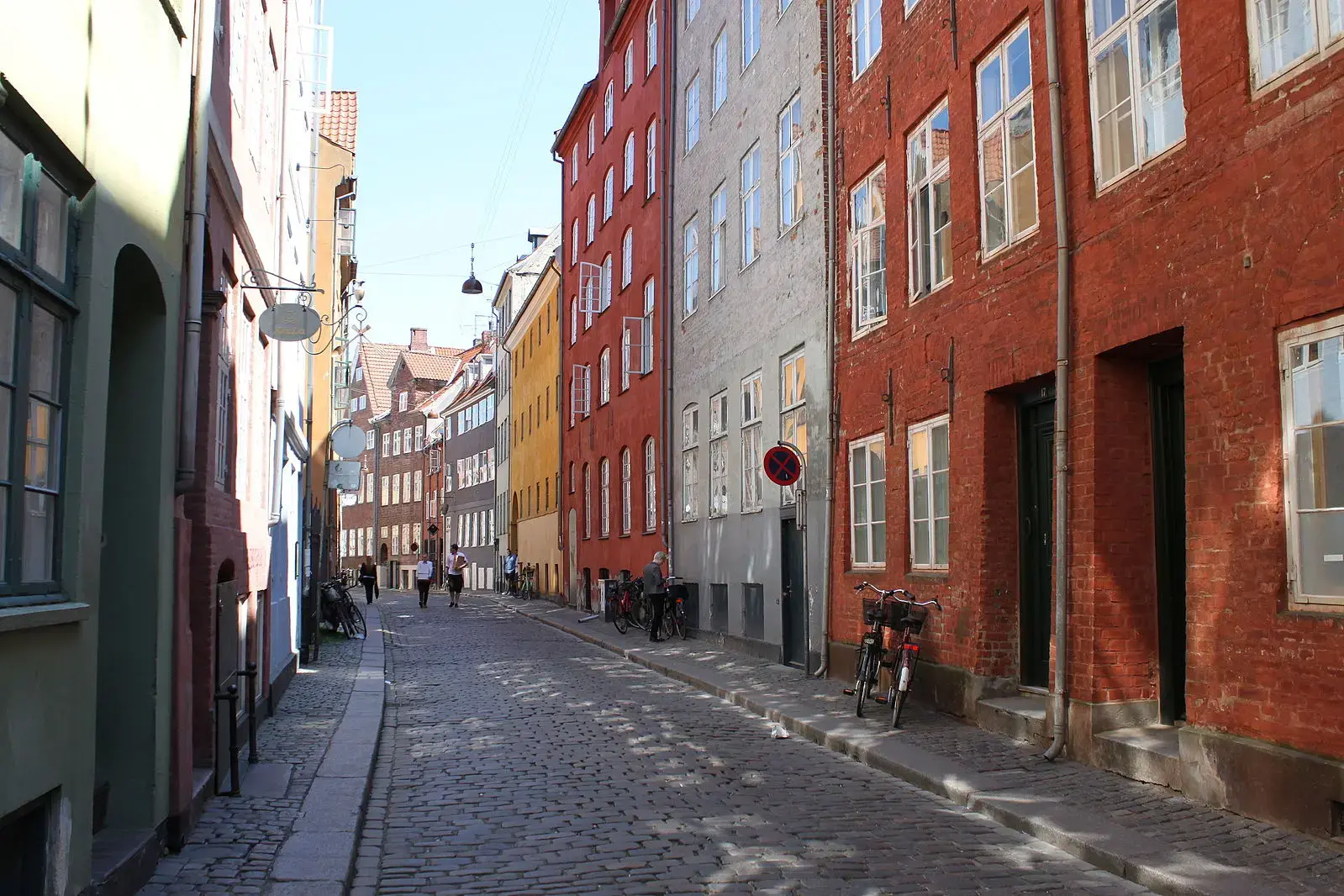
Magstræde is a narrow, curving cobblestone street located in the Indre By district of Copenhagen, situated in the Snarens Kvarter neighborhood between Christiansborg Palace and the Strøget pedestrian axis. The lane runs between Knabrostræde and Rådhusstræde. It originated in the 1520s after land reclamation projects pushed the city's harbor shoreline outward to the line of modern-day Nybrogade, leaving this corridor as an access alley. Along with neighboring Snaregade, it preserves both its original high-crowned cobblestones and its medieval alignment.
Despite its picturesque status today, the street's name stems from utilitarian beginnings. In archaic Danish, the word mag referred to a privy or latrine. During the 16th century, a public latrine known as Vestre Mag ("Western Privy") stood over the water along this alley, giving the passage its enduring name.
Discover Copenhagen’s soul on a self-guided adventure
2.5 hours10 stopsAudio guideStart any day, at your own paceTicket on your phone · 30-day refundSurviving Fires and Preserving Renaissance Architecture
Much of central Copenhagen was rebuilt following catastrophic fires in 1728 and 1795, as well as the British bombardment of 1807. These events reshaped the capital into a landscape dominated by Neoclassical architecture. Magstræde, however, is one of the few corridors in the city center where domestic buildings from earlier eras survived.
The residences at Nos. 17–19 and No. 20 withstood the 1728 fire. In particular, Nos. 17–19 are twin-gabled townhouses constructed between the 1620s and 1640s during the reign of King Christian IV. They represent some of the oldest surviving private domestic structures in central Copenhagen. While street-facing gables were standard throughout medieval and Renaissance Copenhagen, they were widely prohibited or removed after subsequent fires to limit the spread of flames. The gabled façades of Nos. 17–19 provide a rare surviving look at Copenhagen's pre-fire scale and urban silhouette.
Schäffer’s House and Architectural Craftsmanship
Beyond its early 17th-century townhouses, Magstræde contains notable 18th-century architecture. At No. 6 stands Schäffer's House, constructed between 1733 and 1734 by architect Philip de Lange. The building was commissioned by Court Cabinetmaker Diderich Schäffer, an artisan known for his work on the original Christiansborg Palace.
Schäffer outfitted the residence with intricate Rococo wood paneling. The craftsmanship of these interiors was considered historically and artistically significant enough that key paneled rooms were later dismantled and transferred to the National Museum of Denmark for preservation.
Modern Atmosphere and Cultural Life
Today, Magstræde functions primarily as a quiet residential lane frequented by pedestrians and photographers. The street's curvature cuts off vehicular traffic, reducing city noise and leaving narrow sightlines defined by pastel, ochre, and deep-red façades, stepped rooflines, exposed brickwork, and timber joints.
The street also maintains a role in Copenhagen's cultural life. In 1970, the municipality turned over a former warehouse spanning Magstræde and Rådhusstræde to local artists and activists, establishing Huset i Magstræde (now known as Huset-KBH), Denmark's first independent culture house. Located at Magstræde 12–14 and adjoining Rådhusstræde 13, the venue hosts live music stages, an independent cinema, and Bastard Café.
FAQ
What does the name Magstræde mean?
The name comes from 'mag', an archaic Danish term for a privy or latrine. In the 16th century, a public latrine called Vestre Mag ('Western Privy') stood along the alley directly over the water.
Why are the houses at Magstræde 17–19 significant?
Constructed in the 1620s–1640s during the reign of King Christian IV, Nos. 17–19 are among the oldest surviving private domestic buildings in central Copenhagen. Their street-facing gables represent a rare architectural style that survived the city's major fires.
What is Huset-KBH?
Huset-KBH, originally founded in 1970 as Huset i Magstræde, is Denmark's first independent culture house. Operating at Magstræde 12–14 and Rådhusstræde 13, it houses live music stages, an independent cinema, and Bastard Café.