Tallinn's Alexander Nevsky Cathedral: History & Facts
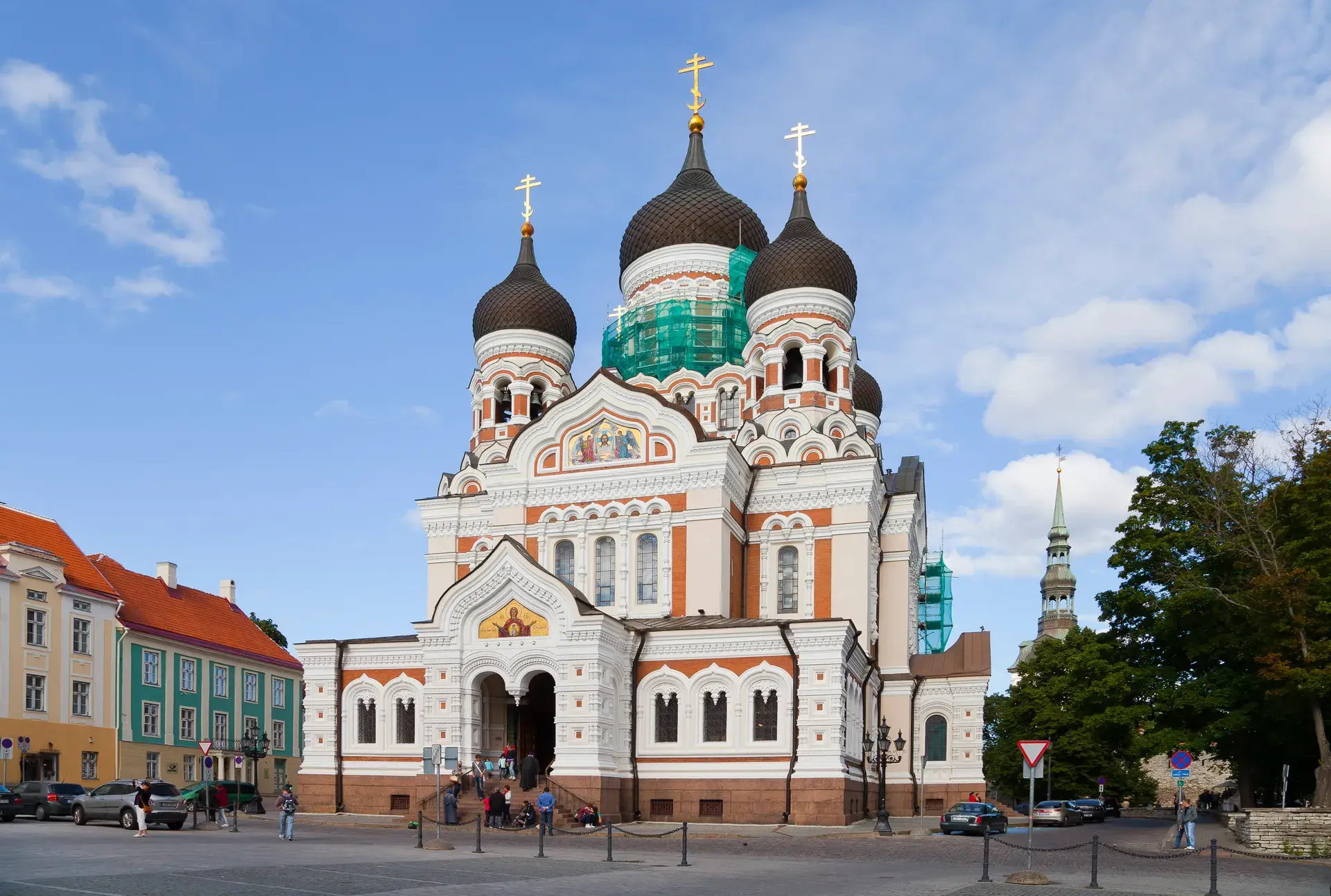
Dominating the skyline of Toompea Hill, the Alexander Nevsky Cathedral is a magnificent example of Russian Revival architecture. This opulent, onion-domed edifice was designed by renowned Russian architect Mikhail Preobrazhensky and stands as a significant, albeit complex, landmark in Tallinn's historical landscape.
An Imperial Statement
The cathedral was constructed between 1894 and 1900, a period when Estonia was part of the Russian Empire under Tsar Alexander III. Its creation was a deliberate act of Russification, intended to assert imperial power and the Orthodox faith in a predominantly Lutheran region. The cathedral is dedicated to Alexander Nevsky, a 13th-century Russian saint and national hero. Its construction also served to commemorate Emperor Alexander III's miraculous escape from a train crash in 1888.
The location was chosen strategically, directly opposite Toompea Castle, the seat of the Estonian Parliament. This site had previously been considered for a statue of Martin Luther, and its selection for the cathedral was a clear symbol of Russian Orthodox dominance over the local culture.
Architecture and Acoustics
Designed in the Russian Revival style, the cathedral features five prominent onion domes, with the central dome being the largest. Its architecture provides a stark contrast to the medieval and Hanseatic buildings that characterize much of Tallinn.
A distinctive feature of the cathedral is its powerful set of eleven bells, all cast in Saint Petersburg. The largest bell alone weighs approximately 16 tons, more than the other ten combined. When rung, especially during church holidays, their solemn and powerful sound carries far across the city, creating a unique auditory experience.
A Controversial Past
Following Estonia's independence in 1918, the cathedral became a contentious symbol of past oppression. Throughout the 1920s and 1930s, there were multiple serious discussions about its demolition, with some proposing to replace it with a 'Pantheon of Estonian Independence'. These plans were never realized, partly due to its architectural value and opposition from the Orthodox community.
Despite the atheist policies of the Soviet government, the cathedral remained a functioning place of worship during the occupation from 1940 to 1991. Notably, the late Patriarch Alexy II of Moscow began his priestly ministry within its walls. The building's symbolic controversy has endured, with calls for its removal resurfacing as recently as 2022.
The Cathedral Today
Currently, the Alexander Nevsky Cathedral serves as the primary cathedral for the Estonian Orthodox Church of the Moscow Patriarchate. It is an active place of worship, holding regular services that attract both congregants and visitors. Thanks to its exceptional acoustics, the cathedral is also a venue for choral performances. It remains one of Tallinn's major tourist attractions, drawing interest for its stunning architecture and complex history.
FAQ
Why was the Alexander Nevsky Cathedral built in Tallinn?
It was constructed from 1894 to 1900 during a period of Russification under the Russian Empire. It was intended as a symbol of imperial power and the Orthodox faith in a largely Lutheran Estonia.
Has the cathedral always been a protected landmark?
No, it has a controversial history. As a symbol of Russian domination, there were multiple proposals to demolish it in the 1920s and 1930s. These discussions have even resurfaced in recent years.
What is the Alexander Nevsky Cathedral used for today?
It is an active place of worship and the main cathedral for the Estonian Orthodox Church of the Moscow Patriarchate. It is also a major tourist attraction, admired for its architecture and historical significance.
What is notable about the cathedral's bells?
The cathedral has a set of eleven bells cast in Saint Petersburg. The largest bell weighs around 16 tons, which is more than the other ten bells combined, producing a powerful sound that can be heard across the area.