Freedom Square in Tallinn: A Symbol of Estonian Independence
Freedom Square, known locally as Vabaduse väljak, is the principal public plaza in Tallinn and a modern symbol of Estonian independence. Surrounded by contemporary cafes, art galleries, and significant monuments, this expansive square serves as a vibrant hub for civic and cultural life.
A History of Transformation
The site's history reflects Estonia's tumultuous past. Its origins trace back to the 14th-century Harju Gate, part of Tallinn's medieval fortifications, and a 17th-century Swedish bastion. In the 19th century, the area was known as the Hay Market (Heinaturg). A significant change occurred in 1910 under Russian imperial rule when a monument to Peter the Great was erected, and the area was named Peetri plats.
Following Estonia's declaration of independence, the tsarist statue was dismantled and melted down in 1922, and the plaza was redesignated Vabaduse väljak (Freedom Square). During the Soviet occupation beginning in 1944, it was renamed Victory Square (Võiduväljak) and used for military parades. The original name was restored in 1989 amid the Singing Revolution, a non-violent movement that led to Estonia regaining its independence.
The War of Independence Victory Column
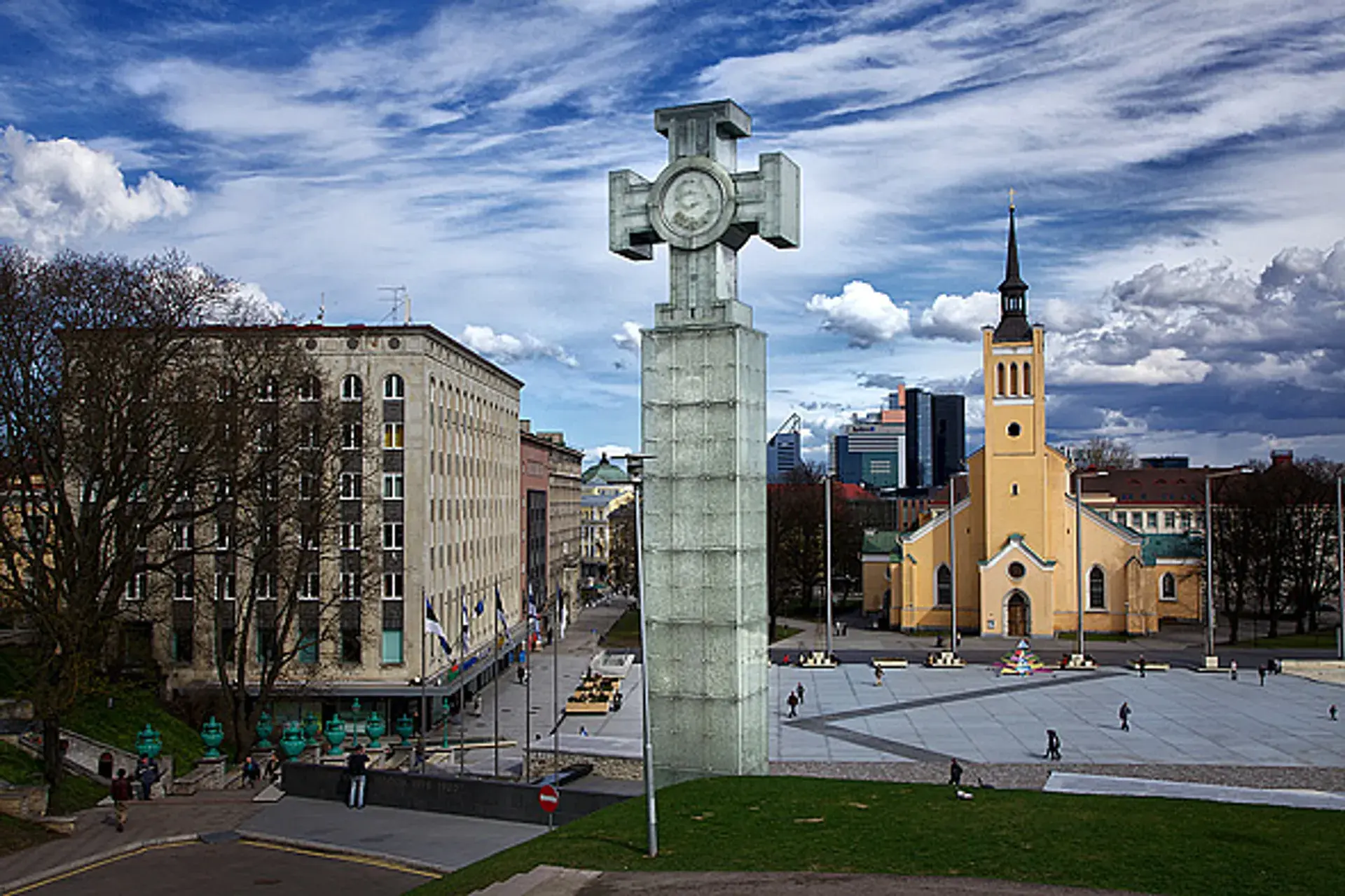
Dominating the square is the War of Independence Victory Column, unveiled on June 23, 2009. This striking monument commemorates Estonia's 1918-1920 War of Independence, which secured the nation's sovereignty and claimed the lives of approximately 5,000 Estonian combatants. Designed by Rainer Sternfeld, Andri Laidre, Kadri Kiho, and Anto Savi, the column stands 23.5 meters tall. It is composed of 143 glass blocks and is topped with a representation of the Cross of Liberty.
Modern Design and Ancient Ruins
Freedom Square underwent a major redesign in 2009 by Alver Architects, creating the 8,100-square-meter pedestrian-friendly space seen today. A unique feature of the modern design is the integration of the site's deep history. During the renovation, archaeologists uncovered the remains of the medieval Harju Gate and the 17th-century Swedish bastion walls. These historical foundations are now preserved and visible to the public through glass panels set into the square's surface. The project also included the construction of a 200-vehicle underground parking garage.
The Square Today
As Tallinn's main public plaza, Freedom Square hosts national ceremonies, Independence Day celebrations, concerts, political rallies, and public exhibitions. It is a popular meeting point and a place for leisurely walks for both locals and visitors. The square is bordered by key landmarks, including the Neo-Gothic St. John's Church (Jaani kirik), the Tallinn Art Hall, and the Tallinn City Government building.
FAQ
What is the main monument in Freedom Square?
The main monument is the War of Independence Victory Column. Unveiled in 2009, the 23.5-meter-tall glass pillar honors those who fought in Estonia's 1918-1920 War of Independence.
Why has Freedom Square had so many different names?
The square's name has changed to reflect Estonia's political history. It was Peetri plats under Russian rule, Victory Square during the Soviet occupation, and became Freedom Square (Vabaduse väljak) to symbolize national sovereignty.
Can you see historical ruins in Freedom Square?
Yes, during the 2009 renovation, archaeological remains of the medieval Harju Gate and a 17th-century Swedish bastion were uncovered. They are now preserved and visible to the public beneath glass panels in the square.