St. Mary's Cathedral: Tallinn's Oldest Church
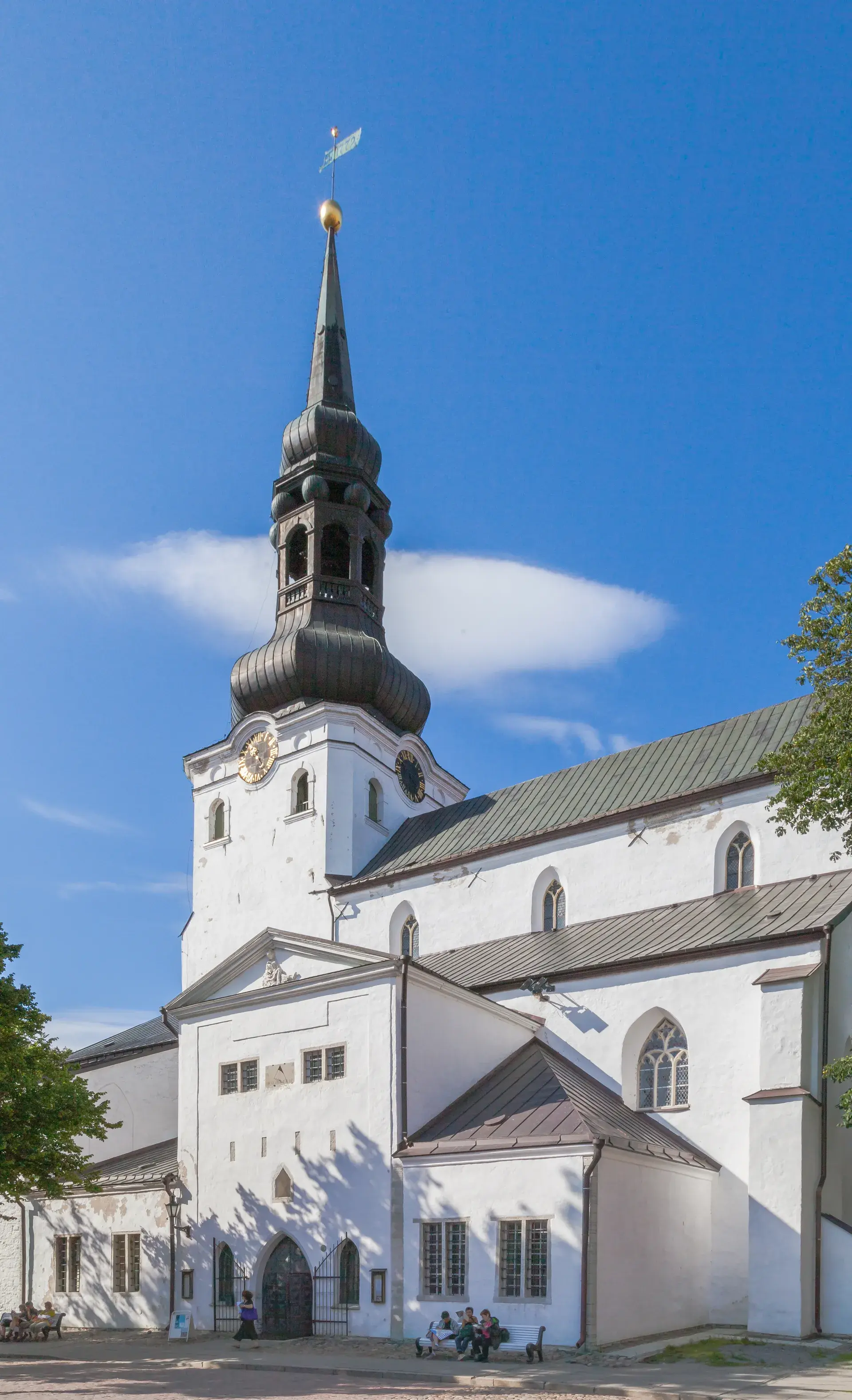
St. Mary's Cathedral, also known as the Toomkirik or Dome Church, stands on Toompea Hill as the oldest church in Tallinn and all of mainland Estonia. This medieval building, crowned by an ornate Baroque bell tower, is a testament to the city's evolving history and architectural styles. Since September 20, 1995, it has been recognized as a national cultural monument of Estonia.
A History Forged in Fire and Faith
The cathedral's story begins in 1219 following the Danish conquest of Tallinn, when a wooden church was first built on the site. A more permanent stone structure was initiated by Dominican friars in 1229. Its early history was turbulent, but the building was completed and consecrated in honor of the Virgin Mary by King Valdemar II in 1240. Between 1330 and 1430, it was enlarged into the three-aisled Gothic basilica seen today. In 1561, during the Protestant Reformation, the cathedral transitioned from Roman Catholic to Lutheran under Bishop Peter Foling.
A defining moment came with the Great Fire of 1684, which devastated Toompea Hill. St. Mary's was the only building to survive, though its wooden interiors were destroyed. This led to significant renovations, introducing many of the Baroque features visible today. The current Baroque tower was constructed between 1778 and 1779, replacing the one lost in the fire.
Architectural and Interior Highlights
The interior of St. Mary's Cathedral is a rich tapestry of history. The Baroque altarpiece and pulpit, both crafted by the renowned artist Christian Ackermann in the late 17th century, are standout features. The cathedral also houses a grand pipe organ built in 1914, highly regarded across Europe for its rich, resonant tone during services and recitals.
The floor of the church is a unique and somber archive, paved entirely with gravestones dating from the 13th to the 18th centuries. Near the entrance lies the tombstone of Otto Johann Thuve, who, in an act of profound humility, requested to be buried there so that all who entered would step upon his grave, seeking forgiveness for his sins.
The walls are adorned with approximately 110 intricately carved wooden coats of arms, representing the Baltic German nobility who were historically connected to the church. This collection is the second-largest of its kind in the world.
Notable Burials
Beyond the common gravestones, the cathedral is the final resting place for several prominent historical figures. These include Adam Johann von Krusenstern, the naval explorer who led Russia's first circumnavigation of the globe. Also buried here is Samuel Greig, a Scottish admiral in the Russian fleet. Another significant tomb is that of Pontus De la Gardie, a Swedish general, who is buried alongside his wife, Sofia Johansdotter Gyllenhielm, the daughter of King John III of Sweden.
The Cathedral Today
St. Mary's Cathedral continues its long history as a place of worship, serving as the main Evangelical Lutheran church in Estonia and the seat of the Archbishop of Tallinn. It holds regular services and is a significant cultural venue, frequently hosting organ concerts.
As a major attraction, the cathedral invites visitors to explore its historic interior. Many also choose to climb its 69-meter bell tower, which provides sweeping panoramic views of Tallinn's Old Town. The building undergoes continuous restoration to preserve its invaluable heritage for future generations.
FAQ
Why is St. Mary's Cathedral in Tallinn significant?
It is the oldest church in Tallinn and mainland Estonia, founded in 1219. It serves as the principal Lutheran cathedral and holds a rich collection of historical artifacts, including noble coats of arms and centuries-old gravestones.
What architectural styles are visible at St. Mary's Cathedral?
The cathedral is predominantly a Gothic three-aisled basilica. However, following a major fire in 1684, significant Baroque elements were added, including its current bell tower (1778-1779), altarpiece, and pulpit.
What is unique about the floor of St. Mary's Cathedral?
The entire floor is paved with a collection of gravestones dating from the 13th to the 18th centuries. One notable tombstone near the entrance belongs to Otto Johann Thuve, who requested to be buried there as an act of humility.
Can visitors climb the tower of St. Mary's Cathedral?
Yes, visitors can climb the 69-meter Baroque bell tower, which offers panoramic views over Tallinn's Old Town.