St. John's Church, Tartu: Gothic Terracotta Wonder
Brick Gothic Architecture in Medieval Tartu
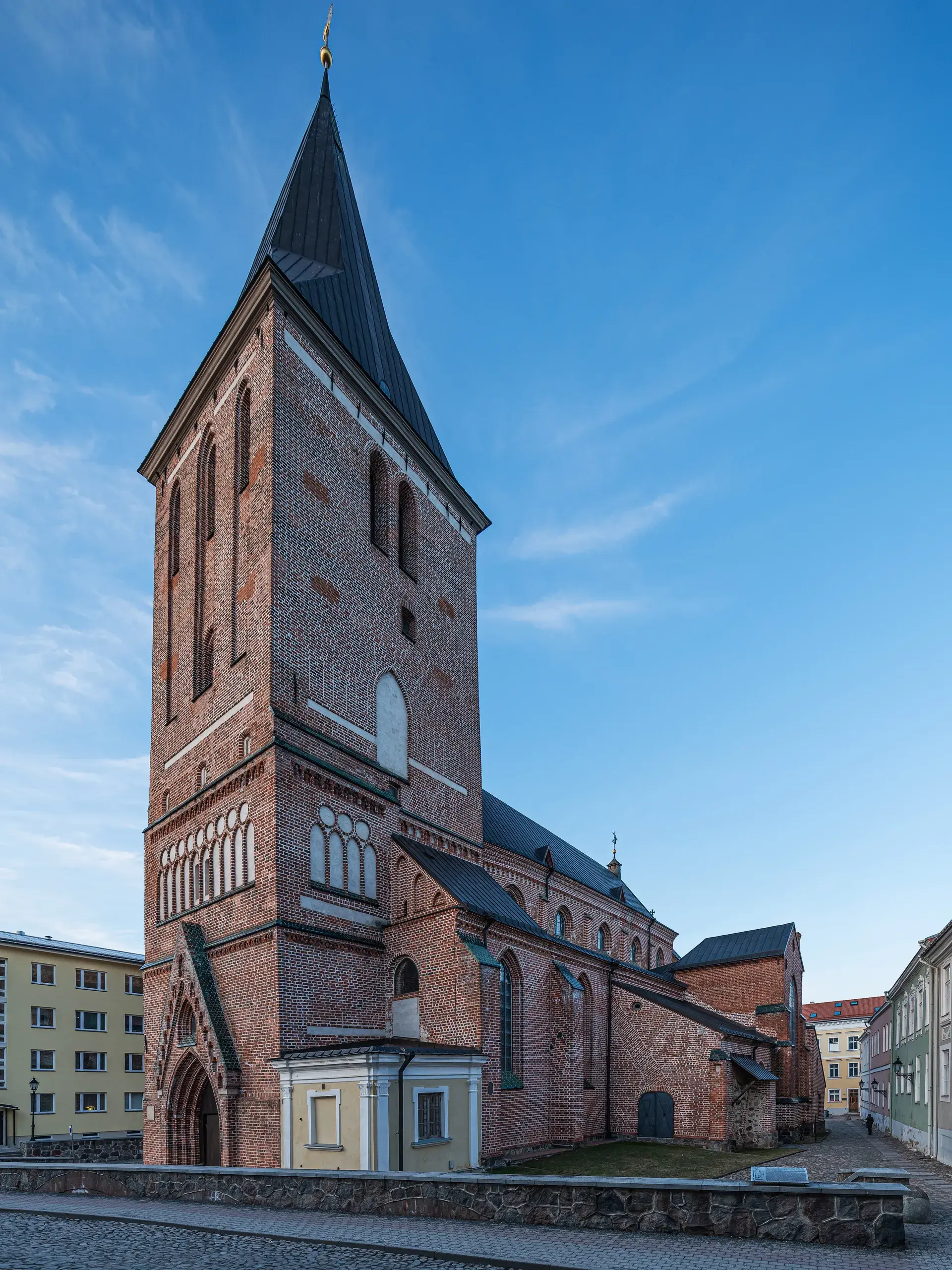
St. John's Church (Tartu Jaani kirik) is a 14th-century Brick Gothic basilica situated in the Old Town of Tartu, Estonia, north of Town Hall Square and the University of Tartu. Southern Estonia lacked local sources of natural building stone, which led medieval builders to rely on brick. The church was designed as a three-aisled basilica featuring an elongated choir, a polygonal apse, and a massive western tower.
The scale and construction of the church reflect the wealth of medieval Tartu (historically known as Dorpat). During this period, the city operated as a thriving inland Hanseatic trading station linking Western European merchants with commercial centers such as Novgorod and Pskov.
The Medieval Terracotta Sculpture Program
The church is celebrated throughout Northern Europe for its extensive medieval terracotta sculpture program. Scholars estimate that between 1,000 and 2,000 terracotta figures originally adorned the building's exterior niches and interior walls. Unlike typical architectural terracotta of the era, which utilized reusable molds for mass production, these figures were individually sculpted and carved directly from wet clay blocks, giving every face distinct characteristics.
The unglazed, reddish-brown terracotta contrasts sharply with the darker structural brickwork. Surviving sculptures show visible clay-carving marks, individualized facial expressions, and detailed 14th-century clothing, including ruffled kruseler headdresses. Several figures hold ribbons that were once blank or painted, likely bearing the names of deceased patrons or honored citizens. An unconfirmed architectural hypothesis suggests the diverse representations of elders, women, children, and townsfolk may have served as memorials for local residents who perished during 14th-century Black Death outbreaks.
Today, approximately 200 intact statues and hundreds of fragments remain. To protect the fragile medieval clay from weathering, many original sculptures have been relocated indoors and into archives, while replica figures occupy the exterior niches.
History, Destruction, and Reconstruction
Written records first mention St. John's Church in 1323, while dendrochronological analysis of the wooden foundation rafts dates the construction of the nave to around 1321. The building underwent significant changes over the centuries. During the 1820s and 1830s, Neoclassical interior remodeling led workers to strip, damage, or plaster over many medieval sculptures to match the era's aesthetic trends.
In 1944, fighting during World War II resulted in a catastrophic fire that gutted the interior. The church remained roofless and exposed to the elements for decades during the Soviet era, leading to the collapse of the northern nave arcade in 1952. A large-scale restoration initiative began in 1989 and continued through Estonia's restoration of independence, culminating in the building's official reconsecration on June 29, 2005.
Modern Parish Life and Tower Views
St. John's Church functions as an active parish of the Estonian Evangelical Lutheran Church, holding services in both Estonian and English. The basilica is also recognized as an important cultural and musical venue in Tartu, hosting choral performances, classical chamber concerts, and sacred music events due to its acoustics.
The church welcomes visitors, offering access to an observation platform in the western tower. From the platform, guests can look out over Tartu's historic Old Town and examine the church's historical bronze bells, named Peter and Paul.
FAQ
Why was St. John's Church constructed with brick instead of stone?
Builders used brick because natural building stone was scarce in southern Estonia during the medieval period.
What makes the terracotta sculptures at St. John's Church unusual?
Rather than being cast in reusable molds, the figures were individually sculpted and carved directly from wet clay blocks, giving every face unique features and expressions.
Can visitors climb the tower of St. John's Church?
Yes, visitors can access the tower's viewing platform to overlook Tartu's Old Town and view the church's historic bronze bells, named Peter and Paul.