Tartu Art Museum: History of the Leaning House
The Leaning House of Raekoja Plats
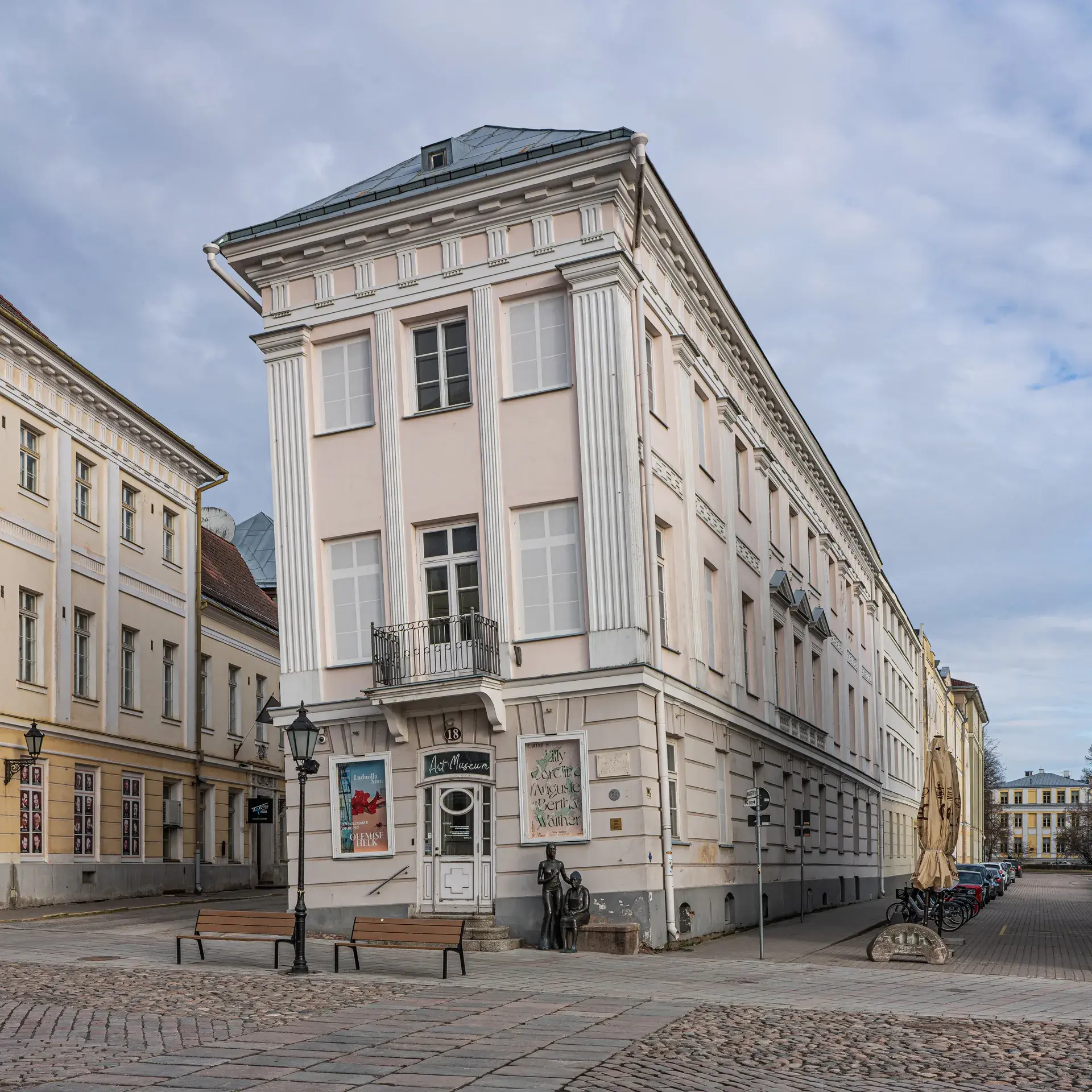
Situated at Raekoja plats 18 in central Tartu, the Tartu Art Museum occupies one of the Baltic region's most unusual historic structures. Known locally as the Leaning House (Viltune maja) or Barclay House, the three-story classicist building was constructed in 1793 with a vaulted cellar, ancillary structures, and coach facilities. Positioned on the Town Hall Square between the historic Town Hall and the Emajõgi River, its distinctly off-kilter facade creates an eye-catching contrast to the strict symmetry and pastel facades of the surrounding square.
The building leans at an angle of 5.8 degrees, giving it a steeper incline than the famous Leaning Tower of Pisa. Since 1988, this architectural landmark has served as the primary exhibition venue for the Tartu Art Museum (Tartmus).
The Engineering Behind the Tilt
The building's dramatic slant is the result of Tartu's riverbank geology and asymmetrical foundation engineering. The historic center of the city rests on the soft, marshy floodplain of the Emajõgi River. When the house was constructed in the late 18th century, one side was built directly upon the sturdy remains of Tartu's medieval stone city wall, while the opposite side was supported by wooden piles driven into the boggy silt.
Over the decades, declining groundwater levels exposed the submerged timber supports to air, initiating decay and causing the silt-supported side to sink. The side anchored to the stone town wall remained firm, resulting in a progressive tilt. By the 1980s, the sinking threatened the building with structural collapse. Polish conservation specialists stepped in to stabilize the foundations, securing the townhouse against destruction while deliberately preserving its distinctive angle.
Centuries of Inhabitants
Beyond its engineering quirks, the building possesses a multifaceted social history. In 1819, the property was purchased by Countess Auguste Helene Barclay de Tolly, the widow of celebrated Baltic German Field Marshal Michael Andreas Barclay de Tolly. The association gave the building its alternative name, the Barclay House, and a commemorative plaque on the exterior marks this history.
Commercial and creative activity shaped later eras of the house. In 1879, pharmacist Theodor Köhler established a ground-floor pharmacy that operated for over a century. Oskar Luts, who later became one of Estonia’s most prominent 20th-century authors, worked in the dispensary as an apprentice pharmacist. Decades later, during the 1950s and 1960s, the upper levels served as a boarding school dormitory that housed students who would become celebrated Estonian artists, including Tiit Pääsuke and Kaarel Kurismaa.
The Museum Experience Today
Today, Tartmus utilizes the three floors of the Leaning House to display rotating temporary exhibitions of Baltic German, modern, contemporary, and 20th-century Estonian art, including pieces linked to the influential Pallas school.
The interior galleries provide a curious physical experience. Level, plumb-hung artworks stand in sharp visual conflict with the visibly sloping floors, doorways, and interior walls. Alongside the gallery spaces, the ground floor accommodates a specialized museum bookshop and ticket counter, while educational rooms host programming and specialized tours that extend into the attic and vaulted cellar.
FAQ
Why does the Tartu Art Museum building lean?
The house leans because of uneven foundation support. One side was built atop the medieval stone city wall, while the other rested on wooden piles driven into soft river silt that subsided over time as groundwater levels dropped.
How steep is the tilt of Tartu's Leaning House?
The building leans at an angle of 5.8 degrees, which is steeper than the incline of the Leaning Tower of Pisa.
Why is the building called the Barclay House?
The property was purchased in 1819 by Countess Auguste Helene Barclay de Tolly, the widow of Russian Empire Field Marshal Michael Andreas Barclay de Tolly.
What kind of artwork is displayed at the Tartu Art Museum?
The museum hosts temporary exhibitions featuring Baltic German art, modern art, contemporary works, and 20th-century Estonian art, including pieces tied to the Pallas school.