Tour de l'Horloge: Aix-en-Provence Clock Tower
A Fortified Gateway of Civic Independence
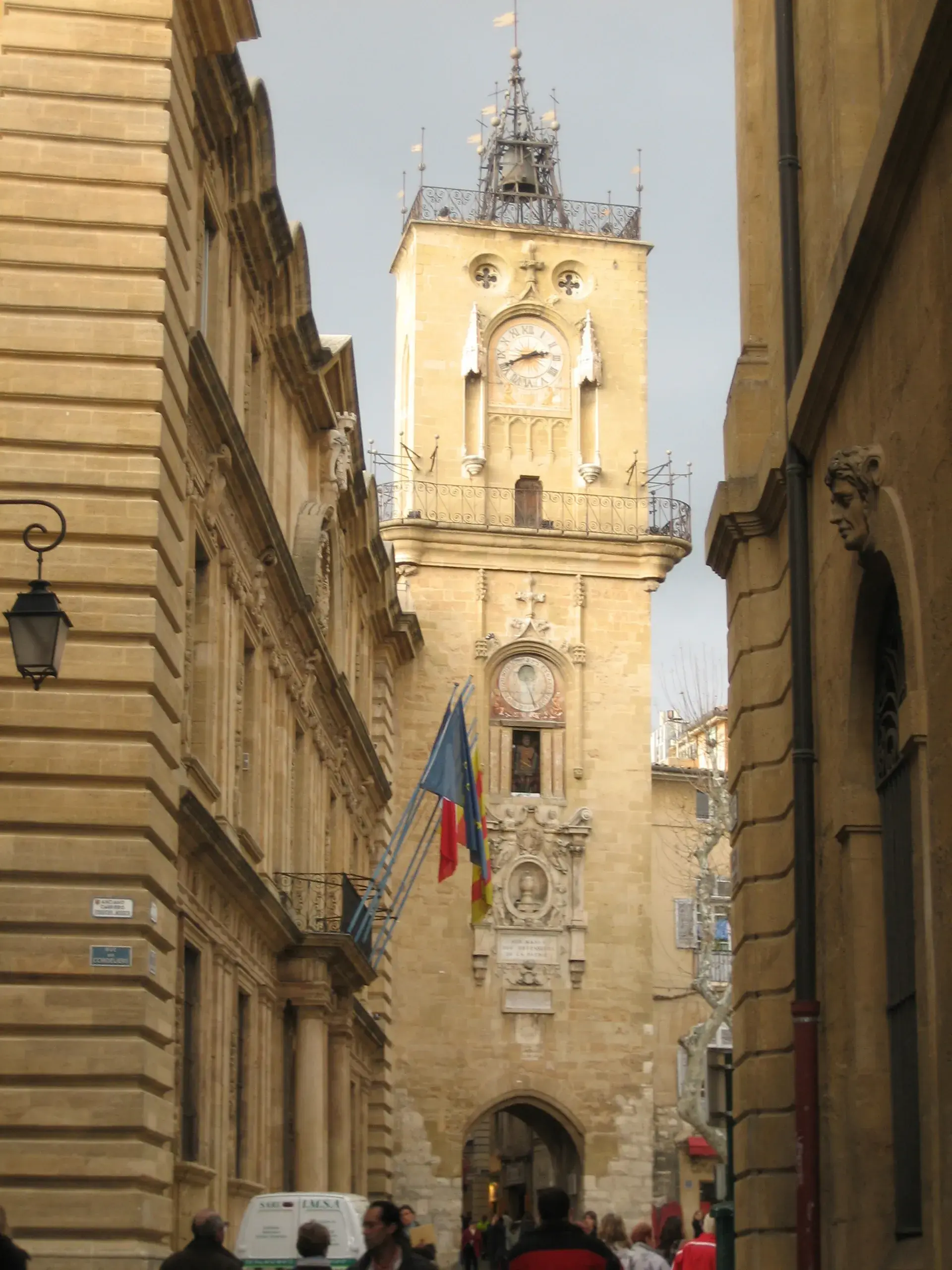
The Tour de l'Horloge, also known as the Beffroi or Tour de la Grande Horloge, stands as the municipal clock tower of Aix-en-Provence. Situated directly alongside the Hôtel de Ville on the Place de l'Hôtel-de-Ville, the structure occupies a site with ancient roots. Built over earlier foundations along the perimeter of the Roman military post of Sextius, the location originally functioned as a fortified gateway opening to the northern Bourg Saint-Sauveur.
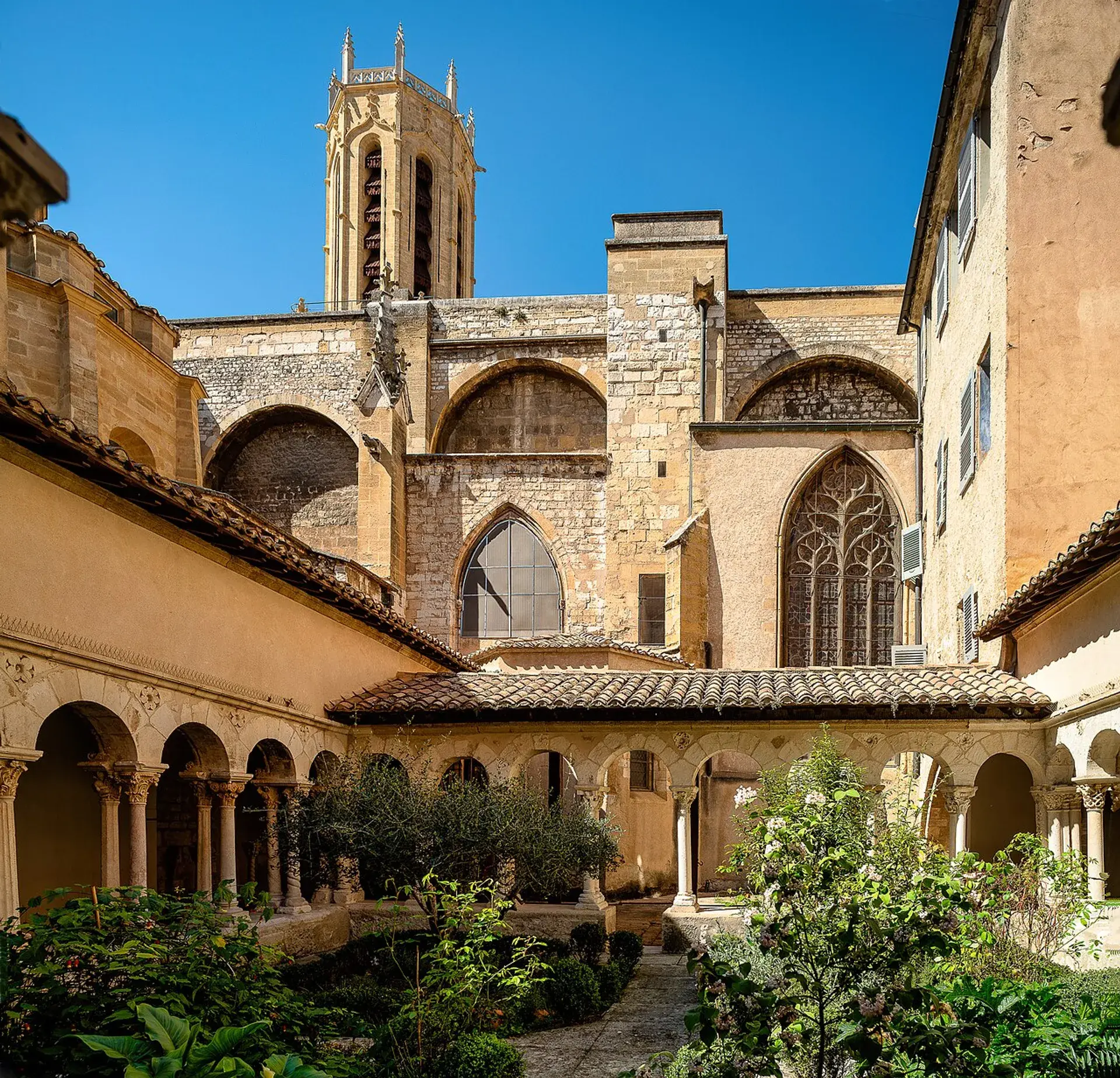
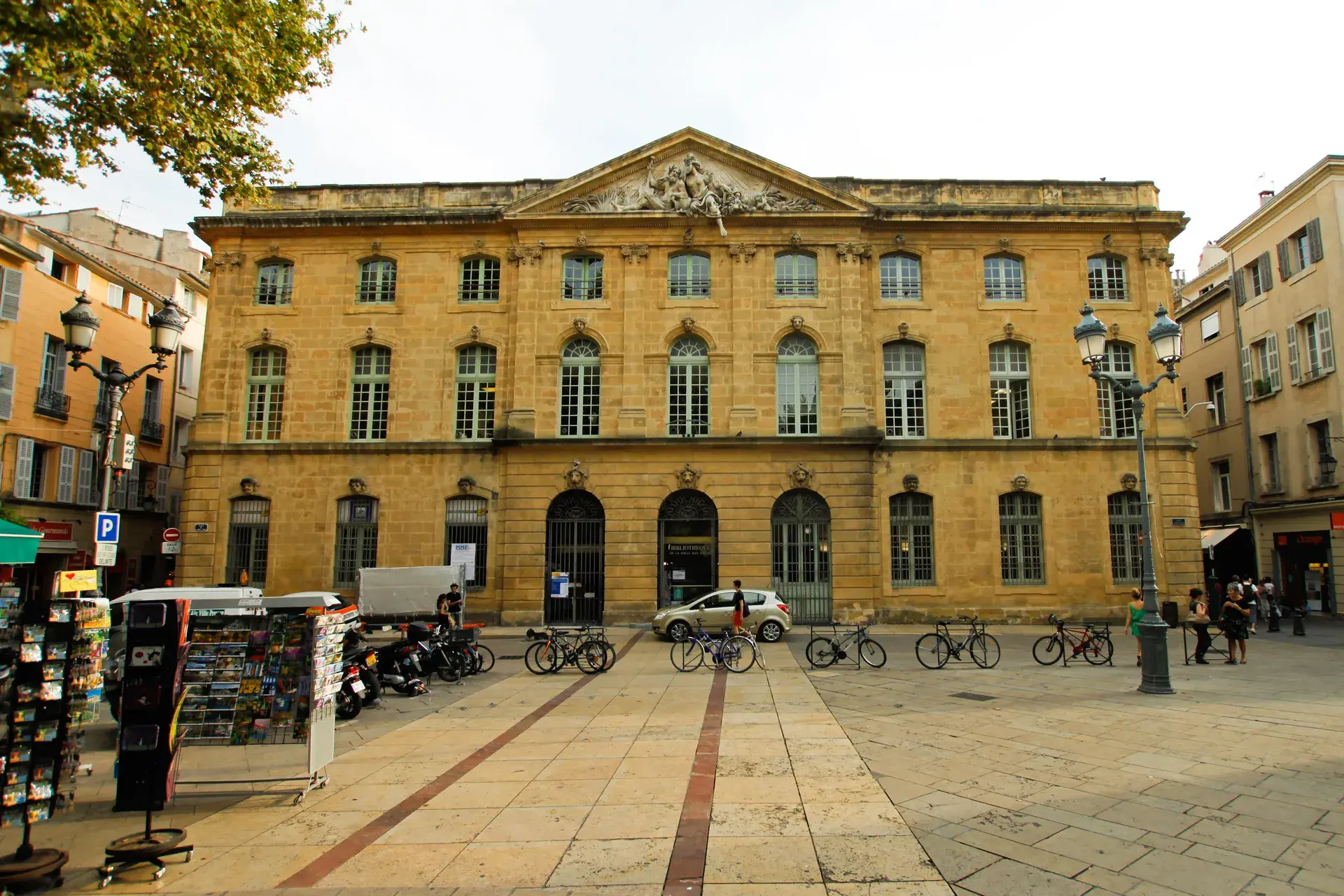
In 1357, the local municipal council established its headquarters at the base of the gate, transforming the tower into a permanent symbol of secular municipal authority distinct from comtal and episcopal power. Between 1510 and 1512, the tower was reconstructed in the Flamboyant Gothic style to create the fortified archway visible today. In the broader urban geography of Aix-en-Provence, the belfry marks the historic divide between the older cathedral quarter of Saint-Sauveur to the north and the civic and commercial quarters developed during the 17th and 18th centuries to the south, including Place Richelme and the Halle aux Grains.
Mistral-Resistant Ironwork and the Cloche du Ban
Crowning the stone tower is a 16th-century openwork wrought-iron campanile that houses the municipal bell, known as the cloche du ban. This summit structure features an intricate lattice design engineered specifically to withstand Provence's severe Mistral winds. Rather than catching solid stone masonry or causing the bell to strike accidentally, violent gusts pass harmlessly through the open iron frame.
Historically, the bell played an essential role in local governance and security. It was rung to sound civic alarms or call citizens to public assemblies across a radius of one league (une lieue). This perimeter defined the feudal jurisdiction of the town council, originating the administrative term ban-lieue.
The Astronomical Clock and the Repurposed Gods
Set into the tower's facade is an astronomical clock dating to 1661, equipped with a display aperture containing sculpted wooden figures. In the 16th century, the clock mechanism originally incorporated seven walnut statues representing planetary deities, each corresponding to a day of the week.
Following an 18th-century repair, four surviving figures were mounted onto a revolving turntable and adapted to indicate the four seasons rather than the days. Instead of traditional seasonal allegories, these Roman planetary gods took on new roles: Mercury represents spring, Venus represents summer, Jupiter signals autumn, and the war god Mars stands in for winter. While the striking of the hours is now electrified, city hall staff enter the upper chamber every three months to manually turn the internal turntable on each equinox and solstice, rotating the appropriate figure into public view.
Historic Markers and Modern Presence
The base of the Tour de l'Horloge remains a functioning barrel-vaulted pedestrian portal linking the Place de l'Hôtel-de-Ville with Rue Gaston de Saporta. The stone archway functions as an acoustic amplifier for street musicians and passing pedestrians, echoing against the metallic chime of the municipal bell above.
Over the centuries, the tower's stonework has absorbed various political shifts. An exterior niche that displayed a 1622 bust of King Louis XIII was converted in 1801 into a civic monument holding a funerary urn honoring defenders of the homeland. Near the base, a carved inscription records the liberation of Aix-en-Provence in August 1944. Although the internal chambers and upper viewing platforms are closed to the public, the tower continues to serve as an active thoroughfare and timekeeper.
FAQ
Can visitors go inside the Tour de l'Horloge?
No, the interior chambers and the upper viewing platform are closed to the general public. However, the barrel-vaulted archway at its base remains an open pedestrian street connecting Place de l'Hôtel-de-Ville to Rue Gaston de Saporta.
Why do Roman deities represent the seasons on the clock?
The clock mechanism originally included seven 16th-century walnut statues representing planetary deities for each day of the week. Following an 18th-century repair, the four surviving figures were repurposed onto a rotating turntable to represent the seasons: Mercury (spring), Venus (summer), Jupiter (autumn), and Mars (winter).
Why is the bell cage on top made of wrought iron?
The open wrought-iron campanile was designed to let Provence's violent Mistral winds blow directly through the structure without catching against solid masonry walls or accidentally ringing the bell.
What is the historical meaning of the cloche du ban?
The cloche du ban was the municipal bell rung to call civic assemblies or sound alarms within a radius of one league (une lieue). This feudal jurisdictional territory defined the origin of the term ban-lieue.