Musée-Château d'Annecy: A Historic Fortress Museum
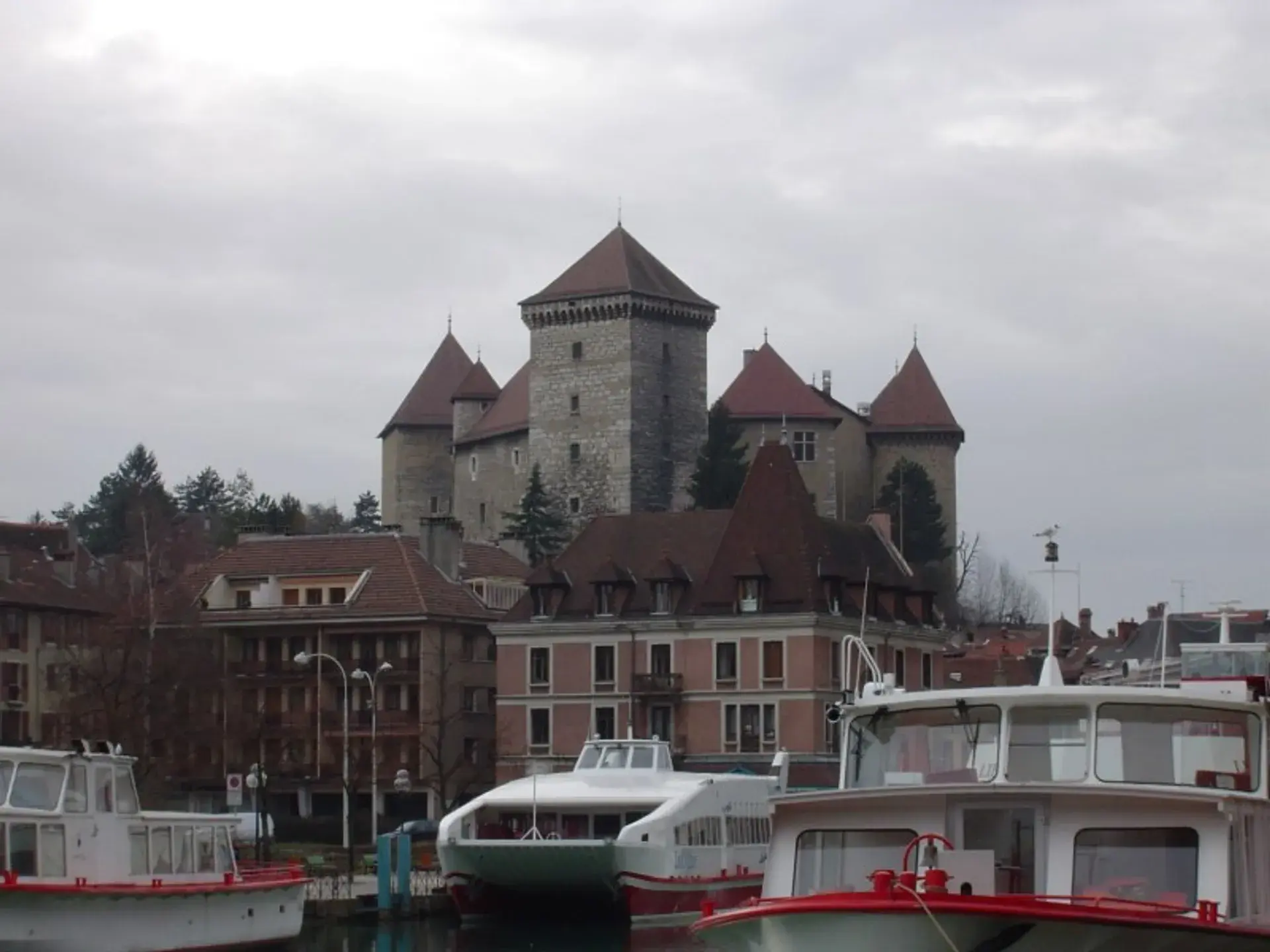
Ascend to the formidable Musée-Château d'Annecy, a commanding medieval fortress whose ancient stone walls have guarded the city for centuries. Constructed between the 12th and 16th centuries, this monumental symbol of Annecy illustrates the city's evolution from a strategic stronghold to a ducal residence and, finally, a modern cultural institution.
A Storied History
The castle's recorded history begins in 1219 when the Counts of Geneva established it as their primary residence. It became a stronghold for the House of Geneva, who developed Annecy into a commercial hub. A significant event in its early history was a devastating fire in 1340, after which it was rebuilt by Count Amédée III. The castle was also the birthplace of Robert of Geneva, who later became Pope Clement VII during the Great Papal Schism.
In the 16th century, the castle became the residence of the Dukes of Genevois-Nemours. However, by the 17th century, it was abandoned as a ducal home and repurposed as military barracks, a role it would maintain until 1947, serving through events like the French Revolution and both World Wars.
Architectural Evolution
The Château d'Annecy showcases a fascinating blend of architectural styles. Its structure layers robust medieval defensive features with the refined elegance of the Renaissance. The oldest surviving part of the fortress is the Tour de la Reine (Queen's Tower), dating to the 13th century.
Later additions, such as the 16th-century Logis Nemours and Logis Neuf, introduced a new aesthetic. The Logis Nemours, commissioned by Charlotte d'Orléans, was particularly inspired by the sophisticated style of Italian Renaissance architecture, representing the cultural shifts of the period.
From Neglect to Revival
Following its long use as a military barracks, the castle fell into a state of neglect. In a dramatic turn of events, the historic structure was occupied by homeless people in 1952. This low point was followed by a complete revival when the city of Annecy acquired the property in 1953.
The city undertook the ambitious project of restoring the castle and transforming it into a museum. In recognition of its historical and architectural importance, the Château d'Annecy was classified as a historic monument, with its final full classification occurring in 1959.
The Castle Museum Today
Today, the Musée-Château d'Annecy is a vibrant cultural center. It houses diverse collections that include regional heritage artifacts, underwater archaeology exhibits from the nearby lake, medieval sculpture, and Alpine landscape paintings from the 18th to 20th centuries. The museum also features contemporary art and a dedicated section for animation films, celebrating a local area of expertise.
In addition to its permanent collections, the castle regularly hosts temporary exhibitions and serves as a venue for social gatherings. It is also home to the Regional Observatory of the Alpine Lakes (ORLA), continuing its legacy as a site of regional importance.
FAQ
When did the Château d'Annecy become a museum?
The city of Annecy acquired the castle in 1953 and subsequently restored and transformed it into the museum it is today.
What is the oldest part of the Château d'Annecy?
The oldest section of the castle is the Tour de la Reine (Queen's Tower), which was constructed in the 13th century.
What kinds of collections are in the Musée-Château d'Annecy?
The museum's collections are diverse, featuring regional heritage, medieval sculpture, Alpine landscape paintings, contemporary art, underwater archaeology, and a section dedicated to animation films.
Did the castle play a role in World War II?
Yes, during World War II, the Château d'Annecy served as a storage location for artworks that had been evacuated from museums in Paris for safekeeping.