Rue Sainte-Claire: Annecy's Historic Arcaded Street
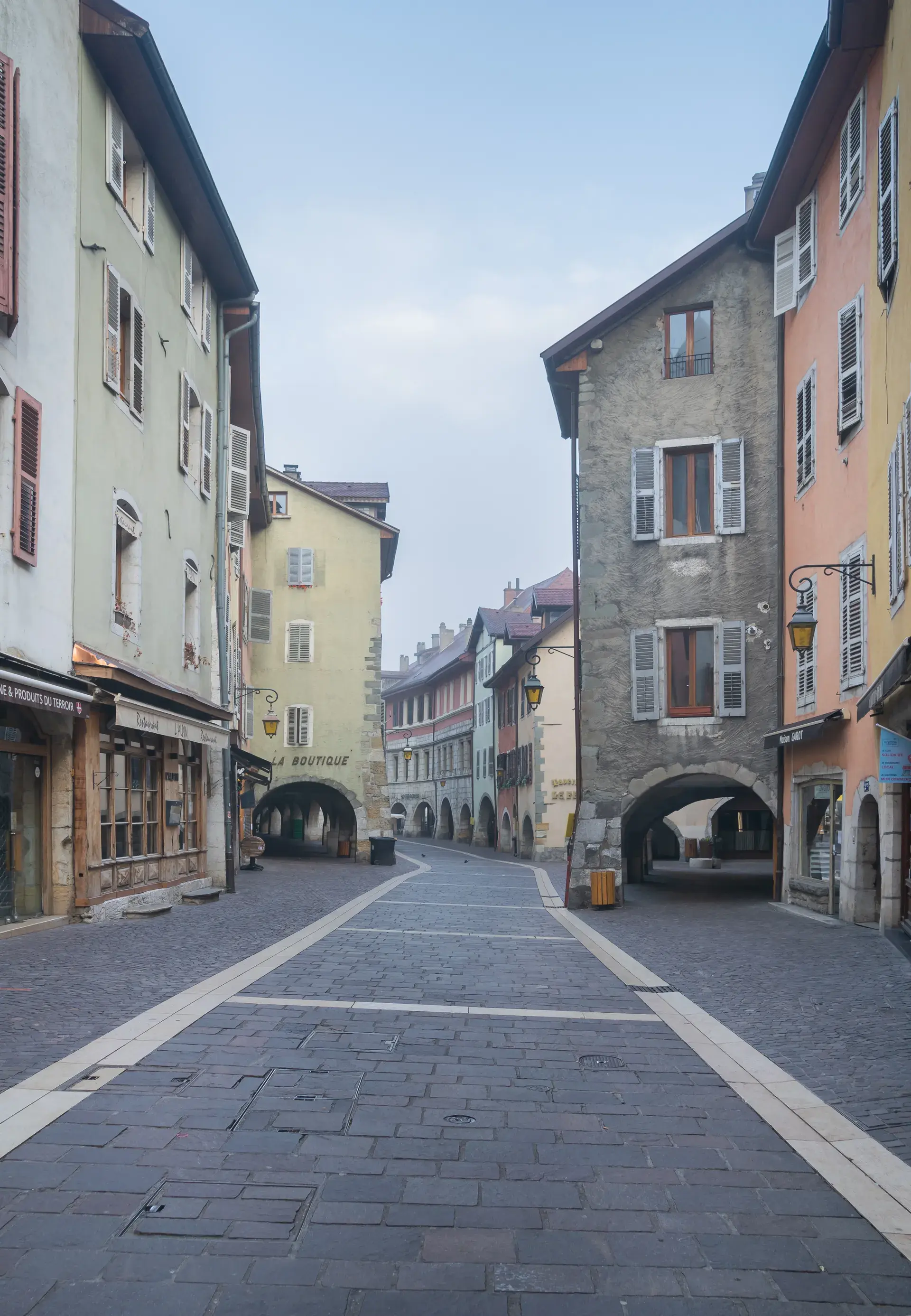
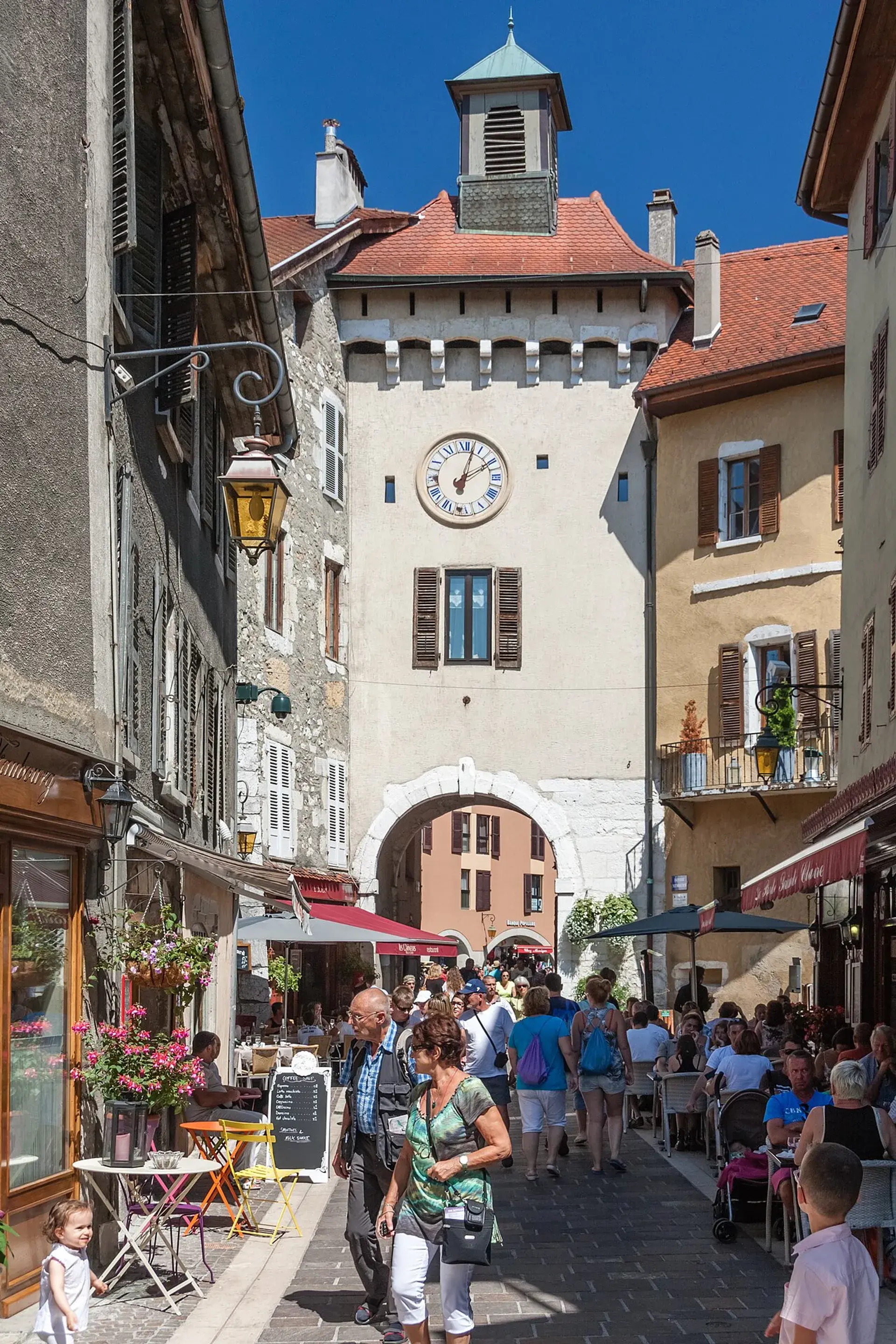
Rue Sainte-Claire is a picturesque and central thoroughfare in the historic heart of Annecy. Lined with vibrant facades and sheltered by its famous arcades, the street is a bustling pedestrian zone that captures the city's unique architectural and commercial history.
Architectural Origins: A Response to Fire
The street's most defining feature, its continuous arcades, dates primarily from the 16th and 17th centuries. This design was not originally for aesthetic purposes but was a practical solution to a recurring problem. In the 15th century, the area's predominantly timber-framed houses were frequently consumed by devastating fires. In response, the Duke of Savoy mandated that all houses be rebuilt in stone, a decree that led to the creation of the arcaded structures seen today. This functional design, intended to prevent the spread of fire, became an early example of Renaissance urban planning and a signature element of Annecy's old town.
Historic Landmarks and Figures
Rue Sainte-Claire is home to several notable buildings. At number 18 stands the Bagnorea House, built in 1582. It was once the residence of Antoine Favre, President of the Genevois Regional Council. In 1607, Favre and Saint Francois de Sales co-founded the Academy Florimontane here, an institution that continues to study Savoyard history. Saint Francois de Sales was a pivotal figure who led Annecy to become a strategic center for the Counter-Reformation after the bishop of Geneva took refuge in the city in 1536. On the adjoining Sainte-Claire Square, the 18th-century Gallo House is named after its architect and is recognizable by its ornamented facade and distinctive, slightly tilted roof.
The Street Today: A Commercial Hub
Today, Rue Sainte-Claire serves as a vibrant commercial artery in Annecy. The sheltered walkways are lined with an array of local boutiques, art galleries, quaint cafes, and restaurants. The street's commercial legacy continues with the Old Town Market, which extends into the area. Food stalls appear on Tuesdays, while a larger market with a wider range of items takes place on Fridays and Sundays, filling the street with a lively atmosphere for both locals and tourists.
FAQ
Why does Rue Sainte-Claire have arcades?
The arcades were a practical urban planning measure. Following devastating fires in the 15th century that destroyed timber houses, the Duke of Savoy decreed that buildings be reconstructed in stone with arcades to help prevent the spread of future fires.
What is Rue Sainte-Claire known for today?
Rue Sainte-Claire is a bustling pedestrian street in Annecy's old town, known for its local boutiques, cafes, and restaurants. It also hosts the Old Town Market on Tuesdays, Fridays, and Sundays.
Are there any famous historical buildings on Rue Sainte-Claire?
Yes, at No. 18 stands the Bagnorea House (1582), former home of Antoine Favre. He co-founded the Academy Florimontane there with Saint Francois de Sales. The nearby Gallo House is another notable 18th-century building.
Who was Saint Francois de Sales and what is his connection to the street?
Saint Francois de Sales was a key figure in the Counter-Reformation. He co-founded the Academy Florimontane in the Bagnorea House on Rue Sainte-Claire. Under his leadership, Annecy became a strategic religious hub in the 16th century.