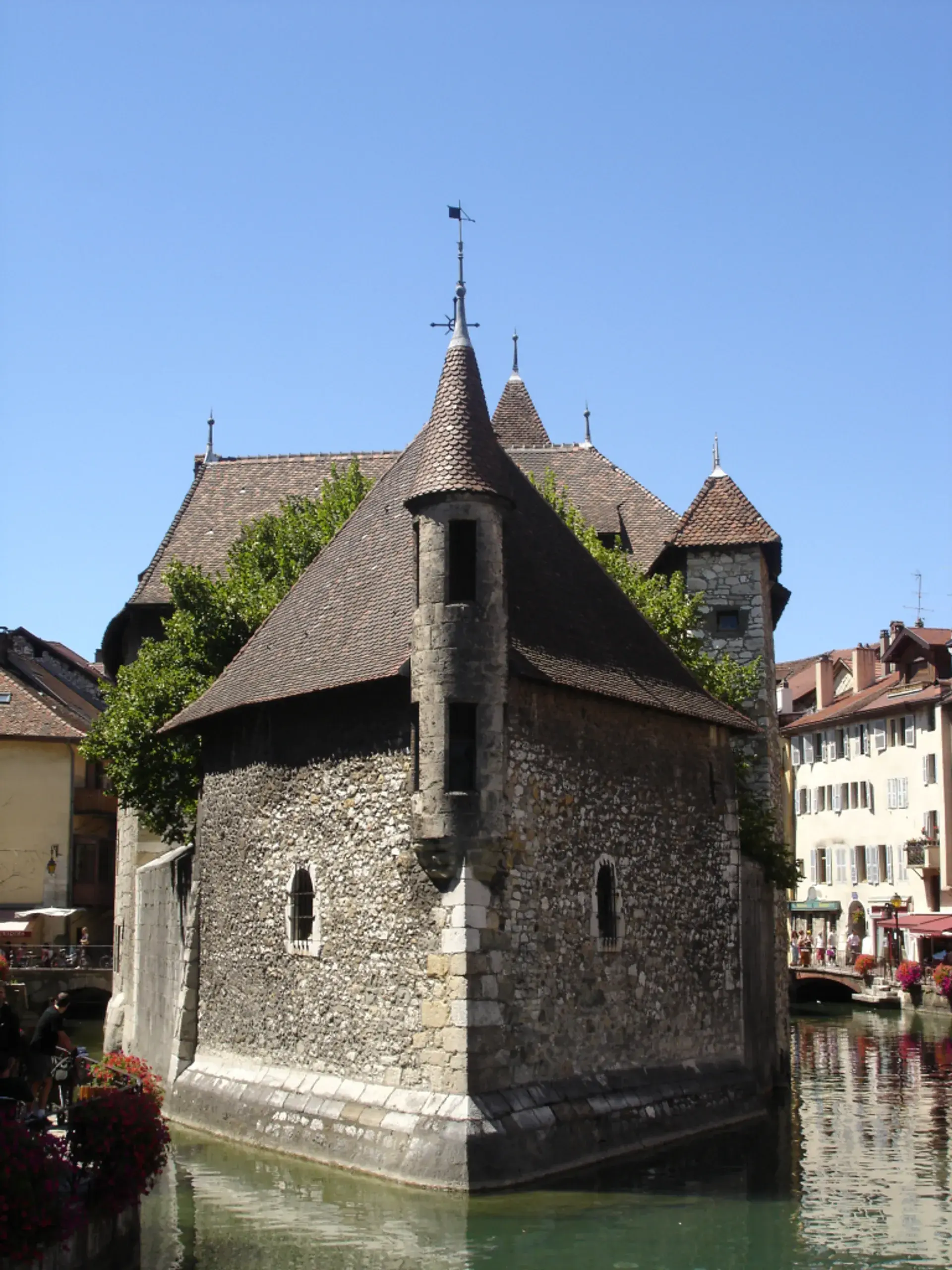
Porte Sainte-Claire: Annecy's Medieval City Gate
The Porte Sainte-Claire is an ancient fortified gate whose weathered stones tell tales of Annecy's medieval past. Constructed in the 14th century, it stands as a powerful testament to the city's history as a fortified stronghold, forming a crucial part of the original city walls.
A Bastion of Medieval Defense
Erected as part of Annecy's medieval defensive system, the Porte Sainte-Claire was designed to regulate entry and safeguard the city from external threats. Strategically oriented towards Chambéry and Aix-les-Bains, it commanded access to the Faubourg Sainte Claire. For centuries, such gates were vital for urban security, and visitors entering Annecy through them were often required to pay a tax.
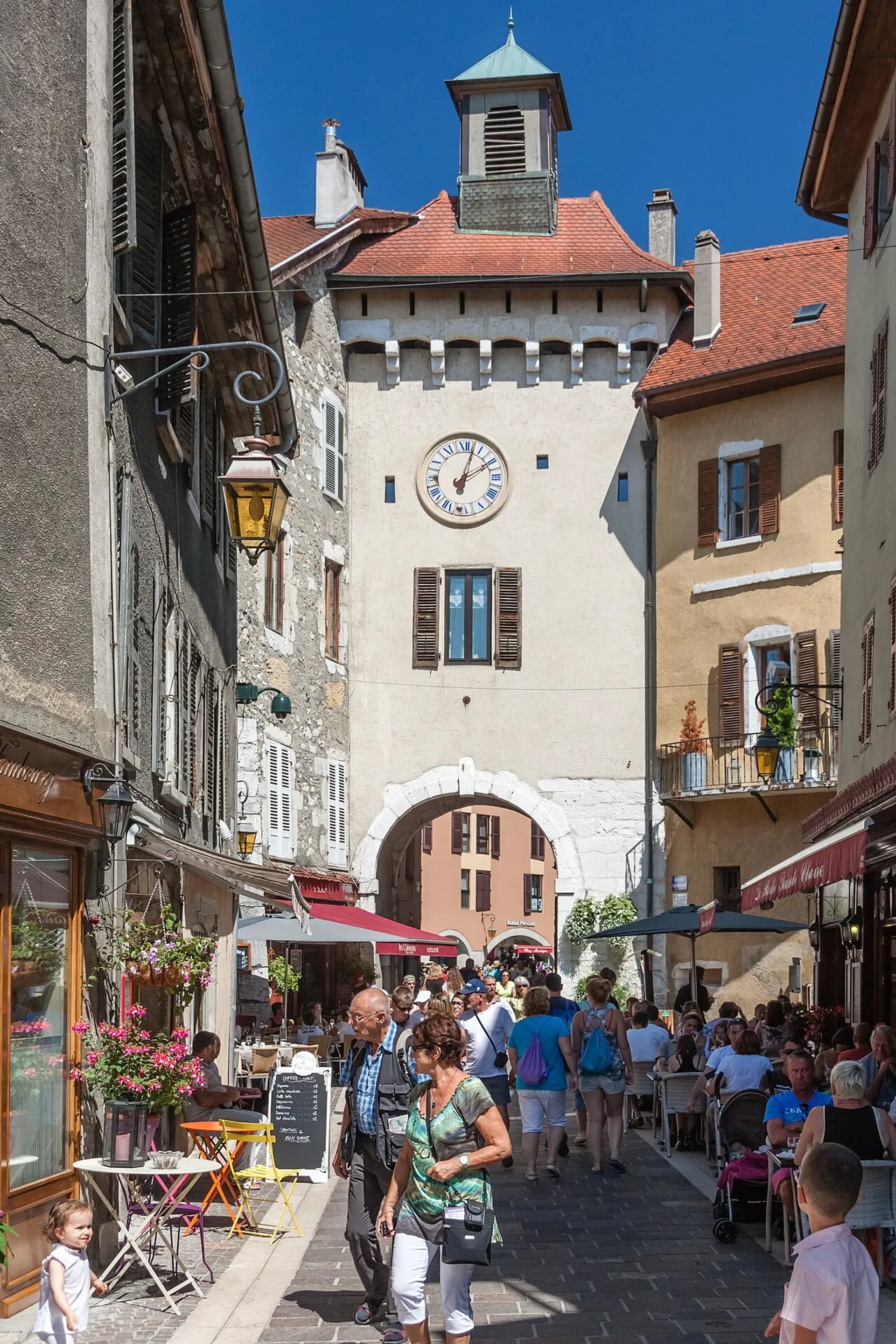
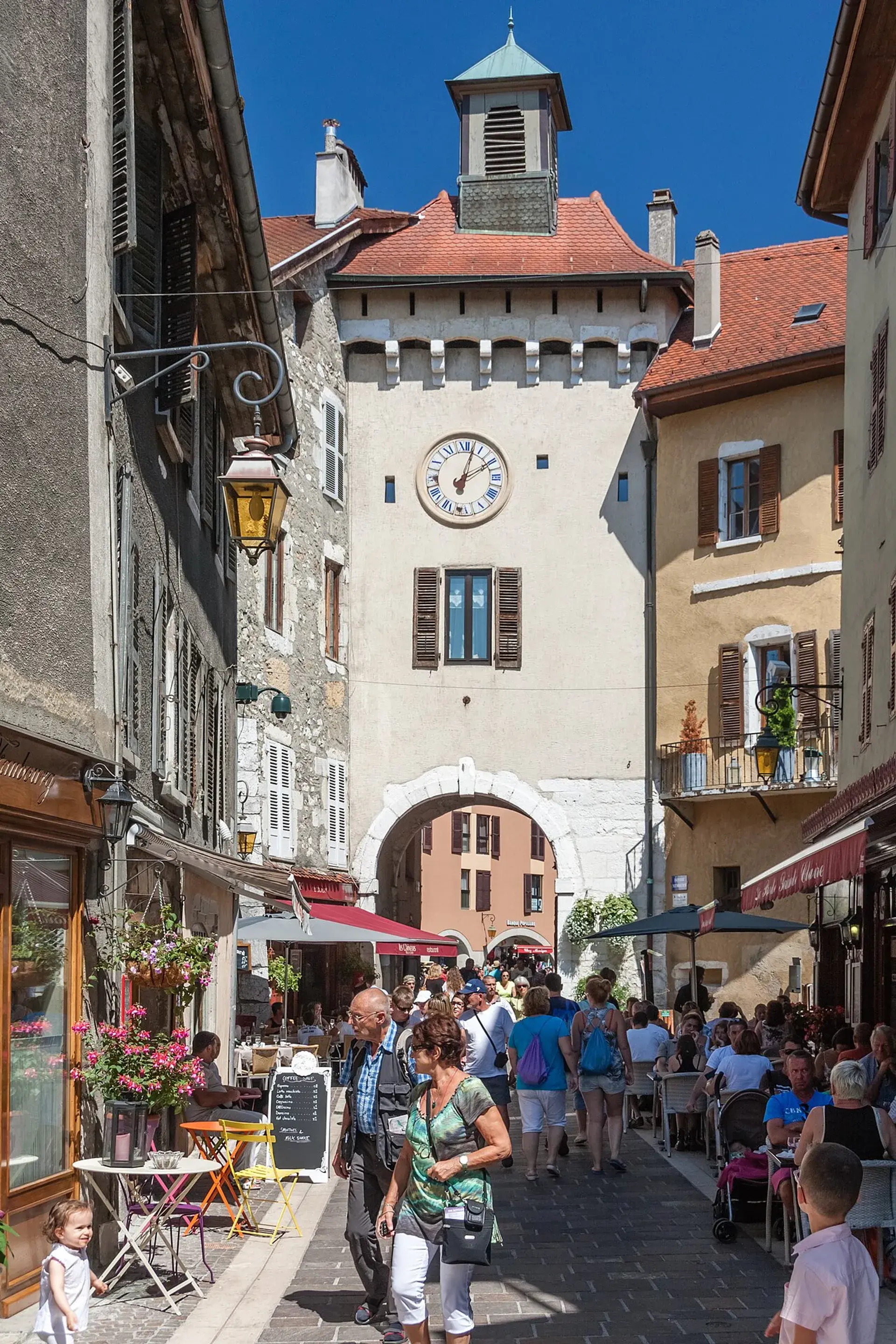
The gate's architecture exemplifies medieval military design, and it notably retains its original machicolations and bell tower. This robust stone structure served as a key point of control and protection for the city.
The Gate's Surroundings and Namesake
The name 'Sainte-Claire' is linked to a former convent of Clarisse nuns (the poor) and the old church of Saint-Clair that were once situated nearby. In 1804, the former convent was repurposed into a cotton factory that eventually employed up to 2,000 people.
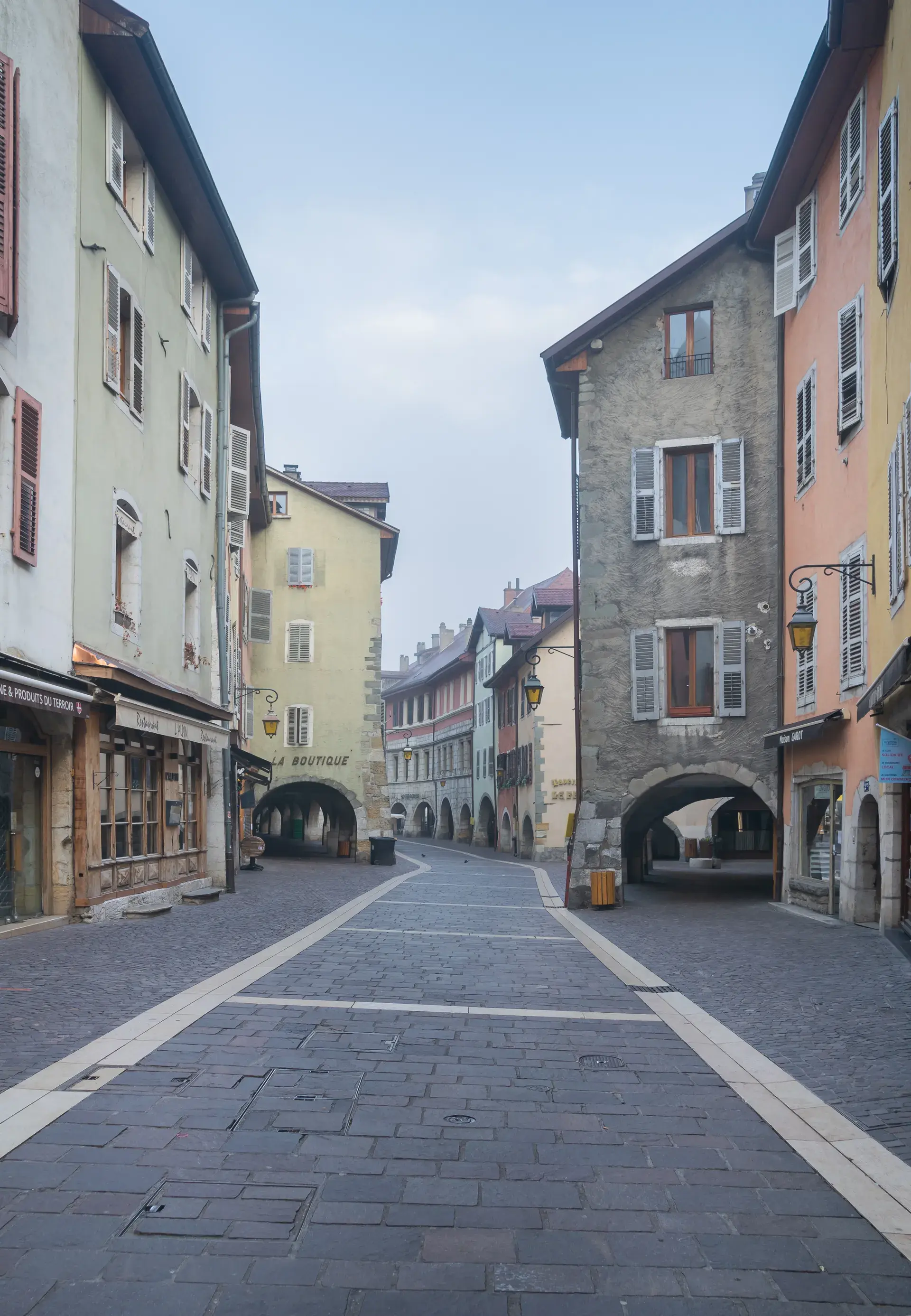
The gate is located on Rue Sainte-Claire, a street lined with distinctive arcades from the 16th and 17th centuries. These stone arcades represent a Renaissance urbanization model, constructed after devastating fires in the 15th century destroyed the city's earlier timber-framed houses. They were designed to provide shelter for pedestrians and create space for merchants' stalls.
Notable Figures and Architectural Visions
The area around the gate has been associated with several notable figures. Saint François de Sales, a key figure in the Counter-Reformation, founded the Order of the Visitation in Annecy in 1610. His associate, Antoine Favre, President of the Genevois Regional Council, had a residence on Rue Sainte-Claire.
In a surprising twist of history, the 18th-century architect Charles Gallo, who renovated the Gallo House on Place Sainte-Claire, advocated for the demolition of the street's charming arcades. He envisioned aligning all the old town's facades for a more uniform look. Fortunately for the city's preserved medieval character, this vision was never realized.
The Gate in Modern Times
Today, the Porte Sainte-Claire is a preserved historical monument and a popular attraction for tourists. It forms a picturesque archway leading through Passage Nemours within Annecy's pedestrian-friendly old town. Its ancient arch and robust structure are frequent subjects for photography.
During Annecy's 'Alpine Christmas' event in December, the Porte Sainte-Claire is one of several historic landmarks that are beautifully illuminated, adding to the area's festive atmosphere.
FAQ
When was the Porte Sainte-Claire built?
The Porte Sainte-Claire was constructed in the 14th century as a key part of Annecy's medieval city walls and defensive system.
Why is it named Porte Sainte-Claire?
The gate gets its name from a former convent for Clarisse nuns and the old church of Saint-Clair, which were located in the vicinity.
What are the arcades on Rue Sainte-Claire?
The arcades along Rue Sainte-Claire date from the 16th and 17th centuries. They were built from stone after 15th-century fires and were designed to provide shelter for pedestrians and space for merchants' stalls.
What is the Porte Sainte-Claire used for today?
Today, it is a preserved historical monument that functions as an archway in Annecy's pedestrian old town. It is a popular spot for tourists to stroll and take photographs.
Gallery