Basilique Saint-Pierre: Avignon's Gothic Masterpiece
In the heart of Avignon stands the Basilique Saint-Pierre, a beautiful example of Provençal Gothic architecture with a history stretching back centuries. While its current form largely dates to the 14th century, the site's religious significance began with an edifice first constructed in the 7th century.
A History Through Centuries
The original 7th-century church was destroyed by Saracens and later rebuilt in the 10th century under the direction of Foulques II. The structure seen today is the result of a major reconstruction that began in 1358, made possible by the financial support of Cardinal Pierre des Prés. During this period of the Avignon Papacy, Pope Innocent VI elevated it to a collegiate church.
Further expansions occurred in the 15th century with the addition of new chapels and an extension of the nave. The church remarkably survived the French Revolution, a period that saw many other religious sites destroyed or repurposed. In recognition of its enduring importance, it was classified as a historic monument in 1840 and later granted the title of minor basilica by Pope Benedict XVI on May 4, 2012.
Architectural Highlights
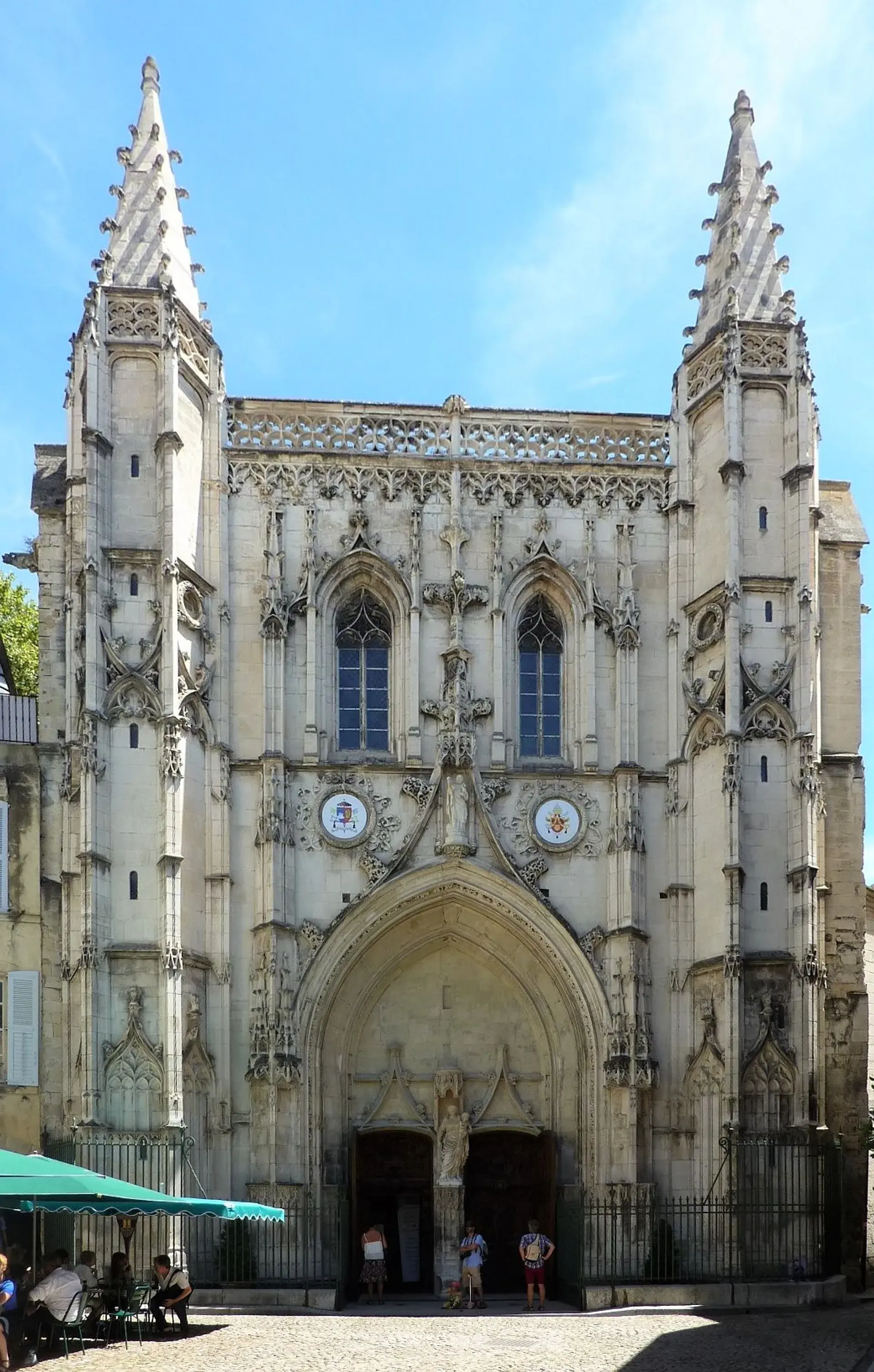
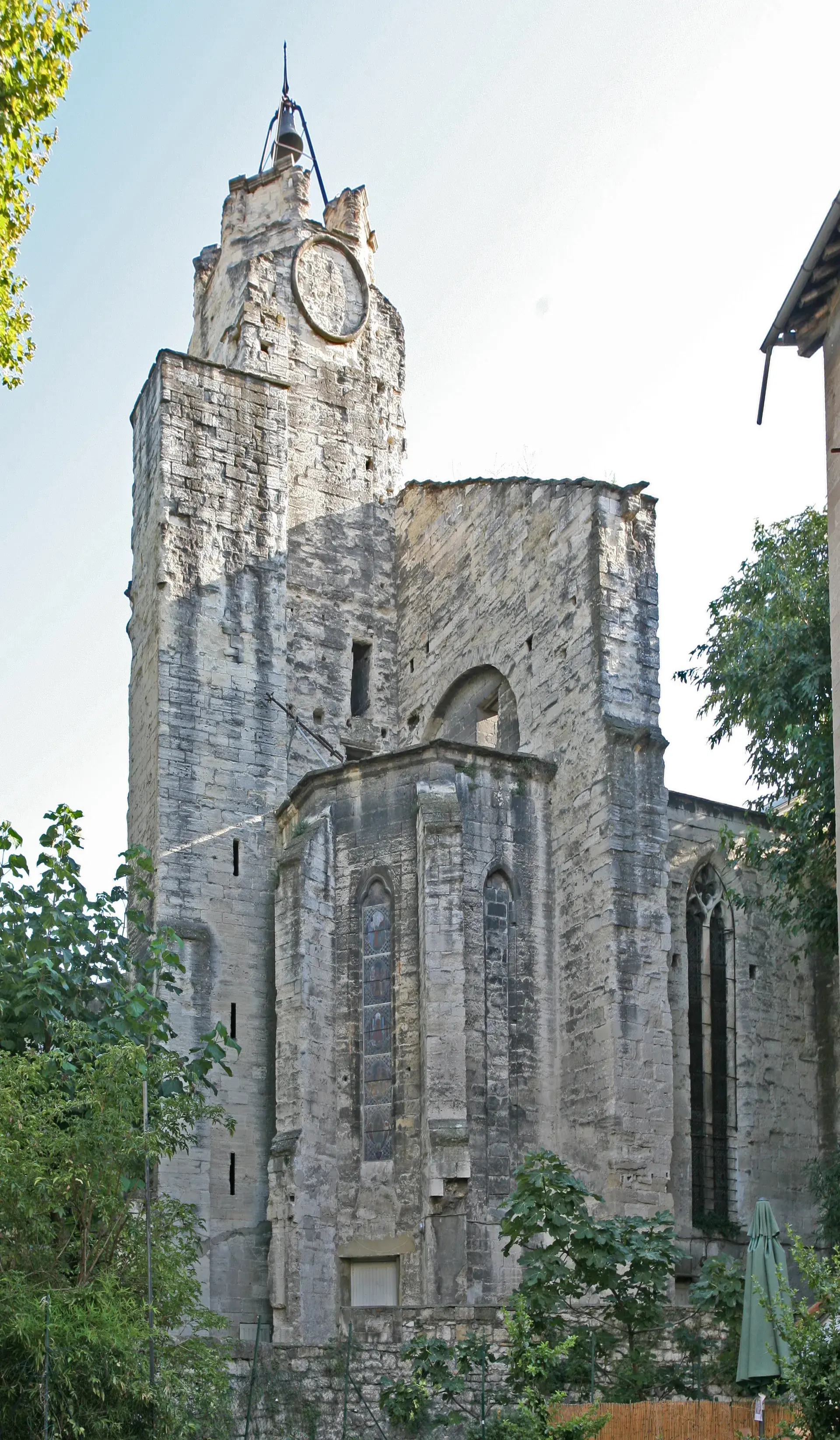
The basilica showcases a predominantly Flamboyant Gothic style, blended with emerging Renaissance elements. Its facade, decorated between 1512 and 1524, is an elaborate work by Nicolas Gasc and Perrin Souquet. An octagonal bell tower, completed in 1495 by Jean-Baptise Lécuyer, rises above the structure. The square in front of the basilica, built in 1486, is distinctively cobbled with smooth stones from the Durance river.
The Monumental Walnut Doors
One of the most striking features of the basilica is its pair of monumental doors. Standing four meters high, these solid walnut doors were intricately sculpted in 1551 by the woodworker Antoine Volard. Unusually, they were not commissioned by the church, but by a wealthy merchant named Michel Lopis, who paid Volard "60 gold crowns with the king's hallmark" for the masterpiece.
The detailed carvings depict specific religious figures. The left door features St. Julien and St. Gerome, while the right door portrays the Virgin Mary and the Angel of the Annunciation.
Inside the Basilica
The interior of Basilique Saint-Pierre holds its own treasures. It houses a High Renaissance altar, built between 1617 and 1634, which features a prominent painting titled 'La Remise des clefs a Saint Pierre' (The Handing Over of the Keys to Saint Peter). The basilica also preserves relics of the Blessed Peter of Luxembourg, a cardinal from the 14th century.
Today, Basilique Saint-Pierre serves as an active parish church, hosting masses and other ceremonies. It offers a place for quiet reflection for visitors exploring Avignon's old town, often providing a more intimate experience than the city's larger attractions. Admission is free of charge.
FAQ
When was the Basilique Saint-Pierre built?
The first church on the site was built in the 7th century. The current structure largely dates from a significant reconstruction that began in 1358.
What is special about the doors of Basilique Saint-Pierre?
The basilica's monumental 4-meter-high doors are made of solid walnut and were intricately carved in 1551 by Antoine Volard. They were commissioned by a wealthy merchant, Michel Lopis, rather than by the church or nobility.
What style of architecture is the Basilique Saint-Pierre?
The basilica is predominantly built in the Flamboyant Gothic architectural style, but it also incorporates some Renaissance elements, particularly in its facade and famous doors.
Is there an entrance fee for Basilique Saint-Pierre?
No, admission to the basilica is free of charge, though donations are welcome. Access on Sundays may be limited to those attending services.