Place de l’Horloge: Avignon's Historic Heart
Place de l’Horloge stands as the bustling heart of Avignon, a vibrant public square surrounded by historic buildings and crowned by its iconic, yet surprisingly hidden, clock tower. This central space has served as the city's civic and social epicenter for centuries, occupying the site of the ancient Roman forum of Avenio.
A History Spanning Centuries
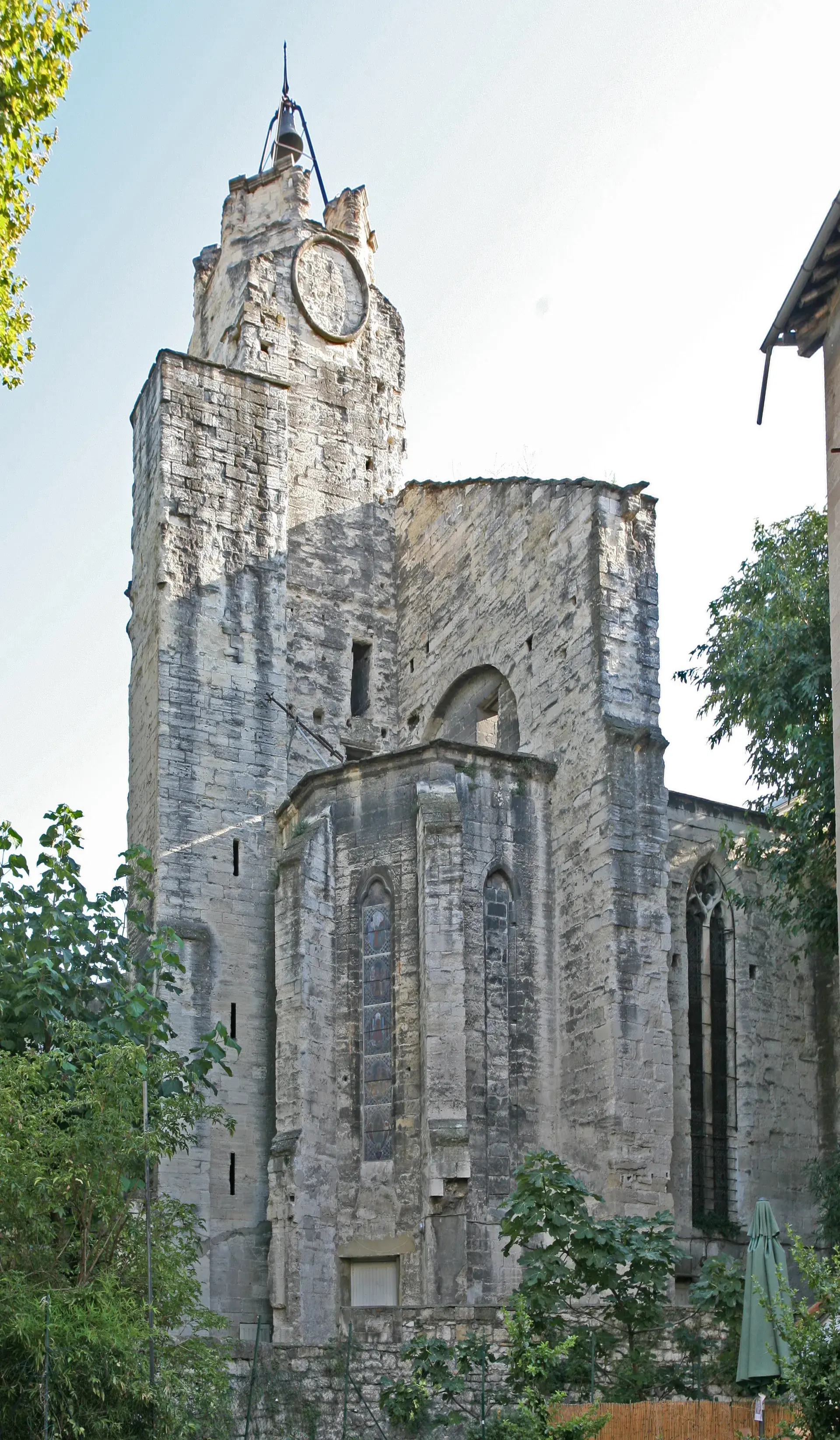
The square's story begins in antiquity as a Roman forum. During the Middle Ages, it evolved into a commercial center known as the 'Magnum Macellum' or 'Great Butcher's Shop,' where butchers sold their goods on market days. The square's namesake feature, the Tour de l'Horloge (Clock Tower), began to take shape in the 14th century. This Gothic belfry was commissioned by Cardinal Andouin Aubert, nephew of Pope Innocent VI, and completed by 1363.
In 1471, a significant technological addition was made: a clock featuring 'jacquemarts'—automated figures that strike a bell on the hour. This mechanism, which required regular winding and maintenance, audibly marked the passage of time for the city's residents. The square also witnessed moments of political turmoil, including an unsuccessful attempt by pro-papacy forces to seize the City Hall in 1790 and the brief installation of a guillotine during the Reign of Terror in 1793.
Architectural Transformation
The 19th century brought a dramatic reshaping of the Place de l’Horloge. The current neoclassical Hôtel de Ville (City Hall) was constructed between 1845 and 1856, designed by architects Joseph-Auguste Joffroy and Léon Feuchère. This new, grand structure largely enveloped the older Gothic belfry, a move famously criticized by writer Prosper Mérimée, who said the tower was preserved "as one preserves partridges in Pithiviers, by putting them in a pie from which only the neck emerges." Consequently, the clock and its jacquemarts are now largely obscured from view from the main square.
Adjacent to the City Hall stands the Opéra Grand Avignon. Built in 1847 with a matching neoclassical facade, it replaced a previous theatre that had been destroyed by fire in 1846. These two buildings define the square's modern architectural character.
The Modern Hub of Avignon
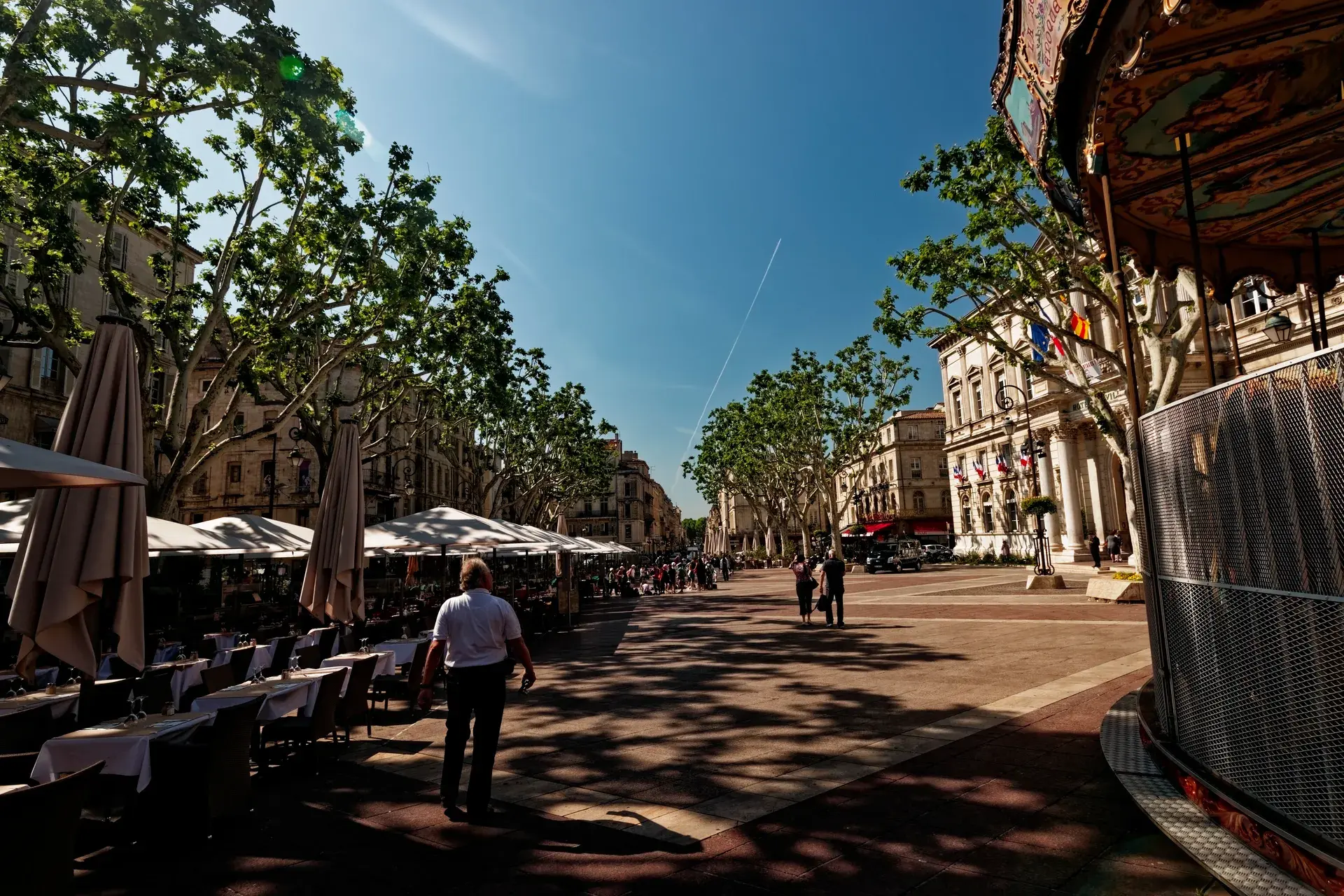
Today, Place de l’Horloge functions as the principal public square and cultural heart of Avignon. It is a lively space filled with numerous cafés and restaurants, whose outdoor terraces are shaded by large plane trees. The square remains the city's administrative center, housing the Hôtel de Ville, and a key cultural venue with the Opéra.
A double-decker carousel provides entertainment, and the square is deeply integrated into the daily lives of locals for meetings and strolls. During the annual Festival d'Avignon in July, the square transforms into a vibrant hub, bustling with street artists and theatre companies vying for the attention of residents and visitors alike.
FAQ
Why is it called Place de l’Horloge?
The square is named for its 14th-century Clock Tower (Tour de l'Horloge). A clock with automated figures called 'jacquemarts' that strike the hour was installed on the tower in 1471.
Can you see the clock on Place de l’Horloge?
The clock and its tower are surprisingly difficult to see from the main square. They were largely enveloped by the much larger, neoclassical Hôtel de Ville (City Hall) that was built around the tower in the 19th century.
What are the main buildings on Place de l’Horloge?
The square is dominated by the neoclassical Hôtel de Ville (City Hall) and the Opéra Grand Avignon, both constructed in the mid-19th century. The historic Gothic clock tower is integrated into the City Hall building.
What happened to the original clock figures?
The original wooden 'jacquemarts' from 1471 were replaced in the 19th century. The originals are now preserved and can be viewed at the Palais du Roure (Musée du Vieil Avignon).