Cathédrale Saint-André & Tour Pey-Berland in Bordeaux
Architectural Anchor of Place Pey-Berland
Cathédrale Saint-André and its freestanding bell tower, the Tour Pey-Berland, form the historical and religious center of Bordeaux. Situated on Place Pey-Berland directly opposite the 18th-century Palais Rohan—which serves as the city’s Hôtel de Ville—the cathedral complex links the medieval Saint-Éloi district with the lively retail corridor of Rue Sainte-Catherine.
Pope Urban II consecrated an earlier Romanesque basilica on this site in May 1096. Between the 13th and 16th centuries, the structure underwent an incremental Gothic reconstruction that produced the monumental church standing today. Its soaring stone vaults reach an interior height of 29 meters, while twin spires dominate the skyline at 81 meters. In 1998, the cathedral complex was designated a UNESCO World Heritage site as part of the Routes of Santiago de Compostela in France, and it forms an integral part of the broader Bordeaux, Port of the Moon World Heritage urban perimeter.
Self guided walking tour of Bordeaux with audio guide
2 hours8 stopsAudio guideStart any day, at your own paceTicket on your phone · 30-day refundRoyal Marriages and Papal Influence
The cathedral has provided the setting for significant events in European monarchical history. In July 1137, thirteen-year-old Eleanor of Aquitaine married the future King Louis VII of France within Saint-André. The subsequent annulment of their union and Eleanor's remarriage to Henry Plantagenet brought Bordeaux and the Aquitaine region under English royal authority for three centuries. Centuries later, in November 1615, the cathedral hosted another major dynastic alliance: the marriage of King Louis XIII of France to Anne of Austria, the Infanta of Spain.
The evolution of the building was also steered by high ecclesiastical patronage. In the early 14th century, Archbishop of Bordeaux Bertrand de Got ascended to the papacy as Pope Clement V, becoming the first of the Avignon popes. Clement V directed considerable financing back to his former seat, providing the capital necessary to transform the Romanesque choir and nave into expansive Gothic architecture.
Engineering the Detached Tour Pey-Berland
Standing several paces apart from the cathedral’s main body is the Tour Pey-Berland, a 66-meter Flamboyant Gothic belfry commissioned in 1440 by Archbishop Pey Berland and completed around 1500. Its separation from the main building was a deliberate engineering solution necessitated by local geology. Bordeaux's subsoil is marshy and alluvial. Medieval builders recognized that the kinetic energy generated by swinging heavy church bells could compromise the church's foundations, risking structural failure and the collapse of the stone vaults.
Geopolitical disruption and financial instability delayed the belfry's original purpose. Following the Battle of Castillon in 1453, which brought an end to English Aquitaine, bell installations were abandoned, and the tower stood without bells for over 350 years. Its bells were finally mounted in 1853, notably including Ferdinand-André II, an eight-ton bourdon bell. Because the belfry stands isolated, the deep resonance of Ferdinand-André II carries directly across Place Pey-Berland rather than reverberating through enclosed cathedral stone.
Surmounting the spire is the gilded bronze statue of Notre-Dame d'Aquitaine, installed in 1863. Perched atop the 66-meter structure, the statue faces north toward Saint-Raphaël in the Médoc, the birthplace of Archbishop Pey Berland.
Revolutionary Repurposing and Shot Production
During the French Revolution, the religious complex was confiscated and repurposed by revolutionary authorities. Cathédrale Saint-André was transformed into a military fodder depot for horses and later rededicated as a secular Temple of Reason.
The empty interior of the Tour Pey-Berland found an unusual industrial use. In the 1790s, the vertical chamber was converted into a lead shot manufacturing tower. Workers poured molten lead through sieves at the upper level, allowing the droplets to freefall down the central void. As the lead dropped, surface tension formed it into spheres, which cooled during their descent before hitting water-filled tanks at the base to produce round musket balls. The tower was also rented out as temporary housing and warehouse space during this era.
Artistic Legacy and Contemporary Use
Cathédrale Saint-André also holds importance in French architectural restoration history. The 13th-century stone carvings framing the cathedral’s North Portal were regarded as exemplary models of French Gothic sculpture. In the 19th century, prominent restoration architect Eugène Viollet-le-Duc took plaster casts of these Bordeaux sculptures to inform his historical restoration of the portals of Notre-Dame de Paris.
Today, the cathedral functions as the active seat of the Archdiocese of Bordeaux, maintaining regular Catholic masses, religious ceremonies, and organ recitals. The adjacent Tour Pey-Berland operates under the administration of the Centre des monuments nationaux. Visitors can climb its narrow spiral staircase of 231 to 233 stone steps to reach open-air observation terraces that afford panoramic views across Bordeaux and the Garonne River.
FAQ
Why was the Tour Pey-Berland built separately from Cathédrale Saint-André?
Archbishop Pey Berland ordered the bell tower built away from the main church in 1440 because Bordeaux's marshy, alluvial soil could not support the heavy vibrations of swinging bells, which risked collapsing the cathedral's stone vaults.
Which historical royal marriages took place in Cathédrale Saint-André?
Eleanor of Aquitaine married the future King Louis VII of France in the cathedral in July 1137, and King Louis XIII married Anne of Austria here in November 1615.
How was the Tour Pey-Berland used during the French Revolution?
During the 1790s, the hollow tower was converted into a lead shot factory, where molten lead was dropped down the central shaft to create spherical musket ammunition. It was also used for storage and housing.
What connection does Cathédrale Saint-André have to Notre-Dame de Paris?
Architect Eugène Viollet-le-Duc made plaster casts of the cathedral's 13th-century North Portal stone sculptures to guide his restoration work on the portals of Notre-Dame de Paris.
More places in Bordeaux
bordeaux, france
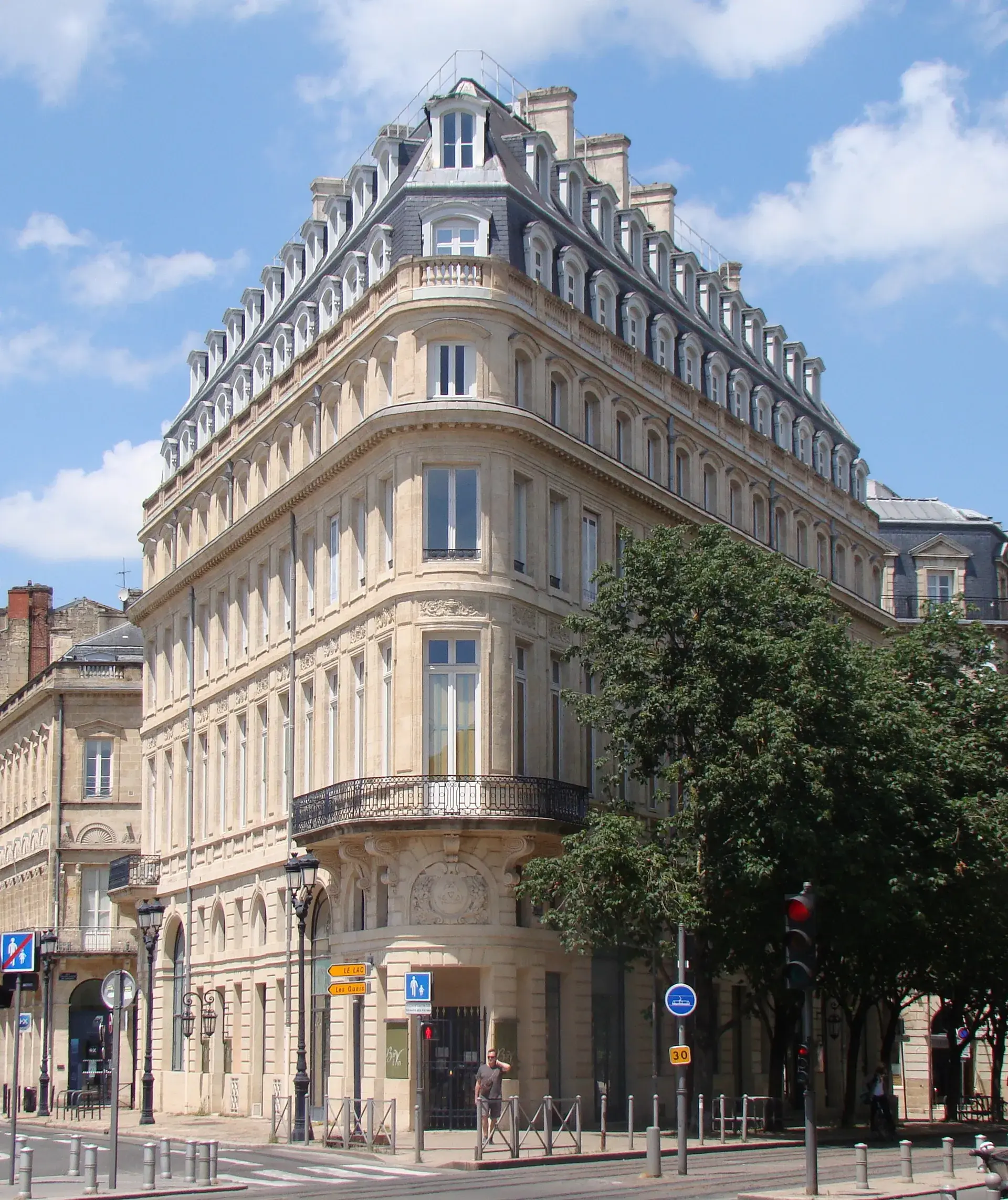
Maison Gobineau: the flatiron of the wine trade
Maison Gobineau: the flatiron of the wine trade
bordeaux, france
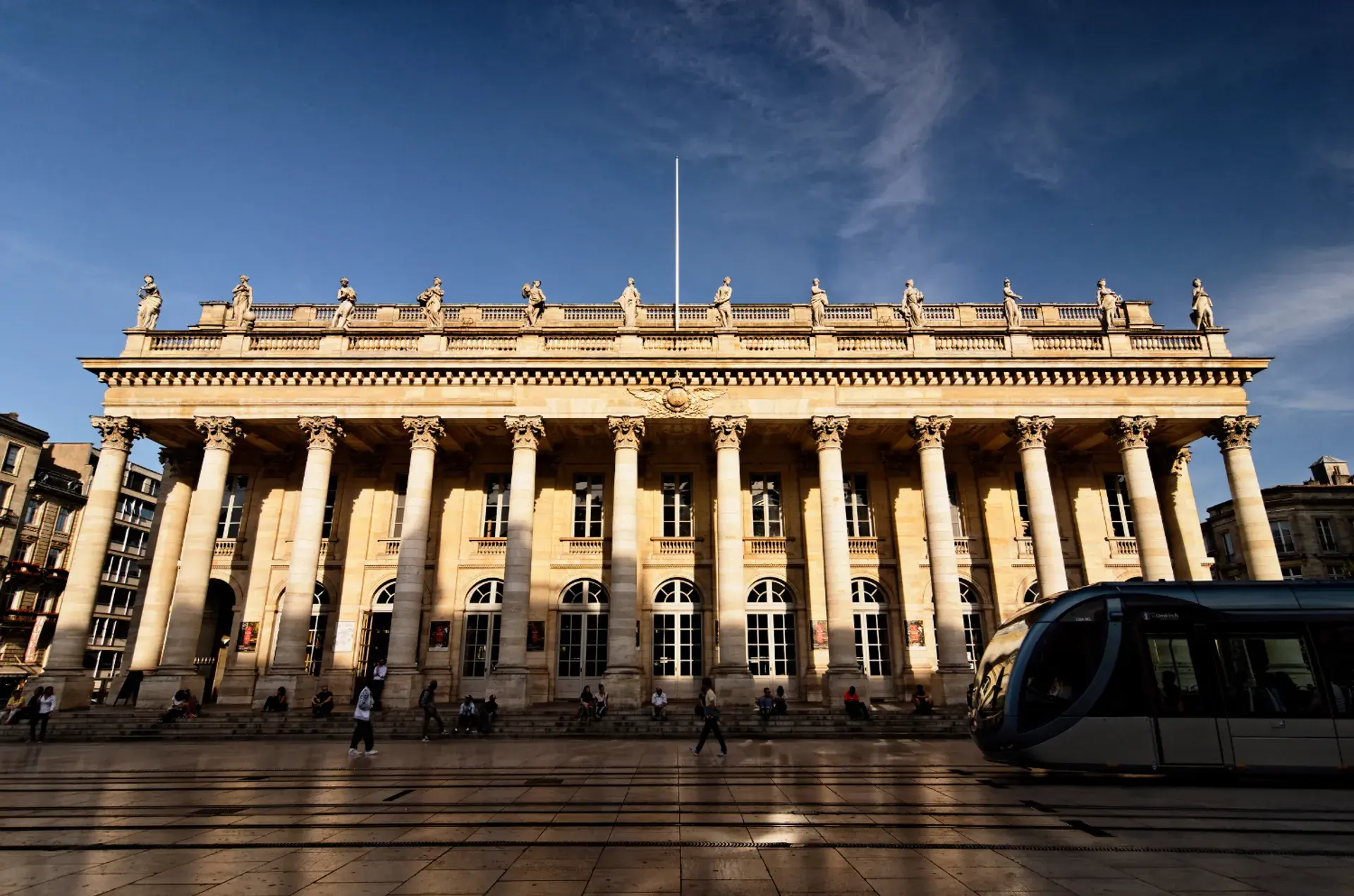
Grand Théâtre: the temple of the twelve muses
Grand Théâtre: the temple of the twelve muses
bordeaux, france
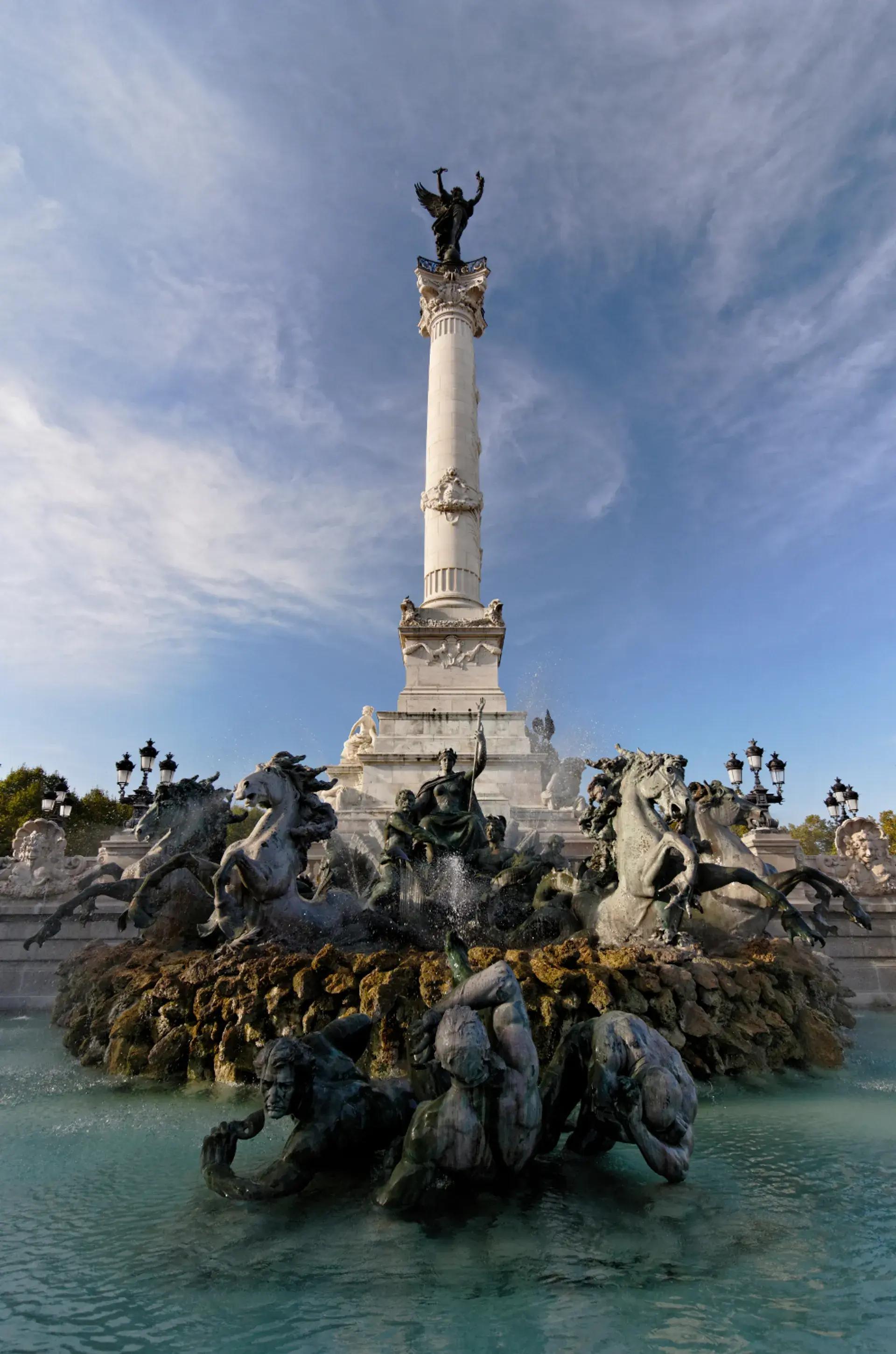
Monument aux Girondins: the fountain of bronze horses