Château Comtal: Carcassonne's Inner Citadel
Origins of the Trencavel Fortress
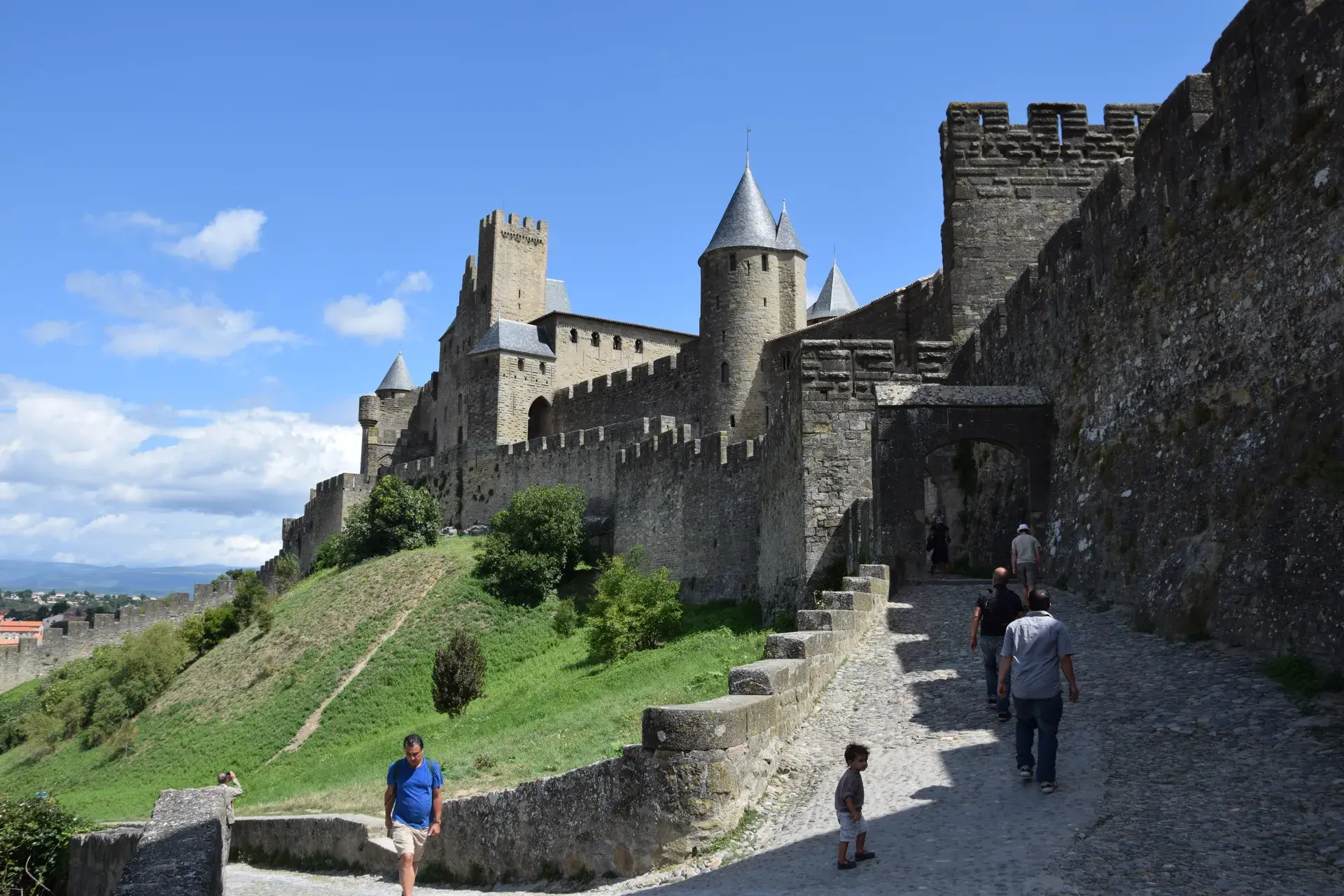
Château Comtal, often described as a fortress within a fortress, is a fortified castle-palace positioned within the upper fortified town of Carcassonne in Occitanie, France. The structure is built directly against the western stretch of the inner Gallo-Roman wall, overlooking the river valley of the Aude. Its construction began between 1120 and 1130 under Viscount Bernard Aton IV Trencavel as an aristocratic residence (palatium) to replace an older noble seat near the Porte Narbonnaise.
The initial 12th-century complex consisted of two residential wings arranged at right angles around a central courtyard. Over time, the Trencavel viscounts expanded the complex to include a dedicated chapel consecrated to the Virgin Mary, establishing an administrative and defensive stronghold at the western edge of the fortified ridge.
The Albigensian Crusade and Royal Expansion
The castle was at the center of regional conflict during the Albigensian Crusade. In August 1209, Viscount Raimond-Roger Trencavel, who had sheltered Cathars across his lands, found himself besieged within the stronghold. To prevent the destruction of the settlement, Trencavel surrendered to the crusader army led by Simon de Montfort. Imprisoned within his own castle walls, the viscount died in captivity in November 1209.
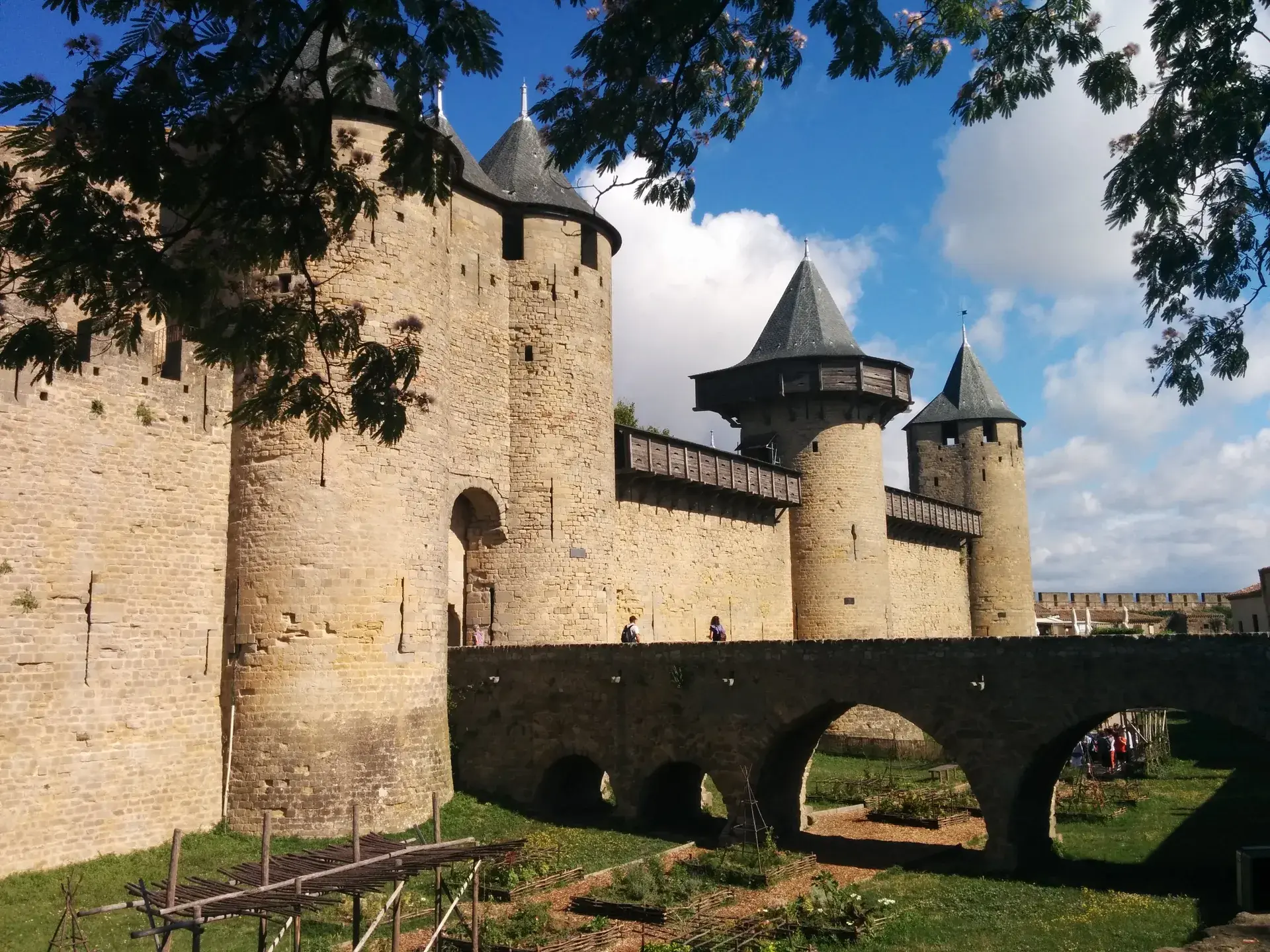
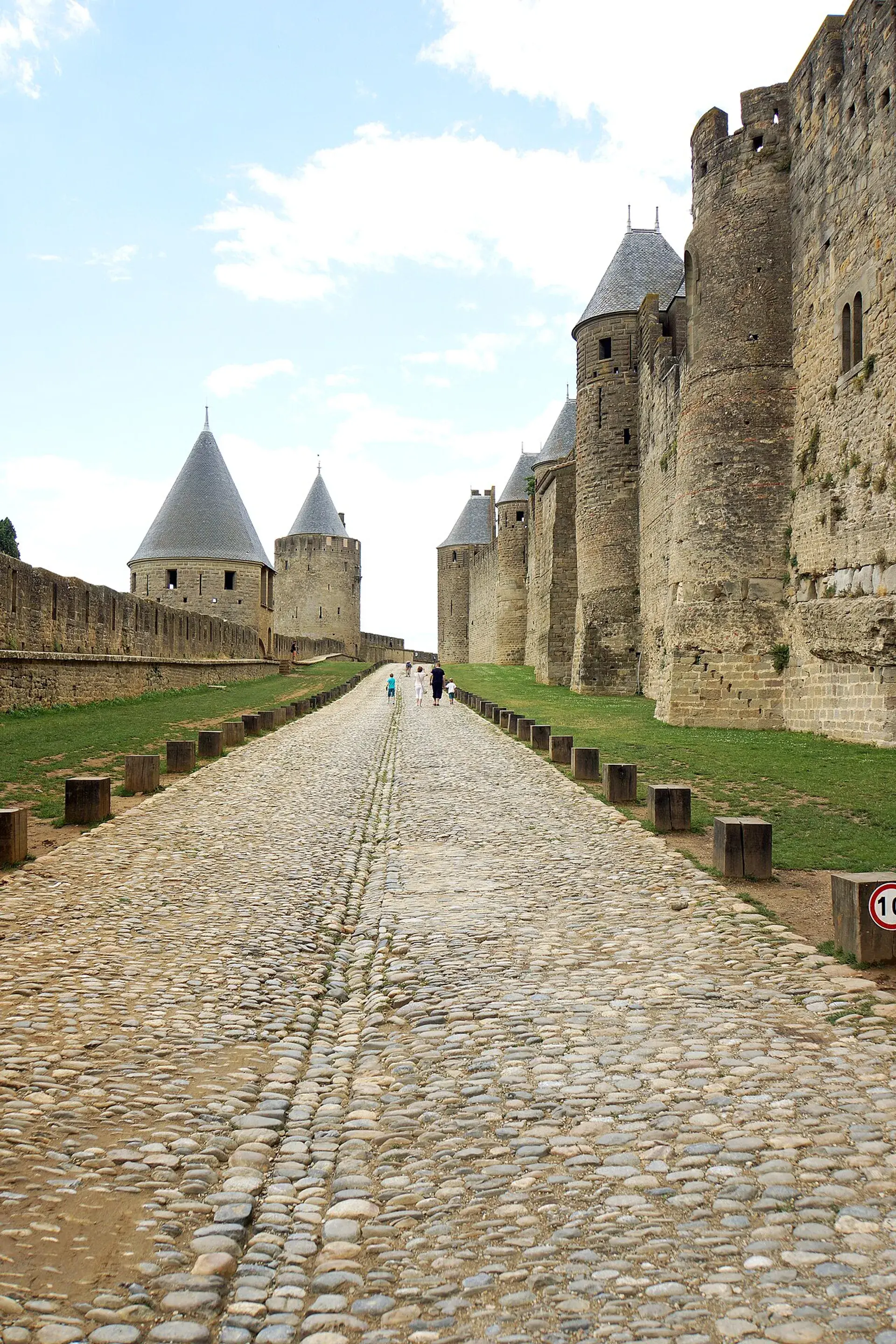
Following Carcassonne's annexation into the French royal domain between 1228 and 1239, royal engineers transformed the aristocratic residence into a heavily fortified citadel. This royal campaign introduced a protective curtain wall (chemise), a series of circular towers, an excavated dry moat, and an independent western cart entrance designed to withstand organized military sieges.
Defenses Directed Inward
One of the defining features of Château Comtal is the strategic orientation of its defensive architecture. The fortress's most formidable defenses—including a semicircular barbican, a twin-towered gatehouse, a dry moat, and banks of arrow slits—face east directly toward the interior streets of the Cité. This design served a specific political purpose: protecting the royal seneschal and garrison from potential rebellions by the town's own inhabitants as much as against foreign attackers.
Architecturally, the castle blends several distinct historical phases. Its western foundation walls still incorporate visible 4th-century Gallo-Roman masonry, characterized by alternating courses of rough-hewn stone and parallel bands of red brick. Rising above the royal circular towers is the Tour Pinte, a tall, rectangular watchtower that remains the only square tower in the entire castle complex.
Restoration and Heritage
After falling into military obsolescence and decay across the 17th and 18th centuries, Château Comtal underwent extensive restoration in the 19th century under the direction of architect Eugène Viollet-le-Duc. His intervention rebuilt ruined battlements, slate roofs, and the distinctive projecting wooden galleries known as hoardings (hourds). These timber hoardings were reconstructed using surviving medieval putlog holes (trous de boulin) preserved in the original exterior stone walls.
Today, the site is managed by the Centre des monuments nationaux and forms a core component of the Historic Fortified City of Carcassonne UNESCO World Heritage site, inscribed in 1997. In addition to serving as the entrance to the elevated inner rampart circuit, the castle houses the Musée Lapidaire, which preserves a collection of Roman, Visigothic, and medieval sarcophagi, sculpted capitals, and architectural fragments uncovered during regional restorations.
FAQ
Why do Château Comtal's main defenses face toward the city?
After Carcassonne was incorporated into the French royal domain, royal engineers fortified the castle to protect the king's seneschal and garrison against uprisings by the town's own citizens, placing the dry moat, barbican, and arrow slits facing directly into the Cité.
What is the Tour Pinte?
The Tour Pinte is a tall, rectangular watchtower within Château Comtal that stands out as the castle's only square tower, contrasting with the rounded cylindrical towers built during the royal fortification era.
What is exhibited inside the castle's Musée Lapidaire?
The castle's Musée Lapidaire displays a collection of Roman, Visigothic, and medieval stone carvings, sculpted capitals, architectural fragments, and sarcophagi recovered during restorations of the site.