Walls of Carcassonne: Double Ramparts and Les Lices
Perched on a prominent hill above the River Aude and opposite the 13th-century Bastide Saint-Louis, the Walls of Carcassonne form one of Europe's most complete medieval fortifications. Inscribed on the UNESCO World Heritage List in 1997, the fortified upper town (Cité) is renowned both as a masterwork of high-medieval military architecture and as a pioneering benchmark in 19th-century architectural preservation.
The Architecture of the Double Ramparts
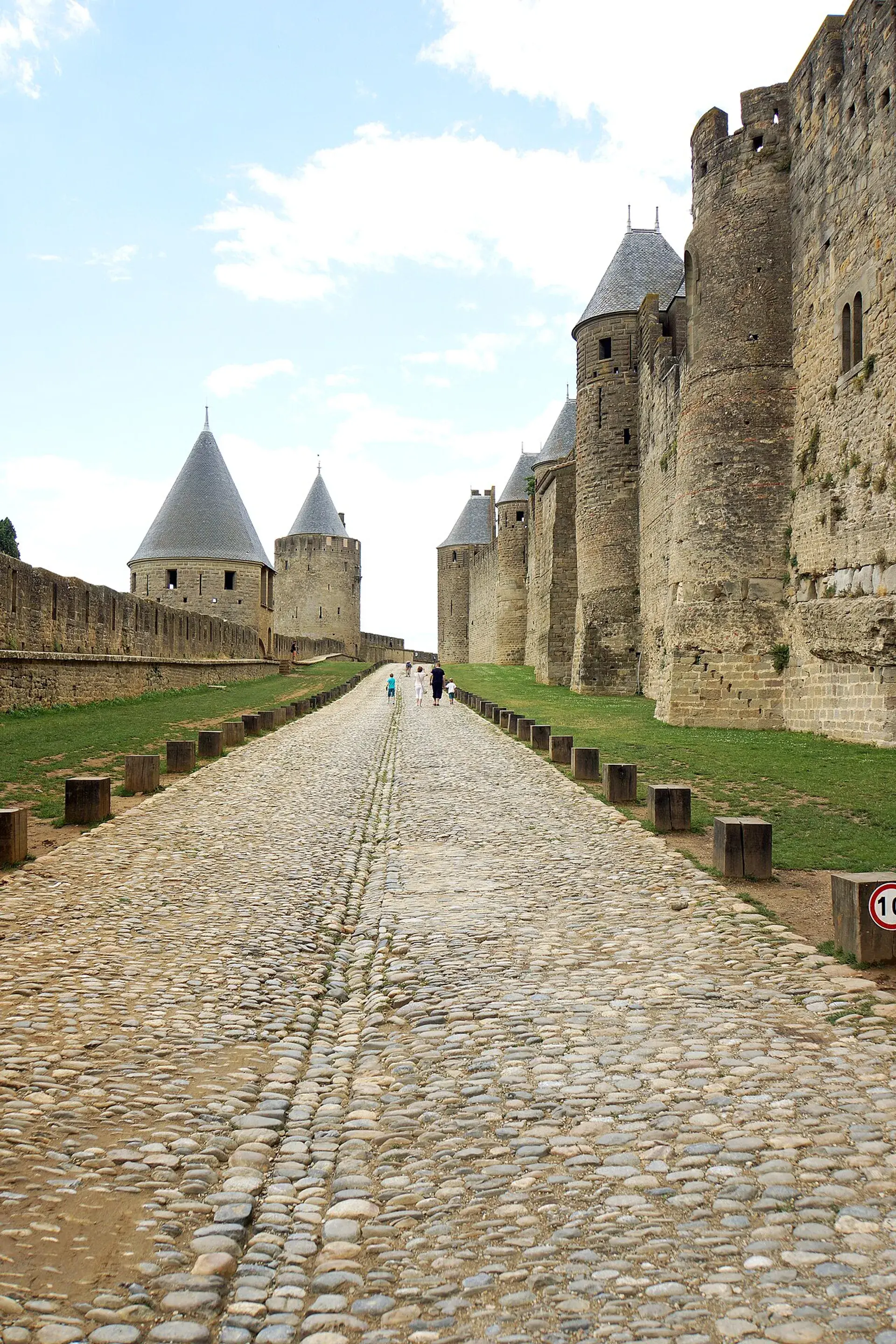
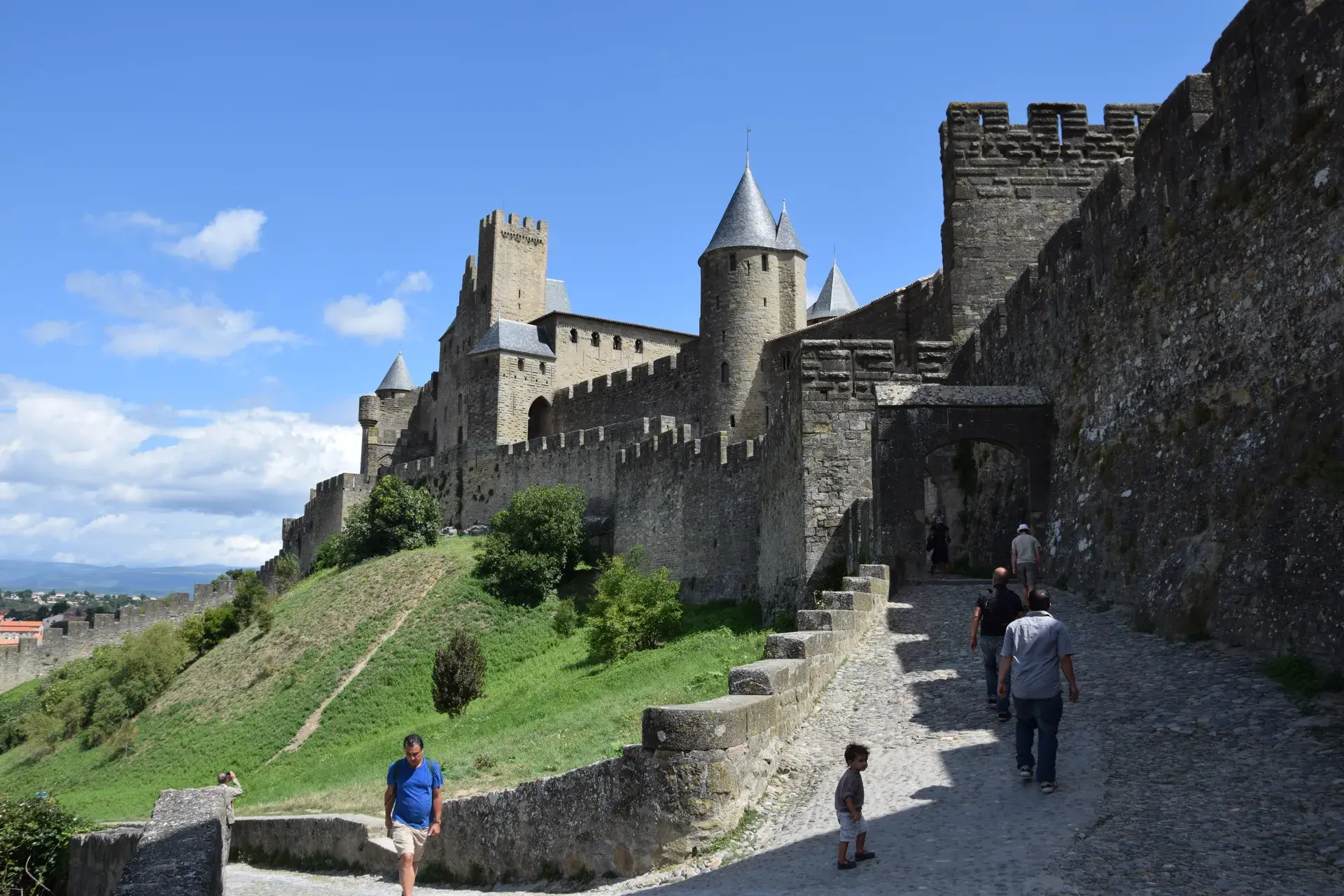
The defensive system consists of two concentric stone perimeters spanning roughly 3 kilometres and reinforced by 52 towers and barbicans. The expansive corridor between the inner and outer walls is known as les lices (the lists). Topographically, the corridor is divided into the northern and eastern section, called the Lices Basses (Lower Lists), and the southern and western section, known as the Lices Hautes (Upper Lists).
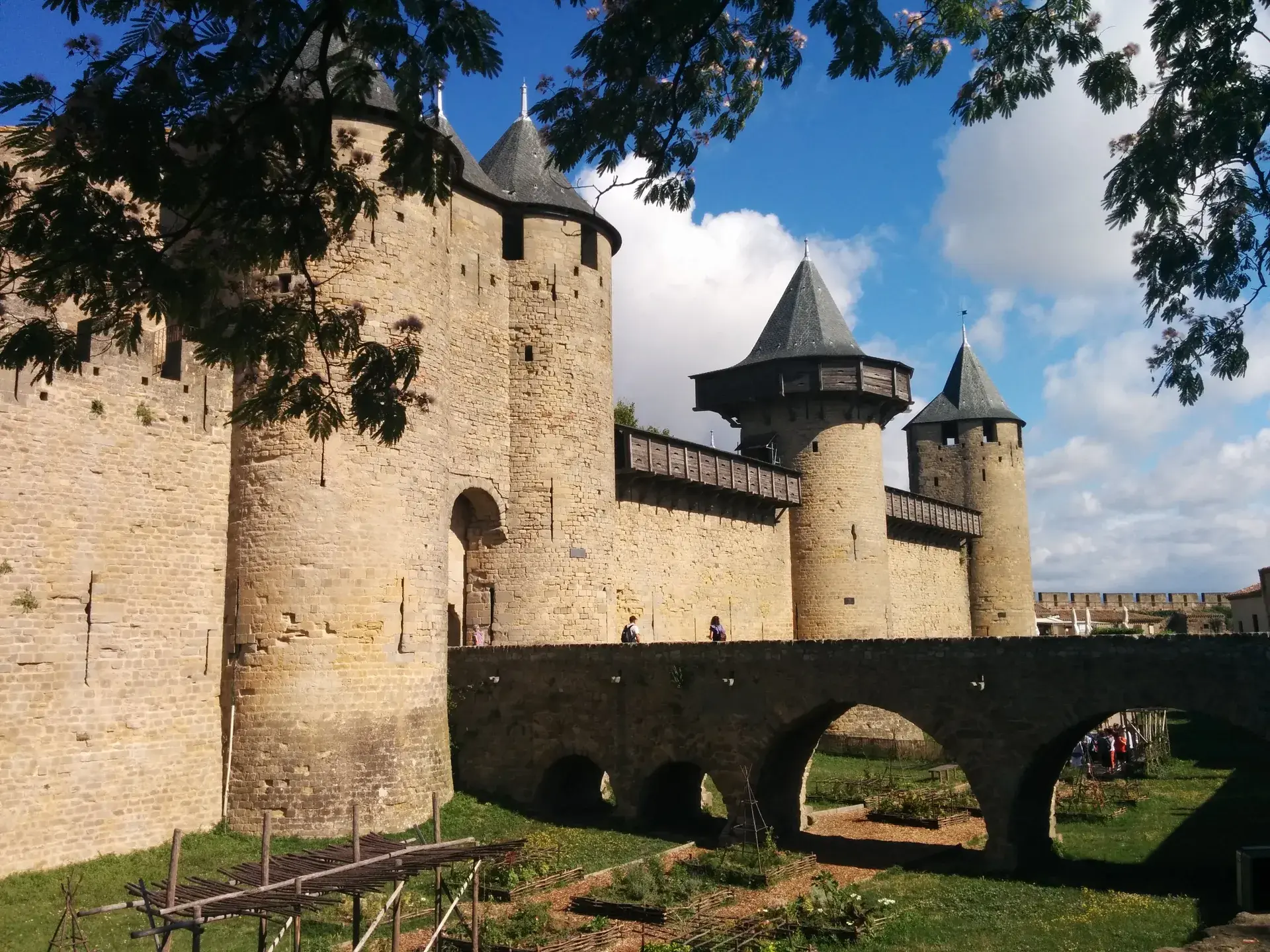
The two rings reflect distinct architectural epochs. The inner curtain represents the older defensive line, resting on late 3rd-to-4th-century Gallo-Roman foundations marked by horizontal red-brick leveling bands alongside medieval modifications. In contrast, the outer wall showcases 13th-century royal engineering, built with smooth limestone and rusticated ashlar masonry (pierres à bossage).
A 13th-Century Tactical Trap
Originally, the settlement relied on a single fortification ring. Following the Albigensian Crusade and an unsuccessful siege led by Raimond Trencavel in 1240, King Louis IX annexed Carcassonne to the French crown. To secure the southern frontier, royal engineers under Louis IX and his successor, Philip III, leveled the hillside slopes and constructed the second, outer curtain wall.
This double-walled design created an engineered killing zone within les lices. Any assaulting force that managed to breach the lower outer wall found itself trapped in the open corridor, directly exposed to projectiles and defensive fire from the taller towers of the inner perimeter. To prevent hostile forces from moving laterally around the fortress if a section was breached, the square Tour de l'Évêque (Bishop's Tower) was built directly astride both walls, physically barring passage through the corridor. The enclosed strip also served as a training ground for cavalry drills, which gave rise to the French idiom "entrer en lice" ("to enter the lists" or join a contest).
Decline, Informal Occupation, and Restoration
After the 1659 Treaty of the Pyrenees shifted the French-Spanish border south to the Pyrenees mountain range, Carcassonne lost its strategic border defense role and fell into severe disrepair. Over the 18th and early 19th centuries, the open military corridor was colonized by local laborers and weavers. More than 120 informal houses, gardens, rabbit hutches, and pigsties were constructed directly against the ramparts.
In the 1840s and 1850s, a major restoration project was launched, spearheaded by local antiquarian Jean-Pierre Cros-Mayrevieille and architect Eugène Viollet-le-Duc. The informal settlements were expropriated and demolished to uncover the original medieval stone lines. During this campaign, Viollet-le-Duc set up his primary design and drafting office directly inside the Tour de l'Évêque.
Public Access and Contemporary Use
Today, les lices function as a free, 24-hour public pedestrian promenade circulating around the perimeter of the medieval settlement. The corridor links the Cité's major historical gates, including the Porte Narbonnaise, Porte d'Aude, and Porte Saint-Nazaire. During July and August, designated enclosed arenas inside the lists host medieval jousting and combat demonstrations.
FAQ
What are les lices at Carcassonne?
Les lices refers to the open defensive corridor situated between the inner and outer fortified walls of Carcassonne, divided into the Lices Basses and Lices Hautes.
Why does Carcassonne have two rings of walls?
Following an unsuccessful siege in 1240, French royal engineers under Louis IX and Philip III added an outer wall to create a lethal trap, exposing breaching enemies in the open corridor to fire from the higher inner towers.
Is access to the lices of Carcassonne free?
Yes, the lices promenade is accessible to the public free of charge 24 hours a day, circulating around the exterior of the medieval core.