Porte d’Aude: Carcassonne's Historic Gateway
An Unconventional Medieval Fortress Entrance
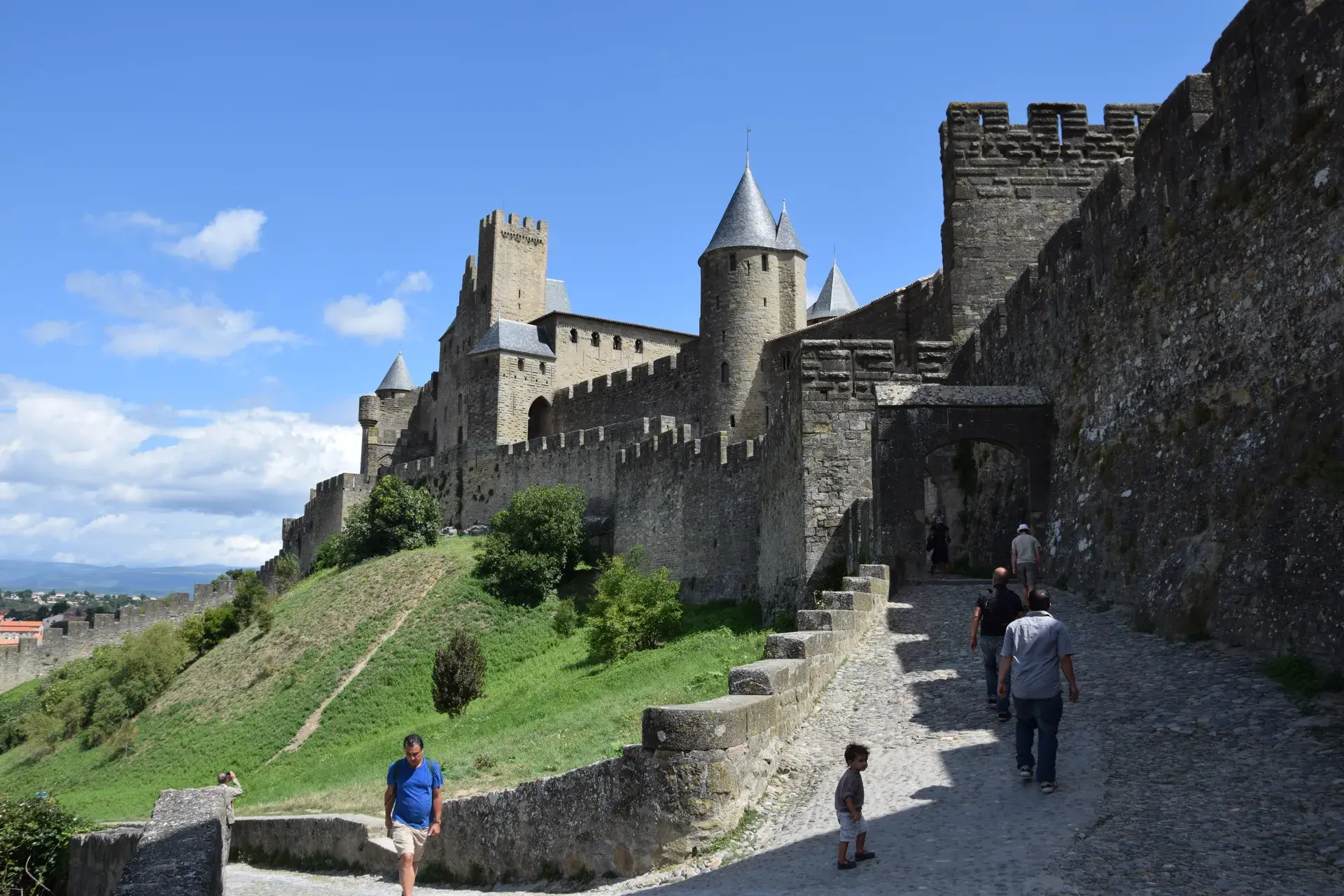
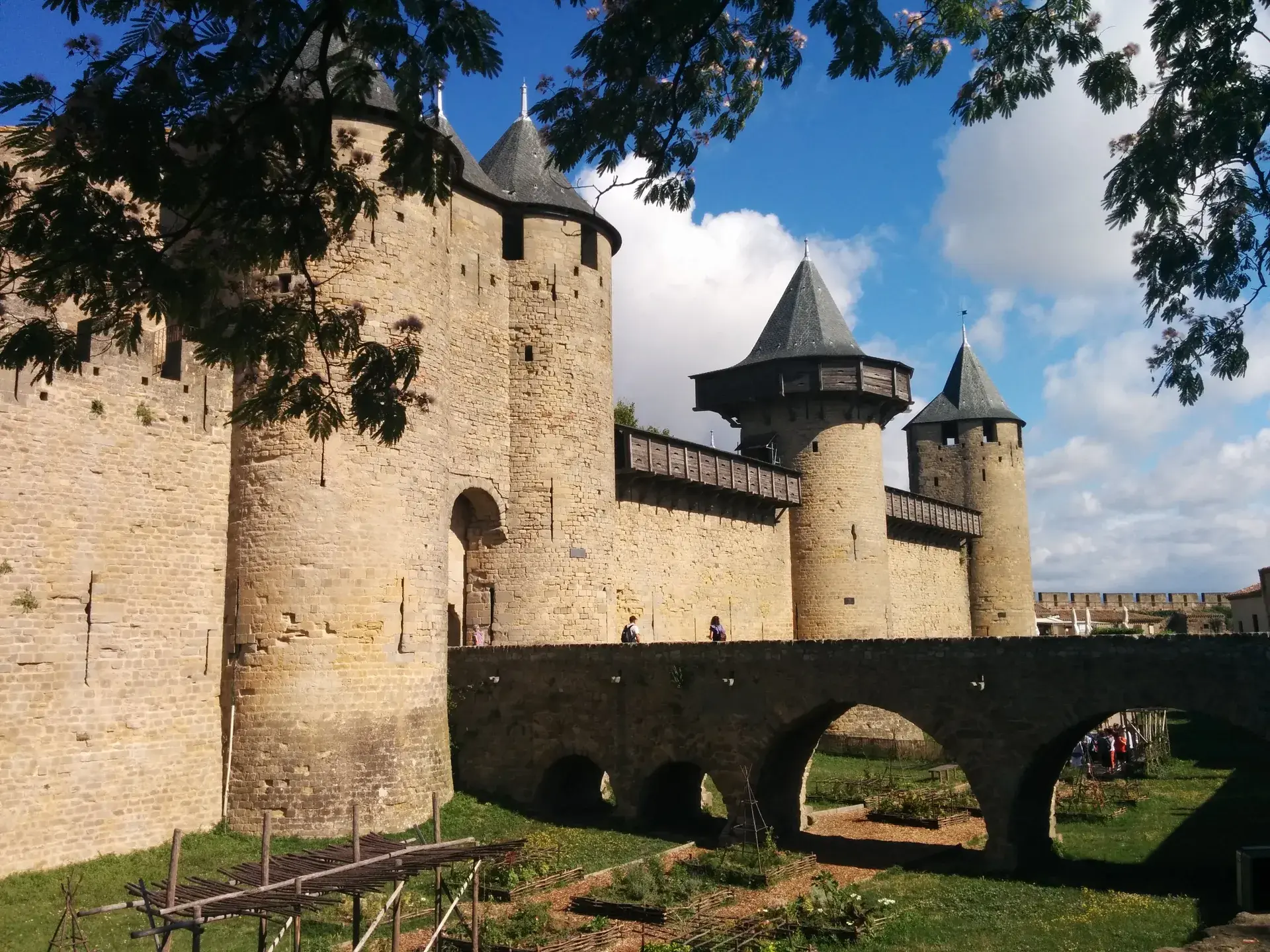
Situated on the western front of the UNESCO World Heritage-listed Cité de Carcassonne, the Porte d’Aude stands directly beside the Château Comtal. Historically known as the Porte de Toulouse, this defensive portal was pierced during the 12th century through a pre-existing Visigothic and late-antique wall curtain. While fortified medieval entrances traditionally relied on moats and drawbridges, the builders of the Porte d’Aude took advantage of the precipitous rocky cliffside, crafting a high-altitude access point protected entirely by terrain and stonework.
Architecturally, the gate features a semicircular Romanesque arch composed of alternating bands of red brick and local sandstone, known as molasse. This distinctive masonry creates a striking contrast against the sheer vertical ramparts of the adjacent castle. Between 1853 and 1879, architect Eugène Viollet-le-Duc led a comprehensive restoration of the entrance, preserving its 12th-century arch while reconstructing the upper crenellations and incorporating a machicolated stone bay, or bretèche, directly above the opening.
The Tactical "Mousetrap" Approach
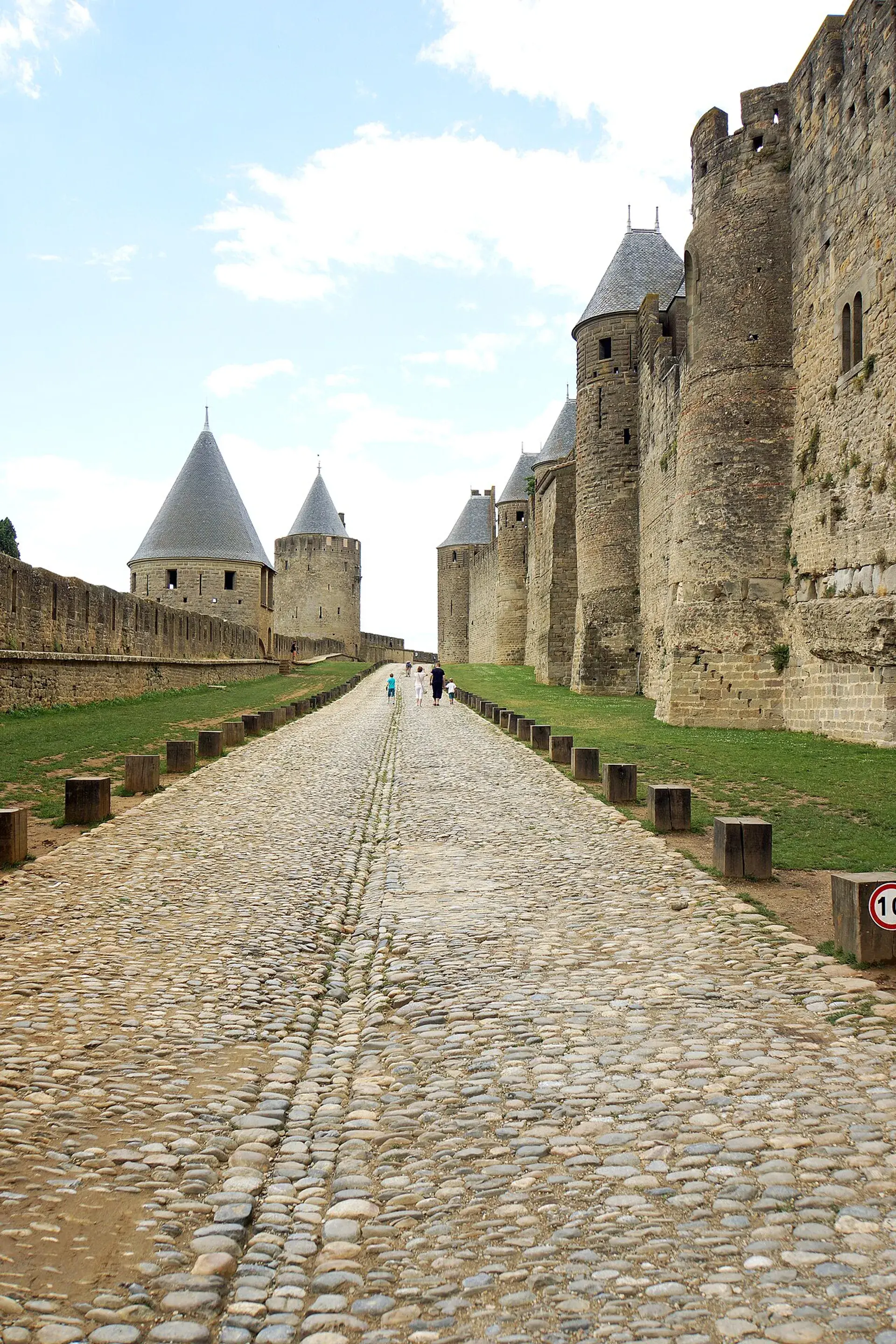
Rather than accommodating carriages, the Porte d’Aude was engineered as a lethal pedestrian trap, historically referred to as a souricière (mousetrap). The only access to the gate is a narrow, steep switchback ramp paved with uneven cobblestones and tightly framed by towering stone walls. Any attacking force attempting to ascend from the riverbank had to negotiate sharp turns that deliberately exposed their unshielded right flanks to defensive missile fire from the towers and battlements above.
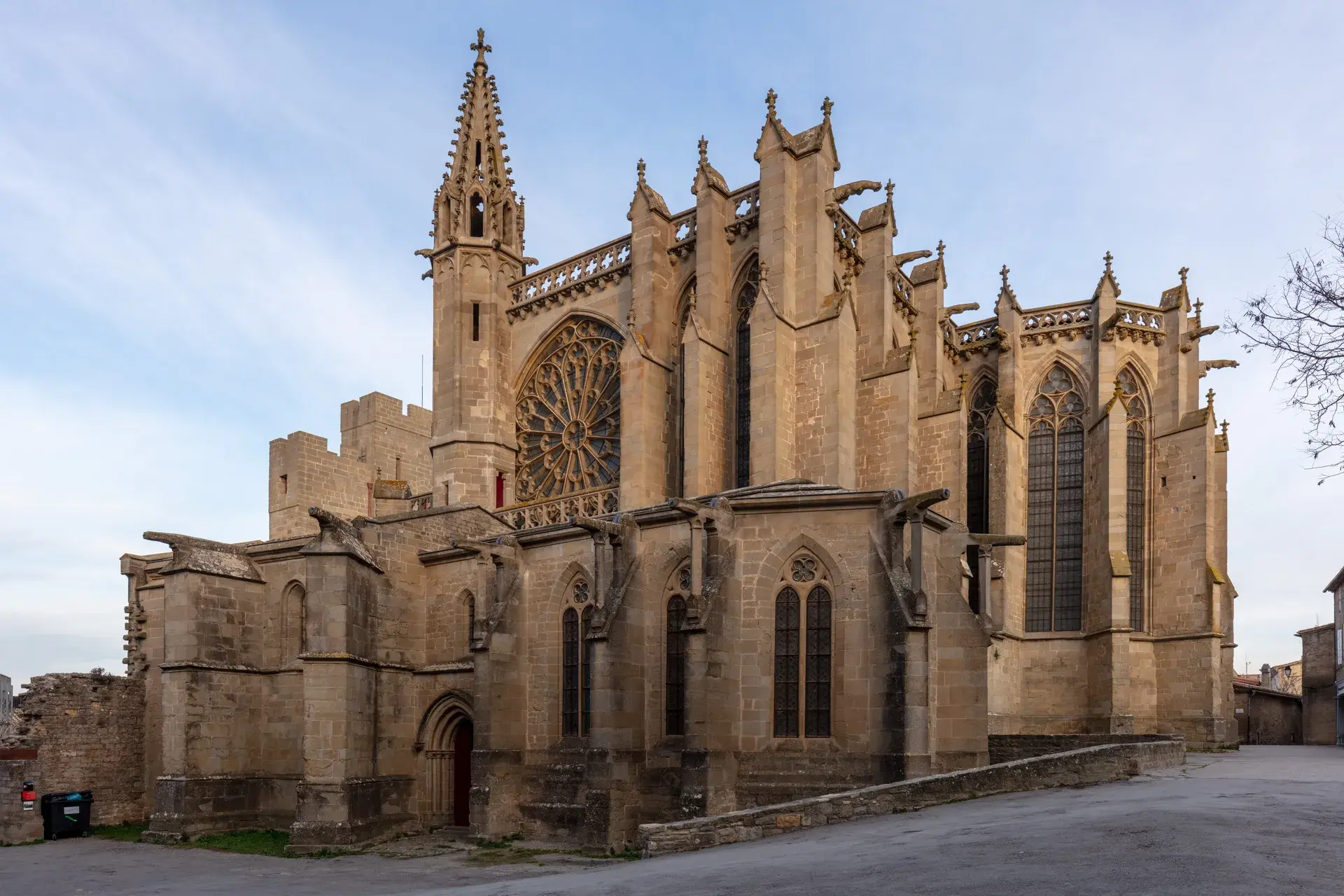
To exacerbate the defenders' advantage, the ramp was designed with passive deceptions, including blind arches and false gates intended to disorient and bottleneck invaders under barrage. Originally, the lower terminal of the climbing ramp connected to an outer defensive work known as the Barbacane de l’Aude near the riverbank. This barbican was dismantled in 1816 to make way for the construction of Saint-Gimer church, leaving the crenellated incline as the sole surviving section of the outer ascent.
Modern Pedestrian Link and Panoramic Lookout
In the broader layout of the fortress, the Porte d’Aude serves as the western pedestrian counterpart to the grand, carriage-accessible Porte Narbonnaise on the east. Today, it remains exclusively open to foot traffic, providing the most direct route between the medieval citadel and the lower town (Bastide Saint-Louis) via the historic Pont Vieux.
Beyond its historical function as a defensive lifeline, the gate's landing and switchback ramp provide expansive views across the surrounding landscape. The elevated vantage point overlooks the Aude river valley, the rooftops of the lower town, the Black Mountain, and the distant Pyrenean foothills. Due to this dramatic setting and rugged medieval stonework, the gate has frequently served as a cinematic backdrop, appearing in productions such as André Hunebelle’s Le Miracle des Loups (1961), Kevin Costner’s Robin Hood: Prince of Thieves (1991), and the French comedy Les Visiteurs (1993).
FAQ
Why does Porte d’Aude lack a moat and drawbridge?
Porte d’Aude was constructed on a steep rocky escarpment, relying on the natural cliff face, a sharp gradient, and bottlenecked curtain walls for defense rather than a moat or drawbridge.
What is the defensive concept behind the gate's switchback ramp?
Engineered as a tactical 'mousetrap' (souricière), the switchbacks forced climbing attackers to expose their unshielded right sides to fire from the battlements above, while blind arches and false gates created confusion.
What happened to the Barbacane de l’Aude?
The Barbacane de l’Aude, which guarded the lower end of the ramp near the river, was demolished in 1816 to construct the church of Saint-Gimer.
Which movies have been filmed at Porte d’Aude?
Porte d’Aude served as a filming location for Le Miracle des Loups (1961), Robin Hood: Prince of Thieves (1991), and the comedy Les Visiteurs (1993).