Grand Puits: Carcassonne's Historic Citadel Well
The Primary Lifeline of Carcassonne
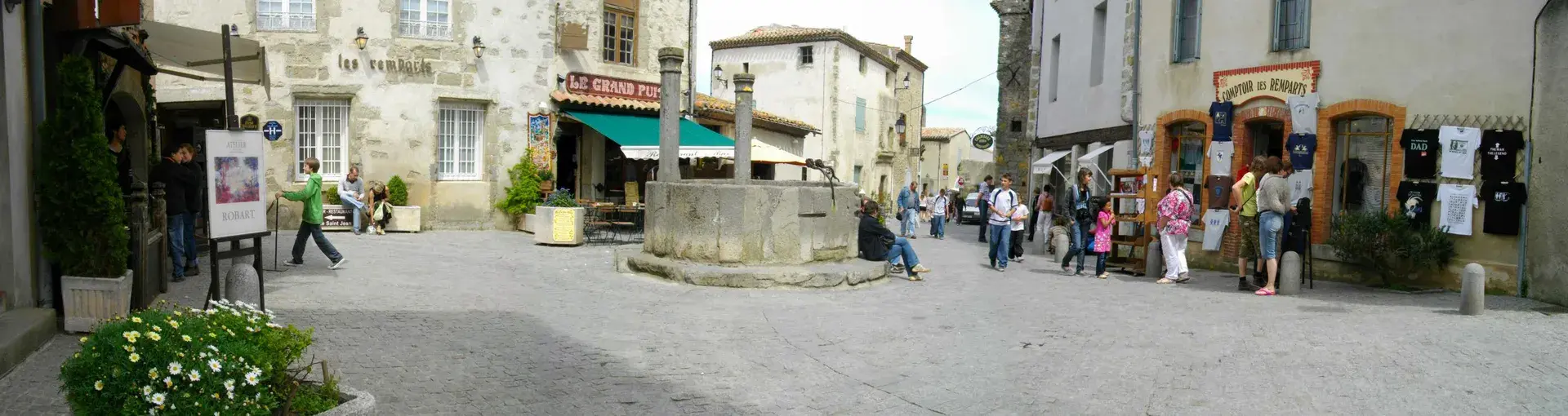
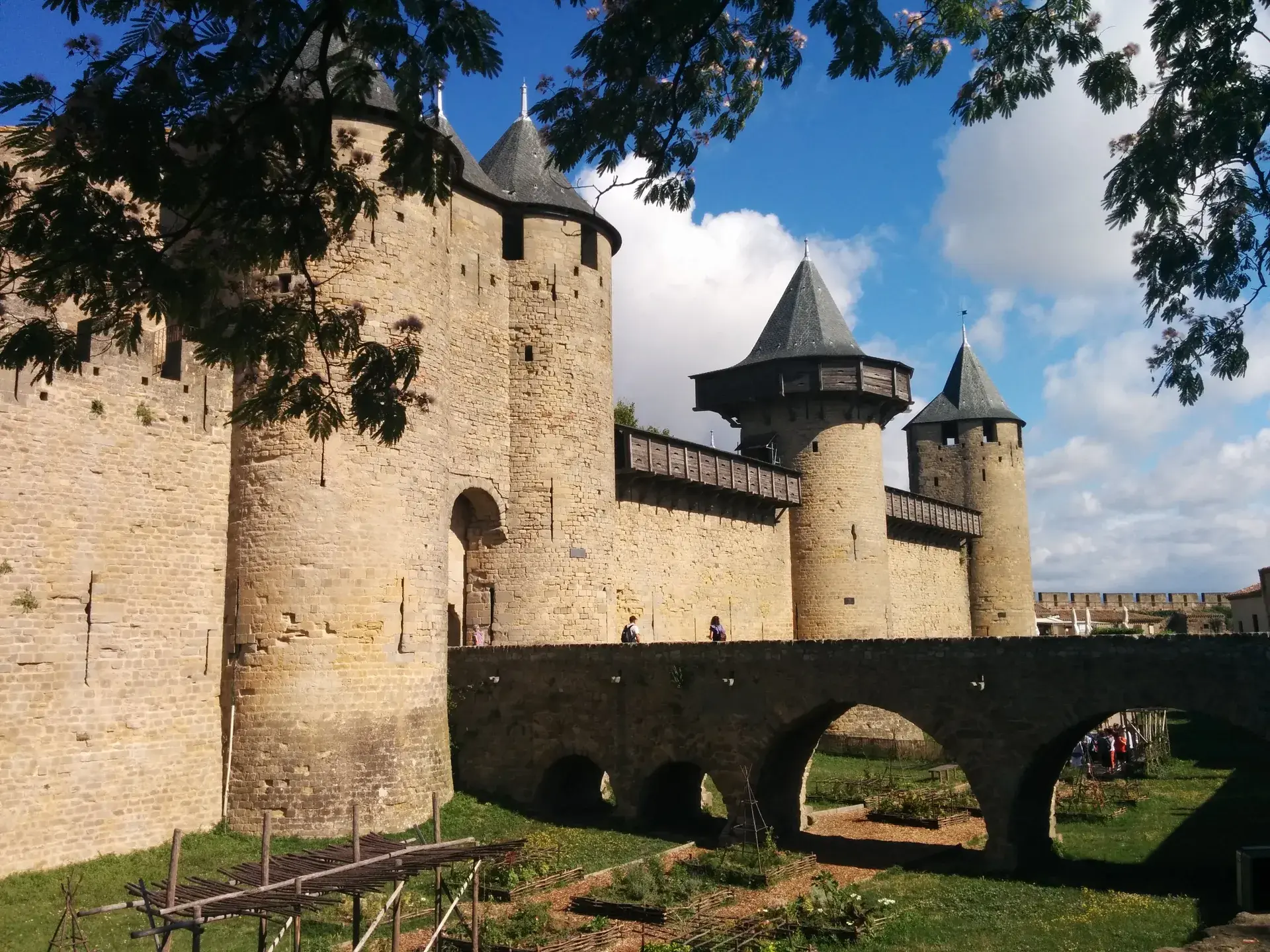
Inside the fortified walls of the Cité of Carcassonne, water supply was a critical element of survival. Positioned on Place du Grand Puits near the Château Comtal, the Grand Puits (Great Well) is the oldest and deepest of the 22 documented historic wells within the citadel. Registered as a French National Historical Monument on March 26, 1926, this public structure supplied fresh water to both soldiers and civilians during military blockades.
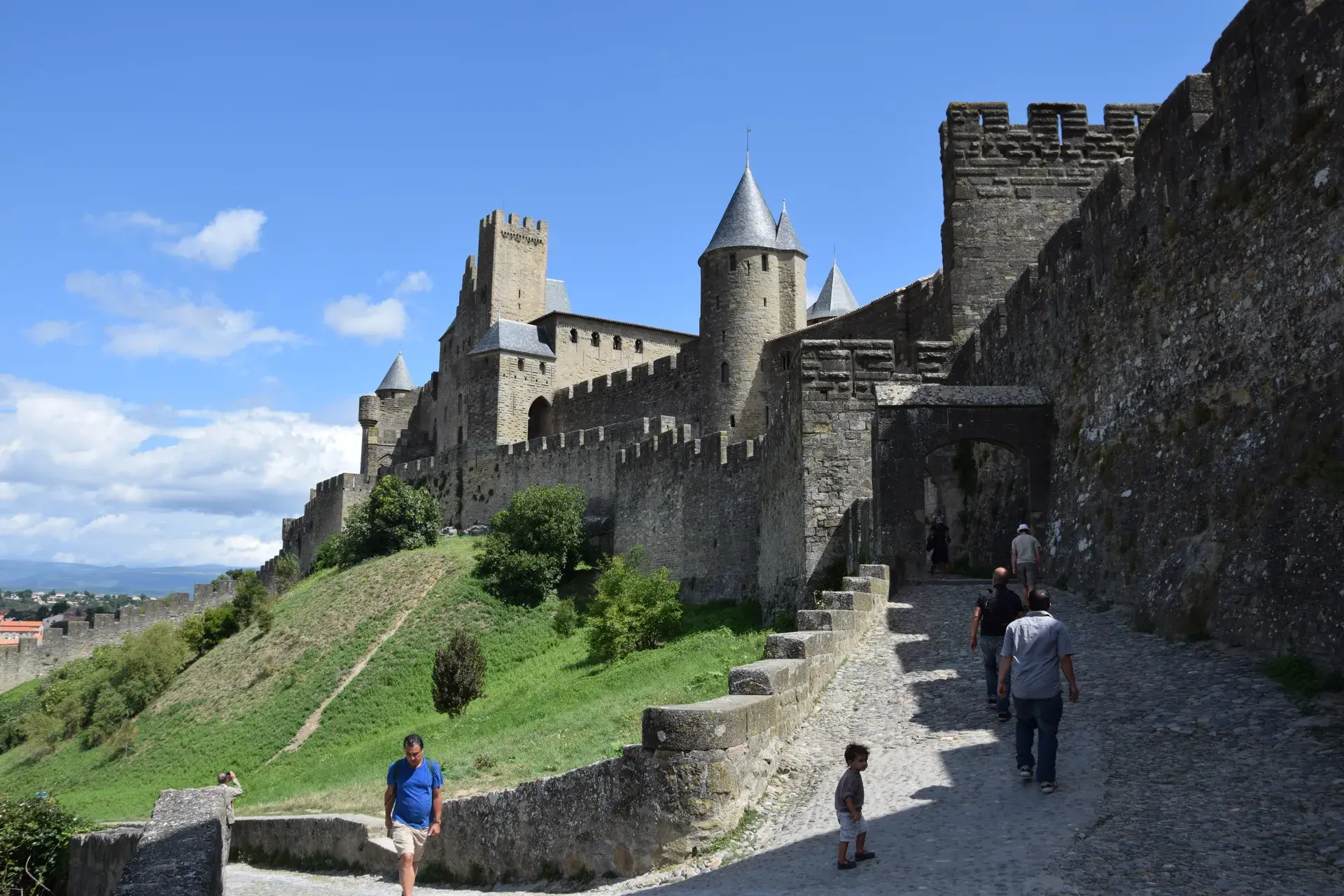
Because the fortified town sits atop a rocky plateau high above the River Aude, defenders were severely vulnerable to cutoffs or river poisoning during sieges. While the fortress relied on extensive defensive walls and 52 towers to keep attackers out, deep subterranean engineering provided the necessary drinking water. The settlement depended heavily on two main public hubs: the Grand Puits and the smaller Petit Puits, located on the Plô.
Architecture and Medieval Engineering
The construction of the Grand Puits combines stone masonry with deep excavation into raw geology. The surface features a 14th-century stone rim with an internal diameter of approximately 2.60 meters. Directly below this rim rests a 12.50-meter collar built of rubble masonry. Beneath the collar, the shaft is hewn directly and irregularly into the natural bedrock.
The well’s original hoisting superstructure included three monolithic stone pillars joined at the top by beams with individual pulleys, an arrangement designed to allow three people to draw water at the same time. Two of these monolithic uprights survive today. Over time, further adaptations were added to the site, including bronze pulleys and Renaissance-era iron mountings anchored directly to the stone parapet.
Historical Cleanings and the Depth Discrepancy
Official surveys of the Grand Puits reveal significant variations in its recorded depth. In 1808, municipal public works contractor Jacques Rancoule conducted an extensive dredging campaign to clear accumulated debris, documenting the well's maximum known depth at 39.45 meters.
Roughly five decades later, architect Eugène Viollet-le-Duc surveyed, cleared, and restored the well during his comprehensive 19th-century restoration of Carcassonne. Viollet-le-Duc recorded a depth of only 30.20 meters. This discrepancy of more than nine meters demonstrates how rapidly municipal siege wells accumulated discarded debris, loose masonry, dropped buckets, and silt when regular municipal cleaning lapsed.
Legends and Local Folklore
Due to its great depth and ancient origin, the Grand Puits has long been the subject of regional mythology. One persistent local tradition claimed that the Visigoths, fearing the advance of Attila the Hun, cast their royal treasury into the shaft. This hoard was reputed to include the fabled Treasure of King Solomon, supposedly seized during the Visigothic sack of Rome in 410 AD. However, archaeological records and Rancoule's 1808 excavation found no evidence of hidden gold.
Another regional tale describes seven blasphemous archers who mocked Saint Gimer. According to the legend, the men mounted an expanding phantom donkey that lengthened to carry all seven riders before transforming into a funeral shroud and plunging headlong down the Grand Puits into the underworld.
Preservation and Present State
Today, the Grand Puits is maintained as an open-air public monument owned by the commune of Carcassonne. Situated along the pedestrian route through the upper fortress, the opening is secured by a protective iron and glass safety grate. The installation prevents accidents and trash accumulation while allowing observers to look down into the raw stone shaft, where a cool draft rises continuously from the bedrock depths.
FAQ
How deep is the Grand Puits in Carcassonne?
The recorded depth varies depending on historical cleanings. Municipal dredging in 1808 recorded a maximum depth of 39.45 meters, while architect Eugène Viollet-le-Duc measured it at 30.20 meters in the mid-19th century after decades of debris accumulation.
Was treasure ever found inside the Grand Puits?
No. Despite local legends claiming that Visigoths threw royal wealth and the Treasure of King Solomon down the well to hide it from Attila the Hun, the 1808 municipal dredging recovered no treasure.
What original architectural elements survive on the well?
The well retains its 14th-century stone rim, a 12.50-meter rubble-stone collar, two of its three original monolithic stone hoist pillars, and later Renaissance-era iron mountings.