Pont Vieux: Carcassonne's Historic Bridge to the Cité
The Historic Crossing of the River Aude
Carcassonne is defined by its dual settlement: the fortified hilltop acropolis known as the Cité and the 13th-century grid-planned lower town, the Bastide Saint-Louis. For more than five centuries, Pont Vieux served as the sole permanent physical crossing linking these two communities across the River Aude. Today, the medieval bridge connects the left bank's lower town with the Trivalle district nestled beneath the ramparts, functioning as an essential pedestrian link within the UNESCO-designated historic landscape.
Records indicate that an earlier river crossing existed at this site as early as 1184, authorized by Viscount Roger Trencavel. This original structure, likely constructed of timber and financed through local grain tolls, was destroyed during the Albigensian Crusade in the early 13th century. Following Carcassonne's incorporation into the French royal domain and the subsequent establishment of the Bastide Saint-Louis, royal authorities commissioned a permanent stone bridge funded through municipal levies.
Construction and Architectural Features
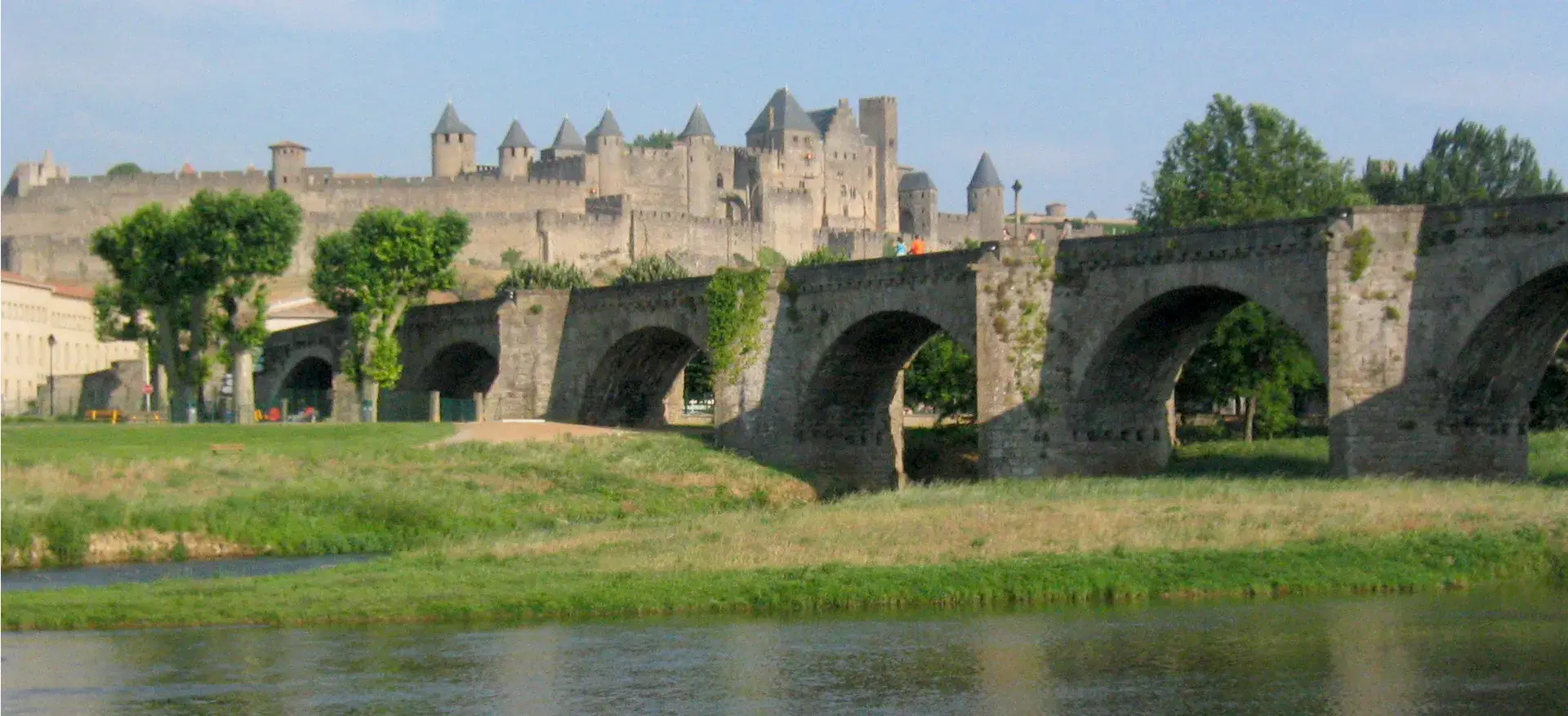
Construction of the stone bridge began in the early 14th century, with archival records documenting active work in 1315. The span was largely completed between 1320 and the 1350s. Measuring between 210 and 225 meters in length, the bridge is supported by 12 semicircular arches. A distinct characteristic of Pont Vieux is that its arches feature unequal widths, ranging between 10 and 14 meters. These irregularities arose because the structure was built span-by-span over decades as toll and tax revenues became available.
Down in the riverbed, heavy triangular stone cutwaters shield the piers against the rushing currents of the River Aude. Pont Vieux underwent several structural updates over the centuries: two collapsed arches were restored during the 15th century, portions of the bridge were remodeled in 1559, and the stone parapets were rebuilt in 1820. On August 18, 1926, the bridge was officially classified as a French Monument Historique.
The Neutral Boundary and Historic Relics
During the Middle Ages, the Cité and the Ville-Basse operated under independent municipal jurisdictions, frequently experiencing civic tension and armed disputes. To define their territories, a dividing arch stood squarely at the midpoint of Pont Vieux. This arch marked the legal frontier between the two towns and acted as neutral ground where delegations met to negotiate and sign peace treaties.
While the medieval dividing arch is no longer standing, its historic location along the parapet is commemorated by a weathered stone crucifix. The monument still bears a damaged figure of Christ, preserving the memory of this ancient civic boundary.
Modern Role and Scenic Perspectives
Pont Vieux is maintained entirely as a footbridge closed to vehicular traffic. In addition to accommodating local foot traffic, it forms part of the Chemin de Saint-Jacques (Voie du Piémont Pyrénéen), welcoming long-distance walkers journeying toward Santiago de Compostela.
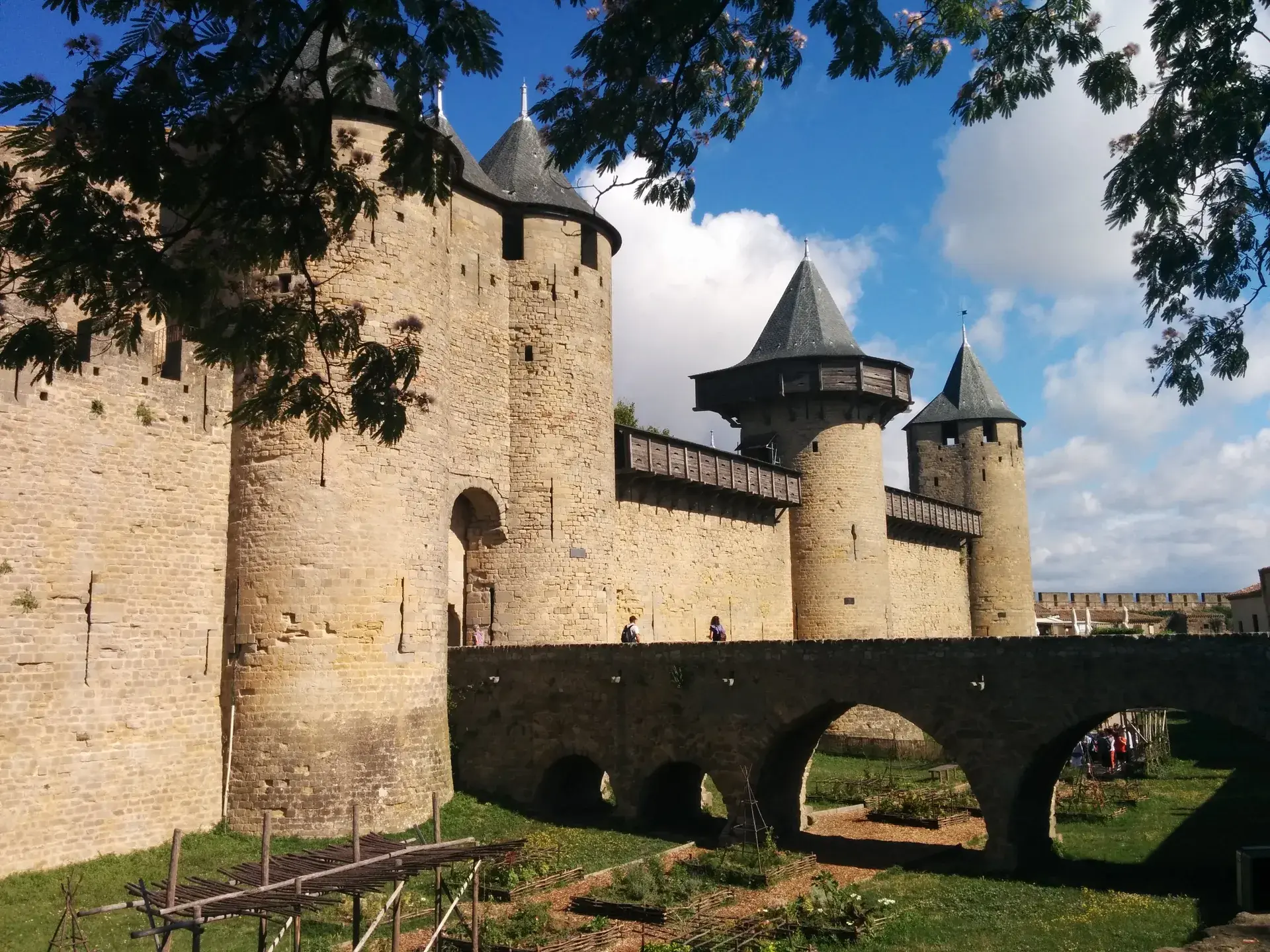
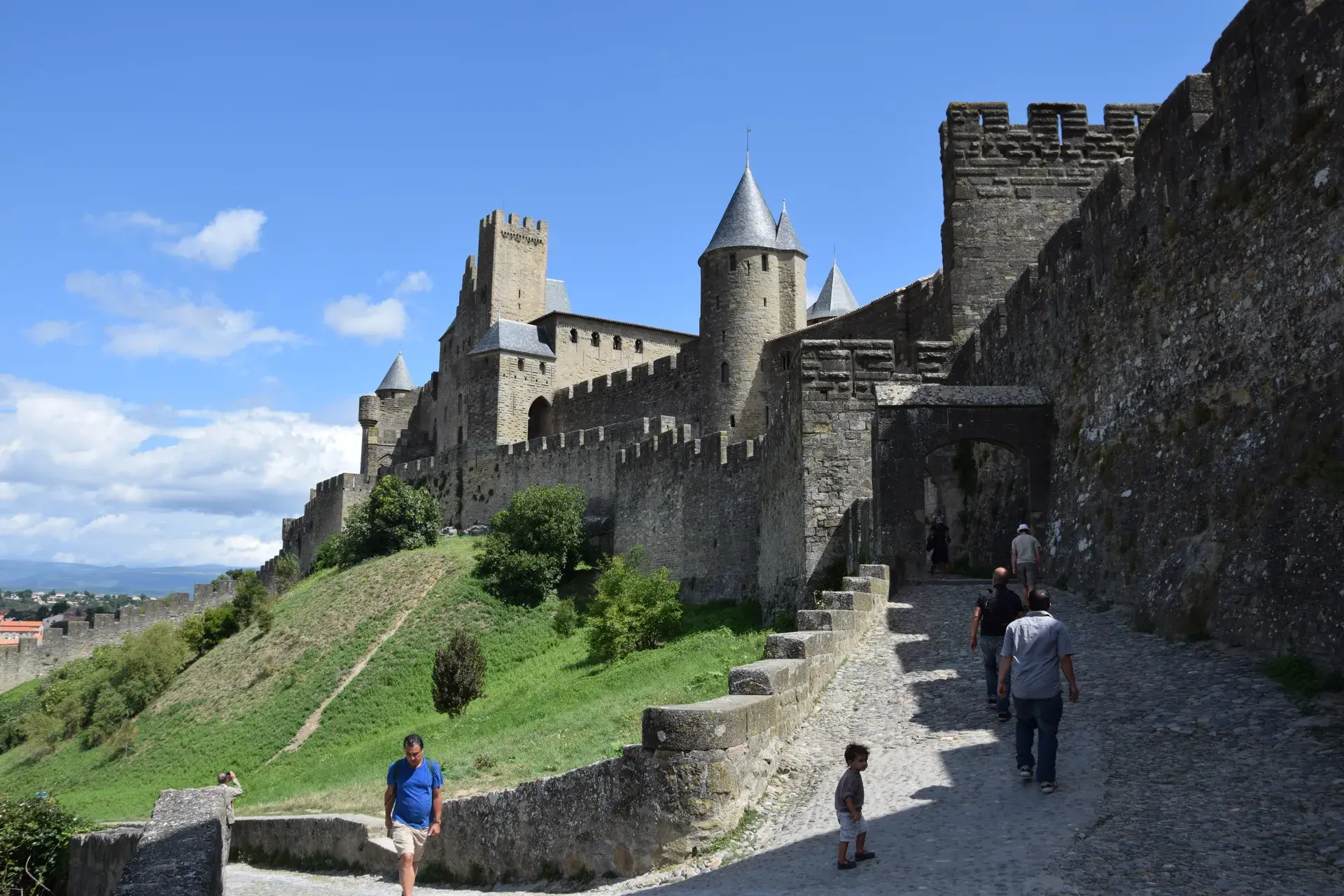
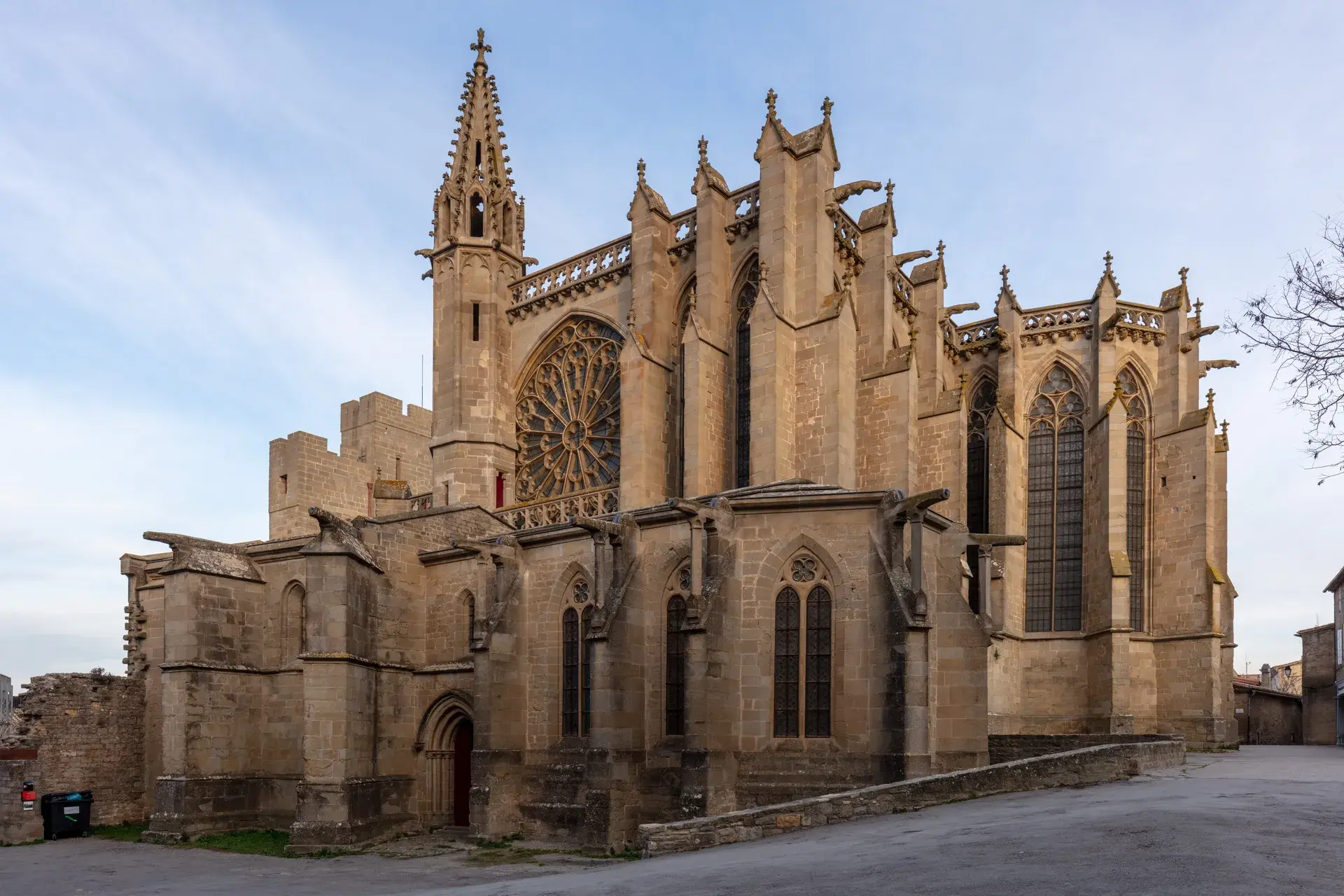
The bridge serves as a celebrated vantage point for viewing the western perimeter of the fortress. From the walkway, observers look across the River Aude toward elevated curtain walls, the defensive towers of the Château Comtal, and the Gothic rooflines of the Basilique Saint-Nazaire. Looking past the fortifications, the parapets also provide clear sightlines extending northward to the ridgeline of the Montagne Noire and southward to the foothills of the Corbières.
FAQ
Why do the arches of Pont Vieux have different sizes?
The 12 semicircular arches vary between 10 and 14 meters in span width because the bridge was built span-by-span over several decades as municipal tax collections and toll funds periodically became available.
What historical role did the center of Pont Vieux play?
In the Middle Ages, a stone arch stood in the center of the bridge marking the legal boundary between the independent jurisdictions of the Cité and the lower town. It served as neutral ground where peace treaties were signed after civic conflicts.
Is Pont Vieux open to cars?
No, Pont Vieux is closed to motorized vehicles and operates strictly as a pedestrian footbridge.
Which pilgrimage route crosses Pont Vieux?
The bridge is part of the Chemin de Saint-Jacques (Voie du Piémont Pyrénéen), an established pilgrimage route leading toward Santiago de Compostela.