Porte Narbonnaise: Carcassonne's Fortified Gate
Royal Construction and Strategic Defense
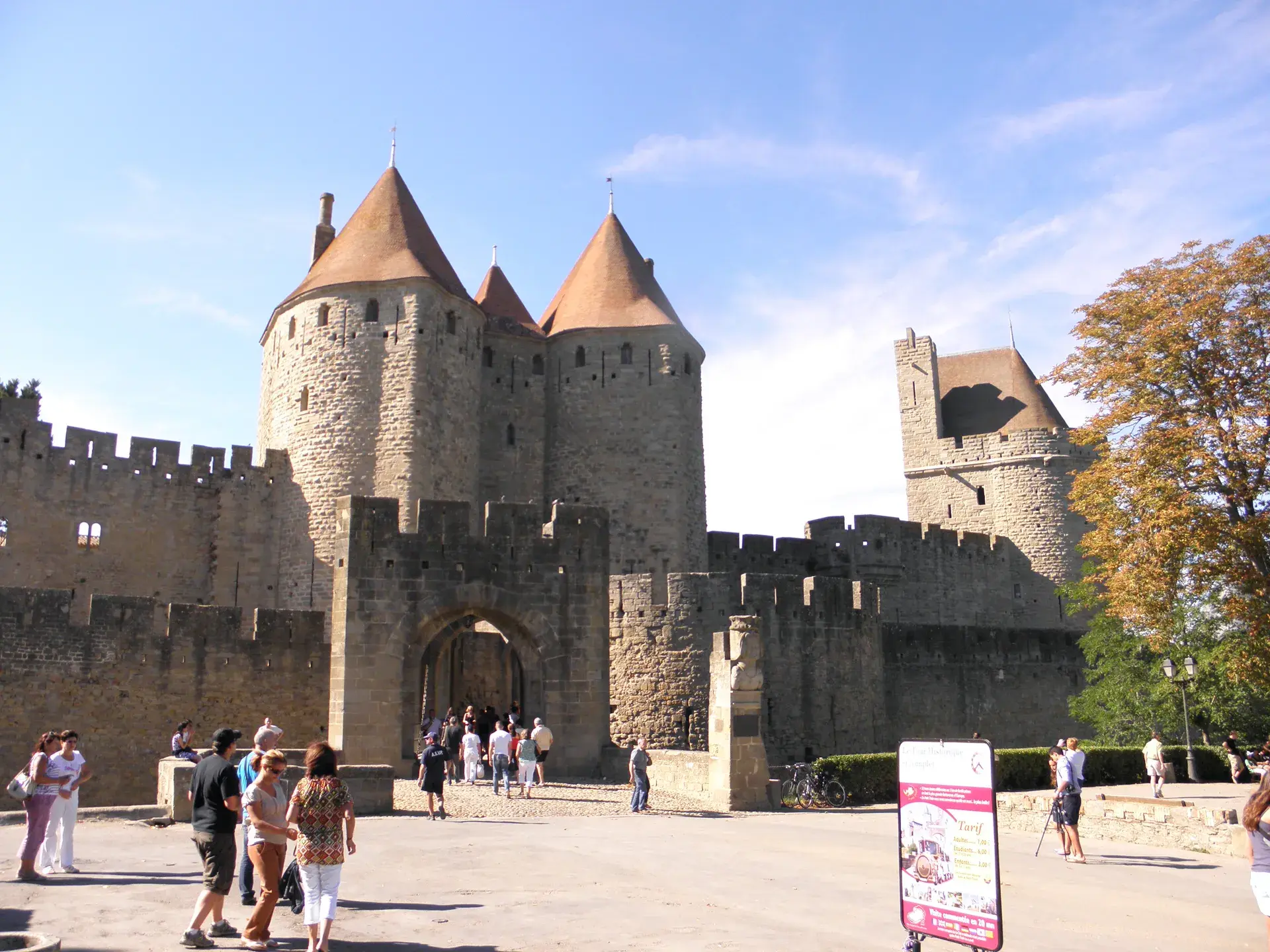
Commissioned around 1280 under the reigns of French Kings Philip III and Philip IV, the Porte Narbonnaise stands as the principal eastern gateway into the fortified hilltop Cité of Carcassonne. Facing the road toward Narbonne, the gate complex was designed as an autonomous royal stronghold to assert French crown sovereignty against the Kingdom of Aragon.
The entrance is flanked by two 30-meter-tall towers known as spur towers (tours en éperon). Rather than maintaining standard cylindrical shapes, their masonry bases project forward into angular stone spurs engineered to deflect heavy projectiles fired by siege machinery. Designed to withstand prolonged isolation, the complex incorporated autonomous survival features: the north tower contained a rainwater cistern, while the south tower was equipped with a cool cellar for storing salted meats.
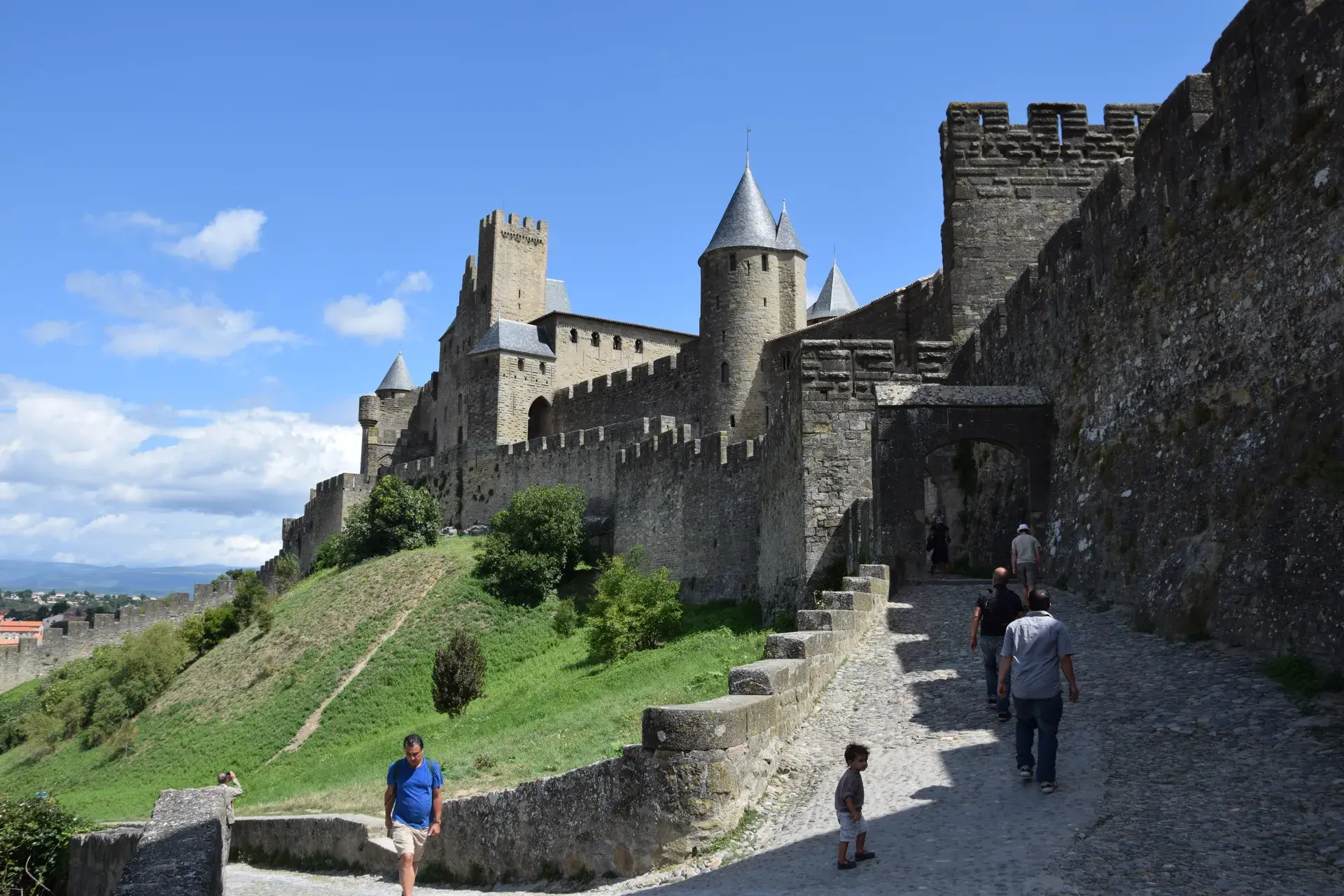
Breaching the gate required an opposing force to bypass multiple layers of active defenses. Attackers had to negotiate the outer Saint-Louis barbican, cross a deep stone-cut dry moat, and penetrate a stone-vaulted entryway secured by double portcullis grooves, machicolations, and overhead murder holes (assommoirs).
The 19th-Century Restoration
Following the 1659 Treaty of the Pyrenees, which relocated the border between France and Spain southward, Carcassonne lost its primary strategic purpose. Over the subsequent two centuries, the fortifications fell into neglect and decay.
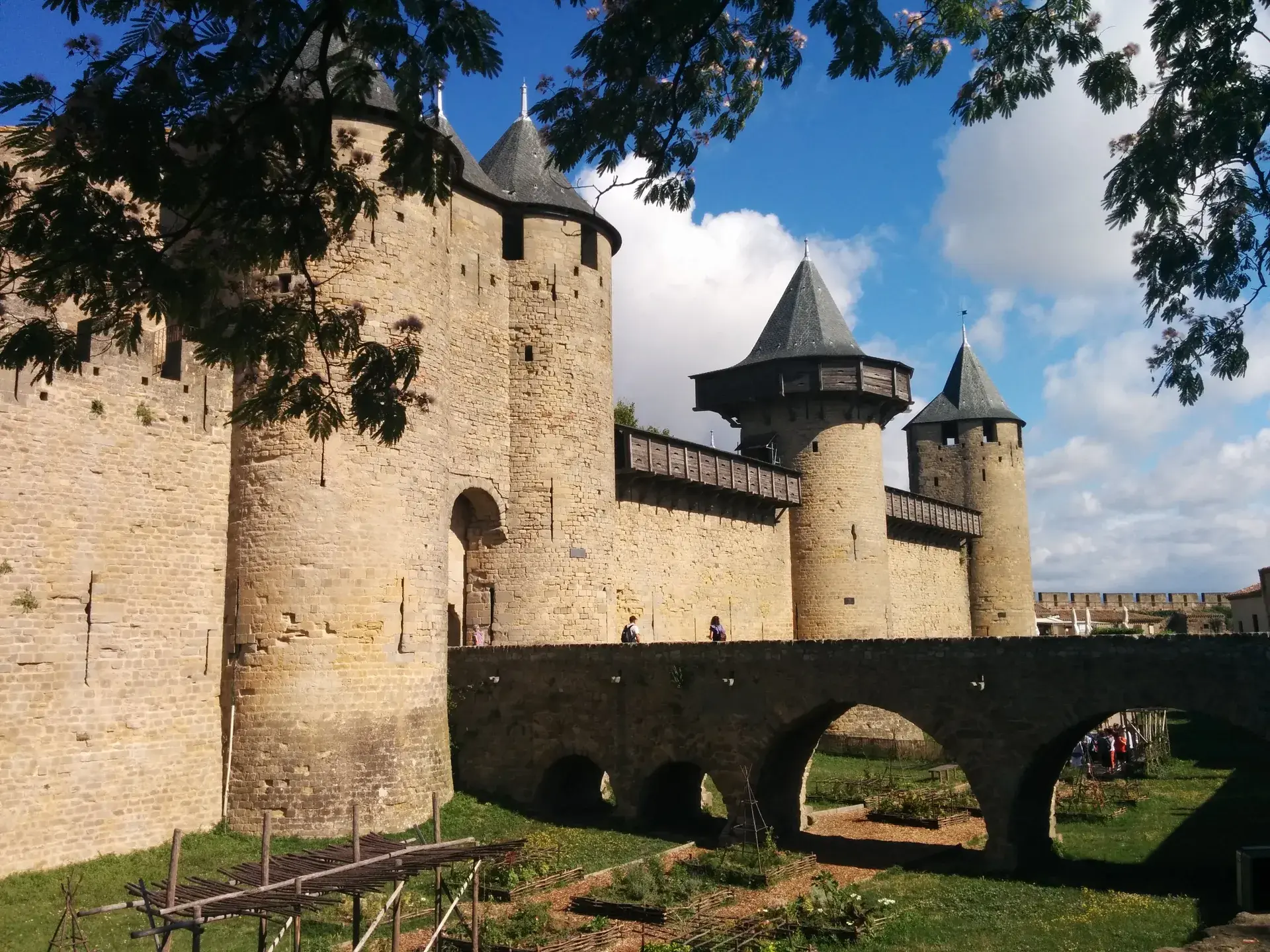
Between 1853 and 1864, architect Eugène Viollet-le-Duc directed an extensive restoration of the gateway following an earlier archaeological survey. His project rebuilt the eroded high masonry, topped the towers with conical slate roof caps, restored the battlements, and reconstructed the approach over the moat. The wooden drawbridge visible today is not an authentic medieval survivor, but a 19th-century reconstruction designed by Viollet-le-Duc to demonstrate medieval defensive mechanics.
Sculptures and Historic Features
Several sculptural details mark the approach to the gate. Mounted near the outer path is a stone bust representing Lady Carcas (Dame Carcas). According to local tradition, the eighth-century Saracen ruler saved the city from Charlemagne's siege by tossing a grain-fed pig from the ramparts, misleading the besiegers into believing supplies were inexhaustible. While popular, this legend is unsupported by historical records. The bust displayed near the approach is a modern replica; the weathered 16th-century original is preserved inside the castle museum.
Directly above the entrance arch sits a niche containing a 14th-century stone statue of the Virgin Mary. The figure survived centuries of border conflicts intact until it was defaced during the French Revolution.
The Gateway Today
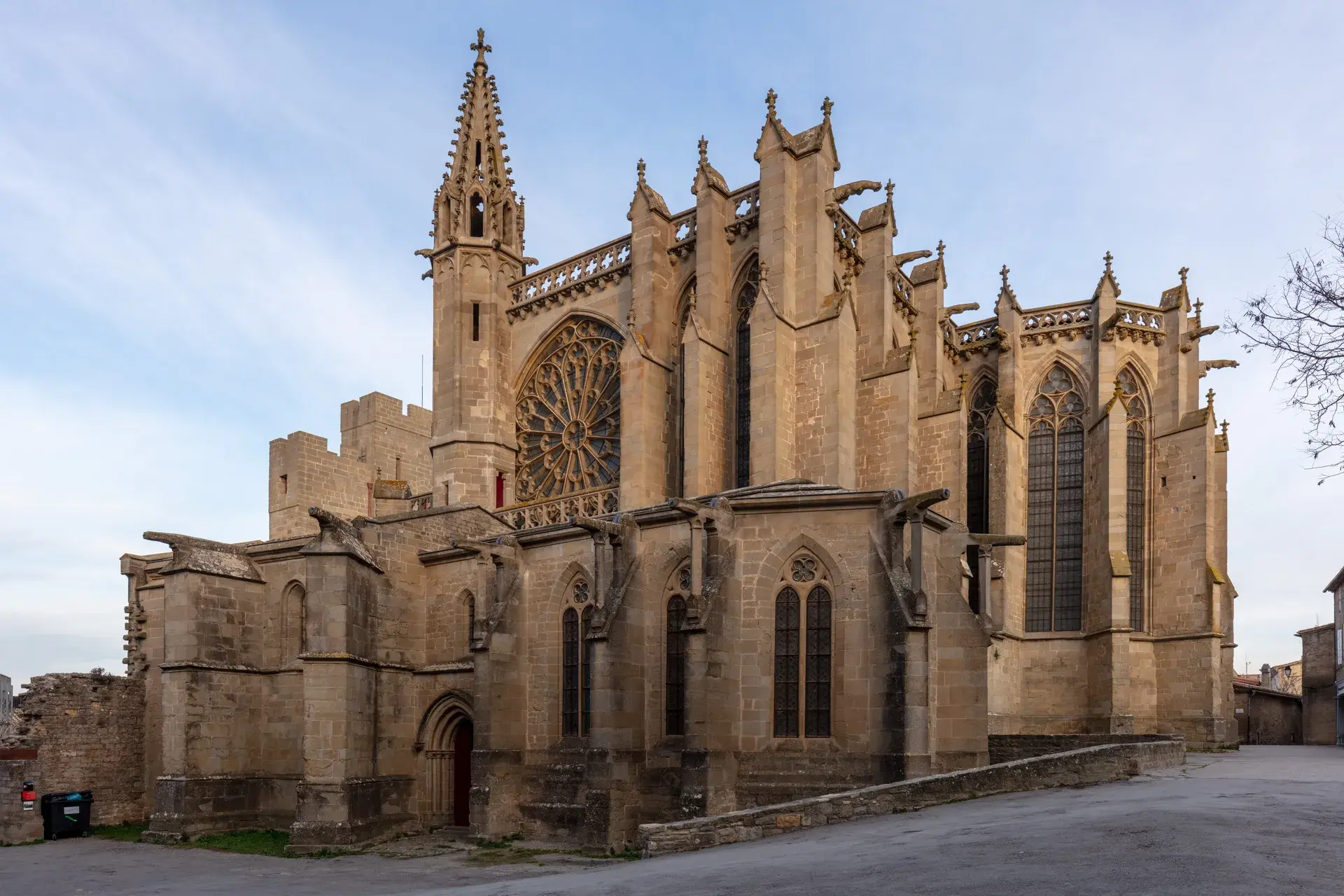
The Porte Narbonnaise serves as the primary pedestrian access point to the UNESCO-listed Cité de Carcassonne. Foot traffic crosses the wooden planks of the reconstructed drawbridge above the dry moat and enters the echoing stone-vaulted gateway beneath the iron portcullis slots. The passage provides free, year-round access directly onto Rue Cros-Mayrevieille, guiding visitors into the historic city toward the Château Comtal and the Basilica of Saints Nazaire and Celse.
FAQ
Is the drawbridge at Porte Narbonnaise an original medieval structure?
No. The wooden drawbridge spanning the dry moat was designed and installed between 1853 and 1864 by architect Eugène Viollet-le-Duc to demonstrate medieval defensive engineering.
What is the purpose of the pointed bases on the gate towers?
The two 30-meter towers feature angular stone projections known as spurs (éperons) at their bases, engineered to deflect projectiles launched by enemy siege engines.
Is the bust of Lady Carcas at the entrance original?
The bust displayed near the entrance is a modern replica. The weathered 16th-century original sculpture is preserved in the castle museum.
Is there a fee to enter Carcassonne through Porte Narbonnaise?
Access through the Porte Narbonnaise and across the drawbridge into the historic streets is free to the public year-round.