Collégiale Saint-Martin de Colmar: A Gothic Jewel
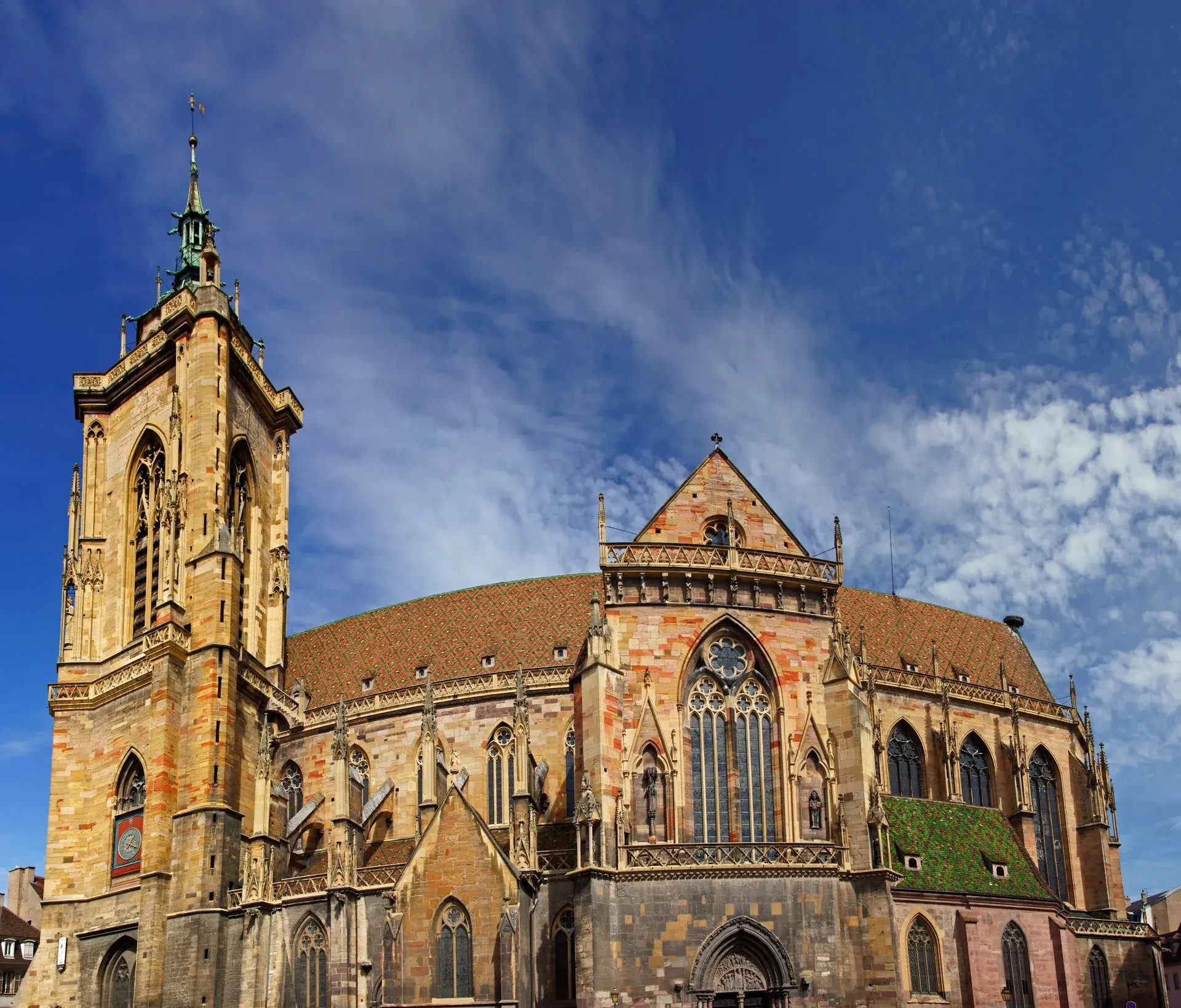
The Collégiale Saint-Martin, a monumental Roman Catholic church, stands as a major work of Alsatian Gothic architecture and the most prominent religious structure in Colmar. Located on the aptly named Place de la Cathédrale, its impressive silhouette and ancient stones dominate the square. Though widely known as Colmar Cathedral, its history is more complex than the name suggests.
A History Through Centuries
The site's religious history dates back to before the year 1000 with an early chapel. Following a fire in 1106, a Romanesque church was built, which was later replaced by the current Gothic edifice. Construction of the Collégiale Saint-Martin spanned from 1235 to 1365, with key architects including Maître Humbret, who designed the transept and nave, and Guillaume de Marbourg, who was responsible for the choir.
A pivotal moment in its history occurred during the French Revolution. From 1790 until 1801/1802, the church was briefly elevated to the status of a 'constitutional cathedral' for the Haut-Rhin department. It lost this title after the Concordat, but the popular name 'Colmar Cathedral' has endured. The building was classified as a historical monument in 1840, cementing its cultural importance.
Architectural Highlights
Constructed from Vosges sandstone that displays a range of colors from light yellow to violet, the church is a prime example of regional Gothic style. One of its most distinctive features is the single south tower, as the planned north tower was never built. This tower is topped by a unique, bulbous Renaissance-style lantern, which was added in 1575 after a fire destroyed the original spire and roof in 1572.
Among its hidden curiosities is a 'double ringing' bell. A second chime sounds from a bell within the lantern two minutes after the initial peal, a unique feature that survived World War II.
The Church Today
Currently, the Collégiale Saint-Martin serves as an active Roman Catholic parish church and a vibrant cultural hub, hosting concerts and exhibitions. It remains a major attraction for visitors admiring its architecture, stained glass, and historic organs. A pair of storks, nicknamed 'Martin and Martine', also calls the church home, nesting annually on one of its towers.
To ensure its preservation for future generations, a large-scale restoration project began in 2024 and is scheduled to conclude in 2030. This extensive work covers the church's facades, sculptures, roofing, and structural elements.
FAQ
Why is Saint-Martin's Church often called Colmar Cathedral?
It was briefly designated a 'constitutional cathedral' for the Haut-Rhin department during the French Revolution, from 1790 to 1801/1802. Although it lost this official status, the name has remained popular among locals and visitors.
What is the distinctive feature on top of the church's tower?
The south tower is crowned with a unique bulbous lantern. This Renaissance-style feature was not part of the original Gothic design but was added in 1575 after a fire in 1572 destroyed the original spire.
When was the Collégiale Saint-Martin built?
The current Gothic church was constructed over a long period, from 1235 to 1365. It replaced an earlier Romanesque church on the same site, which itself succeeded a chapel dating to before the year 1000.
Are there really storks on the church?
Yes, a pair of storks, affectionately nicknamed 'Martin and Martine', returns annually to nest on one of the church's towers, where they raise their young each year.
Discover Colmar like never before
Dive into Colmar hidden stories and secret spots with Ciceru interactive tours.
Explore tour
Audioguide
Quizzes
Maps
Solo
Couples
Groups & families

© Photo by Valentin Orlov via Google Maps · Google Places