Salle du Corps de Garde: Colmar's Renaissance Watch-House
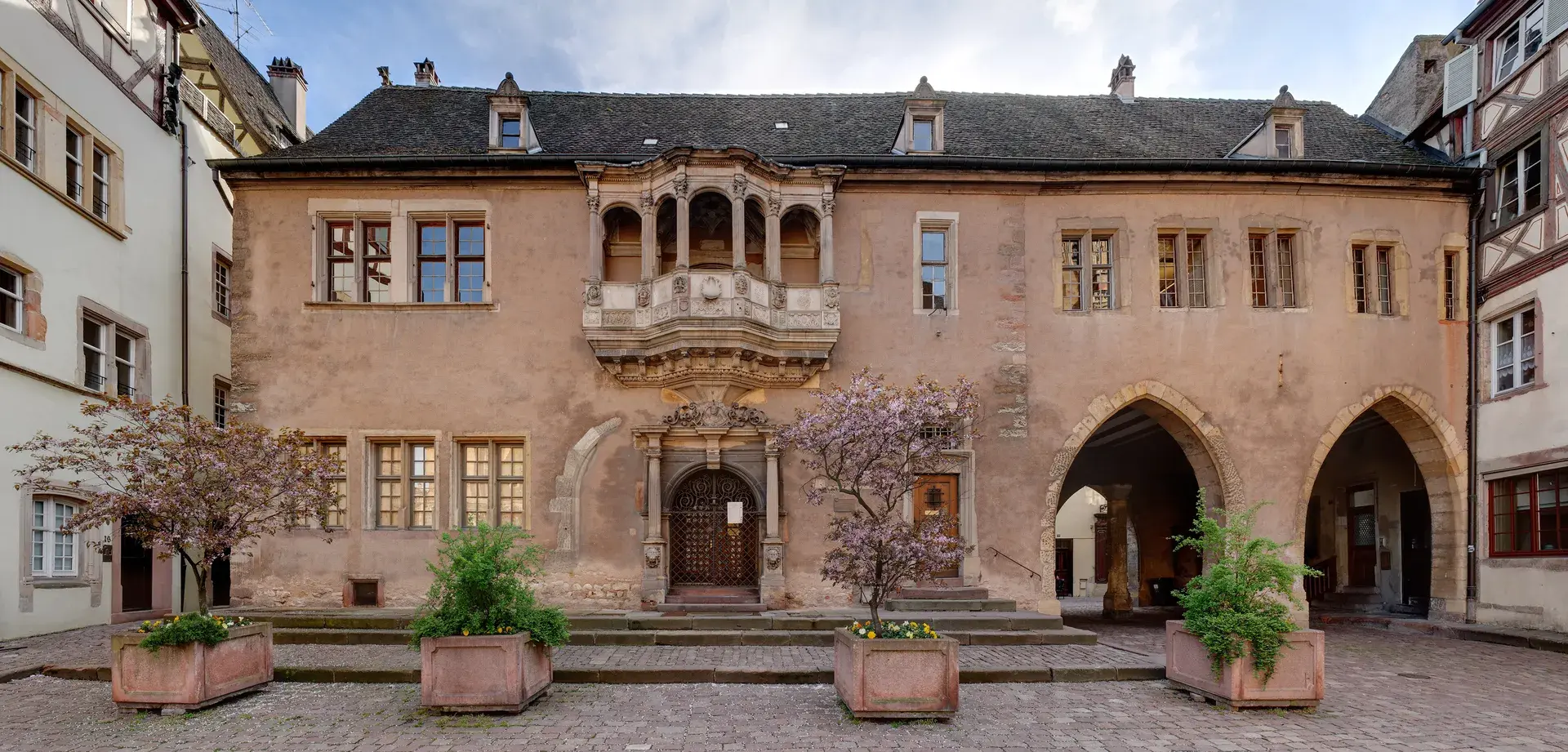
Admire the elegant historic facade of the Salle du Corps de Garde, standing prominently on the Place de la Cathédrale as a testament to Colmar's past civic life. Also known as the Ancien Corps de Garde, this building is a prime example of Rhenish Renaissance architecture and embodies the city's transition from medieval religious life to a bustling civil center.
From Chapel to Civic Building
The site's history predates the current structure. It was originally occupied by the Saint-Jacques chapel, first documented in 1286. In 1308, the chapel was converted into an ossuary to hold bones from the cemetery of the nearby Saint Martin collegiate church. Following an imperial edict in 1533 that prohibited cemeteries within city limits, the chapel was suppressed and later transformed.
The main structure of the building seen today was erected in 1575 under the direction of master builder Melchior Beier. This marked its definitive shift from a religious site to a civic one.
Architectural Highlights
The Salle du Corps de Garde is a jewel of Rhenish Renaissance design, characterized by ornate carvings and a blend of Renaissance and Baroque details. Its most distinctive feature is the magnificent loggia, added between 1577 and 1582. This highly decorative platform, adorned with grimacing grotesque faces, served a somber purpose: it was from here that magistrates publicly announced legal convictions and sentences.
On the ground floor, the building's arcades once hosted a lively market for nuts and oilseeds. Inside, an original wooden spiral staircase leads to the first floor, where a beam is engraved with the date "MDLXXV" (1575). Traces of the original medieval chapel's windows and arched openings, blocked in 1588, can still be seen on the rear wall.
A Building of Many Functions
Throughout its history, the Salle du Corps de Garde has served numerous roles in Colmar's civic life. After its initial construction, it functioned as a guardhouse, a market space, and a judicial tribunal. From 1860, it housed military lodging offices and later a police station, reflecting its central importance to the city's administration and security.
In recognition of its historical and architectural significance, the building's façades, roofs, staircase, and first-floor rooms were classified as historical monuments in 1958. The underlying crypt-ossuary received separate protection in 1991.
The Salle du Corps de Garde Today
Following meticulous restoration, the Salle du Corps de Garde now serves as a significant tourist attraction and cultural hub in Colmar. It houses a museum with artifacts and exhibits that detail the history of the city and the Alsace region.
Beyond its museum function, the building is a vibrant venue for various cultural events throughout the year, including concerts, lectures, and exhibitions, continuing its long history as a focal point of community life.
FAQ
What was the Salle du Corps de Garde originally?
The site of the Salle du Corps de Garde was originally the Saint-Jacques chapel, first mentioned in 1286. It was converted into an ossuary in 1308 and later suppressed in 1533 before the current guardhouse was built in 1575.
What is the architectural style of the Salle du Corps de Garde?
The building's architectural style is primarily Rhenish Renaissance. It is known for its ornate carvings and a distinctive, highly sculpted loggia that was added between 1577 and 1582.
What is the building used for today?
Today, the Salle du Corps de Garde has been restored and houses a museum showcasing the history of Colmar and the Alsace region. It also functions as a venue for cultural events like concerts and exhibitions.
What was the purpose of the building's ornate loggia?
The beautifully sculpted Renaissance loggia, despite its decorative appearance with grotesque faces, served as the public platform where magistrates would announce legal condemnations and sentences to the citizens of Colmar.