Musée Unterlinden: Colmar's Historic Art Museum
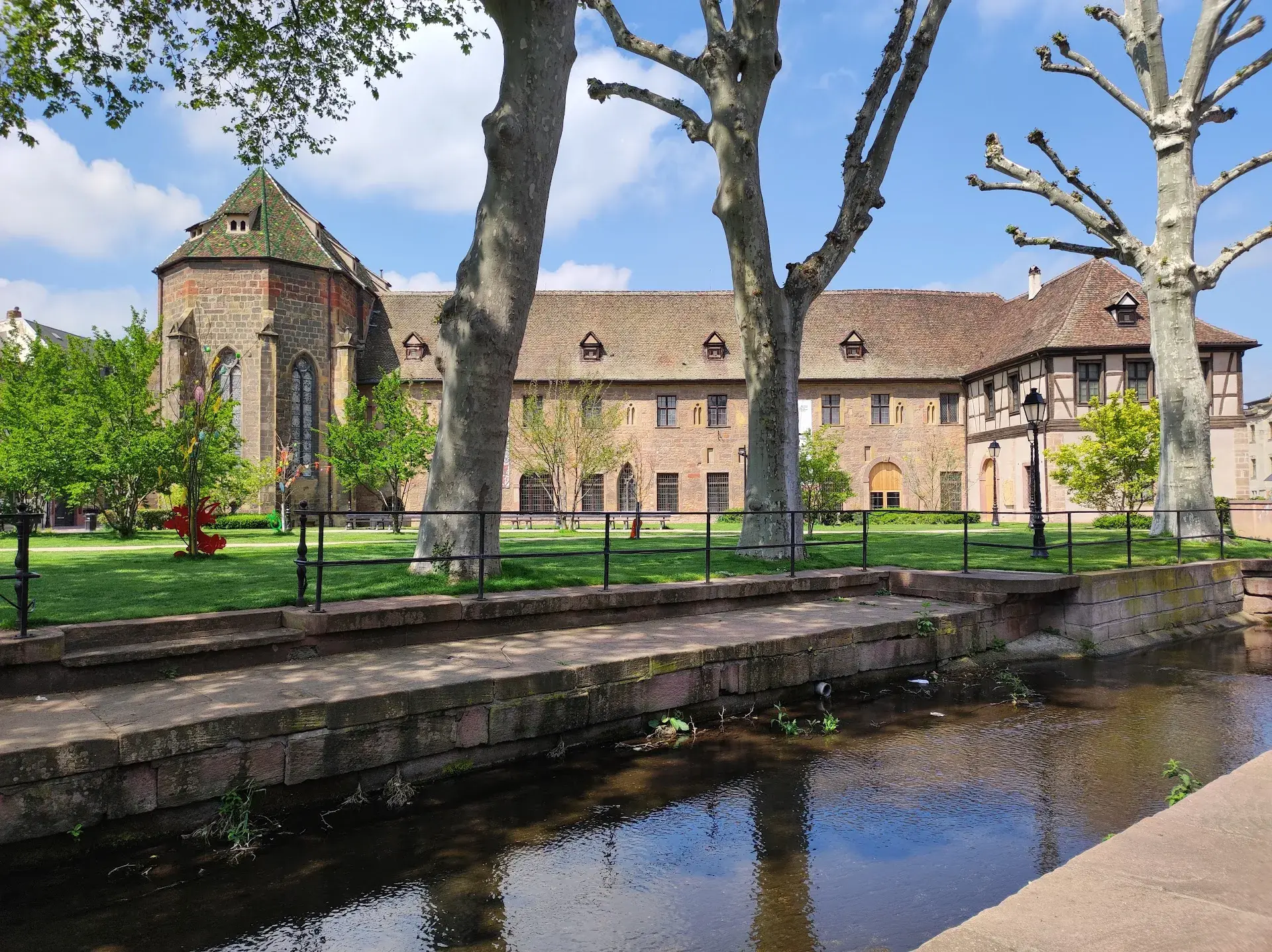
Located in Colmar, France, the Musée Unterlinden occupies an imposing 13th-century Dominican convent, its historic facade now home to a celebrated art museum. This institution preserves millennia of art and history, from its monastic origins to its modern architectural identity.
From Convent to Museum
The history of the Musée Unterlinden begins around 1230, when two noblewomen, Agnes of Mittelnheim and Agnes of Hergheim, founded a convent. Officially integrated into the Dominican order in 1252, it was named 'Unterlinden,' meaning 'under the lime trees' in Alsatian. The complex grew with the construction of a chapel (1262-1269) and a Gothic cloister built from pink Vosges sandstone (1280-1289).
The French Revolution marked a turning point. The nuns departed in 1793, and the abandoned buildings were used as military barracks, falling into disrepair. The site was saved from demolition by archivist Louis Hugot, who championed its transformation into a museum. The Musée Unterlinden was established in 1849 and opened to the public in 1853.
The Isenheim Altarpiece and Key Collections
The museum's most celebrated possession is the monumental Isenheim Altarpiece, which was transferred to the collection in 1852. Painted by Matthias Grünewald (1512-1516) with sculpted portions by Nicolas of Haguenau (c. 1510), the work is famous for its revolutionary depiction of Christ with vivid, plague-type sores. This was intended to show patients at the Antonite monastery hospital that Jesus understood their suffering.
The museum's collections span nearly 7,000 years, from prehistory to contemporary art. It features an extensive collection of Upper Rhenish art, including works by local artist Martin Schongauer. Among its earliest archaeological exhibits is a 3rd-century Gallo-Roman mosaic discovered in Bergheim in 1848.
Architectural Evolution
The museum is a dialogue between historic and contemporary architecture. The original site includes the 13th-century Gothic chapel and cloister. A major expansion between 2009 and 2015, designed by Swiss architects Herzog & de Meuron, nearly doubled the exhibition space.
This modern project integrated the historic convent with a neighboring former public baths building from 1906 and added a new contemporary wing. The expansion was inaugurated on January 23, 2016, by French President François Hollande.
The Museum Today
As the most frequented museum in Alsace, the Musée Unterlinden welcomes approximately 200,000 visitors annually. It is known for its innovative curatorial approach, often juxtaposing medieval and contemporary artworks to create new interpretations. Beyond the galleries, the museum offers a public library with 15,000 volumes on art history, a museum shop, and the Café Restaurant Schongauer, located in the refurbished former public baths.
FAQ
What is the most famous artwork at the Musée Unterlinden?
The museum's most celebrated work is the Isenheim Altarpiece, created between 1512 and 1516 by Matthias Grünewald and Nicolas of Haguenau. It is renowned for its powerful and revolutionary depiction of Christ's suffering.
What does the name 'Unterlinden' mean?
'Unterlinden' is an Alsatian phrase meaning "under the lime trees." It refers to the location where the original Dominican convent was founded around 1230.
When did the Musée Unterlinden open to the public?
After being saved from demolition and converted from a former convent, the museum officially opened to the public in 1853.
What kind of art is in the Musée Unterlinden?
The museum's collections are comprehensive, spanning nearly 7,000 years. They include prehistoric artifacts, a 3rd-century Gallo-Roman mosaic, medieval and Upper Rhenish art, and contemporary works.
Discover Colmar like never before
Dive into Colmar hidden stories and secret spots with Ciceru interactive tours.
Explore tour
Audioguide
Quizzes
Maps
Solo
Couples
Groups & families

© Photo by Loreen Rosenkranz via Google Maps · Google Places